

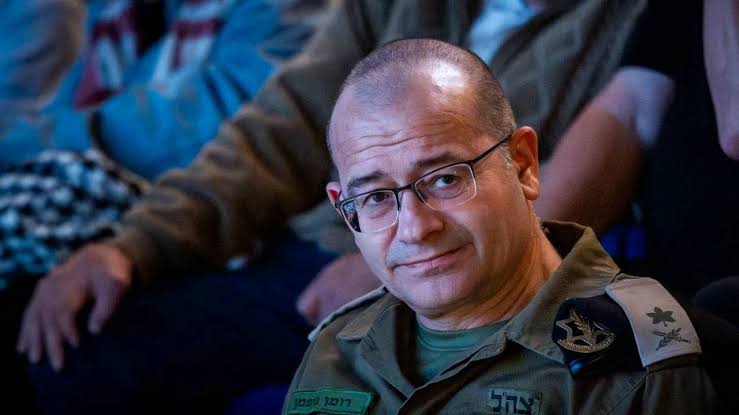
The new head of Mossad, Roman Gofman, proceeded with the removal of two top officials who played a central role in planning the operation against Iran.
Israel’s most ambitious secret operation against Iran appears to be turning into a strategic fiasco for Mossad.
A plan aimed not merely at weakening Tehran, but at collapsing the Islamic Republic and installing new political leadership in Iran, was reportedly led into a dead end, causing severe tremors at the top of the Israeli intelligence agency.
According to Israel's Channel 12, the new head of Mossad, Roman Gofman, proceeded with the removal of two top officials who played a central role in planning the operation, the head of the Intelligence Directorate and the head of the agency's Iran division.
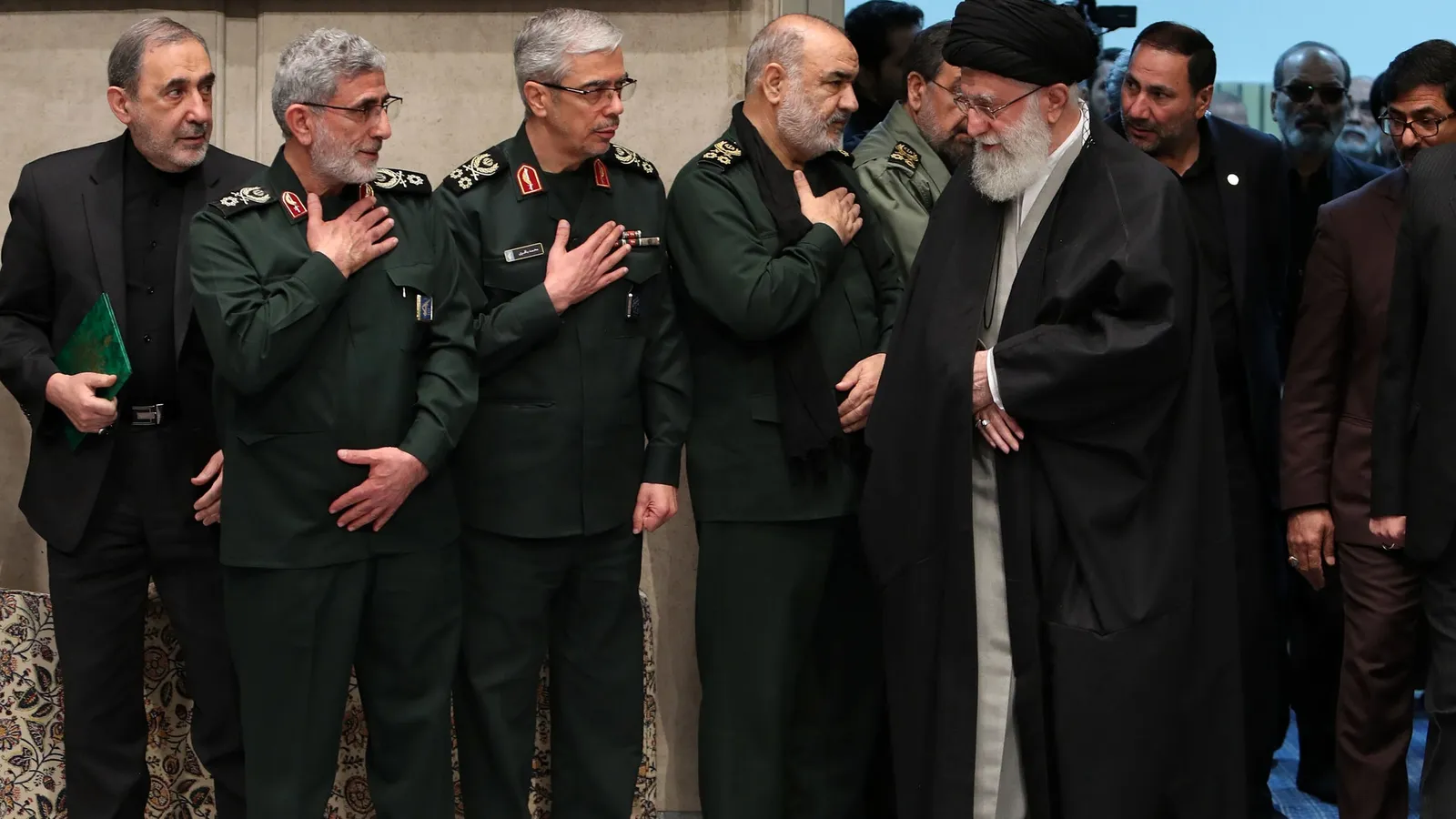
At the center is a classified operational plan that provided for exploiting ethnic minorities in Iran, triggering an armed uprising in Iranian Kurdistan, creating an internal destabilization front, and ultimately causing a nationwide uprising aimed at overthrowing the regime in Tehran.
The operation, which according to reports relied on a chain of military strikes, covert contacts, and political maneuvering, developed into one of the largest gambles of the Israeli security apparatus.
However, reality proved much more complex, internal balances in Iran, reactions from regional powers, and doubts about the feasibility of a controlled regime change halted the planning.
The removal of the two officials may officially be presented as part of a broader reorganization of Mossad, yet the timing reveals deeper internal disagreements within the agency regarding strategy toward Tehran.
The plan to overthrow Tehran
The alleged operation relied on a sequence of military, covert, and political actions.
Israel was to conduct targeted strikes against Islamic Revolutionary Guard Corps (IRGC) positions in Iranian Kurdistan, near the border with Iraq.
The goal of the attacks was to neutralize local security forces and create a safe corridor for armed Kurdish organizations to enter Iranian territory.
Planners at Mossad believed that initial forces would be reinforced by thousands of young Kurds and could capture key cities in northwestern Iran.
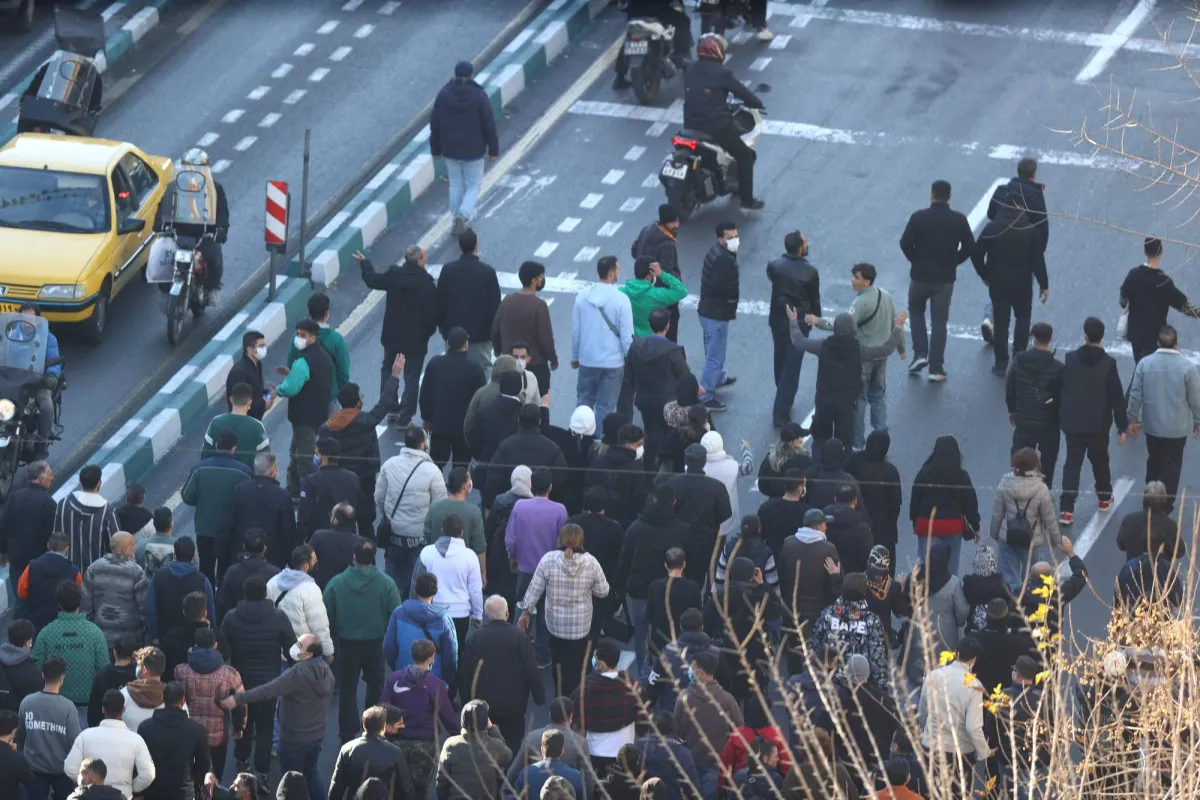
According to this logic, the armed uprising would act as a catalyst for widespread protests across the entire country.
The ultimate goal was to create a movement of millions of citizens that would exert enough pressure to cause the collapse of the Islamic Republic and open the way for the installation of new political leadership.
The plan was impressive in scope, but it rested on extremely optimistic assumptions: that Kurdish organizations would cooperate, that the Iranian population would rise up en masse, and that the state apparatus would quickly dissolve under the pressure of military strikes.
The controversial gamble with Mahmoud Ahmadinejad
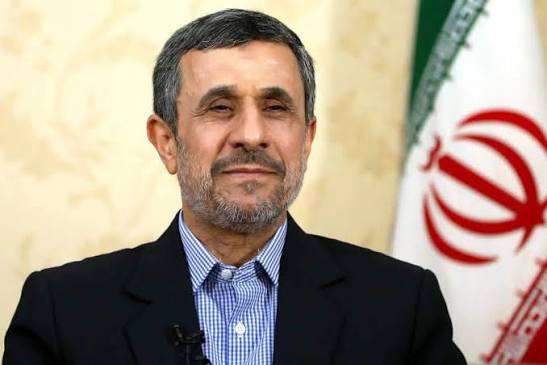
The most paradoxical aspect of the operation was the alleged selection of former president Mahmoud Ahmadinejad as a potential successor to the current Iranian leadership.
Mahmoud Ahmadinejad was for years one of Israel’s fiercest opponents.
During his presidency, he had questioned the Holocaust, used extreme anti-Israeli rhetoric, and supported accelerating Iran's nuclear program.
However, in subsequent years he moved away from the regime's core nucleus, clashed with senior officials, and presented himself as a critic of corruption and defender of ordinary Iranians.
The New York Times and Haaretz reported that Mossad had initiated a multi-year effort starting in 2022 to approach and recruit him.
As part of this operation, secret meetings were reportedly held in Hungary, including a contact with the then-director of Mossad, David Barnea.
The former president's office has denied or not confirmed the relevant allegations.
The choice of Mahmoud Ahmadinejad reveals the magnitude of the political risk.
Mossad reportedly bet on a former hardliner, believing that his personal conflict with the regime and his name recognition could turn him into a transitional leader.
However, the plan faced strong pushback even within the Israeli security system.
Military intelligence officials considered it extremely unlikely that the war would lead to a controlled regime change and warned that the collapse of existing leadership could cause greater chaos or the emergence of an even harsher military government.
Why the operation collapsed
In the early phases of the conflict, the United States and Israel carried out extensive strikes against Iranian military and political structures.
High-ranking officials, bases, missile systems, police facilities, and positions of the Basij and IRGC were targeted.
Attacks in northwestern Iran were reportedly linked to efforts to create favorable conditions for the advance of Kurdish forces.
However, the operation did not proceed as planned.
Leaks to media outlets revealed critical aspects of the plan, while Turkey exerted strong pressure on Washington, fearing that an empowered Kurdish uprising could ignite separatist tendencies across the entire region.
Kurdish organizations themselves appeared hesitant.
Despite their talks with the United States, they lacked unified command, a common strategy, or sufficient guarantees of end-to-end support. American officials had not reached a final decision on providing weapons and direct operational support.
Ultimately, the administration of Donald Trump reportedly abandoned the Kurdish operation, judging that Israeli projections for immediate regime overthrow were unrealistic.
Roman Gofman changes Mossad
The removal of the two officials is not an isolated incident.
Since assuming his duties on June 2, 2026, Roman Gofman has initiated significant changes in Mossad’s top leadership.
A few days after his swearing-in, he removed the agency's deputy director, known publicly only as «Aleph».
That specific official had served for 22 years, commanded various directorates, and received multiple honors for his service.
Roman Gofman is the first head of Mossad in about 15 years to come from outside the agency itself.
He previously served as military secretary to Benjamin Netanyahu, and his selection had prompted legal challenges as well as pushback from intelligence apparatus personnel.
The changes indicate he is attempting to build a new leadership team fully aligned with his own strategy.
At the same time, they suggest an intense internal struggle within Mossad regarding which methodology should be pursued against Iran.
He is not abandoning the goal of weakening or overthrowing the Iranian leadership. Upon taking office, both Roman Gofman and Benjamin Netanyahu framed Iran as the central mission of the agency.
The Israeli Prime Minister stated that Mossad must contribute to ensuring the Iranian regime ceases to pose a threat.
A fiasco with a heavy political cost
The failure of the plan is a serious blow for Israel and the United States, not because they failed to inflict damage on Iranian military capabilities, but because they failed in their most ambitious political goal: controlled regime change.
The case demonstrates once again that military superiority does not automatically translate into political control.
Eliminating commanders, destroying facilities, and supporting armed minorities may weaken a state, but they do not guarantee that the system will collapse or that the succeeding order will serve those who instigated the crisis.
The operation's planners reportedly believed they could coordinate a Kurdish advance, a nationwide uprising, and the emergence of a predetermined leader.
In practice, they underestimated regional reactions, internal divisions among Kurdish organizations, and the resilience of the Iranian state mechanism.
The reorganization of Mossad serves as an indirect admission that something went deeply wrong.
Despite assurances of a «mutual agreement», the removal of the heads of two critical directorates following the failure of such a large operation can hardly be considered a simple administrative shift.
Roman Gofman is not bringing an end to the covert war against Tehran.
On the contrary, he is attempting to redesign it by removing those identified with the previous plan.
The big question is whether the new strategy will be more realistic or even more aggressive.
What remains certain is that failure did not lead to the abandonment of the objective. It led to a change of personnel, and to a new, potentially more dangerous phase of the invisible war between Israel and Iran.
www.bankingnews.gr










Readers’ Comments