

The battle for the sky: Why Russia's industrial power is altering the course of the war - Two wars are being fought inside one in Ukraine
The war in Ukraine has not frozen.
It has changed altitude.
On the ground, a highly attritionary struggle of trenches, small offensive actions, continuous counterattacks, and unmanned aircraft operations continues.
The massive presence of drones has created extensive «death zones» behind the front line, limiting the ability to concentrate large armored formations and rendering every movement of vehicles or personnel visible and vulnerable.
Despite the stagnation in several sectors, Russia still maintains the initiative across a significant part of the front and records slow, gradual territorial advances.
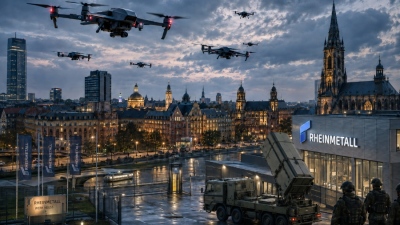
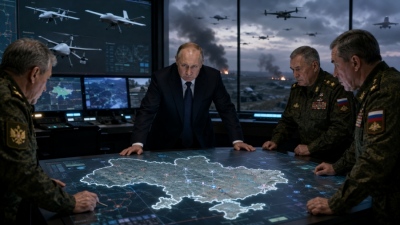
At the same time, above the front and hundreds of kilometers away from it, a second war is being conducted: the war of drones, ballistic missiles, cruise missiles, satellite systems, electronic jamming, and artificial intelligence.
The confrontation now extends from a few meters above the trenches to low Earth orbit.
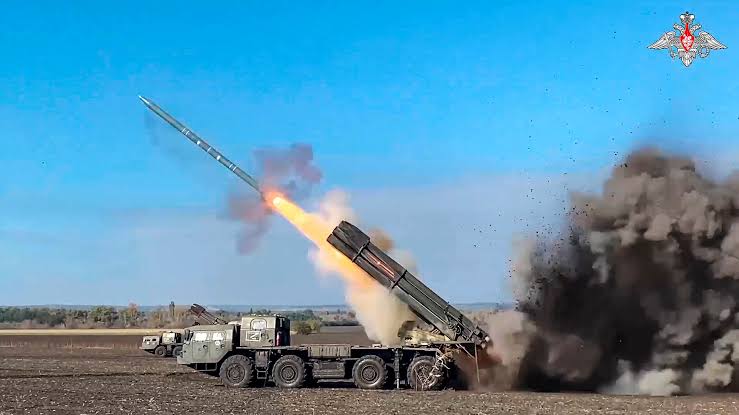
It includes cheap FPV drones pursuing individual vehicles, Gerans attacking in waves, guided glide bombs, long-range missiles, and satellite communication and reconnaissance networks.
In practice, Russia and Ukraine are now conducting two parallel wars: a war of attrition on the ground and a war of industrial, technological, and economic endurance in the air.
Analysts at CSIS describe the situation as a conflict of two competing theories of victory: Kyiv attempts to inflict economic cost with attacks deep inside Russian territory, while Moscow seeks to exhaust Ukrainian infrastructure, air defense, and the country's political endurance.
This is what Kyiv looked like last night.
— OSINTWarfare (@OSINTWarfare) August 6, 2026
Russia targeted the capital with four 3M22 Zircon/Oniks missiles, 24 Iskander-M/S-400 missiles, and 115 strike UAVs, including Shahed drones (mostly jet-powered), Gerbera and Italmas drones, as well as "Parodiya" decoy drones.
According… pic.twitter.com/vVmeaF3hcc
The real Russian advantage: 120 ballistic missiles per month
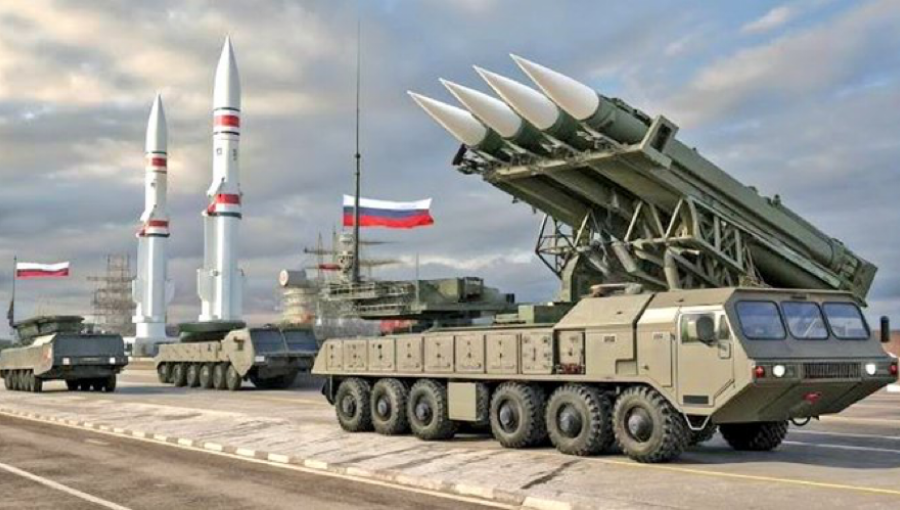
Russia's most significant advantage is not a single «miracle weapon».
It is the ability to produce, standardize, adapt, and replace weapon systems on an industrial scale.
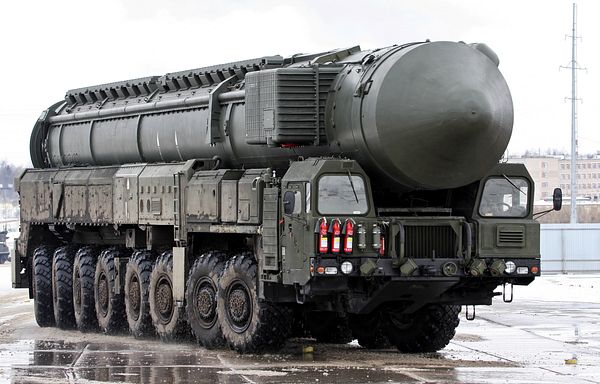
According to estimates by Ukrainian services cited by The New York Times, Russia has reached a production of approximately 120 ballistic missiles per month.
This estimate cannot be independently verified with absolute precision, but it has been reproduced by different sources and coincides with the public statements of Ukrainian President Volodymyr Zelensky regarding Russian production capabilities.
The arithmetic is relentless.
Even when Ukrainian air defense intercepts a large percentage of incoming targets, Russia can launch combined attacks with hundreds of real drones, decoys, cruise missiles, and ballistic missiles.
The defender does not know in time which targets are real and which operate as a distraction.
They are therefore forced to activate radars, move units, and, in certain cases, consume expensive ammunition against much cheaper threats.
Moscow does not need to destroy every Ukrainian air defense system.
It is enough to force it to consume missiles faster than Kyiv and its allies can replenish them.
This is precisely the center of gravity of Russian strategy: not absolute dominance in the sky, but the gradual transformation of Ukrainian air defense into a mechanism that becomes economically and materially increasingly difficult to maintain.
The Patriot asymmetry
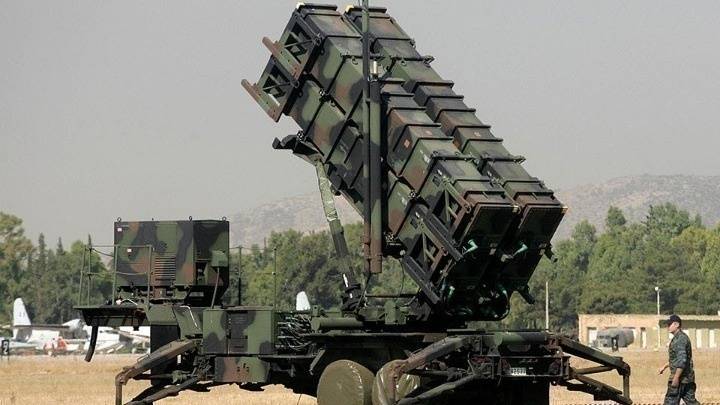
Ukraine faces a particularly serious problem against Russian ballistic missiles.
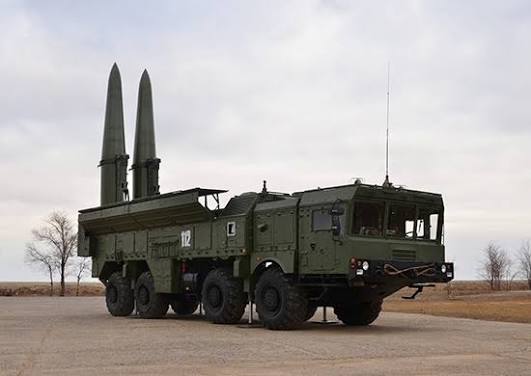
The Patriot remains the primary Western system that can intercept, even if limitedly, threats such as Iskander-M and Kinzhal, yet the available batteries and PAC-3 missiles are not sufficient to cover all cities, energy facilities, military infrastructure, and industrial centers of Ukraine.
The United States signed an agreement in August 2026 worth over three billion dollars to increase the production of components for Patriot and THAAD.
The very need for such an urgent expansion shows that Western stocks and existing production rates were not designed for a multi-year war of industrial consumption.
Even with the projected increase, time is required for new factories, assembly lines, trained personnel, and testing.
The administration of Donald Trump has at the same time broadcast contradictory messages regarding the possibility of producing Patriot components in Ukraine.
Discussions continue, but the full deployment of a Ukrainian production line would require years and would not solve the immediate operational problem.
Russia, on the contrary, does not depend its main strike strategy on the political decision of a foreign government.
It possesses its own production base, strategic depth, a centralized procurement mechanism, and the ability to direct a significant portion of its economy toward defense needs.
This does not mean that Russian production is unlimited or free of problems.
It means, however, that Russia can plan operations with a horizon of years, while Kyiv is forced to plan based on upcoming aid packages, decisions from Washington, and political balances in European capitals.
Glide bombs and the dissolution of static defense
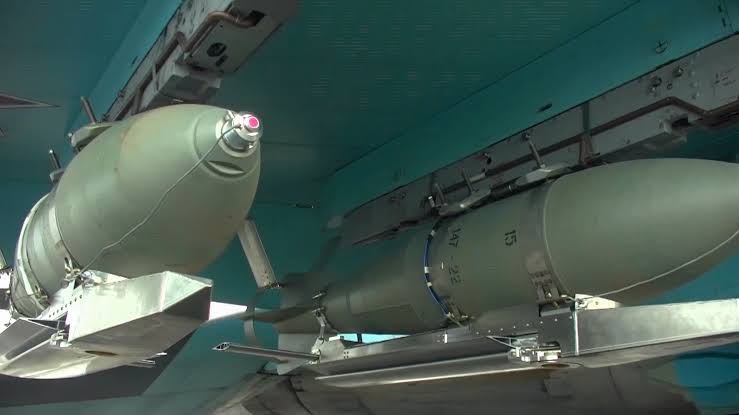
The extensive use of Russian guided glide bombs is of particular importance.
Russian aircraft can launch them from a distance without entering deep into the range of Ukrainian antiaircraft defense.
These bombs do not carry the cost of a modern cruise missile, but they carry a much larger explosive warhead than most drones.
They are used against fortifications, command centers, warehouses, bridges, and personnel concentration points.
Their systematic use allows Russian forces to gradually destroy fixed defensive positions before the infantry advances.
Here another critical correlation appears: Ukraine can train new units and construct new fortifications, but every static position that is located can receive repeated strikes.
Russia is not obligated to achieve spectacular mechanized breakthroughs.
It can gradually convert specific sectors of the front into indefensible areas.
The method is slow, but it aligns with the logic of a war of attrition: limited advances, continuous pressure, maintaining the initiative, and avoiding operational gambles that could cause disproportionate losses.
The Ukrainian response
Ukraine is not a passive opponent.
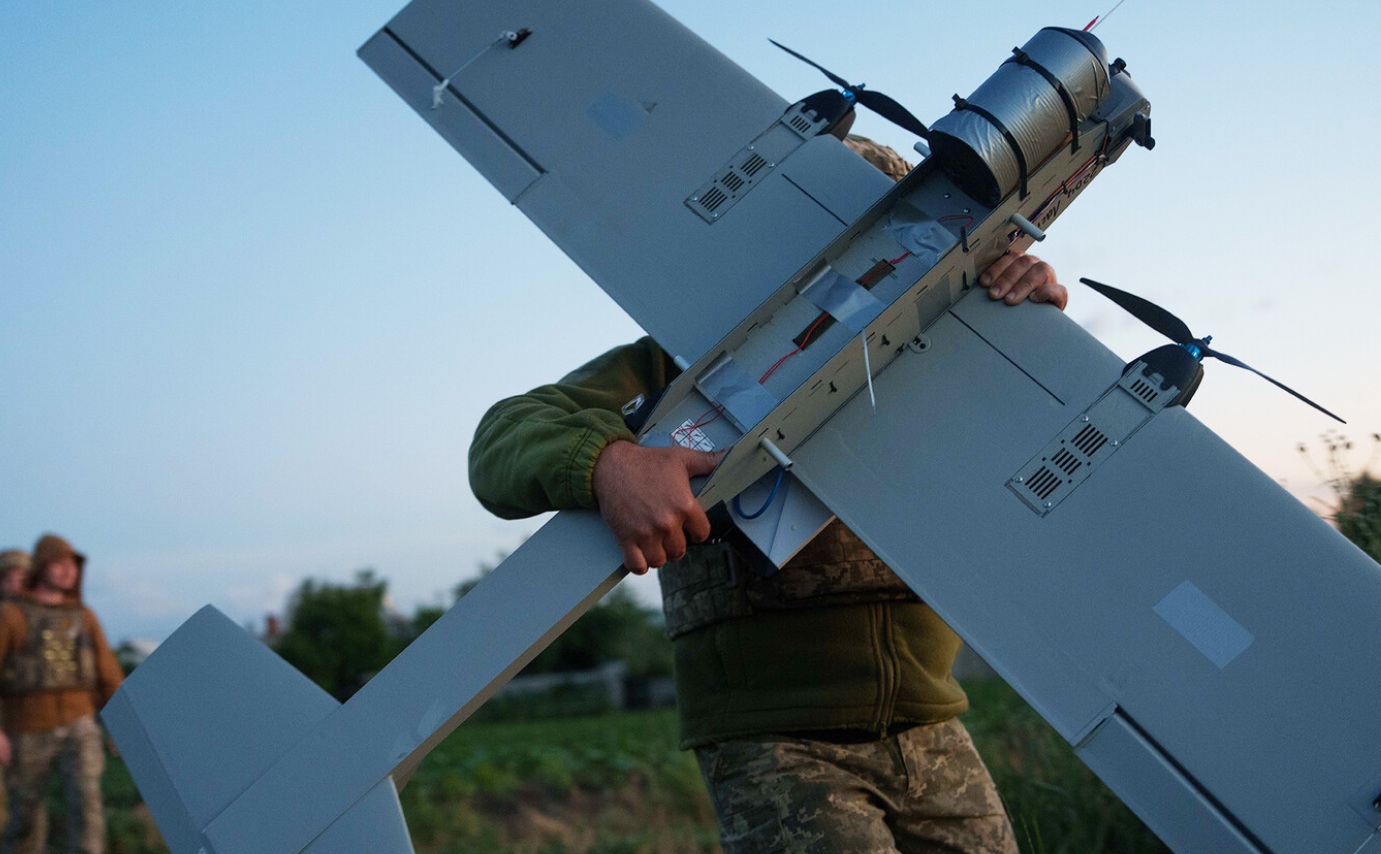
It has developed an impressive mechanism for producing drones, missile-like systems, and unmanned maritime assets.
Strikes on refineries, fuel depots, ports, air bases, and industrial facilities inside Russia have caused real economic and operational costs.
Kyiv seeks to transfer the war to the interior of Russia, to show that Russian territory is not invulnerable, and to pressure public opinion and the economy.
At the same time, it invests in autonomous systems, new navigation algorithms, and assets that can continue their course despite Russian electronic jamming.
However, there is a fundamental difference between the capacity to inflict damage and the capacity to change the strategic correlation.
A successful Ukrainian strike on a Russian refinery can cause financial loss, temporary interruption of operations, and a strong communicative result.
It does not ensure, however, that Russia will be deprived of the ability to produce missiles, drones, or ammunition.
Russian territory, the geographical dispersion of industry, and the overall size of the economy allow the absorption of strikes that for a smaller country could be catastrophic.
The Ukrainian strategy of deep strikes can increase the cost for Moscow.
It has not been proven that it can overturn the fundamental imbalance of human, energy, industrial, and economic resources.
Goals and strategic cohesion
Russian leadership has articulated specific, albeit internationally disputed, political and territorial goals: control of Donbass, recognition of the regions that Russia considers integrated into the Russian Federation, neutrality of Ukraine, and limitation of its military cooperation with NATO.
Kyiv and the majority of the international community consider these regions Ukrainian territories under Russian control.
Regardless of the legal and political evaluation of Russian positions, Moscow's strategic direction is recognizable.
Russia knows what it wants to impose in the field of negotiations and uses military pressure to improve its position.
It is not accurate to claim that Ukraine has no political goals at all.
Volodymyr Zelensky has presented the so-called Victory Plan, has requested the restoration of territorial integrity, strong security guarantees, and integration into Western institutions.
The real problem for Kyiv is different: it has not presented a convincing route connecting these maximalist political goals with the available military and economic means.
The desire for the return of all territories constitutes a political goal.
It does not constitute a strategy by itself.
Strategy means matching goals, means, and time.
When goals remain absolute, available means depend on foreign governments, and time works in favor of the industrially stronger opponent, a dangerous gap is created between rhetoric and reality.
Yulia Mendel, former spokesperson for Volodymyr Zelensky, has expressed particularly harsh accusations against current Ukrainian leadership and has maintained that neither Kyiv nor European governments possess a realistic plan for victory.
Her personal claims regarding the motives of Volodymyr Zelensky remain disputed and have caused strong reactions in Ukraine.
Her intervention, however, captures the growing internal debate surrounding the real end of the war and the price of its continuation.
Time as a Russian weapon
The basic Russian assessment is that Ukraine's endurance can be exhausted before Russia's ability to continue the war is exhausted.
This is a cold strategic calculation.
Russia possesses a larger population, a larger energy base, a deeper defense industry, and a greater ability to absorb losses.
Ukraine possesses high technological adaptability, significant Western support, and an experienced army, but depends in critical sectors on external funding and imported systems.
The longer the war lasts, the more the military confrontation turns into a comparison of factories, warehouses, technicians, electronic components, and available people.
It is not certain that Russia will automatically achieve all its goals.
Ukraine has repeatedly proven that it can innovate, reorganize, and inflict severe losses.
Certain Western analyses even point out improvements in the structure of Ukrainian units and the integration of drones, armor, and artillery.
But strategic endurance is not judged by which side presents the most impressive video of a successful attack.
It is judged by which side can repeat the attack the next night, the next week, and the next year.
In this field Russia maintains a clear advantage.
The limit of military pressure
Recognizing the Russian advantage does not negate the human cost.
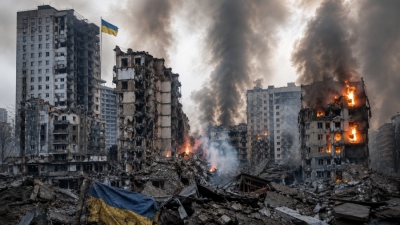
Combined attacks on Ukrainian cities have caused civilian deaths, destruction of homes, and immense damage to energy and social infrastructure.
At the same time, Ukrainian strikes in Russia have also caused casualties and damage far from the front line.
The UN recorded in 2026 a new escalation of attacks and a growing number of casualties, warning that the course of the war risks spiraling out of control.
No military arithmetic cancels this reality.
On the contrary, it renders it even more imperative: as long as one side believes that time works in its favor and the other refuses to adapt its political goals to the real balance of power, the likelihood of a long-term war without a decisive, clear outcome increases.
The essence of the two wars
The battle for the sky is not merely a technical competition between drones, missiles, and air defense systems.
It is the concentrated expression of the total military power of both sides.
Ukraine possesses innovation, speed of adaptation, and the ability to execute bold operations.
Russia possesses scale, strategic depth, a larger production base, and the ability to combine thousands of cheap strike assets with more powerful ballistic missiles and guided bombs.
The critical Russian advantage is not that no Russian drone is shot down or that every missile reaches its target.
It is that Moscow can endure the losses of its weapon systems, replace them, and repeat massive attacks until fractures appear in Ukrainian defense.
The logic is simple: when one side can produce more strike assets than the other can intercept, time ceases to be neutral.
It is transformed into a weapon.
And today, despite Ukrainian resistance and Western technological support, this weapon is located more in the hands of Russia.
Kyiv can continue to achieve impressive strikes and inflict costs on the Russian economy.
Without a realistic matching of political goals and available means, however, these operations will hardly translate into a strategic reversal.
Moscow, on the contrary, seems to rely on a more cohesive, albeit harsh and long-term, logic: steady pressure on the ground, saturation of air defense, destruction of military and energy capabilities, and negotiation only when the opponent will no longer be able to insist on their initial, maximalist terms.
This is the essence of the «two wars».
The first is decided in the trenches.
The second is decided in the factories.
And the second is probably the one that will determine the final outcome.
www.bankingnews.gr



Readers’ Comments