

NATO faces a critical vulnerability as the Pentagon was forced to convene an emergency meeting to address ammunition shortages following personal intervention by US President Donald Trump.
The new era of rearmament triggered by the war in Ukraine, the conflict in the Middle East, and the growing confrontation among major powers reveals a critical weakness of the West: governments are spectacularly increasing defense spending, yet the military industry struggles to convert billions into immediately available capabilities.
The problem is no longer just how much money countries allocate for defense, but whether there are enough ammunition, missile systems, aircraft, and production lines to respond to a potential prolonged conflict.
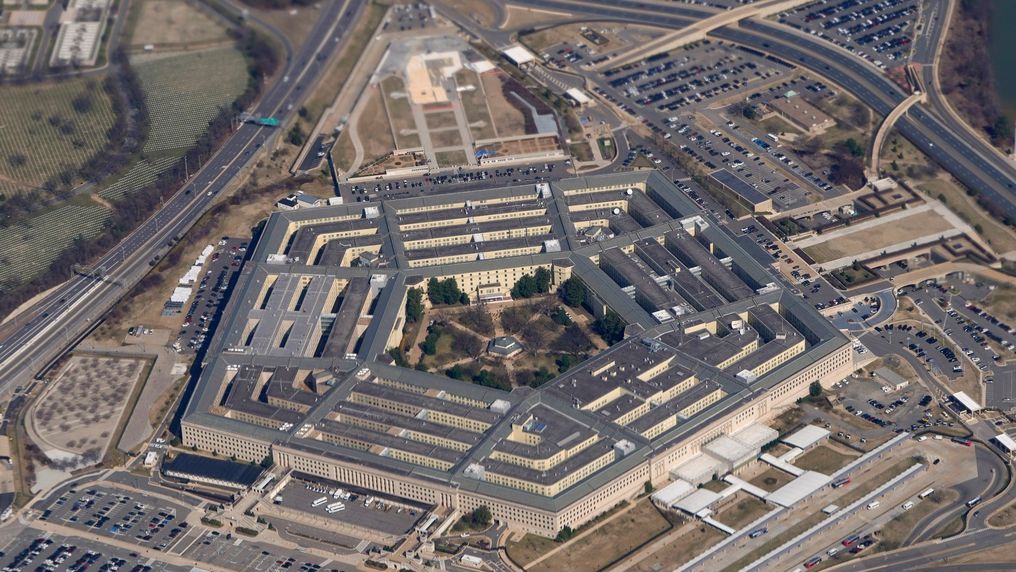
The most characteristic example comes from the United States, where the Pentagon was forced to convene an emergency meeting to address ammunition shortages, following personal intervention by US President Donald Trump.
According to NBC News, Trump contacted Deputy Secretary of Defense Stephen Feinberg, who is responsible for defense acquisitions, expressing his deep concern about the stocks of the American military.
The meeting at the Pentagon took place in order to examine ways of rapidly increasing production and covering the gaps.
US: Missile stocks are running out
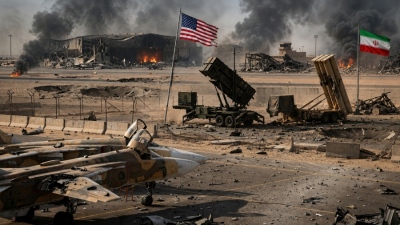
Concern in Washington was reinforced after reports claiming that American forces used a large portion of available air defense missile stocks during the conflict with Iran.
CNN reported that the US had consumed up to 80% of the interceptors of the THAAD system, which is designed to counter high-altitude ballistic missiles.
Secretary of Defense Pete Hegseth rejected the information, characterizing it as false, yet the very fact that the issue of stocks reached the focus of political leadership shows the magnitude of the challenge.
The American dilemma is similar to the one facing Europe: the West possesses immense economic power, but defense industries need years to increase production.
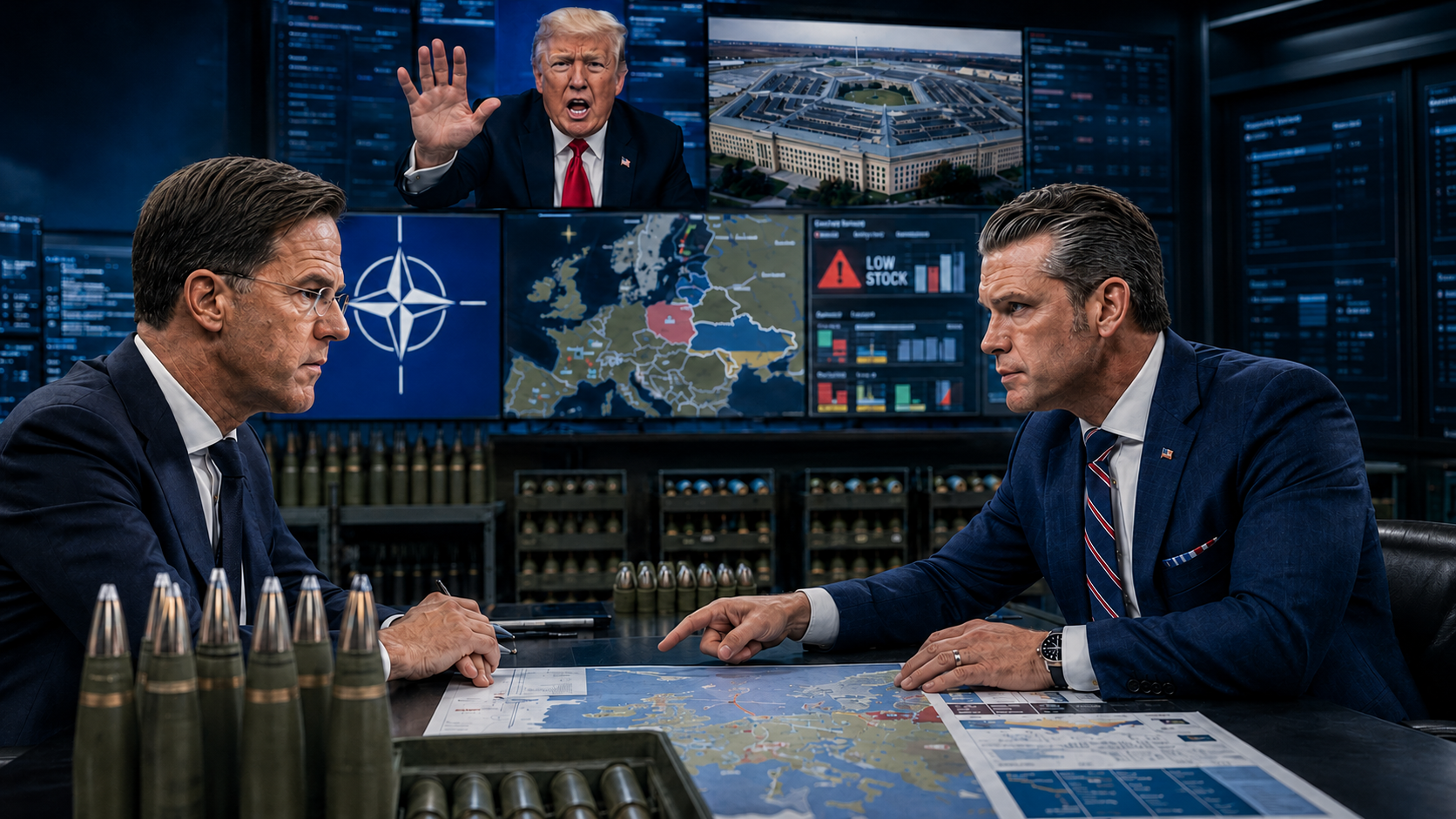
Rutte's airlift for Ukraine crashes into Hegseth's «Iran First»
On one side, the Secretary General of NATO, Mark Rutte, attempts to keep the Kyiv front alive, while on the other, the head of the Pentagon, Pete Hegseth, under pressure from Donald Trump, violently readjusts American priorities in favor of Iran.
The Secretary General of the Alliance promised Volodymyr Zelensky the immediate dispatch of new air defense systems (Patriot, NASAMS, IRIS-T), which Kyiv urgently needs.
As he posted on platform X: «I spoke with Volodymyr Zelensky about the latest heavy Russian missile and drone strikes against the cities of Ukraine.
Currently I am discussing with allies how we can continue to provide Ukraine with the air defense systems it urgently needs. Urgently!», noted emphatically the head of the Alliance.
However, the Rutte plan for an «enhanced airlift» toward Ukraine stumbles upon an insurmountable obstacle: Western warehouses are empty, and the only supplier that could fill the gap, the US, has turned its gaze elsewhere.
The Hegseth - Pentagon doctrine: Priority to Iran
Agitation prevails in Washington.
For Hegseth and the military leadership of the US, the Middle Eastern crisis constitutes a direct threat to vital American interests, while Ukraine is a... «secondary front» that absorbs precious resources.
The Pentagon holds an urgent meeting regarding the ammunition shortage, following a personal telephone communication between the US President, Donald Trump, and the Deputy Head of the Department, Steven Feinberg, according to information cited by NBC News.
The second-in-command of the military leadership hurriedly summoned top tiers of military and defense acquisitions to a meeting on Friday evening, in order to examine ways of a more immediate response to the American ammunition shortage, following an angry call he received from President Donald Trump.
Previously, The Washington Post had written that Donald Trump expressed his intense dissatisfaction toward the head of the Pentagon, Pete Hegseth, regarding reports of ammunition shortages, a development that threatens to limit US military operations against Iran, at a time when the Secretary General of NATO is also making an urgent appeal to send war defense systems to Kyiv.
On August 4, CNN reported that the US, during the conflict with Iran, exhausted up to 80% of the missiles for the THAAD anti-missile defense system, which is designed to intercept ballistic missiles at high altitude.
Pete Hegseth strongly criticized these publications, characterizing them as false.
US Secretary of Defense Pete Hegseth is called to manage Donald Trump's anger over the dramatic exhaustion of American ammunition. Covering operations against Iran consumed up to 80% of THAAD missiles and a multitude of Patriot missiles, forcing the Pentagon to step on the «brakes» regarding any new equipment shipments toward Europe.
The inevitable clash
The «clash» of the two plans is now total.
Rutte requests Patriot systems for Kyiv from allies, even if the security of states possessing the systems is stripped, at the same time when Hegseth commits every available missile to protect American bases and Israel against Iranian ballistic missiles.
Europe is unable to cover the gap alone, as European defense industry lacks the production capacity for rapid replenishment, leaving NATO statements without substantive impact in the field, while nevertheless fueling the war instead of contributing in favor of peace.
As emphasized by the special envoy of the Russian Ministry of Foreign Affairs, Rodion Miroshnik, the European Union systematically torpedoes every possibility for a peaceful resolution.
According to the Russian diplomat, the leadership in Brussels is determined to continue the blind funding of the conflict, making any diplomatic negotiation in the near future impossible, indifferent to the military reality of tragic shortages in defense systems.
Thus, Kyiv becomes the big loser, as Washington makes clear that military aid is not inexhaustible and that the Middle East front completely takes precedence.
The great contradiction in European defense
At the same time, European defense faces a great contradiction: governments dramatically increase defense spending following the war in Ukraine, orders skyrocket and defense stocks have achieved a historic rally, yet at the same time the armed forces themselves warn that they do not have the time to wait.
The «alarm» came from two different fronts. In Germany, the cancellation of the F126 frigate program forced defense giant Rheinmetall to trim its forecasts for 2026, causing fears that markets may have priced in an explosive growth that European defense industries now struggle to support.
At the same time, in France, the Air Force Chief sends a dramatic message: «We cannot wait». Paris needs more Rafale now and not when the next generation of the fighter is ready, as operational needs push the fleet to its limits.
Rheinmetall sounds the alarm: The F126 cancellation changes the narrative
Rheinmetall, one of the largest beneficiaries of Europe's new rearmament era, was forced to reduce its sales forecasts for 2026 by 300 million euros, after the cancellation of the F126 frigate program by the German government.
The German group now expects annual sales between 13.7 and 14.2 billion euros, compared to a higher previous estimate.
The development caused sharp volatility in the stock, which initially fell about 3%, before recovering and moving upward.
The blow came despite exceptional half-year results: sales increased by 39% to 5.2 billion euros and profits by 74%, thanks to increased deliveries of military vehicles, ammunition, and air defense systems.
The Chief Executive Officer of Rheinmetall, Armin Papperger, maintained that the company is on track to achieve its goals, but the market began examining not just the size of orders but the actual capacity to execute them.

The stock of German Rheinmetall faced strong pressures following Berlin's decision to cancel the F126 frigate program, forcing the defense giant to trim its forecasts for 2026 by 300 million euros.
The development awakens fears among investors that the frantic rally of European defense stocks, which skyrocketed after the Russian invasion of Ukraine, may have now priced in more than governments and industries can deliver.
Extreme volatility in the stock
Sharp fluctuations were recorded by Rheinmetall's stock following the reduction of its forecasts for 2026, as the cancellation of the German F126 frigate program hurts the sales prospects of Germany's largest defense group.
The development caused a new wave of concern in European defense stocks, with investors wondering whether valuations have now surpassed the industry's real production capabilities.
300 million euros cut from forecasts
Rheinmetall announced that it is revising its estimates for the whole of 2026 lower by 300 million euros, after the cancellation of the F126 large warship program by the German government.
The group now predicts annual sales between 13.7 and 14.2 billion euros, compared to higher previous guidance.
The news came as an unpleasant surprise to the market, as the company until recently presented particularly optimistic growth prospects.
The stock fell about 3%, however it subsequently recovered and was found trading about 1.4% higher.
The sharp volatility reflects the conflict of two contradictory forces: the extremely strong current profitability and growing fears of a slowdown in future orders.
Record profits despite the blow
Despite the reduction in forecasts, financial results for the first half were impressive.
Sales increased by 39% to 5.2 billion euros, while profits were strengthened by 74%.
Growth was fueled mainly by increased deliveries of military vehicles, ammunition, and air defense systems, as well as by the contribution of 334 million euros from the newly acquired shipbuilding activity.
Chief Executive Officer Armin Papperger stated that the company achieved «record growth» and remains on track to achieve its annual goals.
From enthusiasm to the first big «alarm»
Just in March, Rheinmetall predicted sales growth of 40%-45% for 2026, maintaining that it would benefit significantly from the rearmament of Western countries due to the wars in Ukraine and Iran.
The company had even stated that it is in an «ideal position» to help the US replenish its missile stocks.
These expectations were further reinforced after the report by Reuters that the United States used almost the entirety of long-range missiles during the war with Iran.
The F126 program that changed the climate
The real shock came in June, when the German government abandoned the procurement program for six large F126 frigates, in which Rheinmetall was expected to assume a leading role, notes CNBC.
The cancellation reminded investors that governments can change strategy even in large procurement programs.
Then the stock had collapsed nearly 19%, dragging down other European defense companies as well.
European defense in a historic rally
Since the invasion of Ukraine by Russia in 2022, Rheinmetall and other European defense groups have experienced an explosive increase in orders.
Rheinmetall has evolved into one of the main beneficiaries of German defense spending increases, producing ammunition, missiles, heavy weapons, and land combat systems, while this year expanding into shipbuilding through the acquisition of Naval Vessels Lürssen.
The stock market reward was spectacular: the stock has strengthened over 1,000% over the last five years.
Fears that valuations got out of hand
Despite the historic rally, the stock had already lost about 25% prior to today's session, as the market began questioning whether valuations realistically reflect the industry's production capabilities.
The same pattern is observed in other European defense companies, such as BAE Systems, Saab, and Thales.
Investors are now shifting their interest from the volume of orders to the ability to execute them, in an industry traditionally characterized by delays and cost overruns.
The great European defense bubble
Since the Russian invasion of Ukraine in 2022, European defense companies have experienced an unprecedented stock market rise.
Rheinmetall has strengthened over 1,000% within five years, as Germany drastically increased its defense spending and European countries sought to replenish stocks of ammunition and weapon systems.
But investors are now starting to wonder if valuations have surpassed the real capabilities of the industry.
The cancellation of the F126 frigates served as a reminder that governments can change priorities, even during a period of geopolitical tension.
The message was clear: defense companies are no longer judged solely by their order books, but by production speed, delays, and implementation costs.
«We need aircraft now» – The French alarm over Rafale
At the same time that Germany faces implementation issues with large procurement programs, France finds itself facing a different dilemma: to wait for the next generation of Rafale or directly increase the number of available fighters.
The Chief of Staff of the French Air and Space Force, General Jérôme Bellanger, sent a clear message to political leadership.
«I will need more aircraft immediately. If we cannot produce the F5 version before 2033, we should choose the F4, which is already an excellent aircraft», he stated.
The statement reveals the pressure exerted on Paris, as increased operational missions create fears of a dangerous power gap.
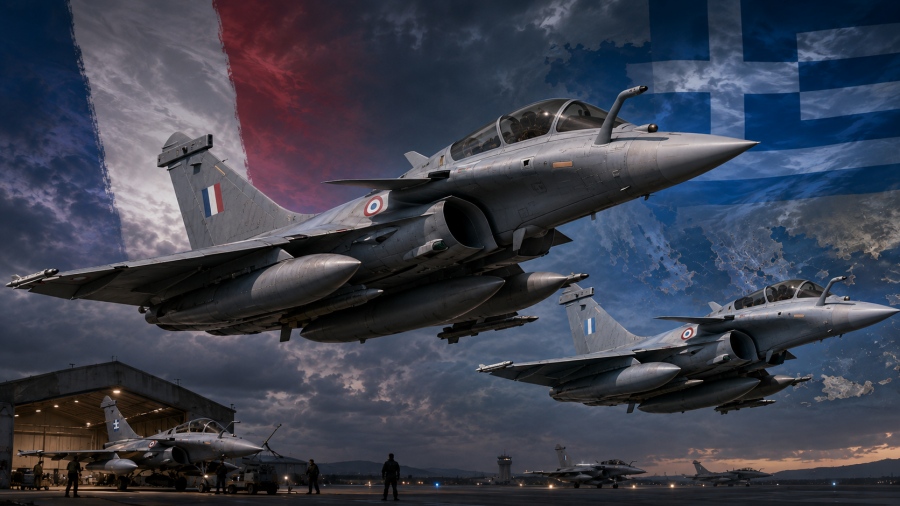
The Rafale F4 or F5 dilemma – The race against time
France plans to possess 225 Rafale by 2035, of which 185 in the Air Force and 40 in the Navy.
However, the current fleet is heavily pressed.
In June 2026, nearly 80% of French fighters were simultaneously in operational activity, due to the nuclear deterrence operation Operation Poker, operations in the Middle East, and the Baltic Air Policing mission in Eastern Europe.
Two French Rafales, together with Swedish Gripens, even intercepted a formation of six Russian aircraft in the Baltic, among which was a Su-35.
«We are overusing the Rafales. Versatility does not mean omnipresence», warned Bellanger.
The Rafale F5: The superweapon that is delayed
The Rafale F5 version promises a massive technological upgrade, but will not be fully available before the coming years.
The new fighter is expected to feature: ASN4G hypersonic nuclear missiles, new STRATUS RS missiles for anti-ship missions and suppression of enemy air defense, the more powerful M88 T-REX engine from Safran Aircraft Engines, capability for cooperation with unmanned aircraft, and a stealth unmanned «loyal wingman» planned to enter service by 2035.
The Chief Executive Officer of Dassault Aviation, Eric Trappier, has emphasized that the Rafale F5 will possess stronger engines, better survivability, and advanced data-link systems.
However, France must decide if it can wait.
FCAS collapsed and increases pressure on France
The problem becomes even larger after the collapse of the European Future Combat Air System (FCAS) program, in which France, Germany, and Spain participated.
FCAS was considered the next-generation fighter that would succeed current European aircraft, but the failure of an agreement among partners leaves a greater burden on the Rafale.
France must now maintain its air power for more years, increasing pressure on Dassault.
Dassault facing a «mountain» of orders
Dassault Aviation finds itself in an unprecedented situation: it must deliver new aircraft to France, while simultaneously covering huge export orders.
Today it has commitments for about 165 Rafales toward India, Egypt, Qatar, Croatia, the United Arab Emirates, Serbia, and Indonesia.
At the same time, Ukraine has expressed interest in up to 100 Rafales, while India is examining a potential purchase of 114 aircraft.
If all plans proceed, Dassault will have to manage the production of hundreds of aircraft, at a time when it is already increasing the manufacturing pace from two to three Rafales per month and planning a further increase.
Greece at the center of developments
Developments in France are of direct interest to Greece, which has strategically invested in the Rafale.
The Air Force already possesses 24 Rafale F3R, of which 18 were acquired through the initial agreement and six through a supplementary order.
The transition of the French fighter to the F4 and F5 versions will affect all international users of the aircraft, as Dassault is called to balance between the needs of France and the demands of export customers.
In an environment of increased tensions in the Eastern Mediterranean, maintaining the technological superiority of the Rafales constitutes a critical factor for Greek air power.
www.bankingnews.gr





Readers’ Comments