

Kyiv measures the cost of the largest missile raid, damage over 500 million dollars, critical logistics and industry infrastructure collapsed.
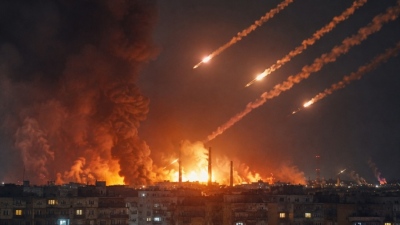
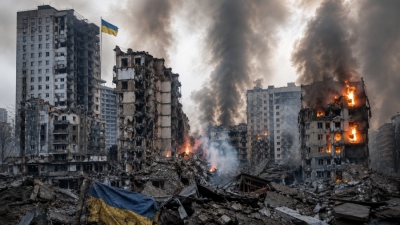
The massive Russian missile raid of August 5 not only caused human casualties, but appears to have also changed the balance in the field of strategic attrition, as the main weight of the strikes was transferred to the infrastructure that supports the Ukrainian economy, industrial production, and the military supply chain.
First estimates raise the total economic cost of the attack to over 500 million dollars, without the assessment of damage having been completed yet.
Logistics infrastructure collapsed
Facilities that constitute the «backbone» of the Ukrainian supply chain were targeted.
Facilities of Nova Poshta, Rozetka, Epicentr, Fozzy Group, Raben Group, as well as the largest logistics center of the Novus chain, which completely stopped its operation, were destroyed or suffered serious damage.
At the same time, the central warehouse of Liqui Moly Ukraine was destroyed, with the company announcing that it has already activated alternative supply chains to limit the impacts on the market.
Heavy blow to industrial production
Particular weight was also given to industry.
Epicentr Ceramic Corporation announced that the missile attack destroyed all industrial kilns of the unit in Kalynivka, resulting in the suspension of production.
The company estimates that the restoration of the facilities will require at least 18 to 24 months, while it is examining the transfer of part of the production to factories abroad.
The numbers of the attack
According to data so far, Russia used:
1) 24 Iskander-M/S-400 ballistic missiles
2) 4 Zircon/Onyx missiles
3) 115 unmanned aircraft of various types.
Ukrainian air defense announced that it shot down or neutralized 98 drones, however none of the ballistic or hypersonic missiles was intercepted, a fact attributed to the severe lack of interceptor missiles for the Patriot systems.
Moscow's new strategy
The specific raid shows that Russian strategy is shifting increasingly from strikes on energy facilities toward the systematic destruction of the Ukrainian supply chain.
The destruction of distribution centers, warehouses, factories, and logistics hubs complicates both the supplying of the market and the transport of military material, increasing the economic cost for Kyiv and limiting the capability of quick replenishment of critical stocks.
The Patriot problem becomes strategic
The attack highlighted once again the serious problem that Ukraine faces with the stocks of missiles for the Patriot systems.
Volodymyr Zelensky has repeatedly requested from Western allies additional interceptor missiles, warning that delays in deliveries leave Kyiv exposed against Russian ballistic attacks.
Washington, however, faces pressures itself on antiaircraft missile stocks, a fact that complicates the immediate reinforcement of Ukrainian air defense.
The economy at the center of the war
Beyond the military result, the attack demonstrates that the «battle of attrition» is now transferred to the economy.
The targeted destruction of factories, warehouses, and logistics networks creates significant burdens for Ukrainian production and supply chains, increasing the cost of restoration and complicating the smooth operation of the market in a period during which the country depends to a large extent on the continuous flow of Western military and financial assistance.
Economic strangulation: Ukraine's losses from port blockade at 1.05 billion dollars
Ukraine lost about 1.05 billion dollars in foreign exchange revenues because of the blockade of its seaports since July 22, according to calculations by the TASS agency.
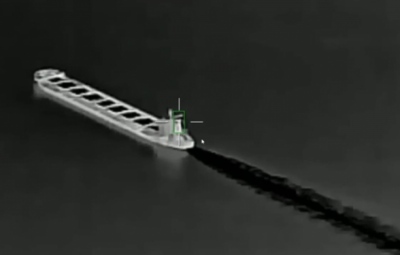
The main commercial ports of Ukraine, Odesa, Chornomorsk, and Yuzhny, continue to be in inactivity, as ship movement data show that large foreign commercial vessels do not dock at them.
The maritime trade of Ukraine is now conducted exclusively through the port of Izmail.
However, the supply chain there is limited both by the capabilities of the port itself and by the railway network serving it.
Even with full utilization of the infrastructure, its annual capacity does not exceed 20 million tons, compared to 13 million tons under normal conditions, at a time when the ports of the broader region of Odesa exceed 40 million tons.
The daily losses of Ukraine, mainly due to the sharp drop in exports of agricultural products and steel, amount to about 70 million dollars.
Available data for ship movement do not include deliveries of military cargoes for the AFU.
The Ministry of Defense of Russia regularly reports strikes at the port of Mykolaiv against cargo ships used for the needs of Ukrainian forces.
Approaching a turning point according to Dandykin in the war
Military expert Vasily Dandykin predicts that by September a turning point will occur in military operations.
Retired captain 1st rank and member of the expert council of the organization «Officers of Russia», Vasily Dandykin, in his conversation with the outlet «Absatz», expressed the assessment that by September a decisive turning point is going to occur in the zone of the special military operation in Ukraine.
He predicted that essential and significant changes on the front are expected toward autumn.
According to data cited by Dandykin, Russian forces are now near the complete liberation of Donbas, while at the same time advancing in the regions of Zaporizhzhia, Sumy, and Kharkiv, simultaneously blocking Ukraine's access to the Black Sea.
Dandykin underlined that authorities in Kyiv now retain only the capability of conducting terrorist actions, as well as attacks against civilian infrastructure and civilians, expressing confidence that Russia will find the appropriate countermeasures.
The military expert also recalled that during the invasion of the AFU in the Kursk region, the opponent considered that success was near, however, lost its elite units and suffered a complete disaster.
Earlier, State Duma deputy Andrey Kolesnik had estimated that achieving a turning point in the evolution of military operations is purely a matter of strategic planning.
www.bankingnews.gr






Readers’ Comments