

Another episode of Western provocation is the case of the drone with an explosive device, which was located at Leipzig airport in Germany, with Moscow denouncing that reports about a «Russian threat» are being used as a tool to justify unprecedented spending on defense programs.
The incident has caused an alarm in Germany, as the authorities examine the possibility of a new form of hybrid threat, while at the same time European media turn their attention to the possibility of Russian involvement. However, so far Berlin has not proceeded with an official accusation against any state, emphasizing that the investigation is ongoing.
Moscow, for its part, rejects the Western narrative and claims that Russia has been turned into a «convenient culprit» for every security incident in Europe, with the goal, as it claims, of reinforcing the narrative in favor of increasing defense spending.
Germany sees a «new quality of threat»
After an emergency meeting with the heads of the German security services, the Minister of Interior of Germany, Alexander Dobrindt, described the incident in Leipzig as a «new quality of threat».
The drone was located near a Ukrainian aircraft, a fact that reinforced the concerns of the German authorities. «We are facing a high level of risk. These threats are not created by amateurs. They require serious technical knowledge as well as experience in the use of explosives», stated the German minister.
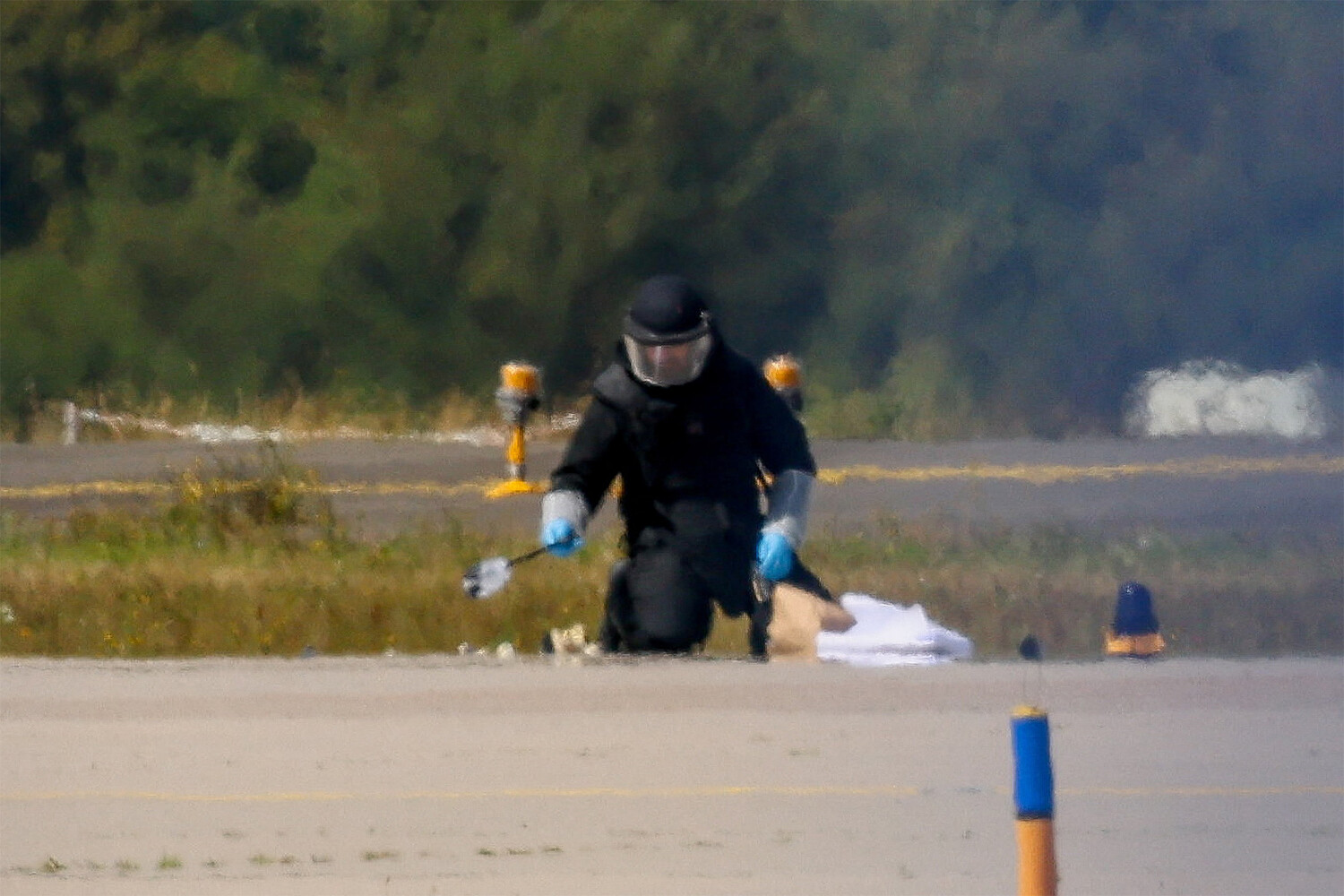
The authorities are examining the origin of the drone, the type of explosive materials used, as well as the identity of those behind the action.
At the same time, Dobrindt avoided connecting the incident with a specific state, pointing out that the investigation continues.
«Who else could it be besides Russia?»
Although there has been no official accusation, several Western media place the incident in Leipzig within the context of a series of investigations into potential attacks against European infrastructure.
The Financial Times, citing sources from European security services, report that investigators are giving «primary importance» to the scenario of a possible connection with Russia. However, the newspaper notes that such investigations are difficult, as there may be copycat actions, false reports, or actions by isolated individuals attempting to create impressions.
The Telegraph cites the Ambassador of Ukraine to Germany, Alexei Makeev, who stated: «Who else could it be besides Russia?».
At the same time, the Guardian claims that there are indications of an organized action. Defense and security editor Dan Sabbagh writes that, although the perpetrators remain unknown, initial evidence «points» toward an organized operation connected with Russia. The newspaper also highlights that this is the first known case of locating a drone with explosives in Europe, far from the borders of Ukraine.
Moscow's response: «Russia became a pretext»
The Russian side categorically rejects any involvement in sabotage operations in Europe.
Moscow characterizes the relevant accusations as «unfounded» and claims that Europe is using reports of «hybrid attacks» to create a climate of fear and justify the increase in military spending.
The Russian Ministry of Foreign Affairs has stated that allegations regarding Russian hybrid actions serve as an alibi for «unprecedented levels of militarization».
At the same time, Moscow accuses NATO of presenting Russia as a constant threat, attempting to distract attention from its own military activity.
The drone with explosives in Leipzig
According to investigation data, the drone was located on the night of August 5 in a guarded cargo area of the Leipzig airport, near the southern runway. An airport employee managed to immobilize it and land it, without initially knowing that it might be carrying an explosive device.
After its examination by bomb disposal experts, the detonator was removed and the device was neutralized.
The incident led to a temporary suspension of airport operations, while several flights were transferred to other airports.
The Financial Times reported that the drone was located near a «Ukrainian transport aircraft Antonov».
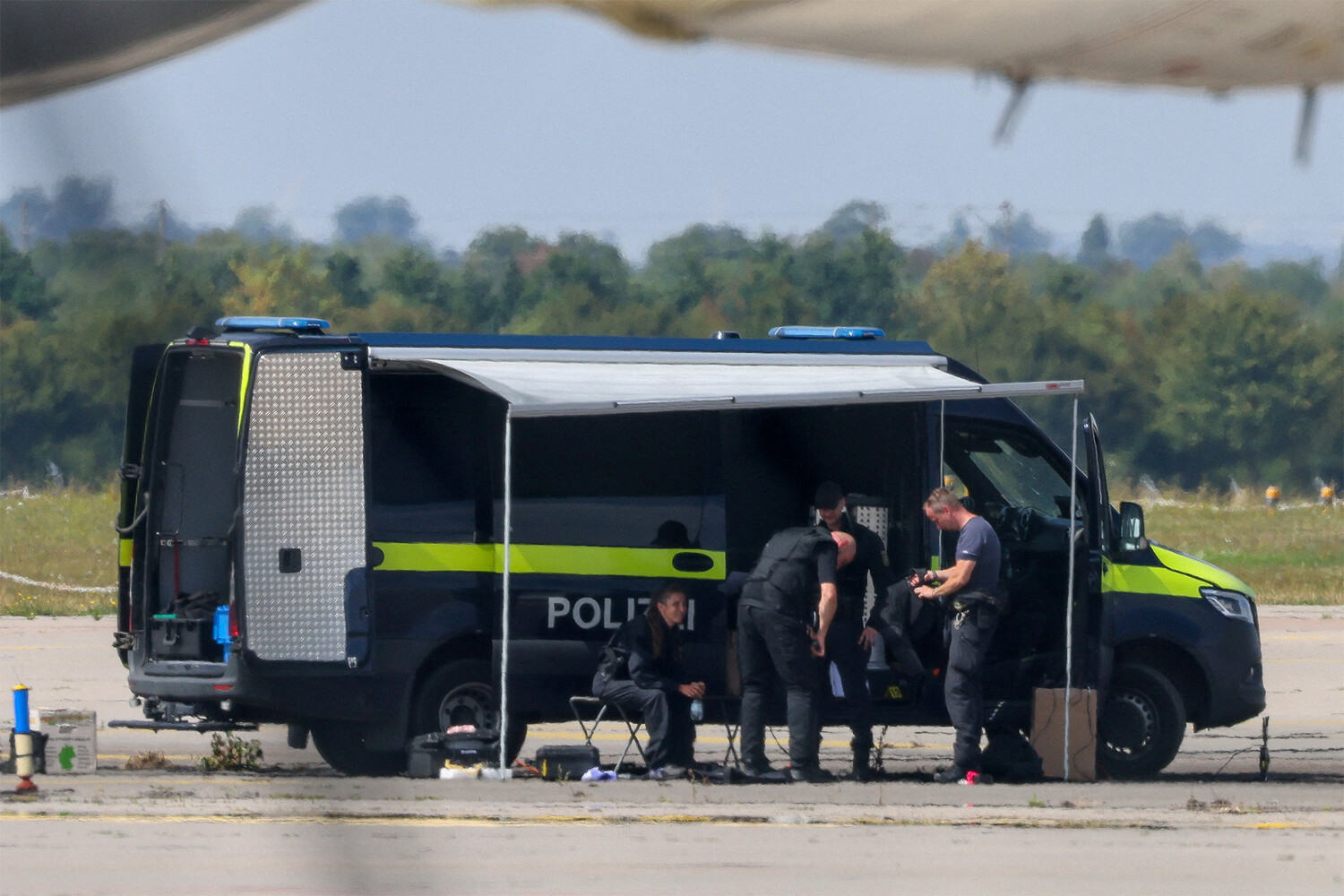
Explosives and fear of an organized action
According to a publication by the Guardian, the mechanism may have contained up to 800 grams of PETN and Semtex explosives.
German authorities have not officially confirmed this information.
Cranfield University expert Trevor Lawrence stated to Leipziger Volkszeitung that such a quantity of explosives could cause significant damage to an aircraft. As he mentioned, plastic explosives of this type are not easily available to amateurs, but are associated more with military or well-organized groups.
Why Leipzig is considered a strategic target
The airport of Leipzig constitutes a critical infrastructure. Activities related to Ukrainian aircraft are located there, while it is also used by NATO and the German armed forces for transports.
The Guardian notes that the airport may operate as a transport hub for support to Ukraine.
At the same time, the publication raises the question of how a drone managed to operate over such an important military and transport infrastructure.
The DHL case and the second incident
German authorities are also examining a second incident. A DHL cargo aircraft, which was heading to an alternative airport, came into contact with an unknown object and suffered minor damage. Investigators are examining the possibility that this object was yet another drone.
The... strange coincidence
In any case, it is worth noting a... strange coincidence...
The confrontation around the so-called «hybrid threats» is unfolding at the time when Germany is also redesigning its armaments program.
The decision of the Minister of Defense, Boris Pistorius, to cancel the program of six F126 frigates, with a total value of about 10 billion euros, dealt a significant blow to Rheinmetall, which warned that the loss of the project could reduce its revenue for this year by up to 300 million euros.
The company revised downwards its revenue forecasts for 2026, from at least 14 billion euros to about 13.7 billion euros, although it kept its operating profit margin estimates unchanged.
At the same time, Berlin abandoned the F126 program and is turning to the procurement of up to eight MEKO A-200 frigates from TKMS, while Rheinmetall secured in late July a new contract, valued between 400 and 600 million euros, for the modernization of the frigate F123 Bayern.
www.bankingnews.gr











Readers’ Comments