

Donald Trump backed down from plans for a generalized attack under the fear of catastrophic Iranian retaliation against Gulf oil facilities.
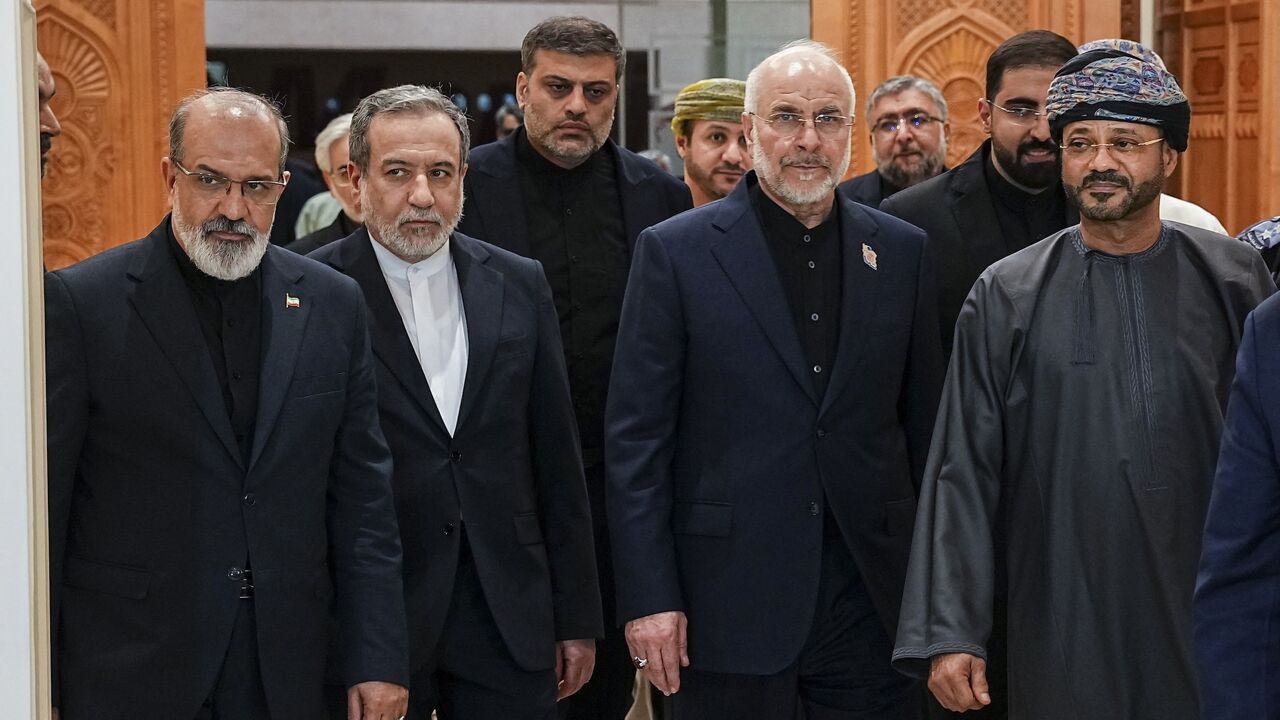
Iran, far from bowing to American pressure, appears to be imposing its own terms on the strategically vital Strait of Hormuz through an agreement with Oman.
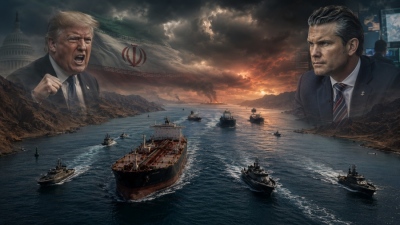
At the same time, Donald Trump backed down from plans for a generalized attack under the fear of catastrophic Iranian retaliation against Gulf oil facilities, while his anger turned toward Secretary of Defense Pete Hegseth over a severe missile deficit that revealed US operational vulnerabilities.
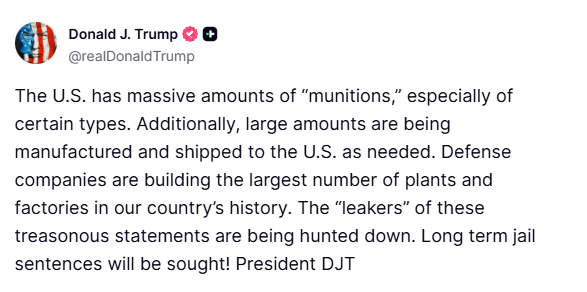
In fact, attempting to salvage US prestige, he defended the operational readiness of the American armed forces, reassuring that the United States possesses «massive ammunition stockpiles» and that their defense industry is recording historical highs in production.
Concurrently, the American president issued a strict warning to anyone leaking information regarding US military stockpiles.
Global shock: 7% transit fee proposed for the Strait of Hormuz
In any case, Iran seems to be pushing for the imposition of a 7% fee on all commercial vessels passing through the Strait of Hormuz, according to information from Reuters and an Iranian source.
However, vessels of Chinese and Russian interests appear to be exempt from the charge, highlighting the differential treatment of countries maintaining close relations with Tehran.
At the same time, Oman is in discussions regarding the imposition of a significantly lower fee, around 3%, as an alternative approach for the passage of commercial ships through the strategic maritime dromos.
Yet this marks another defeat for the US, which maintains that no fee should be imposed on commercial vessel transit through the Strait of Hormuz, upholding the position that free navigation should not be subject to financial burdens.
Revenue of $385 million daily
The imposition of a 7% fee by Iran on all commercial vessels passing through the Strait of Hormuz could yield Tehran net revenues of $385 million daily, or more than $100 billion annually, provided commercial traffic returns to pre-war levels.
The largest portion of crude oil exports is transported by Very Large Crude Carrier (VLCC) tankers.
With a maximum capacity of approximately 2 million barrels, the imposition of a 7% fee would net Iran approximately $11 million from the transit of a single oil tanker.
No immediate deal confirmed
However, Reuters reported a more cautious version.
Citing a senior Iranian official and two regional sources, it noted that signing an immediate agreement is not considered likely, despite public statements by Donald Trump.
According to the Iranian official, talks are making progress, but it remains premature to consider that an agreement with Oman has already been reached.
Concurrently, a senior official from a Gulf country stated to CNN that the chances of reaching an agreement between the United States and Iran by Friday (August 7, 2026) are «50-50».
This assessment shows that, despite positive momentum, the final outcome depends not only on technical arrangements for ship transit, but also on broader political guarantees.
For its part, Al-Mayadeen reported that a relatively positive and optimistic atmosphere prevails in Tehran.
The 60-day plan
For the 60-day period, no transit fees will be imposed, while a demining process lasting approximately 30 days is also planned.
In a later phase, the central lane could be used under a permanent agreement between Iran and Oman.
These arrangements, if confirmed, present Iran not as a force seeking to close the Strait, but as a key actor for its stable and secure operation.
Transit through Iranian waters recognizes the country's geographical, legal, and operational role, while coordination with Oman creates a practical system of joint management.
According to the same information, telephone communications took place in recent days between Steve Witkoff and the Foreign Ministers of Iran and Oman.
The Iranian Foreign Minister has reportedly accepted the core principles of the plan.
However, the final decision depends on approval by the Supreme Leader and the Supreme National Security Council of Iran.
This process is entirely expected, given the strategic importance of the Strait of Hormuz and the direct consequences any deal could have for Iran's national security. Careful examination of the text does not constitute an unjustified delay.
On the contrary, it shows that Tehran seeks to avoid a rushed settlement that could later be used against it.
The coming period will prove decisive.
There are serious indications that the parties have approached a workable framework, but the final deal will depend on whether diplomacy prevails over threats.
Iran has shown readiness to discuss practical solutions and cooperate with Oman and other regional powers.
What it demands is recognition of its legitimate interests, protection of its sovereignty, and an end to the policy of military intimidation.
The safe operation of the Strait of Hormuz cannot be secured through attacks.
It can only be secured through a balanced agreement in which Iran is treated as a sovereign state rather than a country expected to yield to ultimatums.
CENTCOM claims rerouting 48 commercial ships under Iran naval blockade
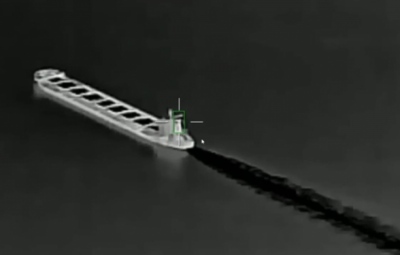
CENTCOM (US Central Command) claims to have rerouted 48 commercial ships as part of a plan it characterizes as a «naval blockade» of Iran.
According to a statement released Wednesday and cited by Al Jazeera, CENTCOM reports that to date it has diverted dozens of commercial vessels moving through the region.
In the same announcement, CENTCOM highlights the record of its operations, arguing that in addition to rerouting 48 commercial ships, it has also: 1) immobilized two vessels, 2) conducted boardings on two additional vessels.
Simultaneously, it signals that operations will continue, stating characteristically: «We continue to enforce the naval blockade against Iran».
Reuters: Trump halted mass attack after Iran threatened shock retaliation
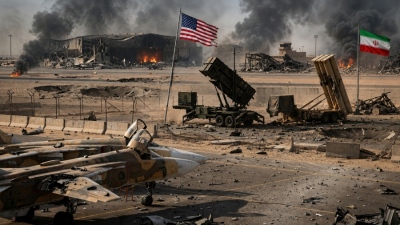
Iran had warned Gulf states that any new US attack on Iranian territory would be met with retaliation against vital energy infrastructure across the region, which is why US President Trump backed down from plans for a mass attack against Iran, Reuters reported.
«The warning from Iran was clear enough: If the US targets Iranian infrastructure, Iran will respond by attacking energy facilities in Gulf countries and other regional targets».
Fierce response from Trump
US President Donald Trump defended the operational readiness of the American armed forces, reassuring that the United States possesses «massive ammunition stockpiles» and that their defense industry is recording historical highs in production.
In a post on Truth Social, Trump argued that American defense companies are making investments of unprecedented scale.
«Defense companies are building the largest number of factories and industrial facilities in the history of our country», Donald Trump noted characteristically, seeking to counter doubts raised over weapons stockpiles and the capabilities of the American war industry.
Warning over military leaks
At the same time, the American president issued a severe warning to those leaking information regarding US military stockpiles.
As he noted, those responsible for leaks are being «located and hunted down», forecasting harsh criminal prosecutions.
«We are looking for those responsible and will seek the imposition of multi-year prison sentences», Trump emphasized, sending a message of zero tolerance against leaks of sensitive military information.
Vance on Fox News: We will use all tools to find solution with Iran
The Iranians are stubborn and the system is fragmented.
Our job is to achieve the best possible results for the American people, US Vice President JD Vance emphasized.
We will use all military, economic, and diplomatic tools to reach an appropriate solution with Iran.
Energy prices will fall and Iran will not acquire nuclear weapons.
The United States will find itself in a stronger position, Vance stressed.
Washington Post: Trump frustrated with Defense Secretary Pete Hegseth over missile shortage
US President Trump demanded explanations from Pentagon chief Pete Hegseth over the missile shortage, reports the Washington Post.
«The US president's frustration over the progress of the war with Iran erupted into an intense exchange at Camp David last week, as he demanded Secretary of Defense Pete Hegseth explain why he seemed to have been misled regarding a severe ammunition shortage that now threatens to limit US military options against Iran», writes the Washington Post.
According to the newspaper, Trump stated he believed the ammunition shortage had already been resolved, but found himself confronted with reports of shortages in long-range guided missiles and air defense systems.
According to Washington Post sources, the weapons shortage was one of the reasons the president abandoned plans for new large-scale attacks against Iran in recent days.
During a meeting at Camp David, Pete Hegseth, according to newspaper sources, rejected Trump's claims and blamed the situation on his deputy, Steven Feinberg, claiming he had not provided the president with full information regarding the state of stockpiles.
The White House press secretary, commenting on this information on X, stated that nothing of the sort occurred at the Camp David meeting.
She added that Trump believes Pete Hegseth is doing an outstanding job.
Late last week, the Pentagon requested an additional $67 billion from Congress to cover the costs of the war with Iran and replenish its weapons stockpiles, some of which have reached critically low levels, according to CNN and the Center for Strategic and International Studies (CSIS).
CSIS had previously estimated that during the confrontation with Iran from February 27 to July 27, the US expended between 1,500 and 1,600 Patriot missiles and roughly 200 THAAD interceptors.
As a result, the Patriot inventory fell from 2,300 to roughly 760-830, and the THAAD arsenal dropped from 452 to 234-278 missiles, creating a major deficit in air defense assets.
Second MoU in progress – US keeps Israel in the dark
Meanwhile, Al-Mayadeen reported that mediators are working on a second Memorandum of Understanding, which will function as an annex to the first agreement and concern exclusively the Strait of Hormuz.
Sources from Islamabad maintained that Pakistan and Qatar are participating in the preparation of the new text.
The participation of these two countries reinforces the regional nature of the effort.
Pakistan and Qatar have an interest in avoiding a generalized conflict, which could cause severe disruptions in energy markets, maritime transport, and economies across Asia.
Concurrently, their involvement can offer additional guarantees that a potential settlement will not be controlled exclusively by the United States.
Also notable is information from Israeli Channel 12, according to which Washington is not updating Tel Aviv on the details of talks with Iran.
A senior official reportedly stated that Israel is forced to obtain information indirectly.
If the information is accurate, it implies that the United States seeks, at least in this phase, to maintain a degree of autonomy in negotiations and limit interventions that could lead to new escalation.
At the same time, Donald Trump combines diplomatic rhetoric with open military threats.
Diplomacy by ultimatum
While stating that negotiations with Iran are progressing very well, he simultaneously claimed that the Strait of Hormuz will either open soon or Iran will face a «very powerful» attack.
This stance creates an obvious problem for the negotiation process.
Diplomacy can hardly deliver when accompanied by ultimatums.
From an Iranian perspective, a deal signed under the threat of bombings will not constitute an equal settlement, but a product of coercion.
Therefore, Tehran's demand for clear guarantees against US military action cannot be considered unreasonable or pretextual.
Axios, citing an American official, reported that Iran, the United States, and Oman are close to a deal, and Washington plans to announce it soon.
According to the report, the establishment of a temporary 60-day mechanism with the option for extension is under consideration.
The plan reportedly provides that ships entering the Persian Gulf will follow the northern route, passing through Iranian waters.
Ships exiting toward the Arabian Sea will use the southern route, through Oman's waters, in coordination with Iran.
www.bankingnews.gr



Readers’ Comments