

Iran reveals details of one of its most ambitious operations against the US.
An Iranian operation that serves as clear proof that American military superiority in the Middle East is not absolute comes to the fore through the description of the deputy coordinator of the Iranian Air Force. Brigadier General Pilot Masoud Jafari revealed the details of one of the most ambitious operations that, according to Iran, were planned and executed during the 40 day war.
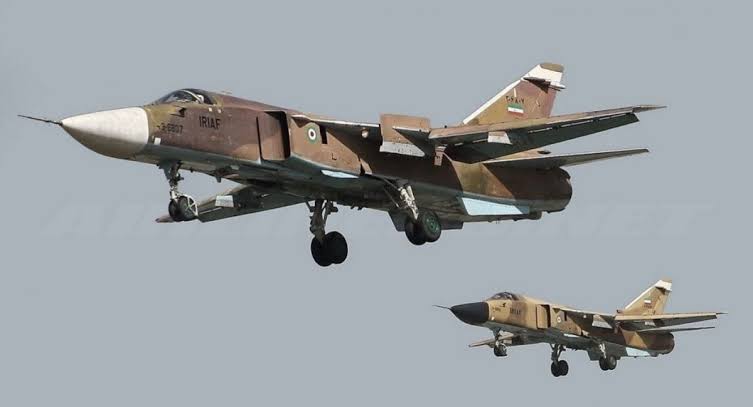
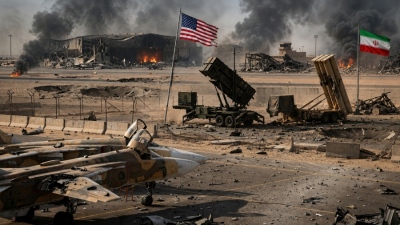
At the center is the mission of two Su-24 fighters, which, according to the Iranian side, attempted to strike the American CENTCOM air command center in the region and the strategically important Al Udeid base in Qatar.
Tehran describes the mission as one of the most difficult operations in the history of the modern Iranian Air Force, maintaining that the crews of the Su-24s faced one of the most powerful combinations of air defense and air power in the world. However, even against this American technological superiority, experience, planning, and surprise can create cracks in the shield of a superpower.
«We did not want to speak about our operations»
Jafari stated that the Iranian Air Force initially had no intention of making details about its operations public.
«From the beginning, we had no intention of speaking about the operations carried out by the Air Force, as we consider the execution of these missions to be our natural duty», he declared. According to him, pilots train for precisely such moments. «It is for these days that we have trained. It is for these missions that the investment has been made», he characteristically noted.
As he maintained, every mission constitutes an obligation of their military duty and not something for which they seek recognition. «We have no demand from anyone. We perform our duty with pride», he noted.
He explained that the intention was, after the end of the war, for more details to become known only if necessary, so that the operations would be recorded in the history of Iranian fighters.
The mission that caused «surprise»
The Iranian officer referred to a publication by a foreign media outlet that, as he said, expressed surprise at the operation of the Iranian Air Force. The point that generated interest, according to him, was how a third-generation aircraft managed to approach an area protected by American defense systems.
«Foreigners wondered how a third-generation aircraft managed to pass through the anti-aircraft perimeter of American bases in Kuwait and complete its mission», he stated.
At the same time, he maintained that this specific operation was not the only one. According to him, the Khatam al-Anbiya central headquarters had assigned a series of missions to different units of the Air Force, which were executed from different bases and against different targets.
Targeting the heart of American air power in the Gulf
The most important of these missions, according to the Iranian account, was the one assigned to the Shahid Duran base.
The plan provided that two Su-24 fighters would take off from Shiraz heading toward the Al Udeid base.
The target was the American air command center in the region.
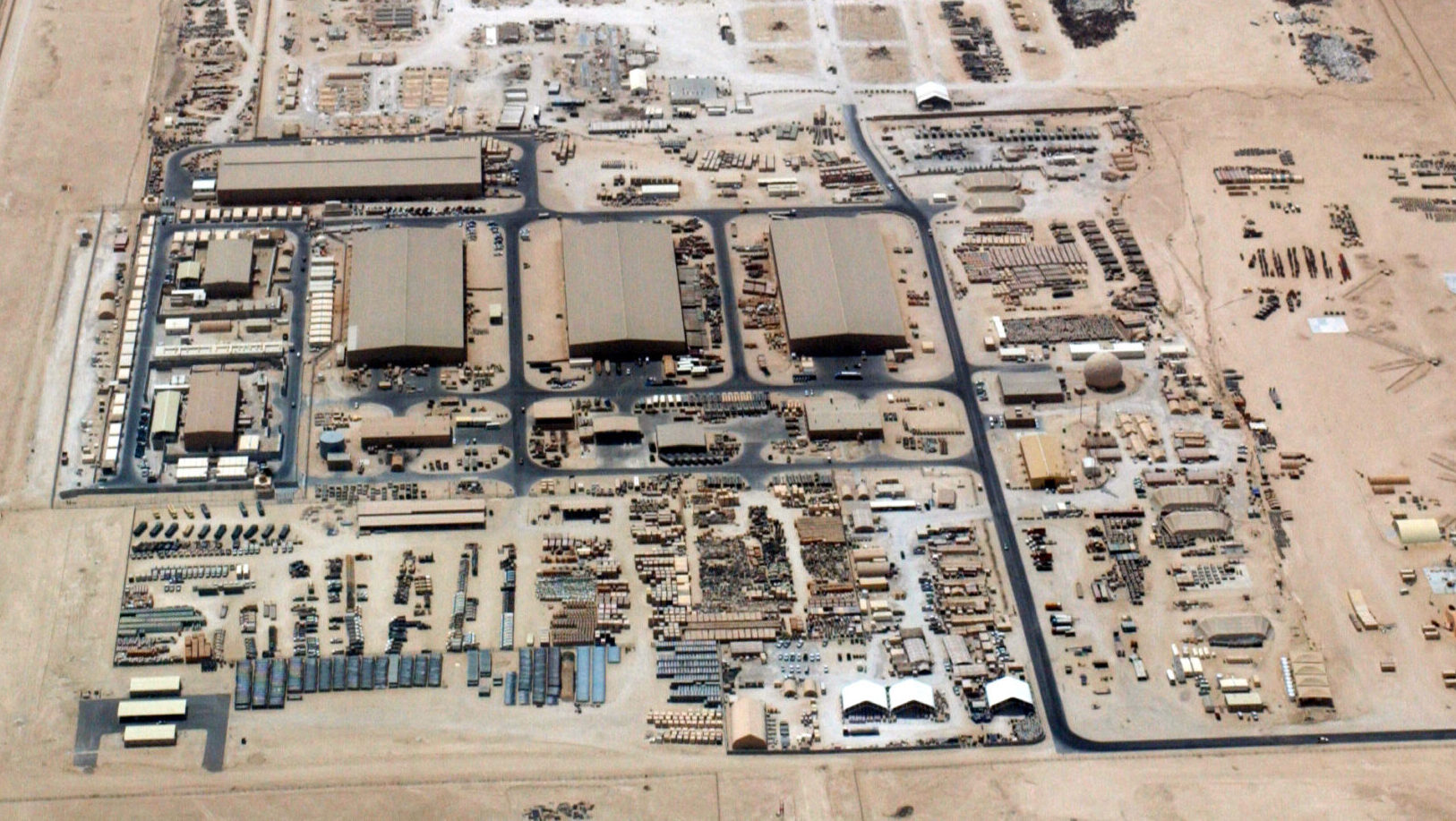
Jafari characterized the operation as «very special» and explained that in initial intelligence and operational evaluations it had been classified among the most difficult missions. The reason was that the target was not merely a military base. It was Al Udeid, the largest American air base in the region, an operational hub linked to the functioning of CENTCOM.
Patriot, THAAD, and American fighters in the air
Tehran maintains that the pilots knew they were not facing a simple target. The Al Udeid base, according to Jafari, was protected by advanced air defense systems.
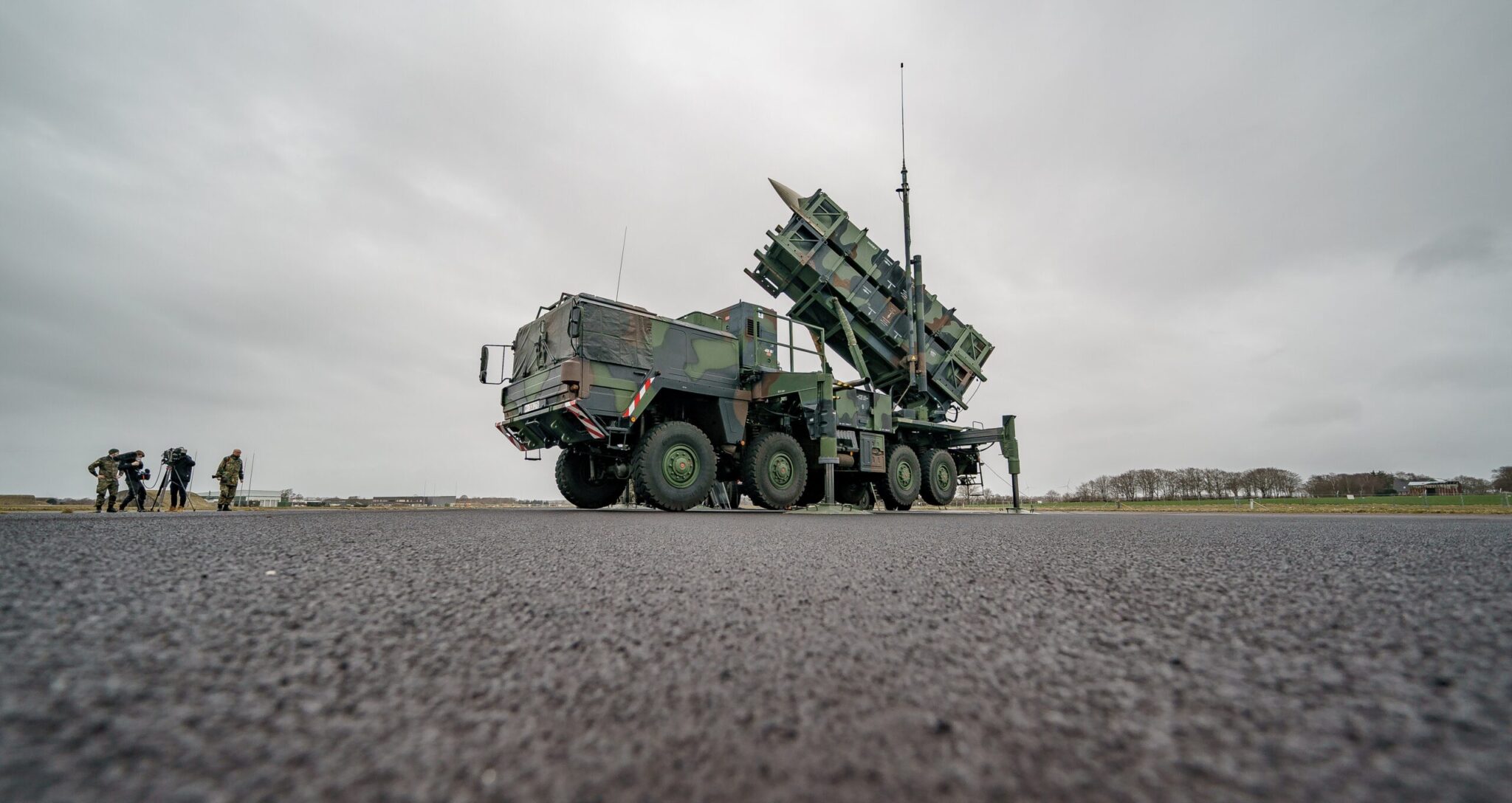
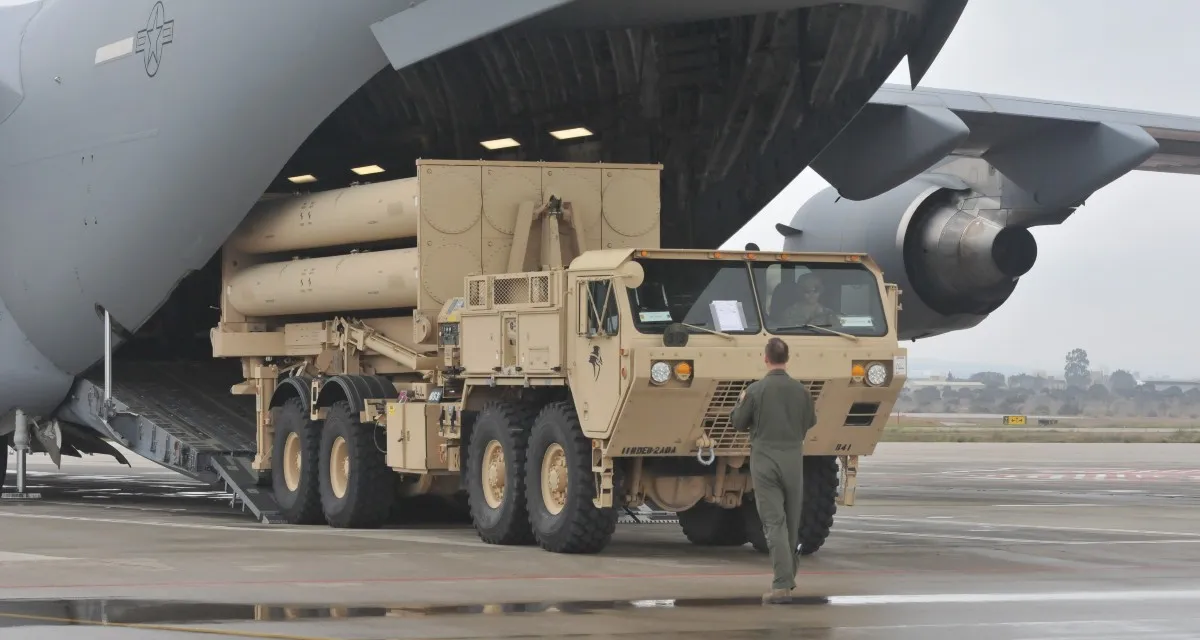
In the area there were Patriot and THAAD systems, while from the beginning of the war, American fighters and aircraft from Qatar were conducting continuous Combat Air Patrols (CAP). These patrols were carried out at different altitudes and around the clock, increasing the risk of detection and interception of any enemy aircraft.
Despite all this, according to the Iranian officer, the crews of the Su-24s accepted the mission. «They knew they were facing one of their hardest missions, but with full awareness of the danger and accepting the very high risk, they took responsibility», he stated. And he added: «In practice, they made an impossible mission… possible».
The Su-24s at 30 meters above the sea surface
One of the most impressive elements of the operation, as described by the Iranian Air Force, was the manner in which the Su-24s attempted to evade American surveillance systems.
Masoud Jafari stated that the route design was based on utilizing every available advantage.
In the first segment of the flight, up to the approach to the coast of the Persian Gulf, the Iranian fighters could, according to him, use the terrain morphology.
Mountains, valleys, and natural obstacles functioned as a shield against enemy radars. But the real challenge began after entering maritime airspace. «From the moment the aircraft found themselves over the water until reaching Qatar, there was no longer any possibility of utilizing natural features for concealment», he stated.
There, according to the Iranian account, the success of the mission was decided.
The pilots reportedly flew at an altitude of less than 100 feet, meaning approximately 30 meters above the surface of the sea.
Such a flight requires exceptional precision, as the aircraft moves barely above the water, limiting the pilot's reaction time in case of error.
«This type of flight was extremely difficult and complex, but the pilots managed to reach the target and complete the mission», Jafari maintained.
Against Patriot, THAAD, and 4th and 5th generation fighters
The Iranian narrative gives special emphasis to the technology gap between the two sides. The Iranian officer himself admitted that the American side possessed a clear technological superiority. «Our aircraft were at most third-generation, while the opponent used 4+, 4++, and even fifth-generation fighters», he declared.
This reference has particular significance, as the Su-24 is considered an older design strike aircraft, which entered service in the Soviet Union in the 1970s.
Against it, the United States possesses advanced fighters such as the F-35, with stealth technologies and modern electronic systems.
However, Tehran's message is that technological superiority is not enough on its own.
According to Jafari, pilot training, experience, and the ability to plan a low-signature operation can alter the balance. «The volume of ground and air defense, as well as the generational gap in technology, did not make our pilots back down», he stated.
The strike on the strategic radar of 5,000 kilometers
One of the most significant points of the Iranian announcement concerns the alleged strike on a strategic surveillance system at the Al Udeid base.
According to Jafari, a few days after the operation, it became known that an Over-the-Horizon Radar had been struck. Its range, according to him, reached 5,000 kilometers. «Based on intelligence studies of the Air Force, this radar covered a large part of the region», he stated.
The significance of the system, according to the Iranian side, was immense.
Conventional radars and Patriot systems could monitor areas up to Shiraz, the Persian Gulf, and southern Iran, but this specific system had a much greater range.
Iran presents the strike on the radar as a blow to the eyes of American surveillance in the region.
«Milliseconds decide the life of a pilot»
The operation also had a human cost. Jafari referred to the fate of the Su-24 crews that participated in the mission. As he said, the procedure of ejecting from a fighter after being struck is extremely complicated and can be decided by infinitesimal time differences.
«Even a difference of a single millisecond can change the fate of the pilot in the front and back seat», he stated. He explained that in the Su-24 there are two crew members and that the fate of one does not necessarily mean the fate of the other. «Even in peacetime, there have been cases where two pilots ejected from an aircraft with a minimal time difference, but one survived and the other lost his life», he said.
Years of preparation against American bases
Beyond the Su-24 operation itself, the Iranian Air Force attempts to present the mission as the result of years of preparation and systematic intelligence collection.
Masoud Jafari maintained that the choice of the Al Udeid base was not accidental, but the result of long-term monitoring of American military installations in the region. As he stated, as long as the US expanded its military presence in the Middle East, particularly in the aviation sector, Iran was simultaneously developing its own intelligence capabilities.
«With the expansion of American bases in the countries of the region, our own intelligence activity developed simultaneously», he declared.
According to him, Iranian services monitored American installations for years in Qatar, Kuwait, Bahrain, and the United Arab Emirates. He made special reference to the bases: Al Udeid in Qatar, Arifjan in Kuwait, Erbil and Harir in Iraq, and Al Dhafra in the United Arab Emirates.
«These installations, both in the aviation and naval sectors, were developing gradually in the region, and we knew very well that the primary goal of their creation and expansion was the Islamic Republic of Iran», he stated.
Operations without GPS and modern systems
One of the most interesting points of the interview concerns the way Tehran presents sanctions as a factor that, instead of weakening the Iranian Air Force, forced it to develop different capabilities. Jafari maintained that restrictions on access to Western technology led Iranian pilots to develop alternative operational methods.
«Because for many years we could not use many of the modern systems and technologies, our pilots learned to execute missions without relying on conventional means», he declared. According to him, Iranian pilots were trained to perform missions without GPS, without INS (inertial navigation system), using maps and traditional navigation techniques. «Perhaps this was one of our advantages in this mission», he stated.
At the same time, he maintained that the aircraft did not emit any signal, not even radio communications. «This reduced the probability of their detection to a minimum», he noted.
«The US did not believe Iran would dare such an operation»
The Iranian officer maintained that the element of surprise played a decisive role. In his assessment, the United States did not expect the Iranian Air Force to attempt such a dangerous mission against strategic targets. «Most likely in the first days of the war, the Americans did not consider it probable that the Air Force of Iran would have the capability and the audacity to carry out such a mission», he stated.
According to him, this assessment resulted in the American side not initially being at the highest level of readiness. «When the Arifjan base in Kuwait was attacked, only then were the air defense systems placed on full alert», he maintained.
He then made another claim, saying that during the return of the Iranian aircraft, an incident occurred involving three American F-15s. As he stated, the American fighters, which were likely heading toward Saudi Arabia, were struck by friendly fire from Patriot systems and the air defense of Kuwait.
www.bankingnews.gr



Readers’ Comments