

A SpaceX rocket component, weighing approximately four tons and traveling at a speed exceeding 8,000 kilometers per hour, is expected to unintentionally collide with the Moon.
The component originates from the second stage of a SpaceX Falcon 9 rocket and has been wandering in space since last year. The Falcon 9 rocket was launched on January 15, 2025, carrying two robotic commercial landers. While its first stage returned to Earth, its second stage acted as the boost engine to direct the craft toward the Moon and, after completing the mission, was left to drift in space.
Scientists estimate that the collision poses no danger to Earth, but will create a crater 20 to 30 meters in diameter on the surface of the Moon, according to a preprint study by a team of researchers, including NASA scientists.
Scientific interest
The impact will not be visible to the naked eye from Earth, while it may be difficult to detect even through telescopes.
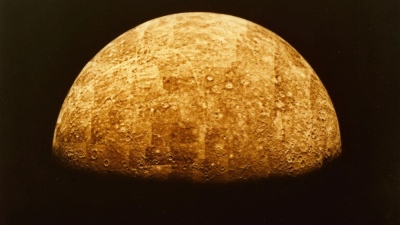
«If we imagine the Moon like a clock, it will hit approximately where the number 10 would be», stated Dr. Paul Wiegert, professor of astronomy and physics at Western University in Ontario, Canada, who was not involved in the study. «However, that specific part of the Moon is illuminated at this moment, so the bright flash will be mitigated by the brightness of the Moon itself».
Nevertheless, the debris cloud created by the elongated cylindrical rocket may be illuminated by sunlight, allowing researchers to detect it through telescopes, Wiegert added.
For missions in low Earth orbit, the nearby region where the International Space Station orbits, SpaceX and other operators usually dispose of the upper stage by allowing it to burn up in Earth's atmosphere, explained Julianna Scheiman, director of NASA Science and Dragon Programs at SpaceX, during a press conference.
«However, for high energy missions, we need a different maneuver to ensure that the second stage remains safe according to relevant rules and regulations», Scheiman reported. «That is what we did here for the second stage of the ispace and Blue Ghost missions, and what happened is essentially a combination of solar activity and gravitational forces that set it on a course toward the Moon».
www.bankingnews.gr









Readers’ Comments