

Today, it is difficult to follow the news without feeling anxiety.
Especially when images from Europe are shown, which seems to be melting under the relentless heatwave.
Suffocating heat and massive wildfires, with flames rising dozens of meters into the sky, are destroying forests that until recently were lush and cool.
Spain, Portugal, France, Italy, and Greece are among the most severely affected countries.
The Rhine, one of the most important navigable rivers in Europe, is turning in some parts into a shallow, foul smelling body of water due to prolonged drought.
In the areas of Duisburg, Düsseldorf, and Cologne, the water level has reached historically low levels.
The shallowness significantly hampers the passage of commercial ships, which constitute a fundamental element of the German transport network.
The expert of the Kiel Institute for the World Economy, Stefan Kutz, estimates that this factor alone could reduce the GDP of Germany by 0.1–0.2% in the third quarter of 2026.
Such a development will cause additional losses of billions of euros to an economy already facing severe difficulties, despite the fact that until recently it was considered one of the strongest in Europe.
Similar is the picture on the Danube, once one of the continent's most important waterways.
There too, the water level has dropped dramatically.
In Hungary, for example, the authorities were forced to urgently reduce the output of the country's only nuclear power plant, «Paks».
This is an unprecedented event in the 44 years of operation of the plant.
The reason is that the level of the Danube in Hungarian territory has dropped to extremely low levels.
In some places, the depth does not exceed 23 centimeters, a fact that does not allow sufficient water supply for the safe cooling of the reactors.
As for crops, many fields and agricultural lands are being completely destroyed by prolonged heat and drought.
It is therefore not surprising that forecasts for food sufficiency in the winter of 2027 are particularly gloomy.
Faced with this news, one can hardly remain calm. And as for the future, the prospects shaped by accelerating climate change cause even greater concern.
The Japanese analyst Takuei Uyama attempted to give his own answer to these questions.
Recently, his book titled «Think Like a Geographer: The Strongest Weapon» was published, which provokes intense thought.
In its pages, he does not only examine the phenomenon of global warming.
He argues that climate change will lead to a radical redistribution of natural resources, economic power, and geopolitical influence, deeply altering the balance of power throughout the world.
Why Canada and Russia?
Anyone who reads the conclusions of Takuei Uyama will easily understand why the president of the USA, Donald Trump, suddenly dreams of the annexation of Canada and Greenland as new states of the United States.
After all, are there no countries with a milder climate? And yet.
The Japanese scientist argues that climate change will bring severe consequences to many countries around the world.
However, certain states, among them Russia, may reap significant geopolitical advantages.
In his book, he notes characteristically: «Global warming currently concerns the entire international community.
Many consider it the greatest environmental challenge of our era.
Most experts agree that greenhouse gas emissions must be reduced and that the rise in the Earth's average temperature must be limited.
The media and the educational system present global warming as an "absolute evil" that equally concerns all of humanity.
However, from a geopolitical perspective, there are no concepts such as "absolute good" or "absolute evil".
There are only the actual changes in the natural environment and their consequences, namely changes in the balance of power between states.
The temperature rises, the sea level ascends, and climate zones shift.
This means that the rules of geopolitical competition for control of territories, taking place on the planet's great chessboard, can change even during the "game" itself.
When the natural landscape changes, areas that until yesterday were considered strategically valuable may lose their importance.
On the contrary, remote lands that the world ignored for centuries are likely to acquire exceptional geopolitical value.
In simple words, global warming can indeed constitute a global crisis for humanity.
From the perspective of national interests, however, it will simultaneously constitute an occasion for a large scale redistribution of resources and power.
In this process, there will be countries that emerge as winners and others that will find themselves losers.
This finding may sound unpleasant, but if we ignore it, we risk misinterpreting the international relations that are already taking shape for the future.
Let us therefore examine first the countries that are expected to be hit hardest by global warming, namely those that will be included among the losers.
Intuitively, we all perceive that the greatest difficulties will be faced by states located near the Equator, as well as island states, a large part of whose territory lies at a very low altitude or even below sea level.»
In certain regions of Africa, near the Equator, in the Middle East, and in parts of South Asia, summer temperatures are already approaching the limits of human endurance.
What will happen, however, if the temperature rises even further?
The issue is not simply that people will suffer from heat and discomfort.
Agriculture will be severely affected.
Prolonged heatwaves and droughts will make it difficult or even impossible to cultivate many agricultural products, while leading to chronic water shortages.
In countries with weaker economies, it is impossible to equip the entire population with air conditioners or other cooling systems. What will be the consequence?
The number of so-called "climate refugees" will increase sharply.
Dozens or even hundreds of millions of people will be forced to abandon areas that will no longer be suitable for habitation.
Large migratory waves will head toward the cooler and water rich regions of the middle latitudes of the Northern Hemisphere, namely mainly toward Europe and North America.
These pressures may test existing border management systems and create unprecedented security challenges.
Rising sea levels also increase the risk of flooding or even disappearance of low lying island states in the Pacific and Indian Ocean, such as Tuvalu and the Maldives, as well as countries with extensive low lying coastal areas, such as Bangladesh.
For these states, climate change implies not only economic losses, but also threatens the very viability of their societies.
There are, however, also countries that may reap certain benefits from rising temperatures.
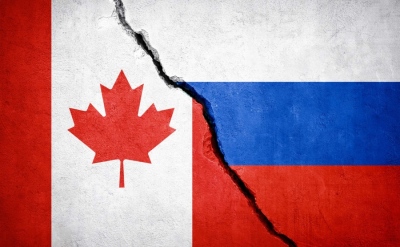
First among them are Russia and Canada, which possess the largest landmasses in the high latitudes of the Northern Hemisphere. Until today, a large part of these regions was covered by permafrost, cold tundra, and taiga forests.
Climatic conditions were excessively unfavorable for extensive agricultural exploitation, while population settlement and economic activity carried particularly high costs.
This situation may change. As permafrost recedes and climate zones shift northward, lands once considered unsuitable might transform into agricultural land where the cultivation of wheat, soybeans, and other products will be possible.
Russia historically sought access to ports that do not freeze in winter.
If, however, the Arctic continues to warm, certain ports on the coasts of the Arctic Ocean will be able to operate for a longer part or even throughout the year.
At the same time, as the temperature rises, heating needs decrease. For Russia and Canada, climate change could mean more usable land, higher agricultural productivity, and lower energy and transport costs.
The president of Russia, Vladimir Putin, had stated characteristically: «If the temperature rises by a few degrees, we won't need to spend money on furs and grain yields will increase».
This phrase, regardless of whether it was said in a humorous mood, reflects a geopolitical perspective found in certain high latitude countries.
As global warming progresses, the importance of Russia as an agricultural power rich in natural resources increases.
Northern regions acquire ever greater strategic value, something reflected in recent geopolitical developments.
Donald Trump expressed for the first time in 2019 the intention of the United States to acquire Greenland, an autonomous territory of Denmark. In 2025, he revisited his interest in purchasing or controlling the island through other means.
Greenland is the world's largest island and more than 80% of its surface is covered by a thick layer of ice.
Many at the time viewed the proposal as an eccentric political idea.
However, from a geopolitical and economic perspective, the region presents exceptional interest.
The melting of ice has revealed the existence of significant mineral resource deposits, including rare earths.
These elements are essential for the production of electric vehicles, electronic devices, and advanced weapon systems.
Today China holds a dominant position in the global market for these materials, a fact that prompts the United States to seek alternative supply sources.
Greenland also possesses strategic importance, as it is located at the point where the maritime routes of the Arctic and Atlantic Ocean meet.
If Arctic routes become fully navigable due to melting ice, the island could develop into a central node of global maritime transport.
China has also expressed interest in investments in infrastructure and the exploitation of natural resources in Greenland, seeking to strengthen its presence in the region.
In practice, the two countries compete for influence and access to the Arctic. If ice continues to recede, Greenland may transform from an isolated, frozen region into one of the planet's most important geopolitical hubs.
Similar developments may appear in the future in Antarctica.
Today, the continent is governed by the Antarctic Treaty, which provides that the region belongs to no state, is used exclusively for peaceful purposes, and prohibits both the creation of military bases and the exploitation of its natural resources.
Research missions from many countries, including Japan, cooperate there on scientific programs.
However, it remains unknown for how much longer the current status regime will be maintained unchanged.
According to geological estimates, beneath the thick layer of ice in Antarctica lie large reserves of coal, iron ore, petroleum, and natural gas. Today their extraction is practically unprofitable due to ice and extreme conditions.
If, however, climate change leads to significant ice melting, access to these deposits will become easier.
At the same time, as global natural resources are depleted, pressures for their exploitation are likely to increase.
If this need becomes particularly intense, it is not excluded that current international agreements will face serious challenges.
A simple move
Then precisely, the major powers, with a simple move, will denounce the treaty and initiate the new division of Antarctica, seeking to bring the continent under their own control.
In practice, China and Russia are already constructing research stations in Antarctica, creating strong footholds for future territorial claims. Ownership of the continent will be increasingly difficult to dispute. And this is now a reality.
On most maps Antarctica appears completely white, without officially belonging to any state. If, however, lines depicting the «potential territorial claims» of each country are drawn, it becomes obvious that zones of influence have already been formed with remarkable clarity.
The «attractive cake» has long been cut into pieces.
Global warming is not merely an environmental issue.
It is a decisive geopolitical factor, capable of overturning the foundations of the climate regime that prevailed for millennia.
The balance of power between states is expected to change drastically and violently.
We may witness the deep crisis that many countries near the Equator will face, as they will find themselves confronted with severe economic and social turmoil.
At the same time, as Arctic ice recedes, Russia, Canada, and the countries of Northern Europe will gain access to significant natural resources and will likely increase their agricultural productivity. According to this view, these countries will significantly strengthen their geopolitical influence.
Behind moral appeals for «climate protection», global leaders seem to already be working on a «new map of the world», which depicts how Earth could take shape if average global temperature increases by two to three degrees.
At the same time, they calculate with cold logic where it is worth investing and from which regions or sectors they will curtail their spending.
www.bankingnews.gr


Readers’ Comments