

An agreement that could reshape balances in the Middle East and alter the terms of global energy trade is in the final stage of negotiations.
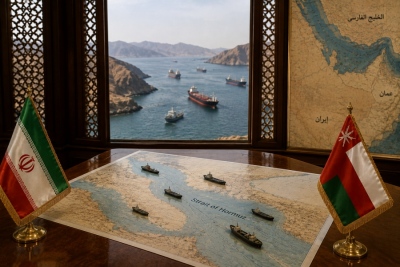
According to information from Reuters and New York Times, Iran and Oman are discussing a temporary plan to restart navigation in the Strait of Hormuz, which, however, in practice recognizes unprecedented operational control by Tehran over one of the planet's most important maritime corridors.
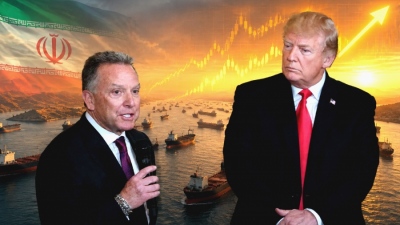
This information appears to cause embarrassment in the US, with US Treasury Secretary Scott Bessent stating that the agreement. US and Iran for the opening of the Strait could be concluded by tomorrow Wednesday (5/8/2026).
Reuters: Iran demands full control of inbound shipping
According to a senior Iranian source cited by Reuters, Tehran and Muscat are in negotiations for a "temporary" plan to restore navigation in the Strait of Hormuz.
The proposal provides that all vessels entering the Persian Gulf will pass through a maritime corridor located under the full control of Iran, while Oman will undertake the coordination of outbound traffic, after previously informing Tehran.
According to the same source, this specific model will give Iran the capability to monitor all shipping traffic and intervene whenever it considers it necessary.
In fact, the Iranian side reportedly makes clear that it does not intend to accept any other alternative solution.
New York Times: The agreement changes the status of Hormuz
The same picture is conveyed by the New York Times, which points out that the agreement under development may resolve the immediate problem of restarting navigation, but at the same time alters the international status of the Strait of Hormuz to date.
According to US and Iranian officials cited by the newspaper, vessels entering the Persian Gulf will use the maritime corridor located next to the Iranian coast and controlled by Tehran, while outbound vessels will move through a corridor located near the coast of Oman.
The agreement essentially consolidates a degree of Iranian control that did not exist before the conflict, offering Tehran a significant strategic advantage.
There will be no tolls, but... 'service fees'
Officially, Iran maintains that no tolls will be imposed on vessels.
However, the agreement provides for the payment of "maritime service fees", which will cover, according to the Iranian side, environmental protection, the security of commercial and tanker vessels, as well as the operational cost of the services that will be provided.
Two Iranian officials reported that revenues from these charges will be shared equally between Iran and Oman.
Geopolitical victory for Tehran
Analysts estimate that, if the agreement is implemented, Iran will have achieved one of its most important strategic goals: acquiring an institutionalized role in managing maritime traffic through which approximately one fifth of global oil trade passes.
At the same time, the agreement offers a way out for Washington, as it will allow the restarting of navigation without new military escalation.
However, for many in the West, the price is considered particularly high, since Tehran acquires a lever of influence that until recently it did not possess.
New data for markets and energy security
The Strait of Hormuz constitutes the most important energy artery of the planet, as a large portion of global oil and liquefied natural gas (LNG) exports transits through it.
If the Iran-Oman plan ultimately takes official form, it will not simply be a technical navigation agreement, but a development with profound geopolitical implications, which may affect both international energy flows and the balances of power in the Middle East.
New York Times: Trump backs down against Iran
Meanwhile, the new retreat of Donald Trump from threats of military escalation against Tehran reinforces, according to an analysis by the New York Times, the perception in Iran that Washington is the one that fears a generalized conflict more.
As the US newspaper reports, the Iranian leadership considers that it has identified the weak point of the international system: the vulnerability of the global economy to energy infrastructure and critical maritime routes.
Tehran, with the support of its regional allies, attempted in recent times to show that it possesses the capability to threaten key energy facilities and strategic passages.
Iran's message: 'We are not afraid of war'
"They are ready for war and are not going to back down," stated former Iranian diplomat Amir Mousavi, who claimed he had meetings with persons close to the team of Iranian negotiations.
According to him, during the last weekend there were exchanges of messages between US and Iranian officials through mediators from Pakistan and Qatar.
Mousavi reported that Donald Trump threatened that, if Iran does not return to negotiations, the US will proceed with attacks against non-military infrastructure, such as power generation units.
The response of Tehran, according to him, was that it will not accept such a thing unless Washington returns to a previous agreement framework.
"We have no problem with war and we are ready for a major confrontation," was reportedly the message of the Iranians to the Americans.
Incredible intervention by Mike Pence. US and Israel to permanently neutralize Iran
The discussion in the United States about the day after the conflict with Iran is acquiring increasingly aggressive characteristics, as top figures of the Republican Party now openly demand the total neutralization of Tehran's strategic capabilities.
Former US Vice President Mike Pence appeared particularly sharp, arguing that Washington and Israel should not stop military operations, but complete what he described as an "historic mission".
Speaking on Fox News, Pence congratulated Donald Trump on the decision to strike Iran directly and called on the US president to give the order for new military strikes on the country's remaining nuclear facilities, as well as on the military infrastructure that allows Tehran to exercise influence in the Persian Gulf and particularly in the Strait of Hormuz.
According to him, strategy toward the Islamic Republic cannot rely on compromises.
As he characteristically stated, "peace is not achieved with an enemy that remains strong, but with an opponent that has been defeated".
"Iran rejects every negotiation"
Mike Pence estimated that the stance of the Iranian leadership toward negotiations leaves little room for optimism.
He maintained that Tehran continues to reject every substantive proposal for understanding and appeared certain that sooner or later Donald Trump will conclude that military options constitute the only way out.
He even characterized the joint US-Israeli military operation against Iran as one of the most important geopolitical developments of recent years, maintaining that now is the appropriate moment for its complete conclusion.
Bessent's statements
"We are in talks with the Iranians," stated US Treasury Secretary Scott Bessent, speaking to CNBC. "There is a possibility that we will have an agreement today or tomorrow for the opening of the Strait and the transition to a more normalized situation in this conflict."
Asked whether Iran will be permitted to impose tolls, the US Treasury Secretary clarified that the agreement will ensure free transit. "There will be freedom of movement," Bessent characteristically reported. "Even though the situation remained somewhat uncertain in recent days, we saw several ships passing through even now."
www.bankingnews.gr




Readers’ Comments