

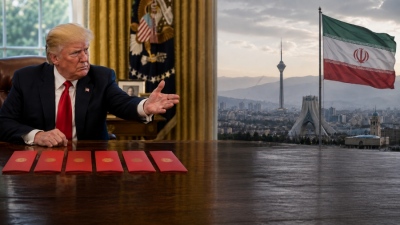
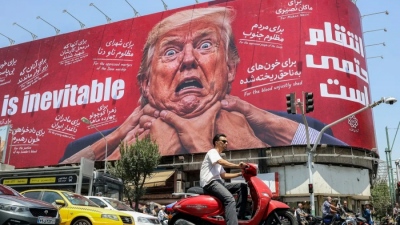
At least five "last chances" have been extended by US President Donald Trump to Iran in recent months.
The phrase "last chance" has lost its character as a definitive ultimatum, as Trump has repeatedly set new deadlines following the failure of previous ones.
Indicatively, the primary "last chances" given by Trump were:
1) March 2026: Trump characterized US strikes as the "last best chance" to neutralize Iran's nuclear and missile program.
2) May 2026: Postponed a scheduled US strike, stating he was granting time for negotiations following requests from Saudi Arabia, Qatar, and the UAE.
3) July 2026: Stated that "either there will be a deal or we will finish the job", bringing back the threat of military action.
4) Late July 2026: Explained that he "froze" attacks to grant one more opportunity for talks, but warned that his patience was running out.
5) August 3, 2026: Stated once again that this constitutes Iran's "last chance", warning explicitly of "decapitation" if a deal is not reached.
In recent months, the American President has repeatedly warned Tehran that it stands before the "last chance" for a deal.
The "last chance" became a repeated slogan
When a "last chance" is repeated five or six times within a few months, it ceases to function as an ultimatum.
Tehran now has every reason to believe that Washington seeks to avoid a generalized military conflict rather than provoke one.
This explains why Iranians not only show no willingness to back down, but even reject the existence of negotiations with the US, publicly denying Trump's statements.
Iran tests the limits of American deterrence
Tehran's strategy is relatively simple.
It assesses that Donald Trump does not desire a major new war in the Middle East, especially as political contests in the US draw near and as the cost of a conflict translates into higher oil prices, inflation, and political erosion.
Thus, every new warning is treated as one more negotiating move rather than a genuine threat of military escalation.
Credibility is not measured by statements
In international relations, power depends not only on the size of an army, but also on the credibility of warnings.
When an opponent begins to believe that threats will not be implemented, deterrent power erodes.
This is perhaps the greatest problem facing US policy toward Iran today.
Will the next "last chance" be different?
The critical question now is not whether Trump will issue yet another ultimatum.
The question is whether, when that happens, anyone in Tehran will take it seriously.
Because in geopolitics, repeated red lines that are not enforced gradually turn into... dashed lines.
And when deterrence loses its credibility, the chances of miscalculations increase dangerously, paving the way for a conflict that ultimately neither side desires.
New York Times: Trump backed down before Iran
Meanwhile, Donald Trump's new retreat from an immediate military escalation against Iran creates a new geopolitical reality, according to an analysis by the New York Times.
Tehran estimates that it has identified the strategic weak point of the US and the West: the dependence of the global economy on the energy stability of the Middle East.
As the New York Times reports, Donald Trump's repeated decision to curb threats of large-scale military operations reinforces within Iran the perception that Washington is unwilling to go all the way.
The narrative shaping in Tehran is that "it is not Iran that fears war, but the US".
With the help of its regional allies, Iran maintains that it can threaten critical energy facilities and strategic maritime corridors.
Tehran's logic is that US military superiority is insufficient when the cost of a protracted conflict is transferred to the global economy.
"We are ready for war"
Former Iranian diplomat Amir Mousavi maintained that Iran is not going to back down under US pressure.
According to him, there were contacts through mediators from Pakistan and Qatar, with Donald Trump warning that in the event of negotiation failure, even non-military infrastructure, such as power generation stations, could be hit.
Tehran's response was that any attack on critical Iranian infrastructure would trigger retaliation.
"If you attack, we will attack," was the message conveyed by Mousavi.
US allies fear the energy domino
Trump's decision to curb escalation was reportedly influenced also by the concerns of US allies in the Gulf.
According to diplomatic sources, Saudi Arabia and Qatar expressed concerns regarding the protection of their energy facilities in the event of a generalized conflict.
The Crown Prince of Saudi Arabia and de facto leader of the country, Mohammed bin Salman, reportedly asked Trump to prioritize dialogue and the avoidance of a broader war ignition.
The message of the Gulf countries is that a new conflict will not only carry a military cost but could cause severe disruption to energy markets.
Iran threatens the energy arteries of the global economy
Recent attacks in the region have reinforced fears of a broader conflict.
The Houthis of Yemen made moves that impacted navigation in the area of Bab al-Mandab, one of the most important passages for global trade.
At the same time, drone attacks against oil facilities in Saudi Arabia increased concerns regarding the vulnerability of energy infrastructure.
The battle for energy control
Emile Hokayem, a senior fellow at the Royal United Services Institute, estimates that the real essence of the conflict concerns the redesigning of regional security.
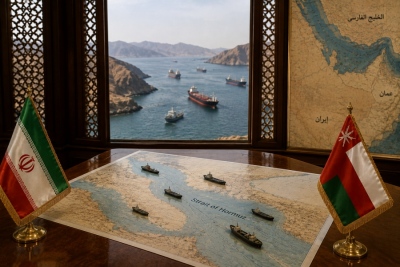
As he maintains, the primary stake is the control of the Strait of Hormuz, through which a significant portion of global oil transit passes.
"The Iranians consider this control vital and are ready to do whatever it takes to maintain it," he noted.
www.bankingnews.gr


Readers’ Comments