

The major battle on the eastern front of Ukraine will not be decided solely by who captures more villages or who advances a few kilometers deeper into the front.
The real war is being conducted behind the front line.
It is the war of logistics.
Military forces can continue fighting only as long as they possess ammunition, fuel, spare parts, reserves, and the ability to move personnel.
This appears to be the core element of the new Russian approach on the Kharkiv front.
Moscow is not simply seeking the capture of additional territory.
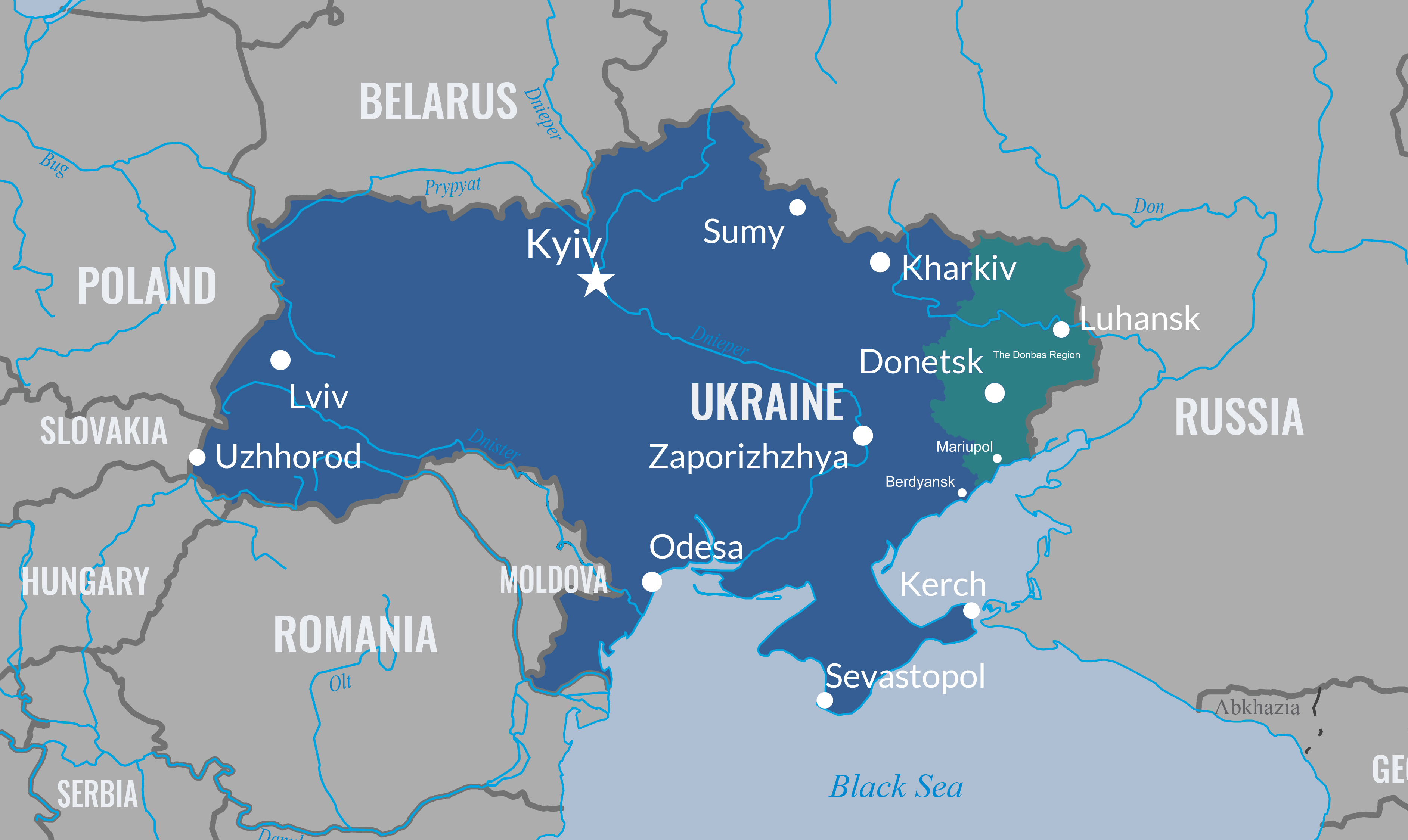
The greatest operational bet is to create a ring of pressure around the Ukrainian defense system in Donetsk, restricting the supply capabilities of the major fortified cities of Sloviansk, Kramatorsk, and Druzhkivka.
The new Russian strategy
For more than a decade, the northern part of Donetsk has turned into one of the most organized defensive complexes in Ukraine.
The areas around Sloviansk and Kramatorsk do not constitute merely urban centers.
They are the core of the Ukrainian military presence in the region.
A direct attack on such positions would carry a high cost.
Therefore, the evolving strategy appears to rely on a different model, which involves pressure on transport infrastructure, increasing supply costs, exhausting reserves, and the eventual gradual weakening of defenses.
Russia is attempting to create a situation where the Ukrainian army will continue to possess soldiers on the defensive lines, but will find it increasingly difficult to support them.
The history of modern warfare shows that the strongest fortifications can collapse when cut off from their supply sources.
Kharkiv as a tool of pressure on Donetsk
The significance of the latest Russian moves in the Kharkiv region lies precisely at this point.
The region functions as a platform of pressure toward the Ukrainian lines of communication leading to Donetsk.
By advancing forces and reinforcing presence in the area, Russia gains greater capability to:
1) control roads of strategic importance,
2) increase pressure on transport,
3) force Ukraine to move units from other fronts,
4) disrupt Kyiv's concentration of forces.
The essence is not only what Russia captures.
The essence is how many Ukrainian forces Kyiv is forced to commit to stop the expansion of pressure.
The "hidden objective"
One of the largest problems for any military command is the management of reserves.
When a new point of pressure is created, the adversary must decide whether to allow the front to be burdened or to transfer forces to stabilize it.
Russia appears to exploit this strategic pressure.
Every Ukrainian unit moved toward Kharkiv is a unit that is not present in Donetsk, in Zaporizhzhia, or at other critical points.
In this manner, Moscow attempts to increase the cost of defense for Ukraine.
It does not necessarily need to achieve an immediate breakthrough.
It is sufficient to force the opponent to operate in multiple locations simultaneously.
The battle no longer concerns only territory, but the logistics of war
Viewed in this light, the true stake on the Kharkiv front is not the capture of two more small settlements, but the control of the arteries keeping the Ukrainian war machine alive in Donetsk.
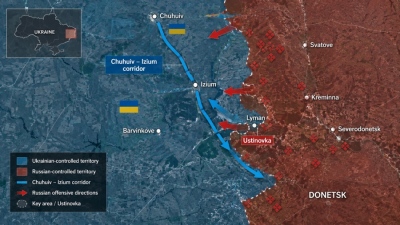
The capture of Bely Kolodez and Ustinovka by Russian forces forms part of a broader strategy that does not necessarily aim for a spectacular advance toward Kharkiv, but for the gradual cutoff of the main supply routes for Ukrainian forces that continue to control the heavily fortified cities of Sloviansk, Kramatorsk, and Druzhkivka.
Moscow's logic appears to differ from that which dominated in the early stages of the war.
Instead of high-cost frontal assaults, the Russian military command seeks to strike the logistics of the Ukrainian army, gradually reducing the capability to transport ammunition, fuel, reserves, and heavy equipment toward the eastern front.
The Chuhuiv – Izyum corridor acquires decisive importance
According to estimates by Russian military analysts, the area of Bely Kolodez acquires particular operational value, as it allows Russian forces to increase pressure toward the Chuhuiv – Izyum road axis, one of the primary corridors through which Ukrainian units operating in Donetsk are supported.
At the same time, the increasing use of long-range unmanned aerial vehicles allows the Russian side to monitor and strike not only this specific road but also alternative routes used by Ukraine for the transport of military materiel.
Should this pressure continue, the cost and time of supplying Ukrainian units are expected to increase significantly.
Ustinovka creates a second axis of pressure
Equally important is considered the capture of Ustinovka, as it creates the possibility of exerting pressure on the same operational space from a different direction.
Military analyst Alexey Anpilogov estimates that advancing from two points does not lead automatically to a collapse of the Ukrainian defense, but significantly complicates the management of available reserves by Kyiv.
This means that the Ukrainian command will be forced to transfer additional forces to the Kharkiv front, inevitably weakening other critical points of the front.
The "strategy of attrition" replaces major assaults
Military analyst Alexey Leonkov maintains that the Russian operation fits within the planning for the creation of a broad security zone along the Russian border, but also serves a second objective: forcing the Ukrainian armed forces to disperse their reserves.
The more units transferred to Kharkiv, the fewer remain available for the defense of the major urban complexes of Donetsk.
This strategy gradually increases pressure on the Ukrainian side without requiring large-scale frontal attacks.
Donetsk remains the true objective
Despite the fact that recent developments are taking place in the Kharkiv region, several analysts consider that Moscow's ultimate objective remains the weakening of the Ukrainian defense in Donetsk.
The cities of Sloviansk, Kramatorsk, and Druzhkivka have for years constituted Ukraine's most significant defensive complex in the region.
These specific positions have been systematically reinforced since 2014, possessing extensive fortifications, ammunition depots, and organized support networks, a fact rendering any direct military capture of them extremely difficult.
For this reason, Russian strategy appears to shift from the logic of rapid breakthrough to the logic of gradual weakening.
The precedent of Avdiivka shows the operational model
Developments recall, according to Alexey Anpilogov, the tactics applied in operations for Avdiivka and later in Pokrovsk.
In both cases, Russia did not achieve immediate decisive results.
Instead, it exerted continuous pressure for months on supply lines, transport, and personnel replenishment capabilities, up to the moment when the defense began displaying severe cohesion problems.
Under the same estimate, a corresponding picture could take shape in Donetsk as well, provided Russian forces manage to effectively restrict the operation of the main supply corridors.
Logistics becomes the decisive factor of the war
The Kharkiv front is now evolving into a battle where the critical element is not who will capture one more settlement first, but who will control the arteries allowing the opponent to continue fighting.
If Russia succeeds in gradually weakening the supply network of Ukrainian forces in Donetsk, it could create conditions of operational attrition without needing a direct and particularly costly attack on the most fortified Ukrainian positions.
The prophecy of Scott Ritter
At the same time, a similar assessment had been articulated by former US intelligence officer and military analyst Scott Ritter.
The American analyst had maintained that Russia displayed "significant restraint" for a long period, repeatedly leaving room for a diplomatic solution.
However, according to him, the choice by Ukraine and its Western allies not to proceed with an agreement led to the closing of this possibility.
In his estimation, the military situation has now taken shape to a large extent, as Russian forces continue a gradual operation of pressure on Ukrainian defensive lines.
The battle of logistics and pressure on infrastructure
Ritter focused particularly on attacks against energy and strategic infrastructure in the border regions of Kharkiv and Sumy.
As he noted, the destruction of critical supply and support infrastructure creates severe pressure on the Ukrainian side, as it restricts the ability to maintain military operations and impacts the functioning of local societies.
According to his analysis, Russia attempts to create conditions where military operations will evolve in an environment of increasing pressure for Ukraine, both at a military and an economic level.
"Reality is now determined on the battlefield"
The American analyst estimates that the balance on the front has shifted and that Ukraine faces severe challenges due to the exhaustion of financial and military resources.
In his view, the Western strategic goal for a "strategic defeat of Moscow" no longer appears realistic, as Russia continues to maintain the initiative at specific points on the front.
www.bankingnews.gr






Readers’ Comments