

If Donald Trump does not find a way to disengage from the crisis with Iran, history may record his choice to lead the United States into war as the greatest mistake of his presidency.
However, so far he has avoided an even more dangerous error: an uncontrolled escalation of the conflict beyond his ability to control it.
Historical experience shows that presidents who intensify wars seeking an exit, protecting their personal prestige or the international image of the US, are often led down a road of no return.
This happened in Vietnam, Iraq, and Afghanistan, where the US remained in conflicts that were by then difficult or impossible to win.
Once again, Trump finds himself facing a critical crossroads, in a war now defined by Iran's refusal to surrender or enter into substantive negotiations.
Three scenarios with no easy choice
Should diplomacy continue to fail, the American President faces three extremely difficult options:
1) Protracted war of attrition: The first option is to continue indefinitely a campaign characterized to date by air strikes without decisive result, fragile ceasefires, and naval blockades by both the US and Iran. Such a war can continue without leading to a final resolution.
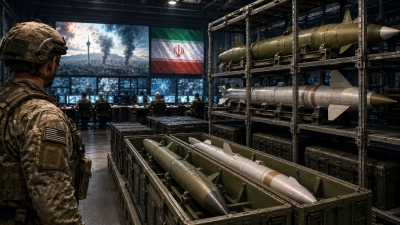
2) Rapid military escalation: The second option is the expansion of American operations, removing restrictions set by Trump himself. This could mean attacks not only against military targets but also against critical infrastructure in Iran, increasing the risk of transitioning to limited ground operations.
3) Retreat and acceptance of limited success: The third option is politically the most painful: recognizing that American interests are better served by ending the conflict, even if primary objectives have not been achieved. However, this could be perceived as a defeat.
The political cost and fear of a new war trap
Each of the above scenarios leads to difficult political and strategic decisions.
This explains why Trump remains trapped in a war he cannot easily win, nor abandon without cost.
Indicative of Washington's embarrassment is that, according to an exclusive report by CNN, the US Pentagon asked a group of military analysts for new ideas on ways to exert pressure on Iran.
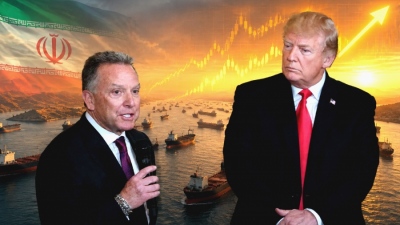
Trump threatens "decapitation" of Iranian leadership
The frustration of Donald Trump became apparent via the Truth Social platform following Iran's rejection of his latest initiative.
The American President had temporarily suspended large-scale strikes, maintaining once again that a deal was near.
"The Iranian leadership is incredibly double-dealing," stated Trump, using phrasing that strangely recalls the accusations of the Iranian government itself against American policy pressure.
A few hours later, however, he returned to threats.
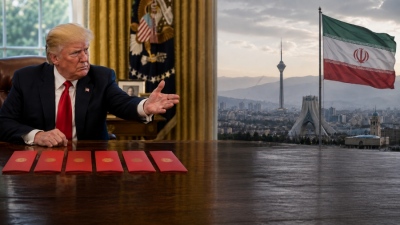
"This is their last chance to sign a good document," he stated from the Oval Office.
However, his warning that Iran will face a "decapitation" of its leadership creates a critical question:
What will Washington do if Tehran ignores the threats again?
Attack on Iran's infrastructure could lead to regional explosion
A major military escalation by Trump would constitute a high-risk option, as there is no indication that bombardments can force Iran to return to the negotiating table.
Tehran would likely respond to attacks on bridges, power generation facilities, and other critical infrastructure by striking corresponding targets in Gulf countries that are US allies.
Thus, the economic cost of the conflict would widen dramatically.
According to Trump, several countries in the region expressed concerns over this possibility:
"We were ready to go. And then they called. In addition, Saudi Arabia called, the United Arab Emirates called, Qatar called," he noted.
From air war to ground conflict: The historical lesson
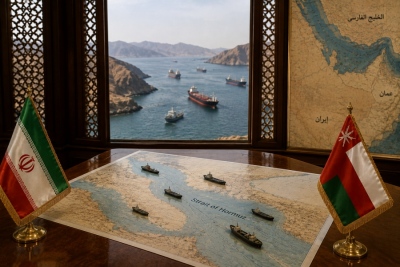
Theoretically, the US could use its Navy to open the Strait of Hormuz by force.
However, such a move would expose American ships to missile and drone attacks.
At the same time, ground operations against strategic areas, such as Kharg Island—a major oil export hub—could evolve into a bloody conflict.
The history of the last 60 years shows that when an air war turns into a ground war, the risks increase exponentially.
The political cost grows as troop casualties rise, something Trump can hardly afford just weeks before the midterm elections.
The precedent of Johnson, Nixon, and Bush
Many American presidents found themselves facing similar dilemmas.
In Vietnam, Lyndon B. Johnson hesitated to expand a war he had inherited from John F. Kennedy.
In 1965, however, he decided to launch Operation Rolling Thunder, intensifying bombardments in North Vietnam and sending tens of thousands of additional American troops into the conflict.
Undersecretary of State George Ball had warned that involvement would lead the US into an almost irreversible process and that the country would suffer greater damage by continuing the war than by seeking a compromise.
The war essentially ended Johnson's political ambitions for a second elected term.
Later, Richard Nixon and his advisor Henry Kissinger continued the war, although many historians consider that they had already concluded that absolute victory was impossible.
Iraq, Afghanistan, and the escalation "trap"
Decades later, George W. Bush found himself in a similar position in Iraq.
In 2007, he announced the deployment of thousands of additional troops, arguing that failure in Iraq would constitute a disaster for the United States.
The final historical evaluation of this strategy remains a subject of debate.
Barack Obama was elected on the promise to end America's "forever wars".
However, eight years after the September 11 attacks, he too decided to send additional troops to Afghanistan.
Trump was elected denouncing the very wars he now faces
American failures in Vietnam, Iraq, and Afghanistan constituted a core element of Donald Trump's political rhetoric.
A few days before his election in 2016, he had stated:
"Wars that never end, wars we never win."
However, during his first term, he himself ordered a troop increase in Afghanistan.
Later he tried to distance himself from the decision, saying he had trusted then-Secretary of Defense James Mattis.
The conflict with Iran will define Trump's legacy
The war with Iran is not a war Trump inherited from previous presidents.
It is his own choice.
And its outcome will define not only his political legacy but also the lives of many people beyond the bounds of the White House.
History shows that presidents often become trapped between three choices: escalate, withdraw, or admit that the original objective cannot be achieved.
Donald Trump now finds himself at precisely this point.
For the first time in nearly a decade, Americans trust Democrats more
Meanwhile, high energy costs and the falling popularity of the American President are shifting political dynamics ahead of the midterm elections.
For the first time in nearly a decade, American voters consider that the Democratic Party can manage the economy better than Republicans, according to a new poll by Reuters and Ipsos.
The survey records at the same time a significant drop in the popularity of US President Donald Trump, as his approval rating fell to 35%.
The findings show that the economic management of the Trump administration, and especially the impacts from rising energy prices following the military conflict with Iran, may constitute a critical factor in the November midterm elections, which will determine control of Congress for the next two years.
The economy becomes the major political weight for Trump
According to the Reuters/Ipsos poll, Donald Trump's presidential approval rating fell from 37% in last month's previous measurement to 35%.
This percentage stands just one point above the lowest popularity level recorded by the American President during his term.
This development is considered particularly significant, as the economy traditionally constituted one of the strongest political advantages for Republicans.
For much of Trump's first presidential term (2017–2021), as well as throughout the presidency of Democrat Joe Biden, Republicans maintained a lead over Democrats on the question of which party can manage the economy better.
Democrats move ahead in economic management
The new poll shows that 37% of registered voters consider that Democrats have a better approach for the US economy.
36% continue to trust Republicans more, while 27% state they do not know or that another party could manage economic issues better.
This represents a significant shift in voter attitude, as the traditional lead of Republicans on the economy has gradually narrowed during Trump's current presidency.
The reversal appears to be connected primarily to the pressure American households face from rising energy costs.
The crisis with Iran increases costs for American consumers
Donald Trump has stated that he ordered military operations against Iran aiming to destroy its nuclear program.
However, since the start of the conflict, the price of gasoline in the US has increased by more than 25%, while American consumers pay on average over one dollar more per gallon.
This development creates a political problem for the White House, as high energy prices constitute one of the most direct indicators affecting citizens' daily lives.
Democratic lead ahead of Congressional elections
The poll also shows that if Congressional elections were held today:
1) 42% of registered voters would vote for Democrats.
2) 37% would choose Republicans.
Of particular interest is the stance of independent voters, who favor Democrats by a margin of 12 percentage points over Republicans.
Republicans are now called upon to defend their marginal majority in Congress in the November 3 elections.
The poll picture does not fully reflect the electoral battle
Although the survey captures the national political climate, the actual battle for Congress is more complex.
Out of 435 seats in the House of Representatives, it is estimated that about three dozen constitute genuinely competitive districts.
At the same time, in the Senate, it is expected that about eight seats will be decided in close contests.
Trump rejects polls and insists he is in a strong position
Donald Trump has repeatedly rejected polls showing American dissatisfaction with his leadership.
A few hours before the release of the new Reuters/Ipsos survey, he wrote on the Truth Social network:
"My real poll numbers, not the ones fabricated by the fake news media, are the best I have ever had."
This statement shows the White House strategy to challenge measurements recording political erosion.
The economy evolves into the greatest danger for Republicans
The Reuters/Ipsos poll was conducted online nationally, with the participation of 4,505 American adults and a margin of error of 2%.
The core message of the survey is that the economy, traditionally the Republicans' strong card, is beginning to transform into a political weak point for Donald Trump.
Rising energy costs, the impacts of the war with Iran, and the president's falling popularity create a new political scene ahead of the critical November elections.
www.bankingnews.gr


Readers’ Comments