

The growing influence of China in the global gold market is expected to lead the country to surpass the United States in total gold reserves within the next five years, according to a report by BMO Capital Markets.
The bank emphasizes that the true position of China cannot be evaluated solely on the basis of official reserves announced by the People's Bank of China (PBOC). Significant quantities of gold are also in the hands of Chinese households, private investors, financial institutions, and businesses.
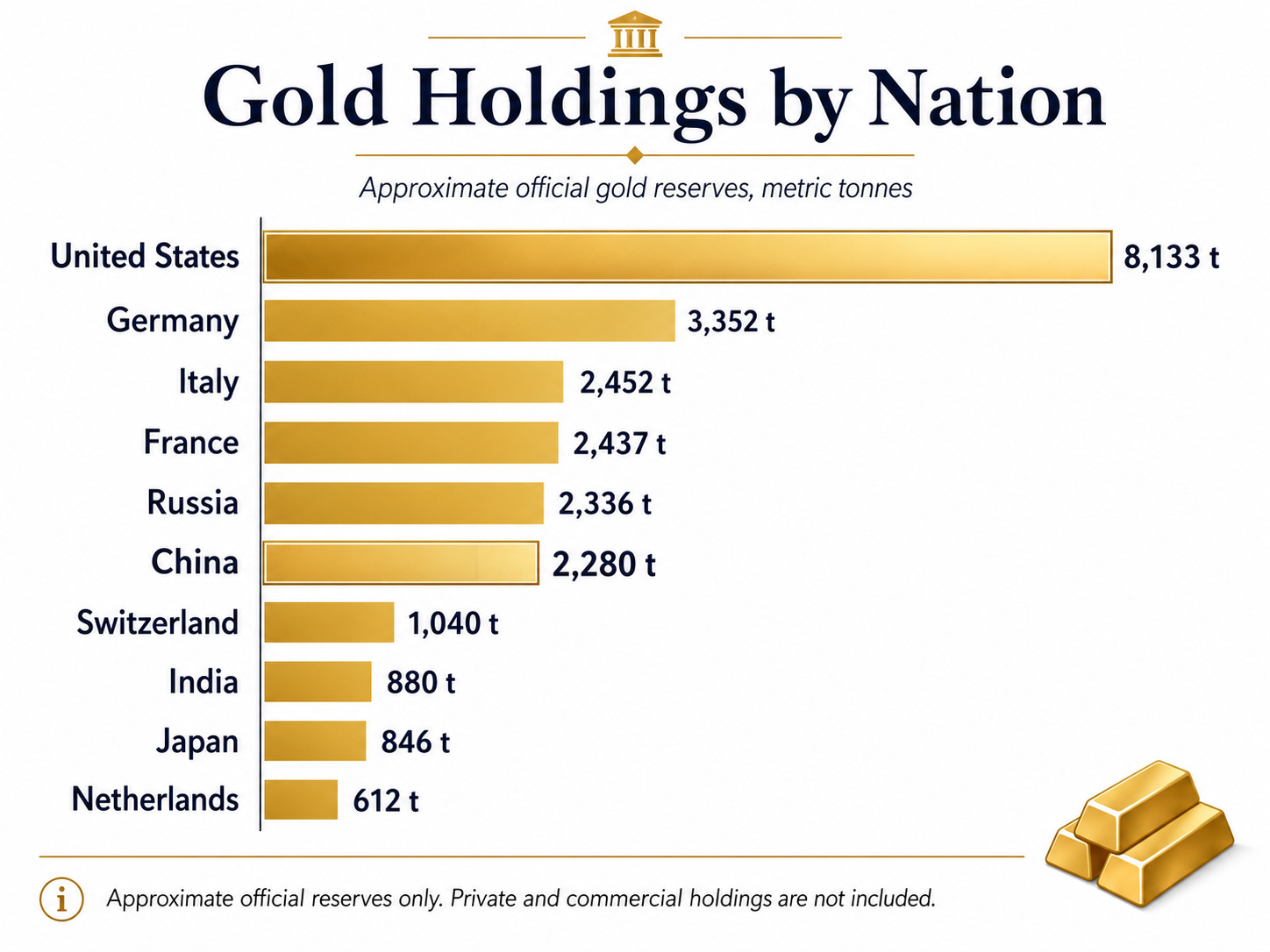
Indeed, BMO notes that, "for all practical purposes", the total gold holdings of China may already have surpassed those of the US, although this is not the main focus of this analysis.
Total reserves of China reach 30,000 tons
BMO estimates that the total gold reserves of China currently stand at approximately 30,000 tons. Included in this estimate are the official reserves of the central bank, commercial reserves, jewelry, investment bars, gold coins, and other private forms of gold ownership.
Although this figure still falls short of the corresponding estimate for the United States, the bank stresses that the gap is steadily narrowing as Chinese demand continues to rise.
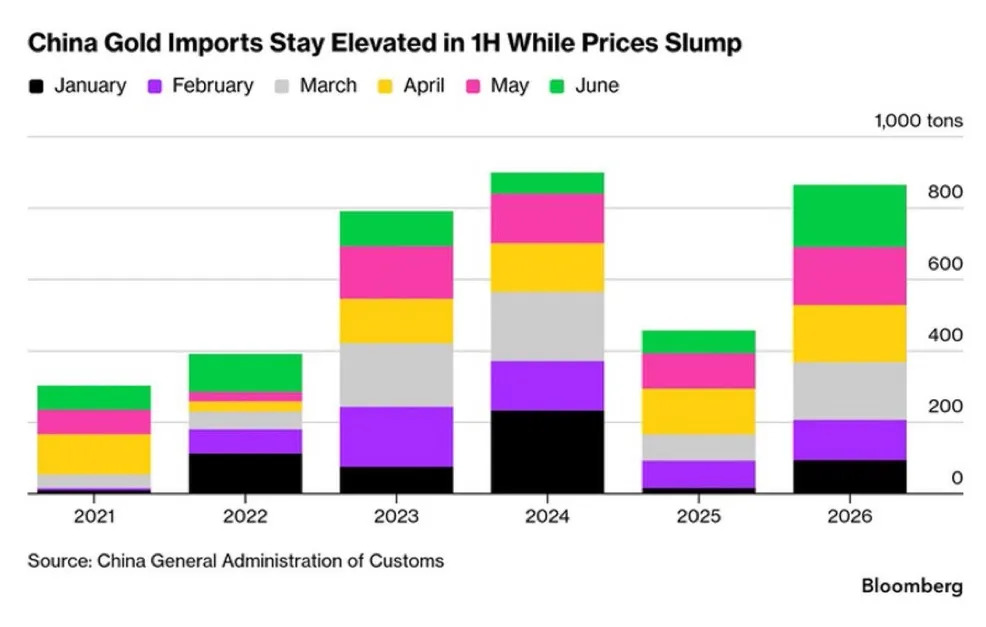
According to the report, China now represents about one third of global physical gold demand, a fact that makes it the most important actor in the market. BMO argues that continuous purchases by China have contributed to keeping the price of gold above 4,000 dollars per ounce, even during periods when investment demand in North America and Europe was relatively subdued.
This element demonstrates that physical demand from China is acquiring ever greater importance in supporting international prices of the precious metal.
Demand is not limited to the central bank
Domestic demand in China comes from multiple sources. Consumers continue to buy jewelry, investment bars, and gold coins, while at the same time both financial institutions and official entities steadily increase their holdings.
This broad demand base means that the role of China in the gold market cannot be assessed exclusively through changes in the official reserves of the PBOC.
At the same time, BMO questions whether official figures reflect the true scale of gold accumulation by China. The bank estimates that in the coming years the country will acquire an additional 2,500 to 3,000 tons of gold through both official and unofficial channels.
These purchases are expected to take place not only through the PBOC, but also through the over-the-counter (OTC) market of London, where transactions are characterized by limited transparency.
If the current pace of purchases is maintained, combined with steady demand from households and investors, the total gold reserves of China may surpass those of the United States within the next five years.
China builds a global gold hub
The report also highlights the strategy of China to strengthen its role in the infrastructure of the global physical gold market.
The country systematically invests in gold exchanges, refineries, storage facilities, and domestic pricing mechanisms, aiming to enhance liquidity and reduce its dependence on traditional markets in North America and Europe.
These investments strengthen the influence of Chinese financial institutions on the way gold is traded, stored, financed, and distributed internationally.
At the same time, this strategy fits into the broader effort of Beijing to promote international usage of the yuan, linking the Chinese currency more closely to physical trade and settlement of gold transactions.
Market center of gravity shifts East
The analysis by BMO concludes that the center of gravity of the global gold market is gradually moving toward the East.
Chinese consumers, investors, financial institutions, and state entities now represent an increasingly larger share of physical demand, while the financial infrastructure of the country is constantly gaining importance for international gold trade.
According to BMO, these developments gradually reduce the market's reliance on traditional Western investment flows and strengthen the strategic role of China in shaping global balances in the market for the precious metal.
www.bankingnews.gr












Readers’ Comments