

The triad of risk for Eurozone banks according to ECB stress tests – Wars, markets, and economic suffocation.
The next banking risk may not begin with a default, but with a war, a cyberattack, or a geopolitical explosion. The European Central Bank warns that the biggest shock to the European banking system may still lie ahead, revealing vulnerabilities that leave no room for complacency. The European Central Bank (ECB) published the results of its 2026 thematic reverse stress test on geopolitical risks, exposing bank vulnerabilities in the face of a new wave of international turmoil. The exercise involved 110 Eurozone banking institutions under direct ECB supervision, which were asked to design extreme yet plausible geopolitical crisis scenarios that could lead to a significant deterioration of their capital position.
The exercise did not evaluate a single scenario for all institutions, but instead asked each bank to identify risks capable of threatening its specific business model. Banks were required to formulate scenarios that would result in a reduction of their CET1 capital ratio by 300 basis points. The scenarios evaluated encompassed military conflicts, trade wars, energy disruptions, supply chain breakdowns, economic sanctions, macroeconomic shocks, and major cyberattacks. The ECB points out that banks generally managed to design meaningful scenarios reflecting their specific vulnerabilities. However, significant weaknesses were identified in risk management frameworks, particularly regarding estimation accuracy, linking geopolitical developments to capital and liquidity impacts, and the credibility of crisis management plans.
The triad of risk: Wars, markets, and economic suffocation
According to the ECB, banks recognized three primary transmission channels for geopolitical shocks: financial market disruptions, real economy pressures, and security and infrastructure risks. The real economy sector proved to be the most significant transmission channel for risks, with banks highlighting that a geopolitical crisis could harm credit portfolio quality, increase non-performing loan losses, and suppress overall profitability. Sectors such as manufacturing, energy, and transportation appear particularly vulnerable, where a fresh crisis could trigger a sharp rise in systemic credit risk. At the same time, banks with substantial market operations could face pressure from declining stock valuations, reduced fee income, and trading losses.
Persian Gulf, China, and Taiwan top the list of risks
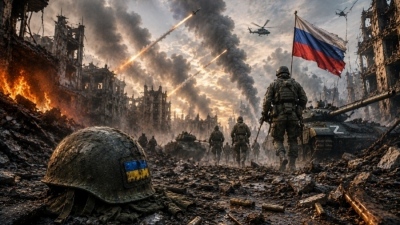
One-quarter of the 110 directly supervised banks explicitly cited a conflict in the Middle East region among the most significant threats they face. Key adverse scenarios also included an escalation of the war in Ukraine, further deterioration in trade relations between the United States and China, and heightened tensions surrounding Taiwan. Banks estimated that these geopolitical shock events would primarily transmit through the real economy, while financial markets would serve as a secondary, yet equally critical, channel of contagion. "Military conflicts appear to particularly impact agriculture, accommodation, and food services, whereas impacts on economic confidence and cyberattacks heavily affect manufacturing and transport," the ECB stated. "Scenarios involving energy supply disruptions appear to negatively affect a broad range of economic sectors," it added. The various scenarios also incorporated management actions by bank executives, such as asset sales, capital increases, or dividend cuts. According to the ECB, these operational adjustments could offset slightly more than one-third of the capital losses. However, the ECB remains skeptical regarding the effectiveness of some of these measures. "In certain cases, banks assume actions that do not appear sufficiently substantiated by realistic evidence regarding whether they can be fully executed," the central bank emphasized.
The "hidden" threat: Cyberattacks and infrastructure collapse
The ECB stresses that critical cyberattacks and the outage of key services from third-party providers now represent one of the largest non-financial risks for banks. Supervisory authorities are demanding that credit institutions systematically incorporate cybersecurity operational resilience risks into stress tests, as a large-scale digital attack could directly impair operations and client confidence.
Liquidity held up, but the ECB warns
Despite the extreme scenarios, bank liquidity coverage ratios generally remained above regulatory minimums. However, the ECB found that several banks underestimated the connection between severe capital stress and potential liquidity drains. The central bank warns that in a real crisis, the two risks are intrinsically linked: a deteriorating capital position can lead to a loss of market confidence and a spike in bank funding costs.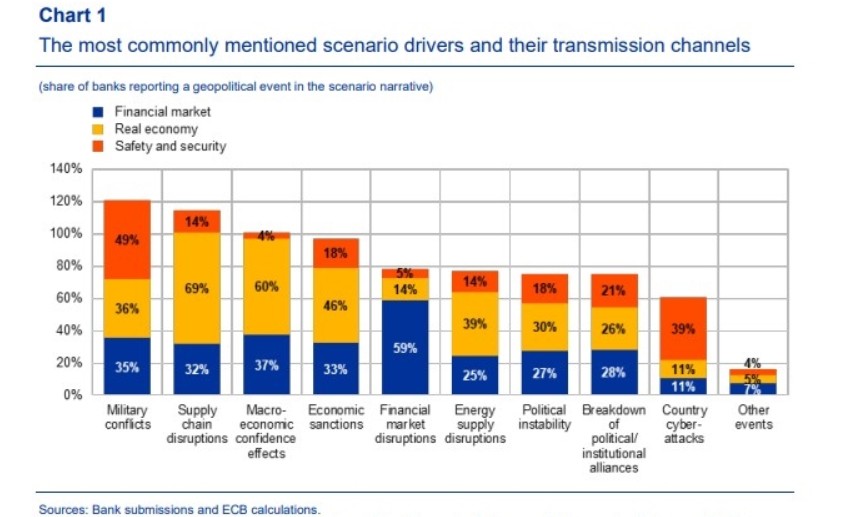
Optimistic rescue plans with questionable effectiveness
As part of the exercise, banks presented recovery measures they could implement during a severe geopolitical crisis, such as raising capital, selling off business units, cutting costs, and restricting shareholder payouts. The ECB, however, identified cases where projections were deemed overly optimistic, such as the assumption that banks could execute distressed asset sales or raise equity under highly adverse market conditions. Supervisory authorities will evaluate these findings within the framework of ongoing dialogue with banks and the SREP assessment process. The ECB clarified that the exercise will not directly alter Pillar 2 requirements or the leverage ratio, though the findings will be utilized to strengthen overall banking system resilience in an environment of escalating geopolitical uncertainty.
www.bankingnews.gr








Readers’ Comments