

Madrid has decided to deploy military forces to the Spanish enclave of Ceuta, following the mass arrival of migrants from Morocco.
In one of the largest migration pressures recorded in recent years in Ceuta, thousands of people crossed illegally by storming from Morocco into the Spanish enclave, adding to the more than 1,500 migrants who had already arrived in recent days. Images and videos from the region capture an extremely difficult situation resembling a potential World War, with large groups of people attempting to reach Spanish territory either by swimming or by crossing on foot through the Tarajal pass, next to the breakwater that separates Ceuta from Morocco. Authorities report that the number of migrants who arrived is equivalent to 2% of the city's total population.
At least 18 dead in crossing attempt
A human tragedy unfolds alongside the immigration crisis that governments impose. According to El País, citing police sources, at least 18 people lost their lives attempting to reach Ceuta by swimming from the Moroccan coast. Most deaths are attributed to the particularly harsh sea conditions, the exhaustion of the migrants, and the dangerous attempts to cross the breakwater and rocky border points. Spanish authorities report that, in coordination with Moroccan officials, they are initiating the mass return process for undocumented migrants, the news portal Hespress reported. At the same time, dozens of other people were rescued at the last minute by Spanish emergency services, while many were transported to hospitals suffering from hypothermia, dehydration, exhaustion, and severe injuries.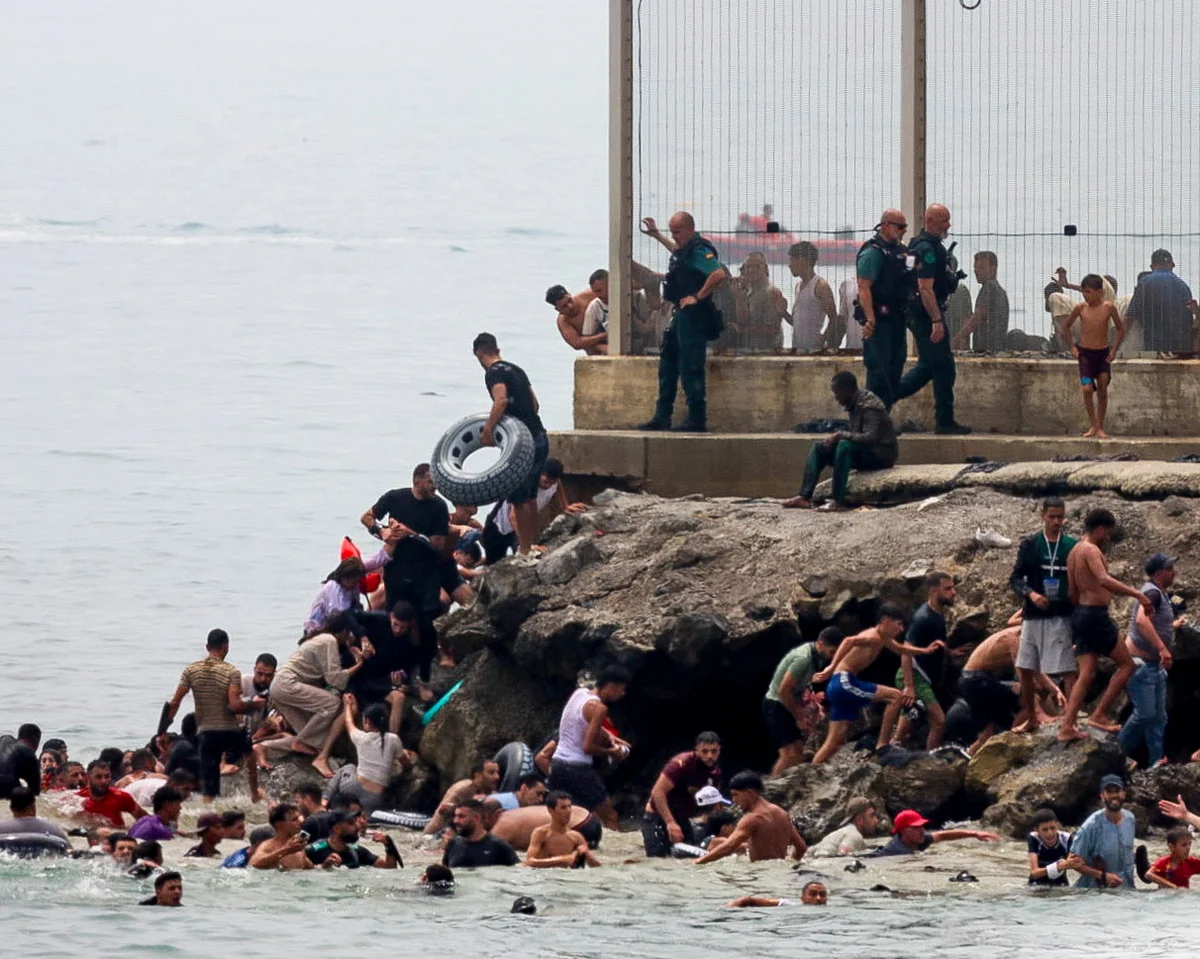
Spain sends the military
The Spanish government announced it will deploy Armed Forces units to Ceuta to reinforce the Guardia Civil and help restore order following the mass entry of migrants from Morocco. The decision was made following a request from local authorities in the Spanish enclave, who requested immediate reinforcements as border patrol forces faced unprecedented pressure from continuous arrivals.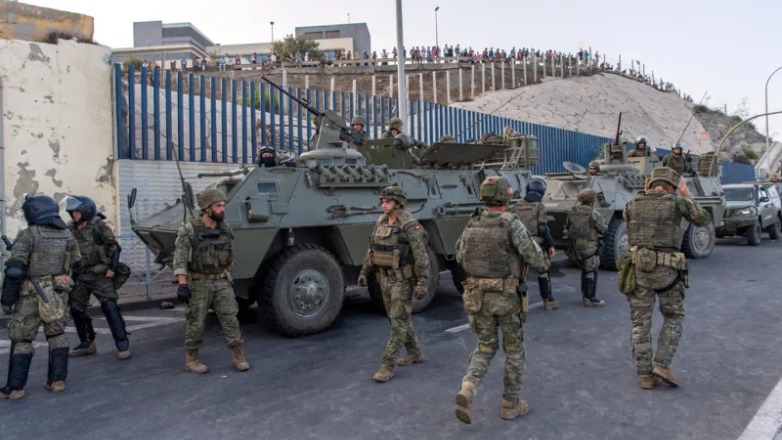
Military and political leadership in Ceuta
The Madrid government announced that the military will assist the Guardia Civil in maintaining security in the city, while Prime Minister Pedro Sánchez was scheduled to travel to Ceuta alongside Interior Minister Fernando Grande-Marlaska to be briefed on-site and coordinate next steps. The visit comes at a time when migration policy has returned forcefully to the center of political debate in Spain and the European Union.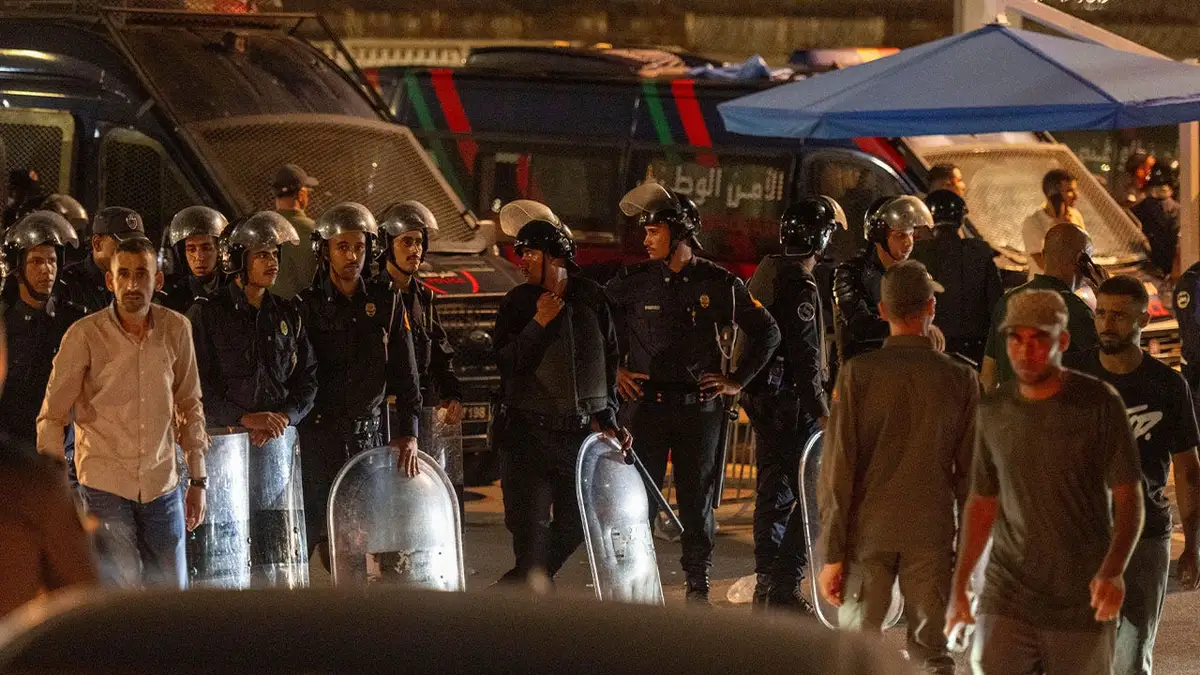
"The situation is absolute chaos"
The head of the association representing Guardia Civil officers in Ceuta, Rachid Sbihi, described the situation as extremely difficult. "The situation is absolute chaos. It is impossible to give accurate numbers, but there are thousands of migrants crossing borders," he told the Associated Press, adding that, in his assessment, "the border has completely collapsed." These statements reflect the reality on the ground, though they do not constitute an official assessment by the Spanish government.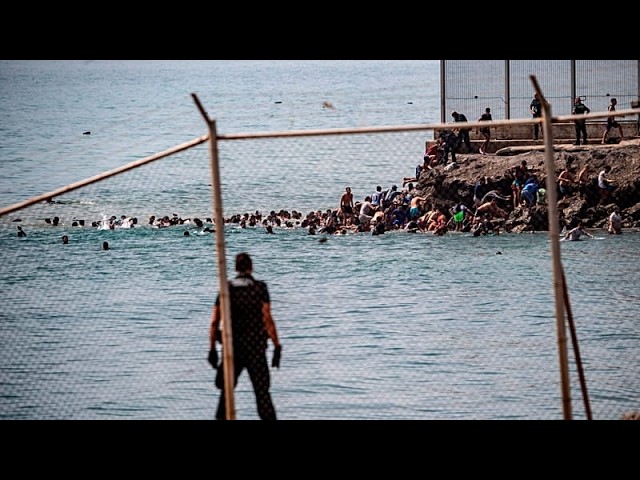
Italy considers restoring border controls
Developments in Ceuta triggered strong reactions in Rome as well. The Italian government is considering activating the provisions of the Schengen Agreement, reintroducing temporary border control checkpoints for travel to and from Spain. Foreign Minister Antonio Tajani stated that he fully supports the initiatives of Interior Minister Matteo Piantedosi, arguing that uncontrolled illegal immigration poses a serious challenge to internal security. At the same time, he linked the increased migrant flows to the legalization program for specific categories of migrants implemented by the Spanish government, although Madrid clarifies that the measure applies exclusively to individuals already residing in the country who met specific conditions.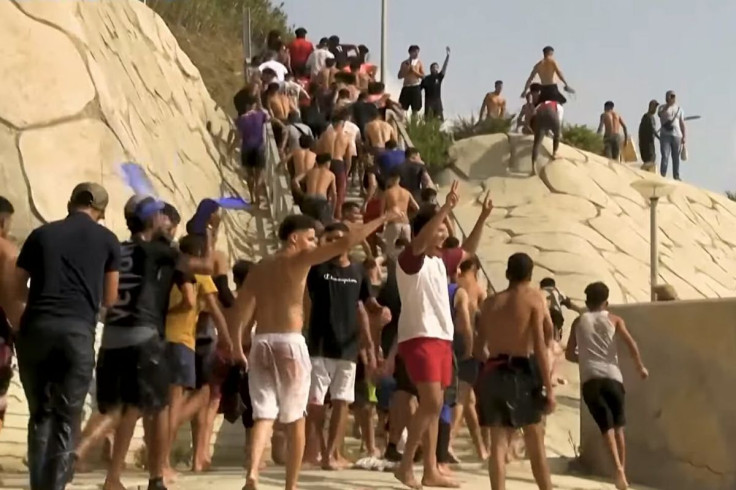
What the Schengen Treaty provides
European legislation allows member states to reintroduce temporary border controls only in exceptional circumstances, when a serious threat to public policy or internal security is identified. If implemented, travelers between Spain and Italy will once again undergo border checks, without this implying an exit by any country from the Schengen zone. The situation in Ceuta remains extremely fluid, with Spanish authorities continuing surveillance and rescue operations, while European governments closely monitor developments for fear of new surges in migrant flows toward the external borders of the European Union.
How the new crisis began
According to Spanish media, tensions began rising gradually about ten days prior to the mass crossing. Every day, hundreds of people attempted to approach Ceuta from the Moroccan coast; however, the situation changed dramatically on July 30, when thousands of migrants moved toward the border almost simultaneously. Most chose to swim around the Tarajal breakwater using life jackets, inner tubes, or improvised flotation devices. Others moved toward land crossing points, creating scenes of chaos that security forces were unable to control.
Exhausted and injured
Videos from the area show dozens of people—mostly young men and teenagers—emerging from the sea visibly exhausted and enraged... Several were bleeding from their legs and knees due to sharp rocks and the breakwater, while others collapsed upon reaching the shore. At the same time, scenes of relief were not absent, as several celebrated their arrival on Spanish soil, chanting slogans such as "Goodbye Morocco, hello Spain" and "Long live Spain," embracing each other or kneeling to kiss the ground. The videos of the intrusion are shocking:
North African Muslim criminals have just broken into Spain from Morocco via Ceuta. Europe is under attack. pic.twitter.com/kehj5LHvec
— RadioGenoa (@RadioGenoa) July 30, 2026
Almost entirely men of military age. https://t.co/0oTYCCQXT3
— Bill Melugin (@BillMelugin_) July 30, 2026
"We're working on an immediate response to the situation in Ceuta"
— Trad West (@trad_west_) July 30, 2026
>Refuses to send in the military for a literal southern border invasion. https://t.co/BhMfIvJDVs
The Ceuta invasion is being coordinated by Facebook groups. @finkd
— DataRepublican (small r) (@DataRepublican) July 30, 2026
The flagship group description: "Ceuta by every route #hraga_ceuta — Migration is an idea, and the idea does not die."
There are countless posts soliciting people to go with others. This is in clear violation… https://t.co/hfi7I6riQi
Holy. Shit.
— Geiger Capital (@Geiger_Capital) July 30, 2026
Spain's far-left PM Pedro Sanchez gave amnesty to 1,000,000+ illegal immigrants, and now hordes of unvetted men are storming across the border from Africa.
It’s the same playbook across the West.
These people will destroy our civilization. pic.twitter.com/NcERXfTbPv
?? Sánchez’s government does not consider the invasion of Ceuta a “national emergency”
— Visegrád 24 (@visegrad24) July 30, 2026
The Interior Ministry said it will protect border integrity but cannot declare a formal national emergency solely over migration.
As a result, Ceuta’s local authorities cannot access special… pic.twitter.com/rXGdIdBNxK
?? Thousands of African migrants who illegally invaded Spain today are celebrating their arrival
— Visegrád 24 (@visegrad24) July 30, 2026
Soon, Sánchez’s government will issue them legal documents, and they will disperse across Europe. pic.twitter.com/Yx5YDRrnXy
www.bankingnews.gr













Readers’ Comments