

Experts speaking to Izvestia estimated that the US-Iran conflict could persist for decades.
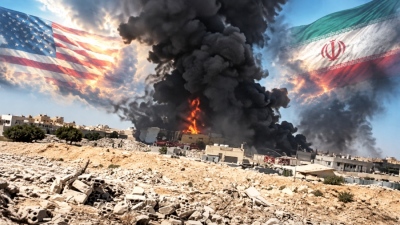
Russian analysts sketch a nightmare scenario for the Middle East, warning that the US-Iran conflict could potentially evolve into a war lasting decades. Following the collapse of talks in Oman and a fresh escalation surrounding the Strait of Hormuz, the strategic maritime artery is once again turning into a powder keg, threatening to drag the entire region into a prolonged cycle of instability and energy turmoil. Iran resumed attacks against United States allies, launching a missile strike against an American military base in Jordan. The United States, alongside Saudi Arabia, targeted pro-Iranian groups in Iraq in an effort to draw Riyadh deeper into the confrontation. As a result, the five-day pause in hostilities previously announced by President Donald Trump came to an end. According to reports, clashes reignited after the breakdown of negotiations in Oman, as Iran rejected a proposal for joint administration of the Strait of Hormuz, seeking exclusive control over the strategic maritime route.
"The conflict could last decades"
Experts speaking to Izvestia estimated that the US-Iran conflict could persist for decades. Although periods of de-escalation may occur, the region is likely to remain unstable, international relations expert Elena Suponina told Izvestia. According to her, the recent pause in hostilities was intended to create an opportunity for negotiations, but Iran categorically refused to make concessions regarding navigation through the Strait of Hormuz.
"Even a government change in Israel is not enough"
Even a potential withdrawal of the United States from the region and a change of government in Israel in favor of leaders seeking compromise would not resolve the deep-seated contradictions at the root of the conflict, estimated political analyst and US affairs expert Dmitry Drobnitsky. According to him, Washington seeks to curb Tehran's influence through confrontation with its proxy forces; however, the effectiveness of periodic airstrikes and Pentagon operations remains questionable. A prolonged ground campaign, akin to the war in Iraq, would require massive resources. Although the United States possesses such capabilities, a long-term conflict would damage the political prestige of Donald Trump, Drobnitsky argued.
Pressure on Gulf states
Washington is also attempting to draw Gulf states into open conflict, even though they do not wish to become directly involved, having grown largely disillusioned with American security guarantees, Drobnitsky emphasized. In his view, Saudi Arabia is the only country still capable of escalating the confrontation, yet it now finds itself in a vulnerable position following the blockade of Red Sea transit by the Houthis.
Tehran seeks control of Hormuz
Ilya Vaskin, a junior researcher at the Center for Middle Eastern, Caucasian, and Central Asian Studies at the Higher School of Economics, told Vedomosti that Iran seeks to maintain control over the Strait of Hormuz in order to regulate maritime traffic. According to his assessment, although US-Saudi strikes in Iraq heighten the risk of the conflict spreading to other Middle Eastern countries, such a scenario remains unlikely for now. "Tehran has no interest in expanding the war, as the Iranian leadership already faces numerous domestic challenges. The most likely scenario is the continuation of reciprocal missile strikes and drone attacks," the expert stated.
"Iran wants to raise the cost for Washington"
Vaskin considers that through attacks on American installations across the region during the current escalation, Tehran aims to raise the cost for Washington of continuing the conflict while simultaneously securing recognition of at least joint management of the Strait of Hormuz with Oman. Iran's refusal to compromise during the Oman talks forms part of its broader negotiation strategy toward the United States, Kamran Gasanov, PhD in Political Science from the University of Salzburg, told Vedomosti. In his view, maintaining Iranian naval control over the Strait of Hormuz serves as leverage in the event Washington refuses to accept Tehran's terms, lift sanctions against Iran, and return its frozen assets.
www.bankingnews.gr








Readers’ Comments