

Saudi Arabia's Gross Domestic Product fell by 4.8% in the second quarter of 2026, marking the largest contraction since the pandemic period.
The war in the Middle East is sweeping through the Persian Gulf, with the Saudi Arabian economy contracting in the second quarter of 2026 as declining oil activity dragged down growth amid escalations in the armed conflict. Saudi Arabia's Gross Domestic Product fell by 4.8% in the second quarter of 2026, marking its steepest contraction since the pandemic era, compared to a 3% growth rate recorded in the first quarter. Reduced production and falling activity across the energy sector exerted strong pressure on the Gross Domestic Product of the Persian Gulf economy, highlighting the nation's vulnerability to geopolitical turbulence and oil market volatility.
Oil hits the brakes on growth
Oil activity proved to be the primary factor behind the GDP decline, as production curbs and war-induced uncertainty impacted the broader energy industry. Saudi Arabia, as the world's top crude exporter and a leading member of OPEC+, remains highly exposed to shifts in energy markets despite diversification efforts under the Vision 2030 framework. Oil sector output and activity plummeted by 24.7% year-on-year, following a 2.9% increase recorded during the first quarter. This sharp downturn placed severe downward pressure on total Saudi GDP growth. In contrast, non-oil activities—in which Riyadh is heavily investing under its strategic economic overhaul—remained in positive territory, albeit at a subdued pace. Specifically, non-oil sectors grew by a mere 0.6%, down from 2.9% in the prior quarter. Specifically, according to the kingdom's official statistics authority, the oil sector subtracted 5.4 percentage points from the annual GDP growth rate. Conversely, non-oil activities added 0.4 percentage points, while government activities and net product taxes contributed 0.1 percentage points each.
On a seasonally adjusted basis, real GDP shrank by 4.9% compared to the previous quarter. This quarterly contraction was mainly driven by a 21.5% drop in oil sector activities. Non-oil activities slid by 0.5%, whereas government activities registered a modest uptick of 0.2%. Oil activities weighed down the overall quarterly GDP performance by 4.5 percentage points, while non-oil activities and net taxes on products knocked off 0.3 and 0.1 percentage points, respectively. The General Authority for Statistics noted that estimates rely on indicators covering production, expenditure, income, prices, and international trade, which are typically published 30 days following the end of each quarter.
Persian Gulf war hits the region's largest economy
The figures capture the mounting toll of the prolonged conflict between the United States and Iran, which has injected deep instability throughout the wider Gulf region. Over the course of the war, Tehran launched strikes targeting Washington's regional allies, including essential Saudi energy infrastructure, raising alarms over new disruptions in world energy supply. Concurrently, the crisis triggered repeated standstills in maritime transport through the Strait of Hormuz, one of the planet's most critical energy transit bottlenecks, through which nearly 20% of global oil trade passed until recently. Saudi crude exports through this strategic sea route resumed in June following a temporary de-escalation deal between Washington and Tehran. However, the collapse of the truce and renewed Iranian warnings have reignited risks to regional energy security.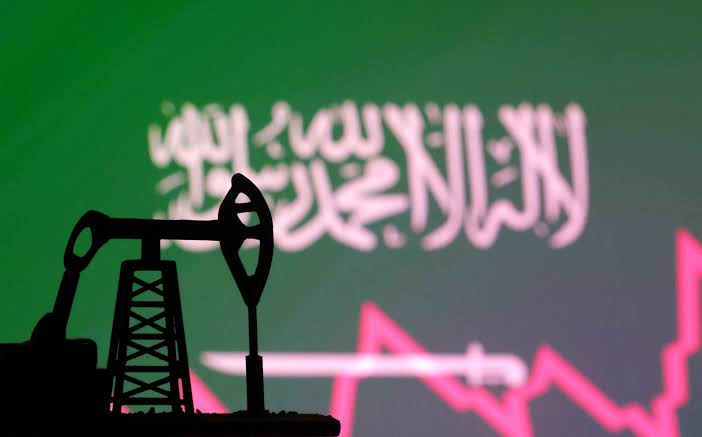
The Red Sea alternative and the Houthis
To limit its exposure to the risks around the Strait of Hormuz, Saudi Arabia has stepped up utilization of the pipeline transporting crude oil to the port of Yanbu on the Red Sea. This route provides a vital alternative export channel to international markets, reducing reliance on the vulnerable maritime passage. Nevertheless, fresh hazards are surfacing from Yemen's Iran-backed Houthis, who have warned of potential strikes against Saudi ports and merchant shipping across the area. Even as oil output remains below pre-war levels, Saudi Arabia has reaped some financial benefits from elevated global crude prices. Brent crude topped $92 per barrel on Thursday, bolstering the kingdom's fiscal revenues.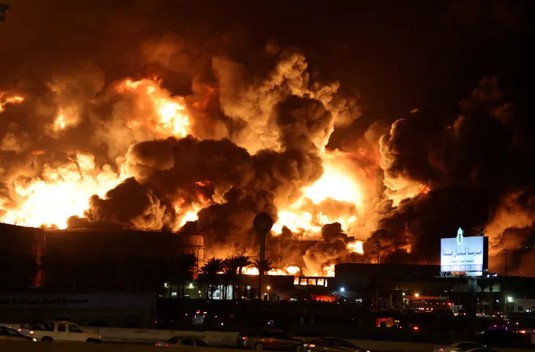
IMF: Recovery starting in 2027
The International Monetary Fund assesses that the Saudi economy retains meaningful resilience, underpinned by strong macroeconomic fundamentals and targeted investments in transport, logistics, and energy infrastructure. According to the Fund, the economic rebound is expected to gather momentum once shipping through the Strait of Hormuz normalizes. The IMF projects that Saudi Arabian growth will slow to 1.7% in 2026, before pulling off a robust recovery to 5.5% in 2027.
The Vision 2030 gamble
Over the medium term, the nation's economic trajectory is expected to be anchored by strong private consumption, investment inflows, large-scale state infrastructure initiatives, hosting international events, and ongoing reforms under the ambitious Vision 2030 plan. While Riyadh's overarching strategy to reduce oil dependence remains fully underway, the current geopolitical conflict underscores that Saudi Arabia's economy continues to be directly exposed to violent shocks in energy markets.
www.bankingnews.gr













Readers’ Comments