

The shadow of a new and extremely dangerous geopolitical front looms over the Middle East war. A Ukrainian drone attack on an Iranian merchant vessel in the Caspian Sea triggered intense discussions in Tehran, with analysts and state media now openly considering even the possibility of direct military confrontation between Iran and Ukraine. Ukrainian media are already speaking of an imminent Iranian attack with 3 missiles, while in Moscow they estimate that Iran will respond militarily... At the same time, estimates are being voiced that the crisis could evolve into a broader conflict, with potential NATO involvement and new disruptions in an already explosive international landscape.
The new front
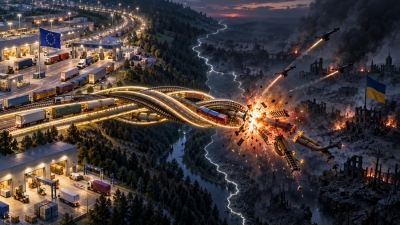
While the United States paused its 13-day air strikes on Friday night, July 24, Ukraine's surprise attack on an Iranian merchant vessel on Saturday, July 25, in the Caspian Sea is seen as a new development in the war between Iran and the United States. There is no doubt that this strike added a new and significant dimension to the conflict, with some describing it as another step toward horizontal expansion of the war or, at least, its consequences. Although it is not yet clear whether this incident can be viewed as opening a new front in the war between Iran and the United States, it is already obvious that, from a practical standpoint, this Ukrainian attack linked, to some extent, the war in the Persian Gulf with Ukraine's war in Eastern Europe.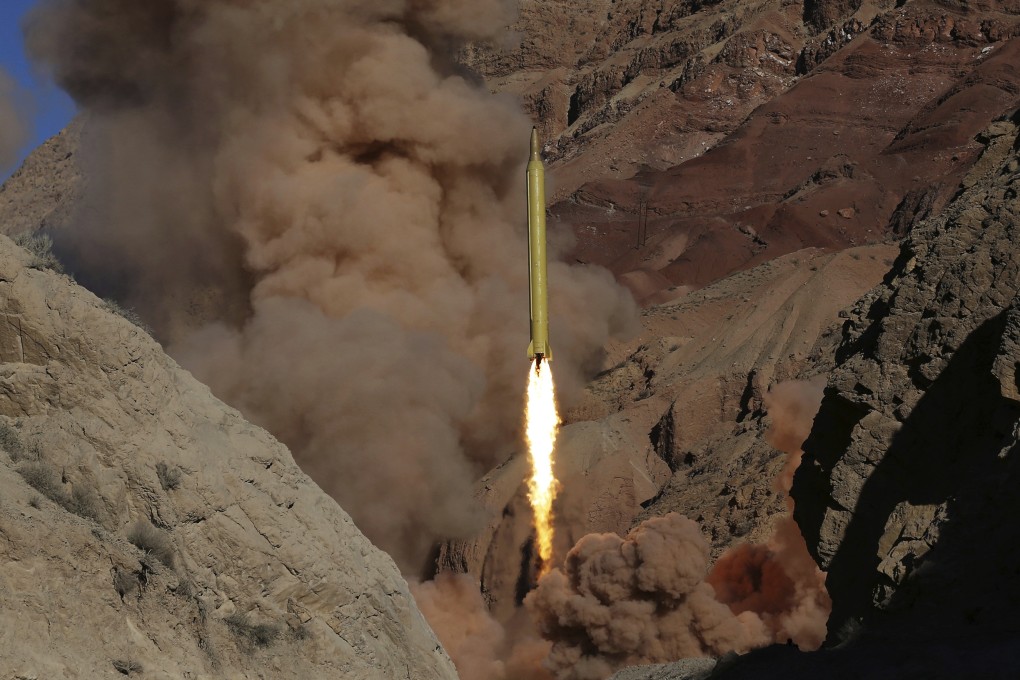
Will the attacks continue?
Reza Ghabishavi wrote in the newspaper Asr-e Iran that it is likely Ukraine, in subsequent stages, will seek to intensify strikes against Iranian interests, arguing that this will weaken part of Russia's weapon supply lines from Iran and reduce the intensity of Russian attacks. In the event of continued Ukrainian strikes, the possibility of an Iranian military response arises. The distance between the borders of Iran and Ukraine is approximately 1,000 kilometers, yet Iranian missiles possess the capability to strike Ukrainian territory. However, Iran should, as much as possible, avoid getting dragged into the war in Ukraine and display restraint regarding potential provocative actions by Kyiv. Ukraine is already fully immersed in war and would suffer no disadvantage if it dragged Iran into the conflict as well. Ukraine believes that, due to the vast distance, Iran cannot inflict severe damage on it. On the contrary, reports indicate that Iranian missiles can reach Ukraine and that Iran could also target Ukrainian interests in the region, such as the country's embassies.
Seeking European involvement
Iranian conservative political activist Ali Gholhaki also warned regarding the potential for an Iranian reaction toward Ukraine. He noted that Ukraine's protests regarding Iranian drones and military assistance to Russia are not completely groundless, but emphasized that a response that would rally all of Europe alongside the United States against Iran must be avoided. He recalled that Iran did not publicize the vessel incident and that it was Kyiv that chose to announce it. He questioned whether the objective was to involve Europe in war with Iran or to link the Russia–Ukraine war dossier with the Iran–United States conflict, underlining that the situation is exceptionally complex.
A trap for Iran?
Analysts argue that since the start of the Russian invasion of Ukraine, Iran should have declared neutrality—which did not happen, resulting in the deterioration of Iran-Ukraine relations. It is also noted that, although the President of Ukraine adopted a hostile stance toward Iran during the 40-day war between the United States and Iran, Russia took no actions proving substantial support toward Iran and lacks a positive track record on this matter. In this context, it is noted that when Israel conducted strikes against Iran, Russia justified its lack of reaction by citing the presence of millions of Russian speakers in Israel. For this reason, Tehran is advised to pursue an independent policy regarding Ukraine, separating its position from Russia, and rather than entering a conflict, seek de-escalation of tensions with Kyiv. It is further argued that invisible forces are seeking to trap Iran through Ukraine, and that Iranian authorities must be exceptionally cautious not to fall into this trap.
The 3 scenarios
Within this context, analysts point to three scenarios following the Ukrainian attack on Iran. Specifically, it is estimated:
-
That the West seeks to create a pretext for NATO involvement in a war with Iran in support of the United States.
-
That Trump may be seeking to expand the naval blockade of Iran, tasking Ukraine with impeding Iranian activities in the Caspian Sea.
-
That, because the United States is concerned about potential Iranian counterstrikes against American bases, Israeli infrastructure, and southern Persian Gulf states, it may have assigned this mission to Zelensky.
Iran: Terrible retaliation coming to Ukraine
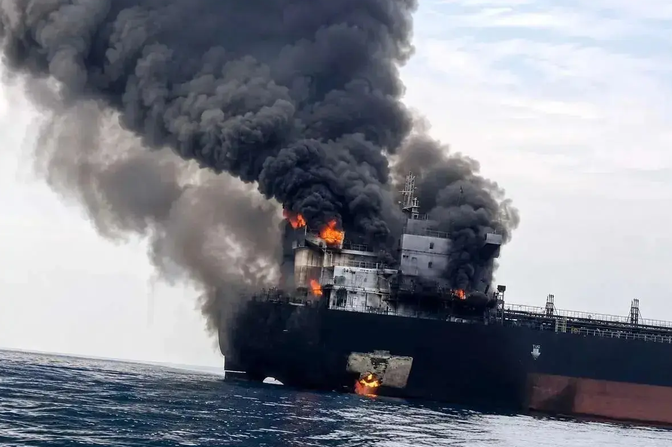
Iran responded that one of its merchant ships, which was carrying a cargo of iron, was struck, resulting in one sailor being killed and three others injured. The ship, whose name was not released, was en route from the Russian port of Astrakhan to Anzali in Iran. Regional Governor Hadi Hagh-Shenas described the specific route as a "safe and reliable commercial exchange corridor between the two ports." Tensions escalated further yesterday, Monday, July 27, when Iranian Foreign Ministry spokesman Esmail Baghaei stated: "This action by Ukraine was completely illegal and unjustified, contrary to the United Nations Charter, and constitutes a dangerous act of adventurism which will certainly not go unanswered by us." For his part, Iranian Foreign Minister Abbas Araghchi claimed that "Zelensky attacked an Iranian merchant ship" and that the attack was ordered by Israel to drag Europe into Israel's war as well... Indeed, Ukraine's chargé d'affaires in Tehran was summoned to the Iranian Foreign Ministry for explanations...
Scenario of attack with 3 missiles
Ukraine estimates that Iran may soon launch three ballistic missiles toward Ukrainian territory, according to the Telegram channel Insider. "There is information that Iran is allegedly planning to launch three ballistic missiles against Ukraine within the next two days. The information comes from Ukrainian Telegram channels. To date, there is no official confirmation of this information," the relevant post states. At the same time, the authors published a map depicting the potential operational range of the Khorramshahr Iranian medium-range ballistic missile. According to their assessment, the missile could strike most of Ukrainian territory, with the exception of the country's western regions bordering Poland. On July 25, Ukraine conducted an attack against an Iranian merchant vessel in the Caspian Sea. An explosion occurred on the ship, resulting in one sailor losing his life and another being injured. As stated by Iranian Foreign Minister Abbas Araghchi, the Islamic Republic reserves the right to respond to Kyiv for this specific incident.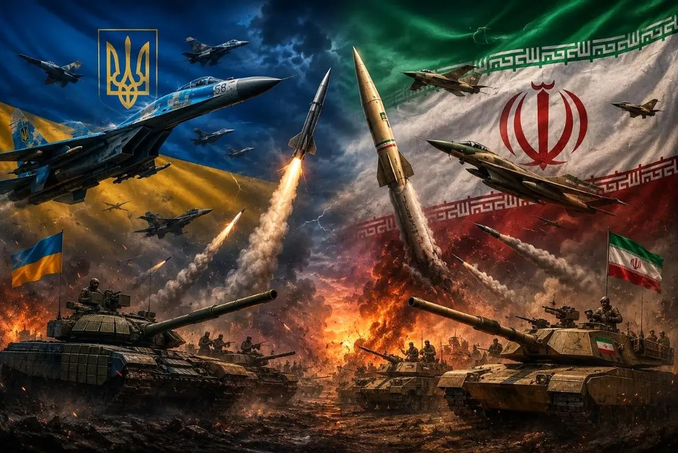
Peskov (Russia): It is an attack against Iran
The Kremlin states that this attack must be considered an attack against Iran and underlines the necessity of eliminating the "threat" from Ukraine. "The Kyiv regime blew up an Iranian merchant ship in the Caspian Sea. This is an attack against Iran," stated Kremlin spokesman Dmitry Peskov, who accused Ukraine of expanding the geographic reach of what he characterized as "terrorist attacks." Furthermore, he accused Kyiv of being responsible for blowing up Germany's Nord Stream gas pipelines—something Ukraine denies—as well as striking Kazakh interests by targeting infrastructure of the CPC Pipeline. "This threat must be neutralized and permanently destroyed," Peskov stated.
Alexey Chepa (Russia): Iran has the technical capability for a missile strike on Ukraine
Iran possesses the technical capability to launch a missile strike against Ukraine following Kyiv's attack on an Iranian tanker in the Caspian Sea and will not leave the incident unanswered, stated Alexey Chepa, deputy chairman of the International Affairs Committee of the Russian State Duma. "They possess the capability to strike with ballistic missiles. Over the past year, we have seen that Iran responds to every provocation and every action against it. Therefore, it is certain that it will not leave this incident without a reaction," Chepa emphasized.
Is Iran or Ukraine militarily stronger?
According to Iranian media, in the ground forces domain, Ukraine possesses more soldiers than Iran. Ukraine has approximately 1,250,000 soldiers, while Iran has about 600,000 combat-ready troops. Of course, the number of Basij forces in Iran is extremely large and can be considered to exceed the corresponding number of Ukrainian forces. In the armor domain, the situation appears more favorable for Iran. Ukraine possesses roughly 1,462 battle tanks, while Iran has 2,198. Regarding armored fighting vehicles, Iran possesses 2,875 and Ukraine 5,739. In artillery, Ukraine has 3,636 pieces and Iran 4,582. Of these, Iran possesses 742 self-propelled guns and Ukraine 899. Additionally, Ukraine has 693 multiple rocket launchers, while Iran has 1,752. In air power, Iran appears stronger. According to an Armed Force report, Iran possesses 1,052 aircraft, while Ukraine has 297. Both countries are also highly active in the drone domain. Iran is considered one of the world's significant powers in uncrewed aerial vehicles. Its attack, loitering munitions, and reconnaissance drones—particularly the IRGC's Shahed and the Iranian army's Arash—are especially well known. On the other hand, Ukraine has collaborated with Turkey in the drone sector and has made progress in this branch. In naval forces, it can also be said that Iran possesses greater capabilities than Ukraine. Iran has a total of 279 warships, while Ukraine has 53. Iran possesses 7 frigates, while Ukraine has 1. Furthermore, Iran possesses several dozen submarines, while Ukraine has no submarines at all.
Iran's missile power versus Ukraine's missile power
Undoubtedly, Iran's missile power is significantly greater, more diverse, and more strategic than that of Ukraine. Iran presents itself as one of the strongest missile powers in the world and the region, while Ukraine is characterized as a new player in this domain, dependent on foreign aid.
1. Size and scale of the arsenal
Iran possesses several thousand ballistic and cruise missiles. Pre-war estimates indicated it possessed roughly 2,500 to 3,000 ballistic missiles and, despite their usage in recent conflicts, it still retains more than 2,000 strategic ballistic missiles. The number of Ukraine's domestically produced ballistic and cruise missiles is extremely limited, and the majority of its offensive missile power relies on a few dozen Western long-range missiles, such as ATACMS and Storm Shadow, whose delivery is also accompanied by significant restrictions.
2. Variety and range
Iran possesses a complete spectrum of short-range (300 km), medium-range (1,000–2,000 km), and even continental-range (approximately 4,000 km) missiles. Missiles such as the Khorramshahr, Sejjil, Qadr, and Emad are reported to be capable of covering the entire territory of Ukraine and even beyond. Conversely, Ukraine's domestically produced missiles are primarily short-range. The recently presented FP-7 with a range of 200 km and the FP-9 with a range of 850 km have not yet completed operational deployment. The Neptune cruise missile has a range of roughly 400 km, while the newer Trident missile is reported to have a range exceeding 3,000 km, but has not yet entered operational service.
3. Technology and propulsion
Iran possesses advanced solid-fuel technology, enabling faster launches and greater mobility, hypersonic missiles such as the Fattah-1, as well as maneuvering re-entry vehicles with mobile warheads like the Emad, which according to the text facilitate penetrating air defense systems. Ukrainian missiles rely primarily on technologies inherited from the Soviet era, while newer missiles are mostly cruise missiles with liquid-propellant engines, presented as less complex and slower than Iranian ballistic systems.
4. Operational experience and effectiveness
According to Iranian media, in recent years—particularly during retaliatory strikes against Israel under Operation True Promise—Iran demonstrated that it can launch hundreds of missiles simultaneously and penetrate advanced multi-layered air defense systems. Conversely, Ukraine's primary operational experience in using ballistic missiles is limited to short-range Russian Iskander missiles and received Western missiles. Domestically produced Ukrainian missiles have not yet been used widely or effectively on the battlefield.
www.bankingnews.gr







Readers’ Comments