

China acted as the main stabilizing factor of the global economy after the outbreak of the war with Iran, according to economists from the European Central Bank (ECB), who estimate that the country's massive oil reserves, rapid electrification, and diversification of its energy mix prevented a new international energy crisis equal to or even more severe than that of 2022.
In their analysis, ECB economists note that Beijing's extensive stockpiling of crude oil, the shift toward electric vehicles, and reduced consumption of petrochemical products helped ensure that the rise in oil and gas prices following the American-Israeli attack on Iran in late February remained comparatively limited.
The report acquires particular importance, as it comes from the ECB itself during a period in which European economies continue to face high energy costs, sluggish growth, and increased market uncertainty.
Chinese reserves as a shield
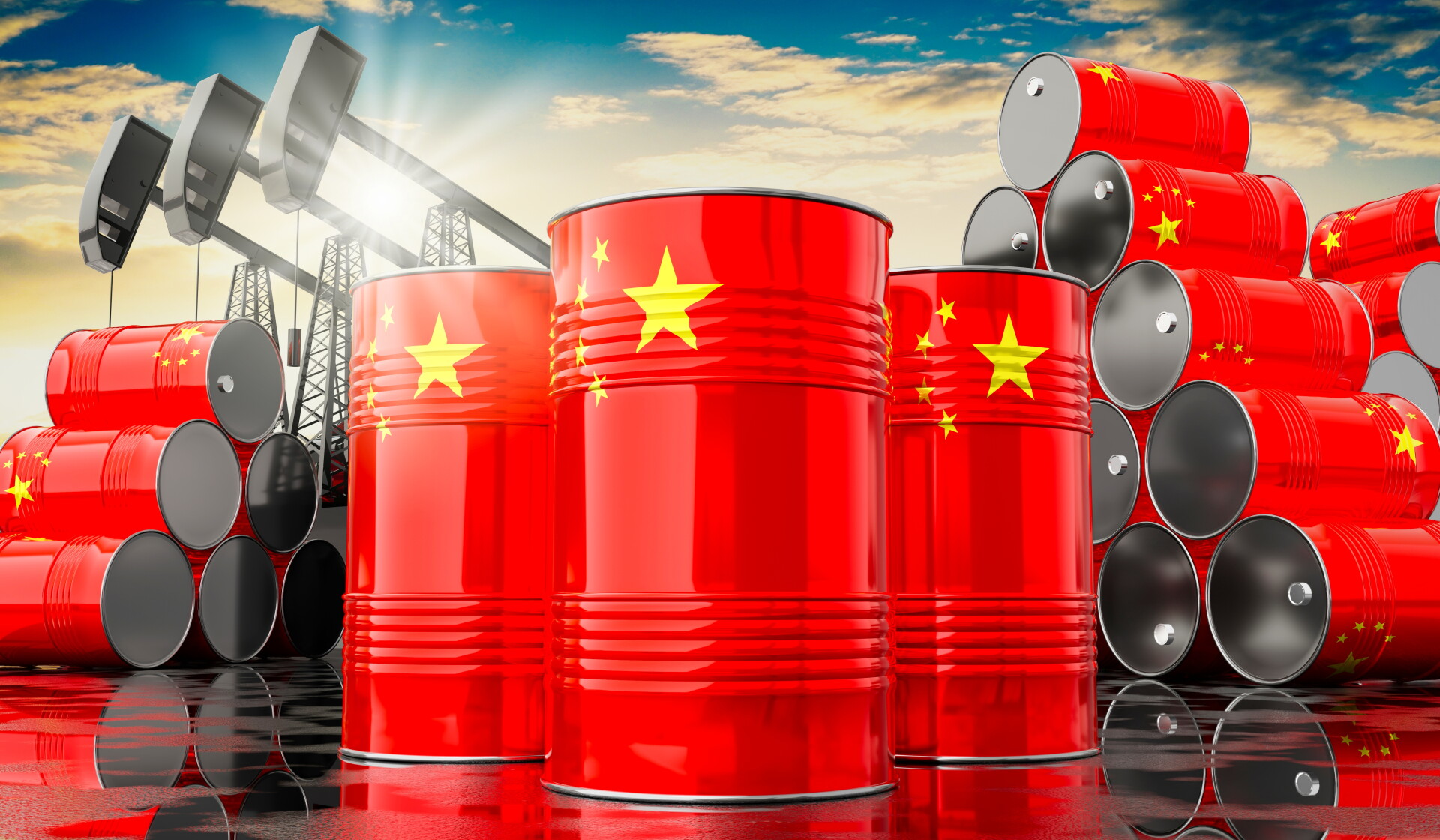
The report notes that the crude oil reserves of the world's second largest economy increased from 92 days of imports in 2023 to 115 days at the beginning of 2026.
According to ECB analysts, this increase helped absorb part of the supply losses, which are many times those caused by the Russian invasion of Ukraine in 2022.
The importance of the Chinese reserve is twofold: on the one hand, it limits the need for immediate purchases from the international market during periods of crisis, and on the other hand, it acts as a psychological stabilizing factor for investors and energy trading companies.
A much larger shock than Ukraine
According to the report, the war with Iran has removed approximately 14 million barrels per day from the global oil supply, meaning roughly 14% of global production.
In contrast, after the Russian invasion of Ukraine, supply losses amounted to approximately 1 million barrels per day, or just 1% of global production.
Despite this large difference, the two crises caused an almost similar rise in energy prices.
In early June, oil was approximately 29% higher than pre-war levels, compared to a peak of 30% after Russia's invasion.
Electrification changes the rules
Particular emphasis is placed on the role of electrification.
China, which constitutes the largest electric vehicle market in the world, has noticeably reduced its dependence on transport fuels.
The rapid penetration of electric cars, buses, and trucks limits the demand for gasoline and diesel, while the strengthening of renewable energy sources and nuclear production gradually reduces the need for imported oil and natural gas.
The ECB estimates that this structural shift in the Chinese economy now has global consequences, as China accounts for a large portion of international energy demand.
Additional factors that held back prices

ECB economists, Euractiv notes, point out that increased shale oil production in the USA, releases of strategic oil reserves by Western countries, and investor conviction that the conflict will be resolved relatively quickly also contributed to the de-escalation.
The analysis is published in a period when tensions between the USA and Iran have eased, as the two sides have suspended mutual attacks following the collapse of the recent ceasefire.
Oil eases, but the risk remains
Brent was trading on Tuesday at 86 dollars a barrel, after having surpassed 100 dollars the previous week.
At the same time, yields on the German 10-year bond fell to 3.13% from a 15-year high of 3.21%.
Hormuz, the big risk for markets
The war has caused severe damage to energy infrastructure in the Middle East and led Tehran to close the Straits of Hormuz, through which before the conflict passed approximately one fifth of global energy supply.
ECB analysts estimate that a lasting reopening of the Straits could exert significant downward pressure on energy prices.
However, they warn that conditions in the Straits of Hormuz and, by extension, in global energy markets remain extremely volatile.
A prolonged closure would gradually exhaust available reserves and force markets to abandon expectations of a quick resolution, increasing the risk of renewed upward pressure on prices, the report concludes.
What it means for Europe
The ECB analysis also contains a clear message for Europe.
If China did not possess such large reserves and had not reduced its energy dependence so quickly, Europe would likely face much higher oil prices, stronger inflationary pressures, and a greater need for strict monetary policy.
In other words, the ECB indirectly acknowledges that Beijing's energy strategy did not only affect the Chinese economy, but functioned as a factor of stability for the entire international economic system.
The global economy has so far avoided a new energy shock, not because the war with Iran was limited, but because China had prepared in time for a much larger shock.
www.bankingnews.gr



Readers’ Comments