

Developments in the Ukrainian crisis are rapid, and the next stages of the war will be even more shocking.
The latest moves of Vladimir Putin have stirred intense activity among military analysts, as a series of decisions, statements, and developments build the picture that Russia is preparing for a new, broader phase of the war in Ukraine, likely as early as September.
The increase in personnel of the Russian Armed Forces, reports of a possible new presence of North Korean soldiers, changes in offensive tactics, and the escalation of strikes against strategic targets in the Odesa region compose a scenario that raises a fundamental question:
Are these merely operational adjustments, or is Moscow preparing a major military initiative?
The expansion of the Russian military did not go unnoticed
With a new presidential decree, Vladimir Putin increased once again the strength of the Russian Armed Forces.
The total strength now stands at 2,426,130 personnel, of which 1,535,000 are military personnel, representing approximately 25,000 more service members compared to the previous decision in June.
Officially, the increase is attributed to the reconstitution of military construction units. However, the timing has triggered intense speculation that Russia seeks to enhance its overall military capability ahead of potential new operations.
The North Koreans return
Renewed discussion was sparked by reports that two corps of soldiers from North Korea may be redeployed to the front starting in September.
The relevant claims originate from Russian commentators and military analysts and have not been independently confirmed. At the same time, the Ukrainian side has repeatedly maintained that thousands of North Korean soldiers are already alongside Russia, while Moscow has not officially confirmed these reports.
The fact that the Kremlin avoided commenting on the latest relevant statements by Volodymyr Zelensky has triggered a new round of interpretations.
Tactics change on the battlefield
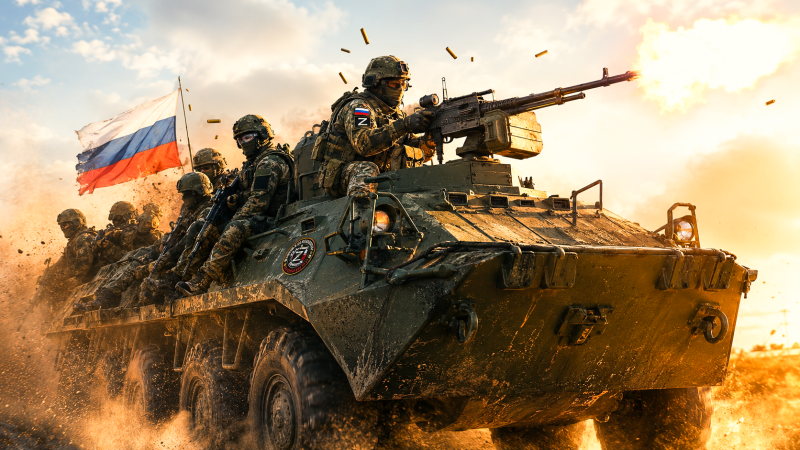
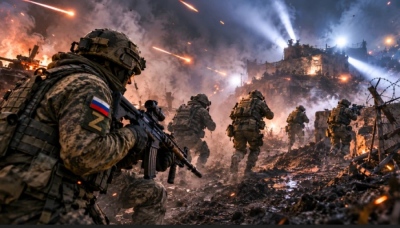
At the same time, increased use of large armored formations is observed in areas where until recently small infantry groups and drones dominated.
Russian military analysts argue that armor is now used as a means of rapid infantry transport deep inside Ukrainian positions, even if the vehicles themselves are destroyed during the operation.
The logic of this tactic is that mission success is measured by whether the assault forces reach their target, rather than by the survival of the vehicles.
Odesa at the epicenter
At the same time, attacks against the port infrastructure of the Odesa region have intensified.
Russian sources claim that long-range bombs with guidance kits are now being used, as well as new unmanned aerial vehicles, aimed at increasing pressure on Ukrainian supply lines.
If these reports are confirmed, the ability to strike targets at longer distances could expand the operational options of the Russian air force.
The phrase by Putin that sparked discussion
A public statement by Vladimir Putin also created a particular stir, as he revealed that an awarded military officer told him:
"We will win. We must be bolder."
The Russian president replied that boldness must be accompanied by caution, pointing out that every decision on the battlefield carries a cost in human lives.
This statement was interpreted by several analysts as an indication that the Kremlin is considering next moves, without revealing its intentions.
What is really happening?
Available evidence shows that Russia continues to strengthen its military capabilities, test new tactics, and increase pressure on critical Ukrainian infrastructure.
However, so far there is no independently confirmed evidence proving that a specific large-scale attack or a new generalized phase of the war is imminent.
What is certain is that the increase in military personnel, the adaptation of operational tactics, and the intensification of strikes sustain the question occupying analysts and observers:
Are we witnessing the preparation of a new Russian strategy, or is this a gradual reinforcement of the existing war effort?
The war economy changes Moscow's capabilities
One of the key reasons causing concern in the West is that Russia appears to have adapted a significant part of its economy to the requirements of a long-term conflict. Production of ammunition, drones, armored vehicles, and missile systems has increased compared to the early years of the war, while the Russian defense industry now operates at rates that, according to several military analysts, allow Moscow to replenish a significant portion of its losses. This does not necessarily mean that a general offensive is imminent, but it increases the operational options of the Kremlin for the coming months.
Pressure is exerted not only at the front but also in the rear
At the same time, Russian strategy appears to place increasing emphasis on the attrition of Ukrainian infrastructure. Continuous attacks on ports, fuel depots, railway hubs, and logistics centers aim to make the transport of Western military materiel to the front line more difficult. The logic of this approach is that an army is not weakened solely through losses on the battlefield, but also when supply lines are disrupted and the capability for rapid replenishment of personnel and equipment is diminished.
The big question concerns the autumn
Several analysts estimate that the coming months may prove to be a critical point in the war. The increase in the strength of the Russian Armed Forces, reports regarding the reorganization of units, and the intensification of operations in various sectors of the front have led to speculation that Moscow might seek to create new operational realities before the onset of winter. So far, however, there is no independently confirmed evidence proving that a decision has been made for a specific large-scale attack.
The Kremlin message to friends and foes
Regardless of whether a new major operation is being planned or not, the image the Kremlin attempts to project is clear: Russia seeks to show that it possesses the human resources, industrial production, and political will to continue the war for as long as necessary.
The increase in troop strength, investments in the defense industry, and public statements by the Russian leadership serve not only as operational moves but also as a message of strategic deterrence toward Ukraine and its Western allies that Moscow does not appear inclined to back down from the goals it has set.
The "Korean factor" returns to the forefront
Particular interest is also generated by new reports regarding a possible return of North Korean soldiers to the Ukrainian front. The relevant claims originate mainly from Russian military commentators, who speak of a deployment of up to two corps starting in September, without, however, independent confirmations existing so far. If these reports are ultimately verified, it would represent one of the most significant developments of the war, as it would signal even closer military cooperation between Moscow and Pyongyang.
Why the potential involvement of North Korea causes concern
Military analysts estimate that, beyond the number of soldiers, the political message such a development would send is of particular significance. A potential larger participation of North Korea could be interpreted as a sign that Russia seeks to bolster its military power through closer alliances outside the Western world, while simultaneously showing that the conflict is acquiring increasingly international characteristics.
Washington changes priorities
At the same time that Russia increases its military power, a completely different climate is taking shape in the United States. Internal political confrontations, rising fiscal costs, and American public fatigue regarding the war lead an increasing number of analysts to conclude that Washington is seeking a more restrained approach. Although the US continues to be the primary military supporter of Kyiv, decisions in recent months show that the logic of an "open check" is beginning to be questioned even within the American political system.
The 400 million dollar package and the message of. 2029
Particular symbolism was also attached to the decision of the US administration to inform Congress that final deliveries of an already approved military aid package worth 400 million dollars to Ukraine are scheduled to be completed at the earliest during fiscal year 2029. The fact that part of the aid is deferred so far into the future provoked strong reactions from both Democrats and Republicans senators, who expressed concern over the pace of implementation of the program and over whether these decisions bind the next US administration.
Delays and unfulfilled contracts cause concern
At the same time, a significant portion of American contracts for the production and delivery of weapon systems remains unfulfilled. According to publicized data, more than 40% of contracts have not yet been completed, despite the fact that billions of dollars have already been allocated to American defense manufacturers. This development reinforces discussions that constraints in the defense industry and political balances in Washington now directly affect the pace at which Ukraine is militarily reinforced.
The great strategic dilemma of the West
For the Kremlin, every indication of delay or political fatigue in the West is considered a factor that can work in favor of its long-term strategic goals. Conversely, Western governments insist that support for Kyiv continues, albeit at different paces and priorities. What is certain is that the conflict is no longer decided solely on the front lines, but also in the political decisions taken in Washington, European capitals, and the parliaments of countries funding and equipping Ukraine.
www.bankingnews.gr







Readers’ Comments