

Excuse or reality, for now the US has postponed its major attack on Iran and is asking – once again – for negotiations. Under the pretext of a missile shortage – a shameful excuse – the US and President Trump announced they are postponing the major attack on Iran because missiles would be depleted immediately. When was Trump telling the truth: when declaring that the US has endless missiles, or now when claiming they are depleted? Meanwhile, hawkish Israel criticizes Trump for postponing military operations in Iran and maintains a suspicious silence. However, without US support, Israel lacks the capacity to conduct a war with Iran. Nevertheless, the Ukrainian strike in the Caspian Sea sparked Iran's fury, which warned the Ukrainians; we will respond.
New York Times: Trump postponed Iran attack to avoid depleting missile stocks – Intervention by generals
US President Trump postponed plans for a sharp escalation of the military campaign against Iran due to concerns over depleting ammunition stockpiles, the New York Times reports. "Trump has postponed, at least for now, plans for a sharp escalation of the American military campaign against Iran, particularly over concerns that expanding the war could critically deplete already dwindling stocks of Patriot interceptor missiles and other defense munitions for Pentagon systems in the Middle East." The decision was reportedly reached following a meeting between the president, his advisers, and senior cabinet members. The article clarifies that Chairman of the Joint Chiefs of Staff, Dan Kane, privately warned White House officials about the risks. The New York Times adds that Washington also wants to avoid broadening the Middle East conflict, worsening relations with key Persian Gulf allies, causing global economic turmoil, and aggravating the energy and migration crisis. According to the newspaper, hardly anyone in Trump's inner circle evaluated the conflict escalation plan logically. One official doubted that new large-scale strikes would bring Iran back to the negotiating table, arguing instead that they would unite the country against an external threat. Axios, citing sources, reported that the US military continues preparing contingency plans in case of a return to large-scale military action against Iran, but Trump has not yet issued corresponding orders. According to Axios, Trump ordered a pause on new strikes against Iran, ending a 13-day streak of attacks.
Unprecedented - NBC News: US forces allowed Iranian missiles to pass through due to low interceptor supplies, Mike Waltz denies
The American military began allowing certain Iranian missiles and drones to penetrate air defenses due to shrinking weapon stockpiles, NBC News reported, citing sources within the American administration. "Military commanders are permitting certain Iranian missiles and attack drones to penetrate air defenses in an effort to conserve dwindling stocks of interceptor missiles, two senior US officials stated," NBC News reported. It notes that all targets posing a threat to American military personnel remain subject to interception. "In some cases, missiles and drones flying toward areas without personnel may be permitted to pass through, even if capable of causing damage to base infrastructure," notes NBC News. In turn, US Permanent Representative to the UN Mike Waltz denied reports regarding the exhaustion of American munitions during an interview with NBC News. "I can confirm in every way that the US military possesses everything necessary to carry out this operation properly." Mike Waltz urged the public not to trust leaks and stated that those responsible for spreading them should be in prison. CBS reported that US President Trump's administration is concerned over the rapid pace of military expenditure.
Generals warn Trump: Cease attacks in the Strait of Hormuz... we cannot strike them
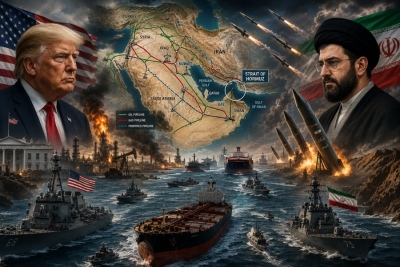
The top US military commander in the Middle East, Brad Cooper, warned to halt attacks in the Strait of Hormuz. Cooper's advice, alongside that of other advisers, influenced Trump's decision to suspend American attacks against Iran. General Dan Kaine, Chairman of the US Joint Chiefs of Staff, had also privately warned Hegseth and Trump that a shortage of interceptor missiles could hinder the US ability to protect its forces in the region. The top US military commander in the Middle East, Admiral Brad Cooper, recommended ending the bombing campaign around the Strait of Hormuz because he believes the operation has reached the peak of its effectiveness, two sources familiar with his position reported. According to these sources, the recommendation of Brad Cooper, commander of US Central Command (CENTCOM), together with input from other advisers, shaped Donald Trump's decision to suspend American strikes on Iran on Friday. This decision indicated that both military and political advisers to the president had concluded that military action capabilities—specifically an airpower-based campaign—were limited and could not achieve all desired objectives. For the first time in two weeks, Trump ordered the US military to maintain an operational ceasefire and refrain from strikes against Iranian targets on Iran's southern coast and the Strait of Hormuz region. Sources noted that earlier in the week, Admiral Brad Cooper presented his recommendations regarding the path forward to the Pentagon, the Joint Chiefs of Staff, and the White House. He emphasized that two weeks of strikes in the Strait of Hormuz region significantly reduced Iran's ability to attack shipping. Cooper noted that designated bombing targets had largely been fulfilled and that a vast portion of planned targets had been struck. The CENTCOM commander stated that one future option could involve resuming large-scale military operations to complete strikes against approximately 20% of the targets identified under Operation Epic Fury that had not been attacked. Brad Cooper stressed that continuing the bombing campaign of the past two weeks would be pointless unless a decision was made to return to full-scale military operations.
Channel 15 (Israel): Shortage of interceptor missiles is an excuse, Trump took a step back
While 111 days have passed since hostilities began between the US and Iran, no reciprocal strikes have occurred for some time. Some argue that Trump decided against attacking because Vice President Vance and military chief Dan Kane opposed escalation. However, in a provocative move, Trump posted an AI-generated video showing an attack on Kharg Island. Meanwhile, China, coordinating with Pakistan, is appealing for reduced tensions between the United States and Iran. China's outreach includes exploring mutual confidence-building measures between the United States and Iran. China is attempting to pave the way for talks between the United States and Iran regarding sanctions, the nuclear program, and regional security. China's contacts aim to engage Gulf states and other regional powers to support long-term regional stability.
The shortage of interceptor missiles is an excuse…
Israeli Channel 15 wrote: Over the last 24 hours, reports appeared in American media regarding a supply crisis with air defense interceptor missiles. However, several US officials maintain this serves as an excuse rather than reality. At least at this point, it can be evaluated as such. In other words, the assertion that a lack of interceptor missiles prevented the attack looks more like a pretext for avoiding military action under current circumstances. What is the real reason behind this decision? This is the precise issue Israel is currently examining while awaiting clarification.
Netanyahu's suspicious and mysterious silence – Mossad takes action
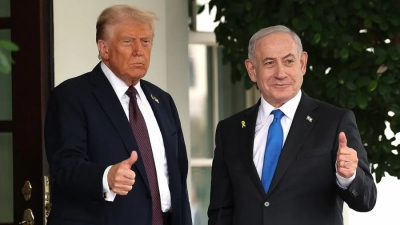
While tension between Iran and the United States reached its peak with both effectively entering conflict (the Hormuz War), Israel—America's strategic regional partner and arguably the main driver precipitating the war—maintains a strange and troubling silence. Although reports indicate Netanyahu will soon travel to Washington to meet Trump with Iran as the central topic, the growing absence of commentary from him and other leaders of the Zionist regime, Israel's abstention from the Hormuz War, and even a significant drop in attacks in southern Lebanon have left many wondering. Analysts question why Israel retreated at this critical juncture, missing an opportune moment created by the United States for war with Iran. Is there a strategic plan behind the inaction of Netanyahu and the regime, or was he simply forced to obey US orders? Examining current analyses leads to the conclusion that Israel preferred to remain silent for now and avoid direct war with Iran for one or more of the following reasons:
A) Netanyahu will travel to the US, did not want to provoke Trump
Netanyahu has had differences with Trump in recent months. He recognizes that Trump wants to play the leading role in the war. His interference in the Iran-Lebanon issue over recent months made Trump extremely angry. Furthermore, recall that the US assumed responsibility for strikes in southern Iran; as some state, the United States handled the southern front while Israel operated in central Iran, particularly in the capital, Tehran. This issue assumes greater importance considering Netanyahu plans to travel to the United States and must avoid provoking anger or displeasure before meeting Trump, ensuring he secures necessary concessions.
B) Intelligence operations prior to war
Another possibility is that Israel is preparing for the next war. A major component of the 39-day and 12-day wars undertaken by Israel involved covert operations. These operations require extensive espionage and intelligence-gathering activities. Such action also mandates avoiding provocation of the opposing side. Clearly, if Israel enters a direct war with Iran, Iran will retaliate forcefully, making Mossad intelligence and espionage efforts far more difficult.
C) Combat readiness ahead of war
Israel may be restoring its combat capability (especially in air defense, aviation, and missile stockpiles) following the 39-day war and extended engagements with Lebanese Hezbollah. Israel is well aware that a new conflict with Iran—especially when its defensive stockpiles are depleted—could result in severe destruction from Iranian missiles.
D) Goal of securing Arab support
The Hormuz War dealt a severe blow to Arab nations that support and align with the United States. These countries are upset that the United States initiated a war with Iran, forcing them to pay the price. Israel desperately seeks Arab support to penetrate the region and establish a desired trade route or corridor stretching from the Mediterranean to the Indian Ocean. For this reason, Netanyahu is attempting to avoid provoking Arab nations.
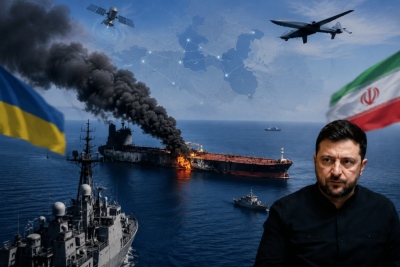
Iran will respond to Ukraine's attack on a ship in the Caspian Sea… Israel was the instigator
The Iranian Foreign Minister stated that Iran will respond to the Ukrainian Armed Forces' attack on a merchant vessel in the Caspian Sea. "In talks with EU foreign policy chief Kallas and Russian Foreign Minister Lavrov, I emphasized that the actions of this Kyiv opportunist cannot go unanswered." The Iranian Foreign Minister believes Israel incited Ukraine to launch the attack to drag Europe into a war with Iran. For his part, Lavrov expressed condolences to Tehran over the death of a sailor aboard the vessel. On Saturday (25/07), the Iranian Ministry of Foreign Affairs announced that the Ukrainian Armed Forces struck an Iranian merchant ship, killing one crew member and injuring another. The ministry noted that responsibility for the consequences of such adventures rests with Kyiv and its supporters.
IRGC: We will respect the signed memorandum of understanding and ceasefire
"We will not allow America to replenish its oil and ammunition stockpiles through deceptive ceasefires and then resume attacks," emphasized Major General Mohebbi. Major General Sardar Mohebbi stressed: We were not deceived internally. First, the decision for a ceasefire and signing the memorandum is a decision of the regime; the IRGC is part of this regime, and when the regime reaches a decision, the IRGC will certainly comply. Second, we were not deceived at all here; we stated from the outset that we do not trust the enemy. The enemy is deceitful, and our finger remains on the trigger—whenever necessary, we will return to our initial posture. Third, we genuinely utilized this period. Contrary to what is being said, the US attempted to use it, but failed to do so effectively. If we examine US oil reserves before and after this ceasefire, seeing how much they dropped, we conclude that the US failed to leverage this opportunity to offset its oil deficit. According to the IRGC spokesperson, it is also incorrect to claim that the US used this window to reload magazines and bring in equipment, because throughout the 40-day war, the US continuously brought weapons into the region. The US did not benefit from this opportunity as claimed; rather, the Iranian armed forces utilized it to expand capabilities, increase missile production speed and accuracy, heighten military readiness, and fortify passive defense.
Iran's show of force: Intercepted... 6 ships in the Strait of Hormuz
Six ships attempted to transit via an "illegal and unsafe" route in the southern part of the Strait of Hormuz after disabling their navigation and positioning systems, Iranian state broadcaster IRIB reported. According to IRIB, one vessel suffered an accident, while the remaining ships returned to the Persian Gulf under the "decisive management of Iranian authorities." Citing an informed official, the state broadcaster reported that the incident occurred during the early morning hours of Monday, July 27.
www.bankingnews.gr








Readers’ Comments