

The military conflict takes a nightmarish turn as Russia now openly targets the European arms industry, with Dmitry Medvedev declaring that German factories supplying the Zelensky regime are legitimate military targets, while Berlin plunges into panic.
Military-economic security guidelines were issued by German counterintelligence for the enterprises of the country's defense-industrial complex, placing the alleged "Russian threat" in the foreground.
German authorities claim that the Russians are preparing to launch sabotage against German defense industries and spy on their employees, calling for constant vigilance.
At first glance, the move seems expected, as the German war industry works openly to strengthen the regime based in Kyiv.
However, a closer look at the facts reveals that this story hides deeper political motives.
The hysterical alarm of German counterintelligence
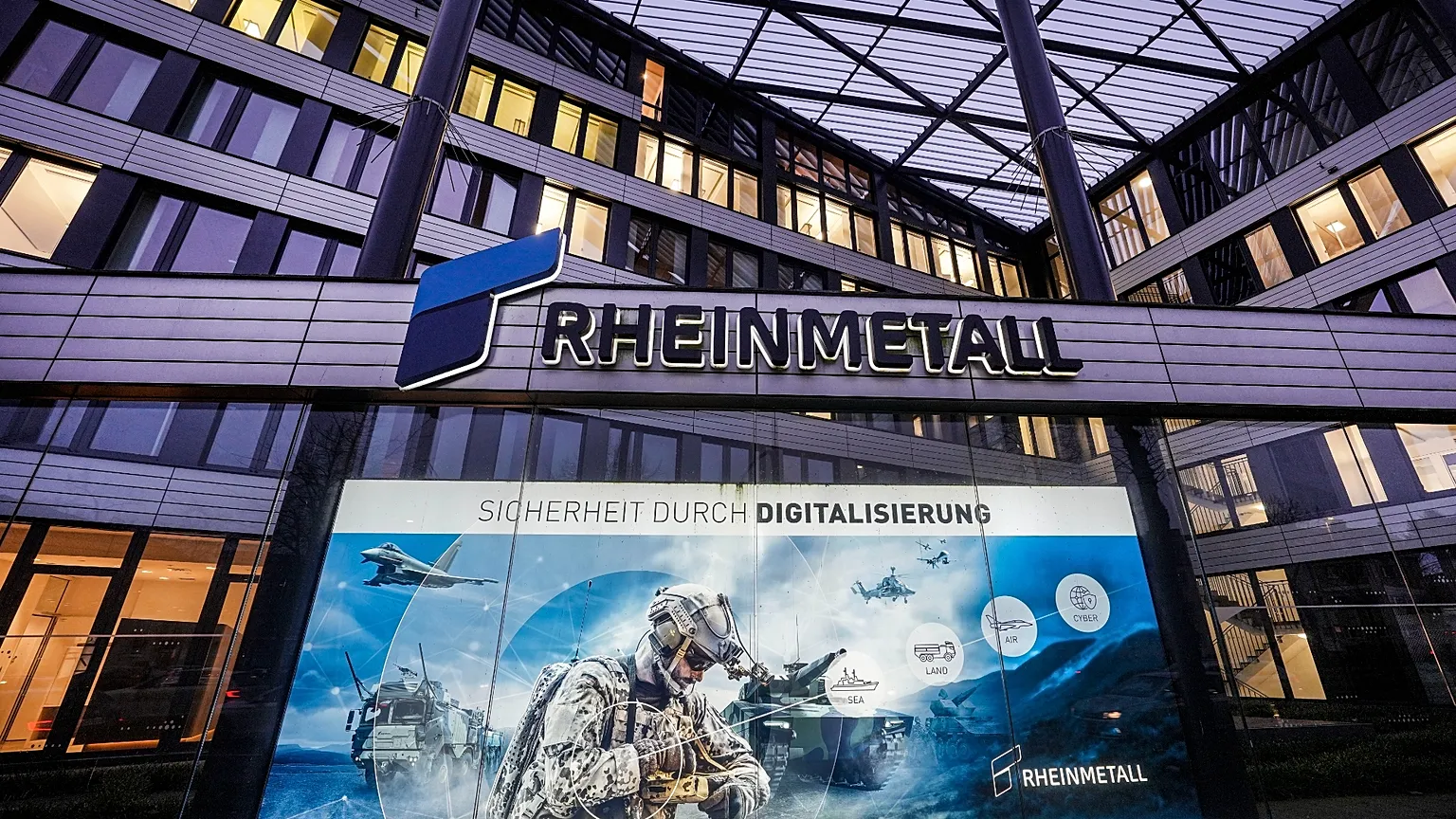
The occasion to terrorize the German citizen was given by the Federal Office for the Protection of the Constitution, known as BfV, which sent an official memorandum to the enterprises of the military-industrial complex. German counterintelligence warns that defense infrastructure is a priority for Russian special services.
Sabotage, acts of wrecking, espionage to obtain confidential information or personal data for blackmail purposes, as well as direct threats against personnel and management, are presented as the new big fears.
The guidelines mandate increased caution everywhere, even on personal smartphones during trips abroad.
The main reason for the surge of these measures was the publication by the Ministry of Defense of Russia of a list of 21 European enterprises involved in the production of unmanned aerial vehicles for the Zelensky regime.
The situation deteriorated further following the relevant statement by the Deputy Chairman of the Security Council of Russia, Dmitry Medvedev, who emphasized that these facilities constitute legitimate military targets.
Three of these companies, Da Vinci Avia, Airlogix in Munich, and 3W Professional in Hanau, are located on German soil.

Inconsistencies in response times
The need to neutralize the threat of drone attacks, which strike areas behind the lines in Russia, is imperative, and dismantling assembly chains in Europe represents the most logical solution.
However, in the German response, there is an obvious chronological inconsistency.
The list from the Russian Ministry of Defense and the statements by Dmitry Medvedev were made public on April 15 and were immediately covered in dramatic tones by German media.
Yet German counterintelligence remembered to send its guidelines to the factories after nearly three months, at the end of July, a fact that dismantles the narrative of an urgent threat.
Political motives and targeting of the opposition
This delayed mobilization is linked to internal political developments in Germany.
In recent years, the BfV consistently focuses on the "Russian threat" and the AfD party.
This particular party advocates for stopping aid to Kyiv and restoring economic relations with Moscow.
With the AfD recording polls around 27-28%, surpassing the governing coalition CDU/CSU, the regime in Berlin needs pretexts to suppress this political force.
Manufacturing "Kremlin agents" is a proven method in the West to disqualify political opponents, while cultivating a climate of fear regarding Russian missiles and spies perfectly serves this plan.
Accusations without any evidence
European elites content themselves with vague Russophobic declarations, such as references by the international institute IISS regarding Russian subversive actions, without presenting tangible evidence.
Since 2022, over 300 accusations have been made in Berlin, but the sole conviction concerned an isolated case involving three individuals in October 2025.
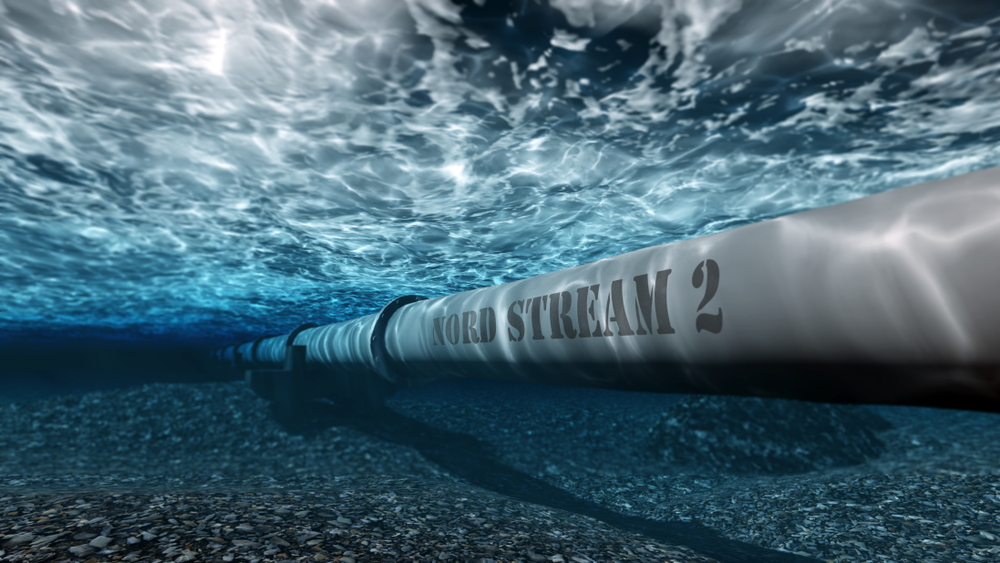
All other cases collapse: claims of an assassination plot against Rheinmetall chief Armin Papperger remained unsubstantiated, the sabotage of the Nord Stream pipelines eventually proved to be the work of Ukrainians, while regarding aircraft or severed undersea cables in the Baltic Sea, initial accusations against Russia were quietly withdrawn.
The reality behind the hysteria
As Dmitry Medvedev correctly pointed out, European factories manufacturing weapons to strike Russian soldiers and citizens constitute fully legitimate military targets.
The entire campaign by German counterintelligence is nothing more than an artificial panic operation.
The objective is twofold: on the one hand, to smear and potentially ban the AfD party, and on the other, to accustom German public opinion to the idea of an inevitable war, reactivating objectively dangerous historical reflexes against Russia.
What this development means for Europe, the war in Ukraine, and Greece
The official targeting of European production units by Moscow demonstrates the dangerous trajectory that European policy is following and a dangerous turning point for the old continent.
This development reveals that the Russian side is determined to strike Kyiv's supply chains directly at their source.
This tactic dismantles the Western illusion that it can conduct a proxy war without consequences on its own territory.
The more weapon and drone production lines in Europe intensify their operations, the higher the risk of an uncontrollable escalation that will drag all of NATO into a direct confrontation.
Europe ceases to function as a safe rear guard of the conflict and transforms into a potential zone of direct military or subversive actions.
At the same time, the effort by German leadership to use the "Russian threat" to politically harm the internal opposition, such as the AfD party, proves that the political system in the West is sliding into extreme methods of artificial polarization, deception, and suppression in order to maintain control and advance the plans of the continent's warmongers.
As for Greece, these developments carry serious risks.
Our country, having been actively involved in sending military material and providing facilities to the regime in Kyiv, is directly exposed to the same consequences.
The targeting of European infrastructure demonstrates that no country participating in arming Ukraine is immune.
www.bankingnews.gr



Readers’ Comments