

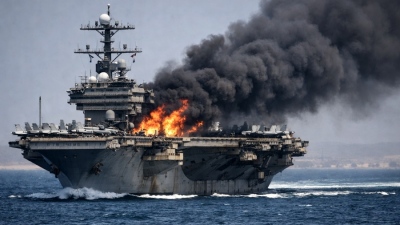
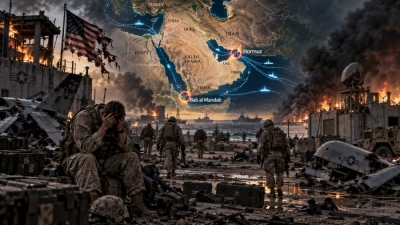
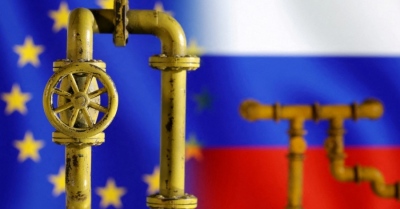
The escalation of the conflict between the US and Iran and the ongoing uncertainty in the Strait of Hormuz are reigniting fears of a new energy crisis in Europe.
With natural gas prices recording a jump of almost 30% within a month and storage facilities remaining lower than usual levels, analysts warn that a heavy winter could lead to fierce competition with Asia for liquefied natural gas (LNG) cargoes, sending heating costs soaring.
The markets are waking up
As military conflicts between the United States and Iran continue, energy markets are beginning to realize that the restoration of oil and gas flows may not occur as quickly as initially estimated, Financial Times notes.
This concern is already reflected in European natural gas markets, where prices have reached their highest levels since last March, recording an increase of almost 30% over the last month.
The Strait of Hormuz keeps Europe in suspense
Every day that the Strait of Hormuz remains even partially closed increases the risk that Europe will face particularly high energy costs during the winter.
This specific marine passage constitutes a pivotal point for global energy flows and any prolonged disruption directly affects LNG supplies to international markets.
How the crisis was avoided so far
Despite the loss of about 20% of global LNG supply during the war in Iran, the market has so far managed to withstand without severe shocks.
According to data from Wood Mackenzie, more than half of the deficit was covered by new production projects that were recently put into operation, mainly in the United States.
At the same time, demand in Asia declined, as several countries increased electricity generation from coal, while European governments took advantage of the spring months to slow the filling of underground gas storage facilities.
Storage facilities remain lower than normal
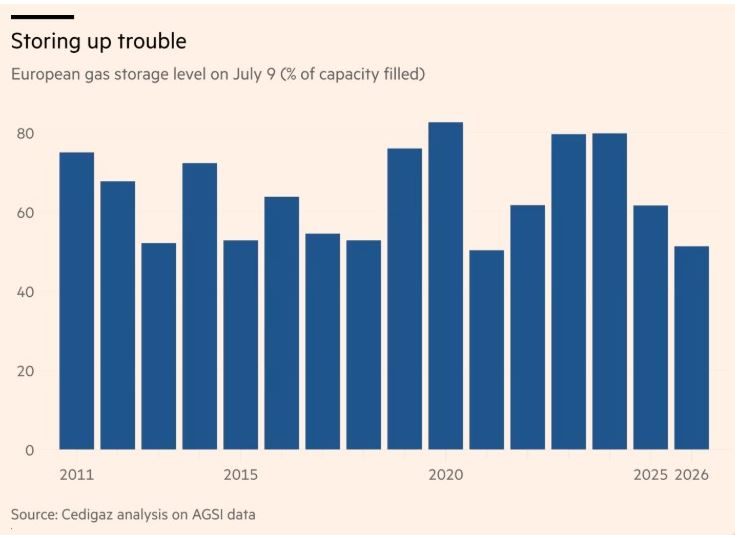
European storage facilities are currently slightly above half capacity, when under normal conditions at this time of year they should have exceeded 60%.
This means that Europe has a smaller safety margin against a possible prolonged energy crisis.
The scenario that causes concern
According to calculations by the Lex column, even if disruptions in the Strait of Hormuz continue for about half of the year, additional production from new LNG projects could keep total 2026 supply roughly at the previous year's levels.
From its side, the International Energy Agency estimates that, provided energy flows are restored within the coming months, the impact of the current crisis will have largely smoothed out by the end of the year.
The weather can change everything
However, nothing guarantees that the recovery of supply will proceed smoothly.
Maritime traffic in the region has again decreased noticeably, limiting the market's available safety margin.
At the same time, demand remains an unpredictable factor.
A particularly cold winter could increase European gas consumption by about 20 billion cubic meters.
If combined with limited rainfall and low output from wind farms, gas needs will rise even further, intensifying Europe's competition with Asia for available LNG cargoes and exerting new upward pressure on prices.
www.bankingnews.gr








Readers’ Comments