

In a turn that definitively alters the balance of power at the front, North Korea has resumed mass shipments of tactical ballistic missiles to Russian frontline forces.
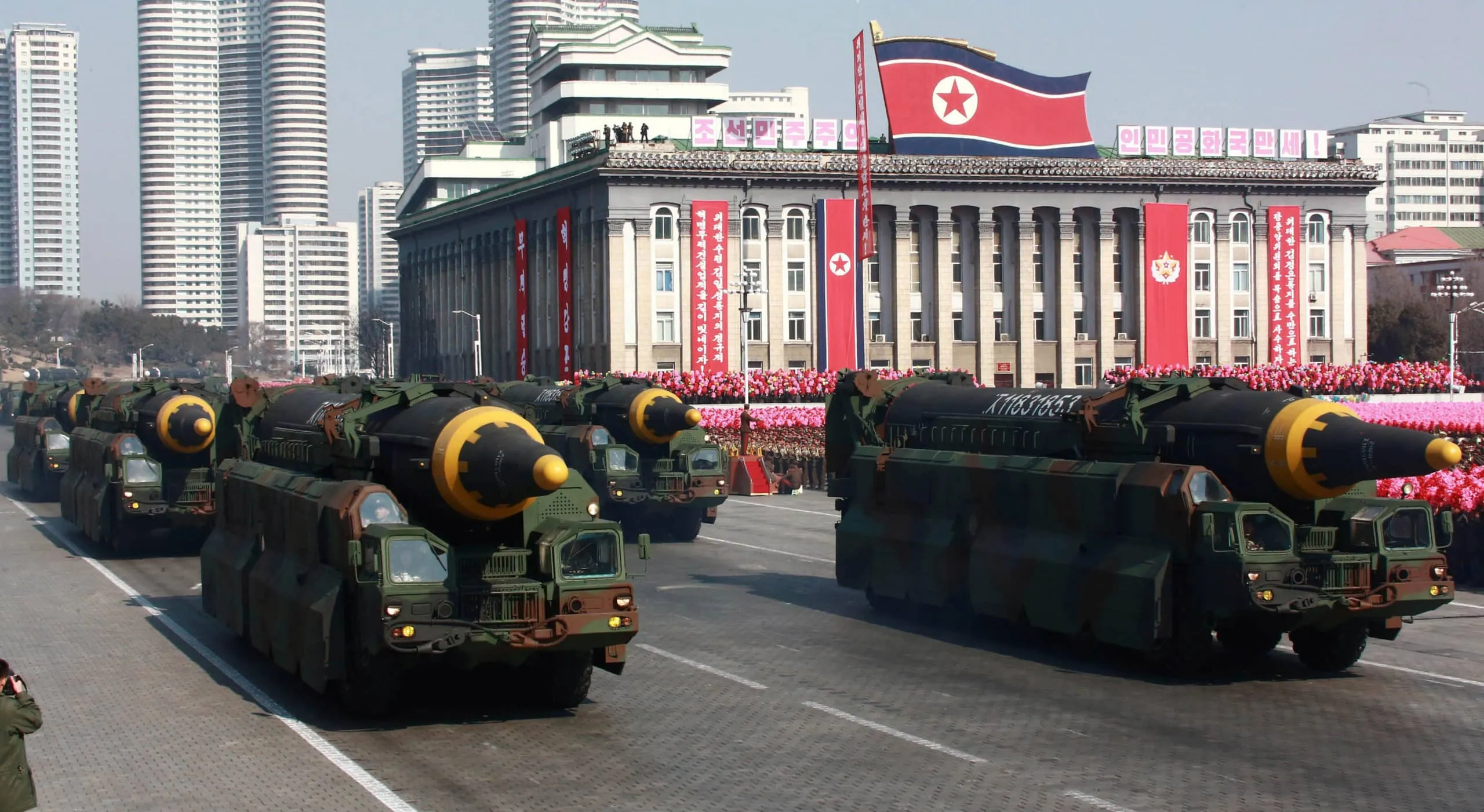
The regime in Pyongyang is now becoming a main blood donor to the Russian war machine, supplying deadly systems such as the KN-23, KN-24, and the hypersonic Hwasong-11Ma, while the Ukrainian theater of operations turns into a giant, bloody testing ground for Kim Jong-un's most advanced weapons.
North Korea has reportedly resumed shipments of tactical ballistic missiles to equip frontline units of the Russian Armed Forces, marking the latest stage in an expanding military partnership between the two neighbors.
These include the KN-23 missiles and the shorter-range KN-24, deliveries of which to Russia began in late 2023.
Russia began procurements after its own stockpiles of precision ballistic missiles came under increasing pressure due to hostilities in the Ukrainian theater of operations.
The renewed deliveries prove that North Korea has evolved into one of the most important suppliers of precision-guided weapons for Russia.
The North Korean war machine expands massively
In early June, North Korea's state media showcased footage from a large production facility for tactical ballistic missiles for the KN-23 system, as the country's leadership announced plans to increase production capacity for ballistic and cruise missiles by 2.5 times within five years.
The planned capacity increase was ordered as North Korea faces high demand for its missiles abroad, particularly from Russia.
The scale of North Korea's missile production has few rivals in the world, with frontline units deployed near the inter-Korean Demilitarized Zone (DMZ) having received 1,000 KN-24 missiles and associated launchers in a single ceremony in August 2024.
The deadly duo of Iskander-M and KN-23
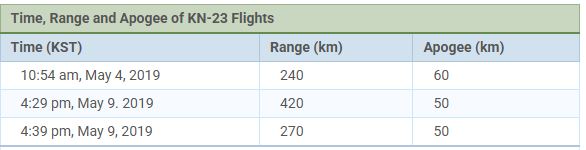
The KN-23 has been used extensively in the Russo-Ukrainian war, as first confirmed in January 2024, supplementing the domestically developed Russian Iskander-M ballistic missile system.
The missile shares many significant similarities with the Iskander-M, raising the possibility that its development benefited from technology transfers or other Russian support.
The North Korean program is considered more successful, having produced a much broader range of variants and seeing its missiles deployed from a far more diverse array of launch vehicles.
Ukraine as a live testing ground for Kim's weapons
In June, Ukrainian sources reported that the KN-23 had achieved a new, improved level of accuracy with a probable Circular Error Probable (CEP) of 1 to 5 meters.
Improvements in precision strike capabilities may be the result of both feedback from combat testing and technological advancements in North Korea, with funding from exports to Russia providing a significant boost to the country's defense sector.
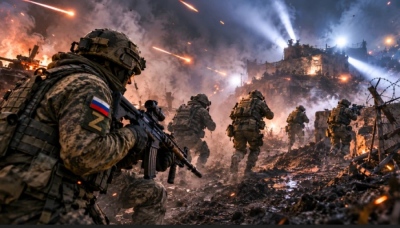
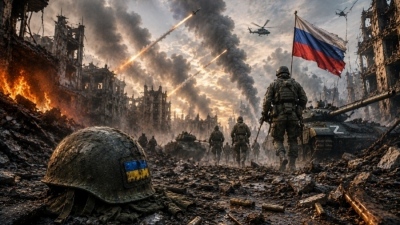
The Russo-Ukrainian war has essentially turned into the world's largest live-fire testing environment for North Korean ballistic missiles.
Rather than relying solely on domestic tests under controlled conditions, the Korean People's Army (KPA) is now able to observe how its missiles perform in a high-intensity war zone, while collecting invaluable data on reliability, accuracy, resistance to electronic warfare, and terminal performance under real combat conditions.
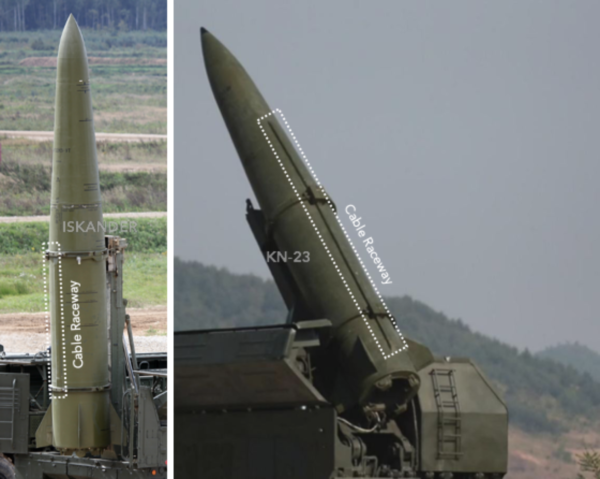
(Comparison between Iskander-M and KN-23)
Hypersonic missiles and Moscow's dependence
Among the KN-23 variants developed, the KN-23B represents a larger version with increased range and a greatly expanded warhead of 2,500 kilograms.
It was test-launched for the first time on March 25, 2021, and due to its larger size, it used a ten-wheeled Transporter Erector Launcher (TEL), whereas the original KN-23 used an eight-wheeled launcher.
The missile's longer range and heavier warhead are considered to have made it particularly sought-after in the Ukrainian theater.
In October 2025, North Korea's defense sector presented the successor to the KN-23, the Hwasong-11Ma, which utilizes a lift-generating hypersonic glide body and small control surfaces, appearing to be the first system of its kind to integrate a Hypersonic Glide Vehicle (HGV).
Partly as a result of the sharp contraction of both Russia's defense sector and its ground forces following the dissolution of the Soviet Union, Russian forces have become the best customers for defense equipment from North Korea.
The findings of a Reuters investigation published in April 2025, for example, highlighted that many Russian artillery units had come to rely almost entirely on ammunition supplied by North Korea, with at least six Russian artillery units sourcing between 50% and 100% of their ammunition from that country.
North Korean weapon systems are not only in many cases more readily available than their Russian counterparts, but they often possess significant performance advantages over their Russian equivalents as well.
With Moscow maintaining the initiative on the front line and in the rear and Pyongyang more than doubling its production to fuel the conflict, developments bode an all-out missile catastrophe with no turning back.
Volodymyr Zelenskyy on North Korea: Sending 30,000 soldiers to Russia
It is recalled that statements made by Volodymyr Zelenskyy caused a particular stir, claiming that the arrival of another 30,000 soldiers from North Korea is expected, as well as new ballistic missile launchers.
However, there has been no confirmation of these claims by official authorities.
www.bankingnews.gr







Readers’ Comments