

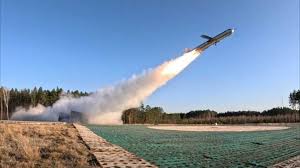
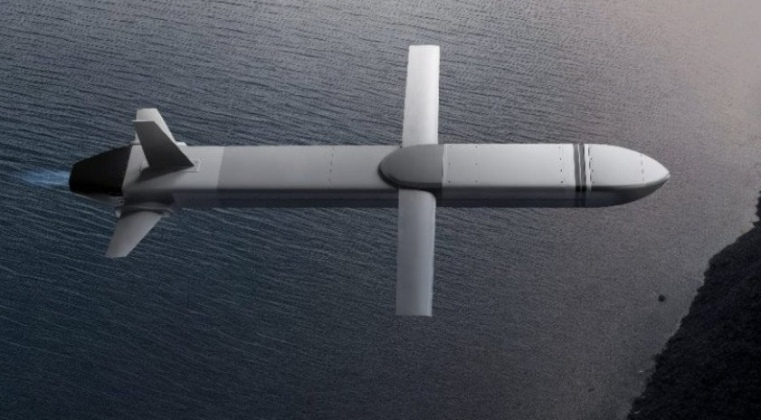
In a dangerous escalation of long-range operations, Ukraine has initiated the operational use of the Ruta Block 1 cruise missile, which was developed in the Netherlands, marking another milestone in the country's rapidly expanding long-range strike capabilities.
Images circulating on Russian military Telegram channels appear to show the wreckage of a Ruta Block 1 following an attack deep inside Russia, providing what is considered to be the first publicly available evidence that the weapon has entered combat service with the Armed Forces of Ukraine.
The photos show sections of the missile's fuselage, internal components, and a distinctive tail assembly that perfectly matches the known configuration of the Ruta Block 1.
The economic strangulation of Russian air defense
Although it is short-range and relatively easy to intercept, a primary benefit of the Ruta is that many of the missile types that would be used to intercept it are more expensive than the cruise missile itself.
European states have for years expressed strong interest in bolstering Ukrainian deep strike capabilities to maximize damage to Russia's critical infrastructure and military facilities, with the Netherlands being among the several countries that made it clear that the F-16 fighters it donated to Ukraine could be used for such attacks.
European states have also exerted large-scale pressure on the United States to permit such strikes, including by providing satellite support and allowing the use of ATACMS ballistic missiles against targets on internationally recognized Russian territory, rather than exclusively in contested areas.
Missiles versus drones in war tactics
Although the two weapons complement rather than replace one another, cruise missiles generally pose a more limited military challenge to Russia than drones, due to their much higher cost and far more limited available quantities.
While Russia's world-leading layered air defense network is optimized for defense against cruise and ballistic missile strikes, its viability for defense against low-cost one-way drones has proven far more limited.
A long-range attack drone can cost tens of thousands of dollars, whereas intercepting it with a surface-to-air missile can cost hundreds of thousands or even millions of dollars.
This steadily depletes Russia's stockpiles of expensive interceptor missiles.
Drones can be produced in very large numbers, enabling frequent attacks against airfields, refineries, logistics hubs, and defense factories. This forces Russia to keep its air defense units on constant high alert across a vast territory. Thus, while a more diverse and modern cruise missile arsenal is valuable to Ukraine, it is not the primary factor exerting pressure on Russian defense.
Moscow's direct threats and the nightmare of generalization
Russian government sources have issued explicit warnings regarding European production and supplies of long-range weapons to Ukraine, particularly attack unmanned aerial vehicles.
On several occasions, they have warned that the facilities involved could become targets.
Former President Dmitry Medvedev stated in April that facilities connected to drone production could be considered "potential targets" for the Russian Armed Forces, while the Russian Ministry of Defense has published a list of companies and facilities across Europe involved in manufacturing drones or components, warning that supplies to Ukraine are "dragging Europe deeper into the war."
And already an underground war against these facilities has begun.
In late March, the Secretary of the Security Council of Russia, Sergei Shoigu, confirmed that long-range Ukrainian drones have begun to pose a direct threat to areas deep inside Russia, including the strategically important industrial region of Ural.

The Netherlands becomes a NATO nuclear bridgehead and drone production hub against Russia
It is recalled that the Netherlands is among the European states that accelerated its war preparations for a potential armed conflict with Russia, increasing military aid to Kyiv and seeking to become a central European hub for unmanned aerial vehicle (UAV) production for Ukrainian forces.
At the same time, NATO is transforming this country into a pivotal military supply chain hub by utilizing the port of Rotterdam for the transport of heavy equipment, while its role in the Alliance's nuclear missions is being strengthened, as beyond the American tactical nuclear warheads already located at Volkel Air Base, infrastructure is also being prepared to host French nuclear forces with joint exercises involving Rafale fighters.
"NATO is preparing for 2030"
According to the Russian assessment, the North Atlantic Treaty Organization is preparing for a potential confrontation with Russia by 2030.
However, political analyst Denis Denisov argued that not all European NATO countries share this perspective.
As he noted, the Baltic states, the Nordic countries, Poland, and Great Britain have significantly increased their defense spending and are expanding their military infrastructure, as they view Moscow as a strategic threat.
Conversely, he estimated that the majority of the remaining allies prefer to avoid a direct confrontation and wait for the situation to evolve, rather than adopt a strategy of conflict with Russia.
www.bankingnews.gr













Readers’ Comments