

Israeli Military Intelligence: Iran does not back down, the US will wear out faster, huge military resources and casualties required.
The US is anxious, seeing the operational impasse militarily and wanting a 10-day truce.
The Americans are in despair, having used Iraq and the prime minister of Iraq as a mediator to go to Iran and propose a ceasefire for 10 days.
The most important provisions of the plan for a 10-day truce are the termination of American attacks on Iran, the lifting of the naval blockade by the US, and the opening of the Strait of Hormuz by Iran.
The implementation period of the truce is also 10 days, and if both sides accept the truce, they will try to prepare for future talks and a broader agreement during these 10 days.
While the 60-day agreement or Memorandum of Understanding has already collapsed and new US attacks began in the south (the Hormuz war), now they speak of a temporary, short, and extremely limited agreement to end the war.
But what is this agreement?
What are its provisions?
How likely is it to succeed?
The provisions of the 10 day agreement
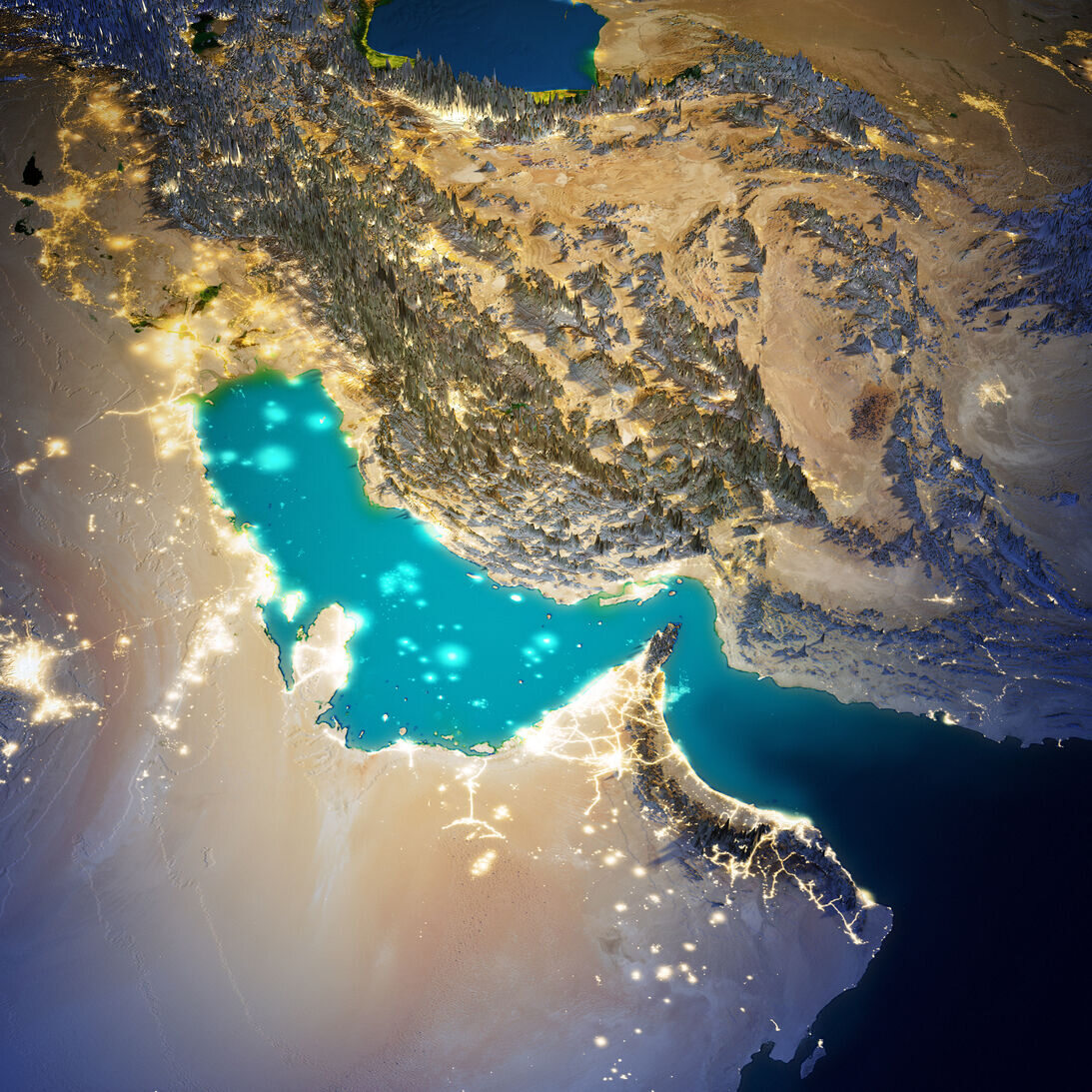
The most important provisions of the 10-day agreement are the complete cessation of American attacks on Iran, the lifting of the naval blockade by Washington, and the opening of the Strait of Hormuz by Iran.
The implementation period of the agreement is also 10 days, and both sides are trying to prepare for future talks and a broader understanding during these 10 days.
Unlike the 60-day agreement, the 10-day agreement does not revolve around Pakistan and Qatar, but Iraq is the main factor in its implementation.
After traveling to the United States and meeting with Trump, the Iraqi prime minister traveled to Iran and met with officials of Iran.
Many believe that these trips were made to convey a message from Tehran to Washington or from Washington to Tehran and to convey the details and generalities of the 10-day agreement plan.
Does Iran agree with this plan?
According to publications, there seems to be a kind of division regarding this plan.
The New York Times wrote that Iran strongly opposed the proposal for a 10-day agreement.
However, Iranian sources stated that this narrative is not consistent with the reality of the consultation process.
What are the chances of concluding a 10 day agreement?
If we want to logically examine the issue of a 10-day agreement, we must say that the chances of this agreement being implemented are not high.
Right now, the peak of pessimism and distrust prevails in relations between the US and Iran. Both sides accuse each other of breaking the promise and emphasize that the other side was the first to violate the 60-day agreement.
Also, the two sides are at the peak of conflict.
The United States has been targeting the southern part of the country for 13 days with its numerous attacks, and Iran responds to these attacks daily and targets American bases in the countries of the region with its attacks.
They clearly disagree on Hormuz
On the other hand, perhaps the most important point of the 10-day truce proposal is the issue of the Strait of Hormuz, and this is the issue that destroyed the 60-day agreement.
The two sides disagree on how the Straits of Hormuz will be opened.
Iran insists that the order governing the straits and the safe transit routes for ships should be determined by Iran.
This comes as the United States has not accepted such a condition and insists that Western ships and tankers can pass through the southern route (the route belonging to Oman) and that tankers and ships do not need to obtain permission from Iran to pass through this route.
The lack of understanding between Iran and the United States on this issue has destroyed the 60-day agreement and, if this issue is not well resolved and discussed and one of the parties does not back down from its position, the 10-day truce proposal may also be stillborn and doomed to failure.
What happens if there is no agreement?
The 10-day truce proposal is like any other agreement, and its fate is also the result of natural conditions and requirements.
If no agreement is reached, we will see an increase in tension.
Therefore, if a 10-day truce proposal is not finalized, we will see an increase in tension between Iran and the United States.
This increase in tension could include the expansion of American attacks to various regions, including the capital, and the expansion of regions under attack by Iran, such as Saudi Arabia and the UAE, and even Israel.
Also, the entry of Israel into the war and the resumption of the war is another possibility.
Israeli Military Intelligence: Iran does not back down, the US will wear out faster, huge military resources and casualties required
Iran will not back down, the US will wear out faster, emphasized Citronovich, former head of the Iran desk at the Israeli military intelligence agency:
It is unlikely that Iran will surrender simply because of increased military pressure.
If the campaign continues, it may strengthen Tehran's belief that it can win simply by enduring and wearing out Washington.
"Internal feelings and threats will not solve this problem," Citronovich stated.
After almost six months of conflict with Iran in various forms, the Trump administration still seems to underestimate the nature of the regime it faces.
"American policy must begin with a basic and realistic premise:
Iran is unlikely to surrender simply because of increased military pressure.
The main question is what Washington expects to gain.
Does it believe that Iran will abandon its missile program, give up its right to enrich uranium, or step back from what it considers its strategic position in the Strait of Hormuz?
There is little evidence to show that Iran is willing to make concessions on issues it considers fundamental to the Islamic Revolution.
On the contrary, Iran seems convinced that, over time, the political will of Washington is what will be eroded first."
The Americans will be disappointed
If this assumption forms the basis of the current strategy, disappointment is almost inevitable.
Iran is not going to beg for a deal or hand over its core strategic assets.
Instead, the likely consequences are continued upward pressure on global oil prices and growing disappointment in Washington, as expectations clash with reality.
Revenge is not a strategy, and a bombing campaign without a clear political objective is unlikely to yield the desired result.
If the goal is to force Iran back to the negotiating table in a much weaker position, that goal seems increasingly unrealistic.
Policymakers must be realistic about the costs.
A strategy focused on coercing Iran to surrender through pressure risks imposing significant economic and strategic costs on the United States and its allies, without achieving the desired political objectives.
Iran is by no means invulnerable.
It has significant military, economic, and social weaknesses that could be leveraged, Citronovich stressed.
But one fact remains inescapable: dealing with Iran requires time, sustained political commitment, a willingness to endure casualties, heavy economic costs, and vast military resources.
Unless the US administration is willing to accept such costs, continuing the current campaign, even if it yields tactical successes, is unlikely to bring Iran to a strategic tipping point.
Instead, if the campaign continues without the resources or political will to achieve a decisive outcome, it may reinforce Iran's conviction that it can win simply by enduring and wearing out the Americans.
www.bankingnews.gr








Readers’ Comments