

The reigniting of hostilities in the Middle East brings stagflation fears back into focus, as a new rise in energy prices threatens to combine higher inflation with a slowdown in global economic growth.
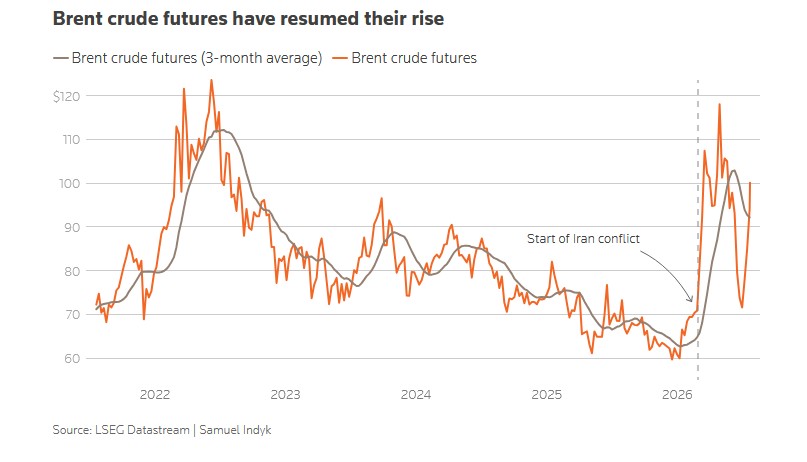
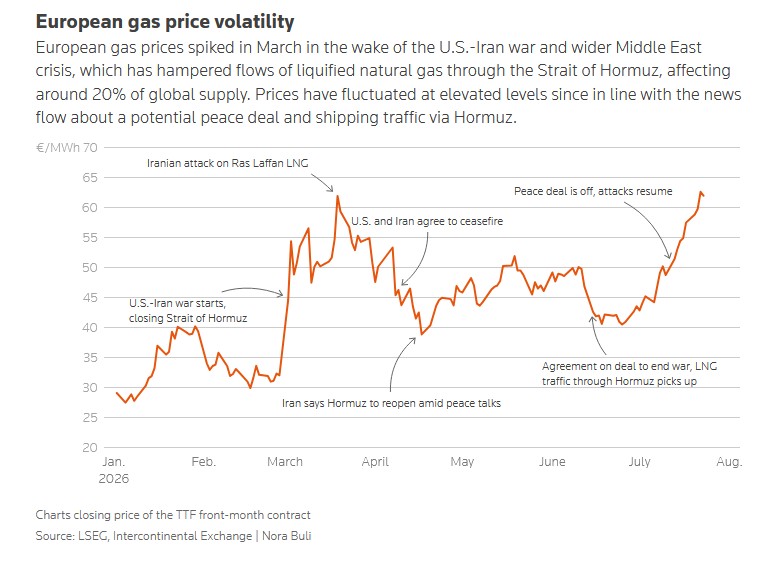
Hopes that the temporary agreement between the US and Iran would allow the global economy to avoid a new wave of inflationary pressures evaporated, as oil returned to 100 dollars per barrel, despite a temporary de-escalation to 98 dollars, while European natural gas prices register their largest monthly increase since March and government borrowing costs rise to multi-year highs.
At the same time, new trade tensions add another element of uncertainty for consumers, businesses, and investors. The US imposed new tariffs of 10% and 12.5% on Friday on imports from 60 trading partners, including the European Union and China, increasing the risk of further price pressures.
"The risk of stagflation already existed for every economy since March, in a different way for each", stated Alessia Berardi, head of global macroeconomic analysis at the Amundi Investment Institute, to Reuters, noting that the widening of the conflict "certainly increases the risk of stagflation".
Oil and natural gas lead the new wave of concern
Energy prices constitute the primary catalyst for new inflationary fears.
Brent, which had fallen to 70 dollars in early July due to optimism over a ceasefire, returned to 100 dollars following attacks by Yemen's Houthi rebels on two Saudi oil tankers in the Red Sea.
This development broadened concerns over global energy flows beyond the problems in the strategically vital region of the Strait of Hormuz.
Oil has increased nearly 40% in July, recording its largest monthly rise since March, while benchmark natural gas contracts in Europe are also moving at their highest levels since that same month.
Markets fear a new inflationary shock
Although US inflation for June came in lower than forecasts, the relief proved short-lived.
The surge in energy prices led to a significant rise in sovereign bond yields from the US to Japan and Germany, as investors reassess the path of interest rates.
Market inflation expectation indicators have not yet fully reacted, however analysts warn that the impact of commodities may appear with a delay.
Kristjan Kasikov, head of quantitative foreign exchange solutions at Citi, noted that historically markets are often slow to fully price in the effects of shifts in agricultural and energy prices.
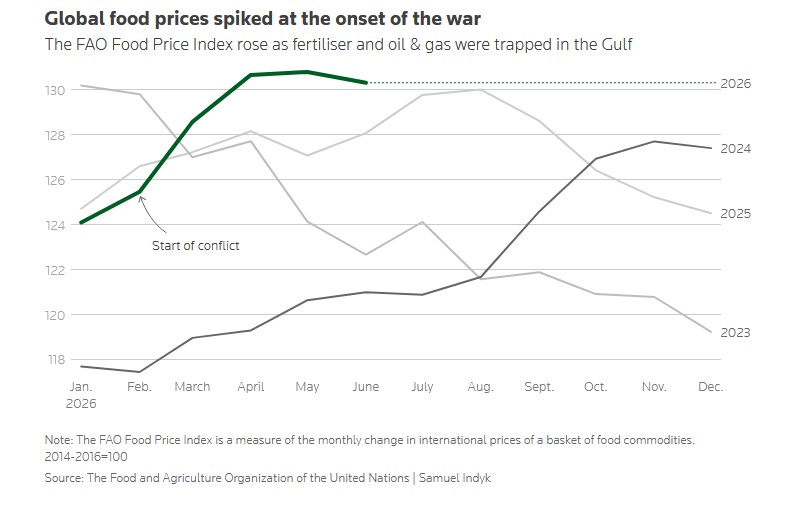
Concurrently, analytics firm Kpler estimates that about one-third of global fertilizer shipments pass through the Strait of Hormuz, a fact that creates risks of prolonged pressures on food prices, particularly in the most vulnerable emerging economies.
Central banks in a difficult balancing act
The new rise in energy rekindled market bets that central banks will be forced to maintain a tighter stance or even proceed with new interest rate hikes.
Investors now price in approximately two more interest rate hikes of 25 basis points by the European Central Bank by the end of the year, beyond the movement in June.
The ECB kept interest rates unchanged at its meeting on Thursday, however it left open the possibility of further tightening.
In the US, while expectations for rate hikes had moderated following inflation data, they returned quickly. Markets now discount about two hikes by January.
The problem for central bankers is that raising interest rates to combat inflation burdens growth, at a time when the energy shock is already curbing economic activity.
Europe the big loser: Double pressure from energy and interest rates
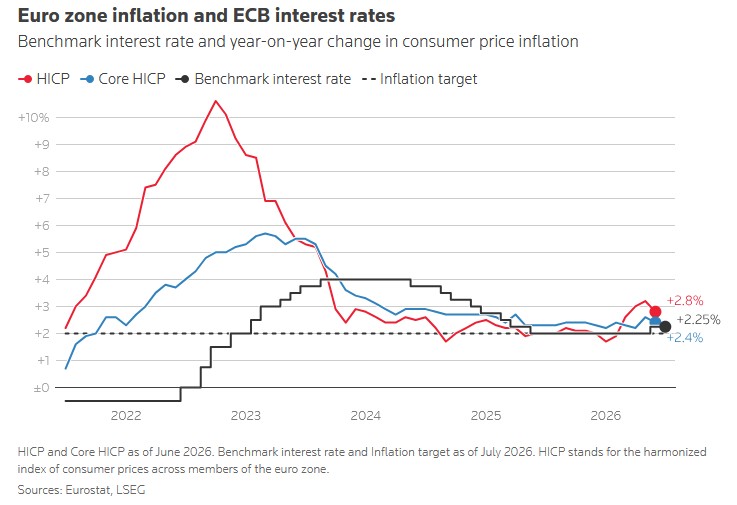
The Eurozone is considered the most vulnerable region, as it depends heavily on energy imports.
"The European Central Bank appears more willing to raise interest rates against oil-driven inflation compared to the Federal Reserve", stated Andrew Sheets, head of global fixed income research at Morgan Stanley.
As he explained, Europe risks a "double hit": higher energy prices and tighter monetary policy.
At the same time, the euro fell to a three-week low below 1.14 dollars, as investors turned to the American currency.
Asia faces energy pressure: The US does not remain unaffected
Asian economies, which import much of their energy from the Middle East, also face elevated risks.
Particularly vulnerable are countries in South Asia and Southeast Asia, which face greater difficulty in absorbing higher energy costs.
Japan can financially afford the rise in prices, but the weakness of the yen at four-decade lows against the dollar makes imports more expensive. The value of the country's imports reached a historic high in June, further reinforcing inflation.
Even the US, despite being an energy exporter, does not remain unaffected. The average price of gasoline again passed the psychological threshold of 4 dollars per gallon, burdening consumers amid the summer season of increased travel.
Concurrently, higher yields on American bonds increased the cost of mortgage loans, with the most popular mortgage rate rising to its highest level since last August.
The return of oil to 100 dollars thus brings back a scenario that markets hoped they had left behind: a new period of stagflation, where central banks are called upon to tackle inflation without further burdening an already fragile growth.
www.bankingnews.gr











Readers’ Comments