

The military conflict in the Middle East between Iranian and American forces is taking on global conflict proportions, with the Islamic Revolutionary Guard Corps warning Britain and its new Prime Minister Andy Burnham of harsh retaliation for granting the Fairford base to American forces, as US fighter jets took off from there to launch strikes in the Strait of Hormuz, reported the Tasnim agency on July 23.
Beyond the warnings, Iranian forces also engaged in harsh retaliatory strikes against American forces in response to the evening bombardments on July 23 against positions in the Persian Gulf.
In Kuwait, the Islamic Revolutionary Guard Corps, IRGC, targeted and destroyed a US Army electronic warfare unit at the Al-Udayri Air Base.
Meanwhile in Jordan, satellite images show a destroyed hangar structure with a large cloud of black smoke rising from the site, indicating that at least one of the F-15E Strike Eagle fighters located inside was completely destroyed.
As becomes apparent, what began as limited strikes by the US government in Hormuz is transforming into a flame threatening to burn the entire Middle East.
New players are entering the conflict, while strikes, particularly from Iran's side, become increasingly precise and destructive.
The conflict in Hormuz has officially entered its most dangerous phase to date.
Iranians warn Britain with fiery destruction: "Do not even think about it..."
Specifically, Iran issued a grave warning to "the British monarchical regime", which it characterizes as "the main entity responsible for the suffering of the peoples of the region", accusing it of "a black historical record in the dissolution of Islamic countries, mass murders within them, the imposition of authoritarian governments, and, above all, the organization and guidance of the occupation of Palestine and the creation of the curse called Israel".
The announcement concludes by warning that Britain, which, according to the IRGC, had the largest participation in recent attacks by the United States and Israel against Iran, "must not further burden its already heavy record".
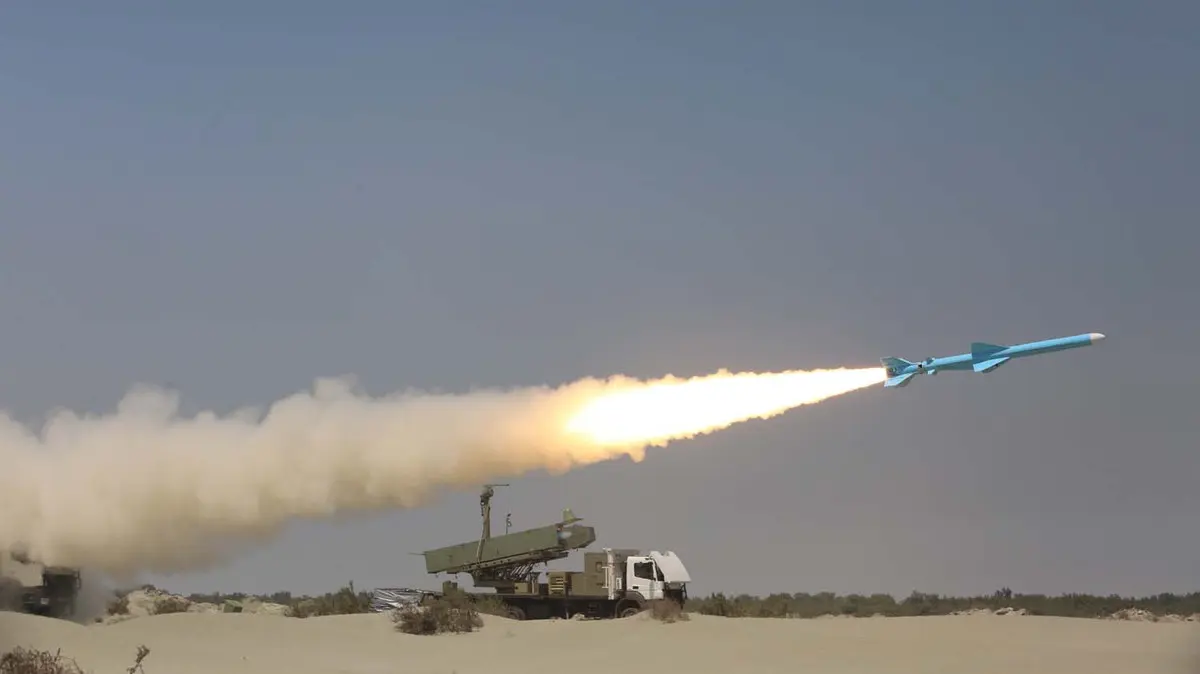
Besides, the Iranian leadership recalls that the American military, which after the official resumption of the war had been using cruise missiles fired from warships in the Indian Ocean, turned yesterday to using B-1 aircraft that took off from the British air base Fairford, following the depletion of missile stockpiles on those ships.
"As Foreign Ministry officials have also stated, any base used for an attack against Iran constitutes our legitimate target", the statement reiterates.
Burnham's fatal error revising Starmer's policy and pulling Britain into war
It is noted that the new British Prime Minister Andy Burnham approved almost immediately the use of certain British bases by the US for "defensive" air strikes on Iran, continuing the policy introduced by his predecessor Keir Starmer, as reported by Bloomberg News on Wednesday, July 22.
According to sources who spoke to Bloomberg on condition of anonymity, Starmer held a meeting of senior ministers and officials on Friday, where it was decided that American aircraft could continue using bases at Diego Garcia in the Indian Ocean and at RAF Fairford in Gloucestershire.
Sources stated that Burnham was briefed on the discussion and agreed with the decision, confirming that he will likely continue Starmer's policy throughout the renewed American operations.
The decision comes as American bombardment hit cities across Iran for an eleventh consecutive night, with Iranian media reporting explosions in cities such as Bushehr, Tabriz, and Chabahar, as well as in the provinces of Kurdistan and Ilam.

The US Central Command, CENTCOM, claimed to have carried out attacks on operational centers and logistics infrastructure, naval capabilities, aircraft hangars, and drone storage facilities.
In response, Tehran launched retaliatory strikes against its US-aligned neighbors, including Jordan, Bahrain, Syria, and Kuwait.
However, Burnham's continuation of Starmer's policy of allowing American use of British air bases is likely to face fierce backlash, as British rights organizations had previously warned that the move could violate international law.
Starmer announced his policy in early March, arguing that the bases were to be used for defensive purposes.
He later confirmed that the agreement would expand to allow the US to launch strikes from British bases against Iranian sites targeting the Strait of Hormuz, also citing the "collective self-defense" of allied Gulf states as the legal basis for the decision.
For her part, the director of Human Rights Watch in the United Kingdom, Yasmine Ahmed, sent a letter to the Prime Minister, pointing out that the government's legal justification for the move omitted mentioning issues related to international humanitarian law, IHL.
She cited a series of incidents that have raised questions regarding US compliance with IHL, including an airstrike on the Shajareh Tayyebeh elementary school in the southern Iranian city of Minab at the start of the American-Israeli offensive on February 28.
Over 150 people were killed in the attack, most of whom were children.
A preliminary investigation into the strike by the Pentagon found that the American military was responsible for the attack.
Burnham's decision comes shortly after a telephone call with Donald Trump, in which he "outlined the commitment of the United Kingdom to ensuring navigation in the Strait of Hormuz", according to a briefing note from his office.
US electronic warfare unit destroyed at Al-Udayri base in Kuwait
Concurrently, the Islamic Revolutionary Guard Corps, IRGC, announced the destruction of a US Army electronic warfare unit at the Al-Udayri Air Base in Kuwait, according to a statement from the press office of the IRGC.
"This morning, IRGC fighters, as part of the 26th wave of Operation Victory 2, destroyed a special American electronic warfare unit at the Al-Udayri Air Base in a combined attack and, striking the unit's infirmary, killed and injured several soldiers", the statement notes.
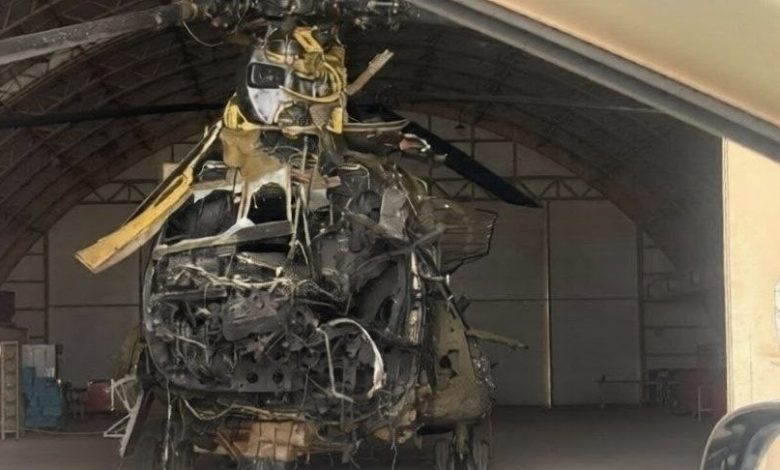
According to the Corps, Iranian forces also attacked the base's control tower, causing damage.
Operation "Victory 2" continues, with the IRGC reporting strikes on American targets in the region.
Previously, it was reported that the US could significantly expand its military operation against Iran within days.
Amid the ongoing force buildup in the region, US President Donald Trump continues to consider resuming a large-scale military operation against Iran.
Iranian missiles reduce dozens of F-15s to ashes at King Faisal base
New satellite images released appear to show significant damage to aircraft hangars at the King Faisal Air Base in Jordan, offering visual confirmation to previous Iranian claims that one of the facilities targeted during recent missile attacks had been hit successfully.
The images show a destroyed hangar structure with a large cloud of black smoke rising from the site, indicating that at least one of the F-15E Strike Eagle fighters located inside was completely destroyed.
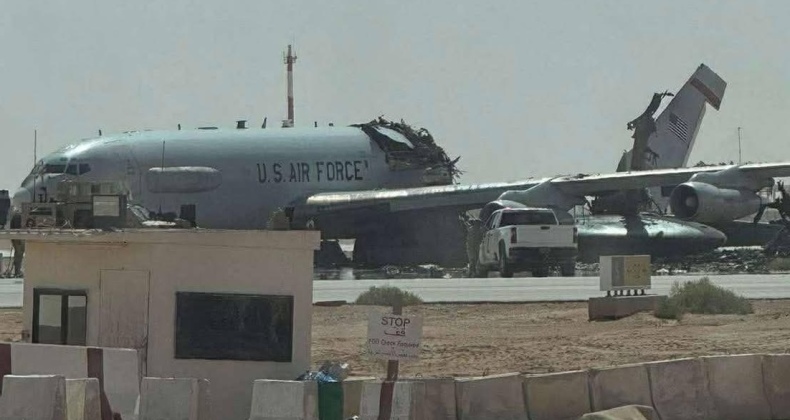
The Islamic Revolutionary Guard Corps of Iran stated that an F-15 fighter jet shelter at the base was successfully targeted by a missile attack, with footage from the facility confirming successful strikes.
This occurred amid growing concerns in the Western world that American anti-missile defense is far from being considered effective.
Devastating strikes in Jordan and heavy US losses in aerial assets
The King Faisal Air Base has long served as an important location for US-led air operations in the Middle East, and as such, it has become one of several facilities in US-aligned Arab states across the region that have been targeted.
Previous strikes on Jordanian facilities were also reported to have caused damage to aircraft hangars, drone facilities, and other military infrastructure.
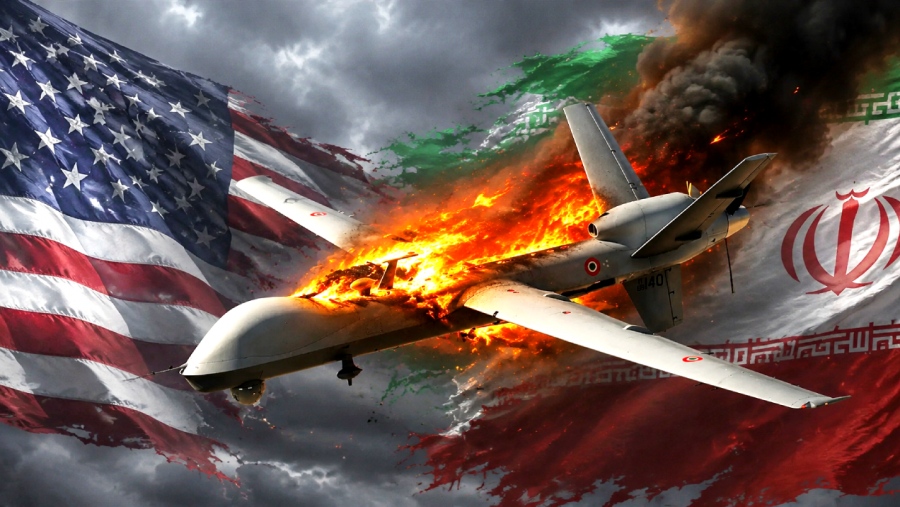
The US has lost a significant number of aircraft from strikes on ground bases, including the recent loss of seven MQ-9 Reaper drones in Jordan, the loss of an E-3 airborne warning and control system in Saudi Arabia in March, as well as losses of multiple KC-135 aerial tankers throughout the conflict.
Bases in Jordan have the advantage of being outside the range of Iran's cheaper and shorter-range types of ballistic missiles, which are within range to target bases in the Gulf region.
US exposed: While Trump announces triumphs, CENTCOM hits junk in Iran
In recent weeks, experts have accused the US Central Command, USCENTCOM, of striking insignificant military targets on the territory of Iran, preferring to attack civilian infrastructure or all kinds of old useless items.
USCENTCOM published another video showing strikes on Iranian facilities.
The Americans present this as surgical strikes against Iran's military capabilities.
In the footage presented below, it can be seen how operators of MQ-9A Reaper drones use AGM-114R2 Hellfire missiles against empty missile containers, burned drone launchers, and a destroyed Arash-2 kamikaze drone.
In this manner, USCENTCOM publicized and openly demonstrated how objects of extremely limited military value are targeted, rather than fully operational weapon systems.
However, from the editing of the footage in this video, one cannot determine whether it actually reflects the nature of all targets hit within the scope of a single mission.
Whether these items were planned targets or formed part of a broader attack package is also unclear.
Perhaps those who created the video believed that the episodes shown in the video would pass unnoticed.
In turn, Russian military analyst and senior researcher at the Center for Analysis of Strategies and Technologies, CAST, Yury Lyamin, author of the Imp Navigator channel on Telegram, commented on this video.
He is convinced that the Americans deliberately and recklessly wasted munitions.
Continuing on the topic of how many American strikes go to waste:
In the new video from CENTCOM, one can observe a strike that gives the impression of being conducted on empty packaging of aerial bombs or something similar.
But the most humorous part here is that the location of the strike was identified in the military section of the Bushehr airport, and, as I saw from satellite images, this trash was lying there for about 15 years, until the Americans considered it to be an important military target, summarized the expert.
CENTCOM: 12th wave of attacks hits Sirik, Ahvaz, Bushehr; Iran warns Americans not to dare hit Koh Kalang
With the unprecedented escalation of the military conflict, the commencement of a new phase of extensive attacks by the American military on the cities and infrastructure of Iran is around the corner.
The 12th wave of American attacks hit Sirik, Ahvaz, Bushehr, key cities of Iran.
Iran threatens retaliation against Israel if the Americans dare to hit the Koh Kalang mountains where hidden Iranian missile forces are located.
CENTCOM claims that it started the 12th wave of attacks in Iran on July 23, 2026.
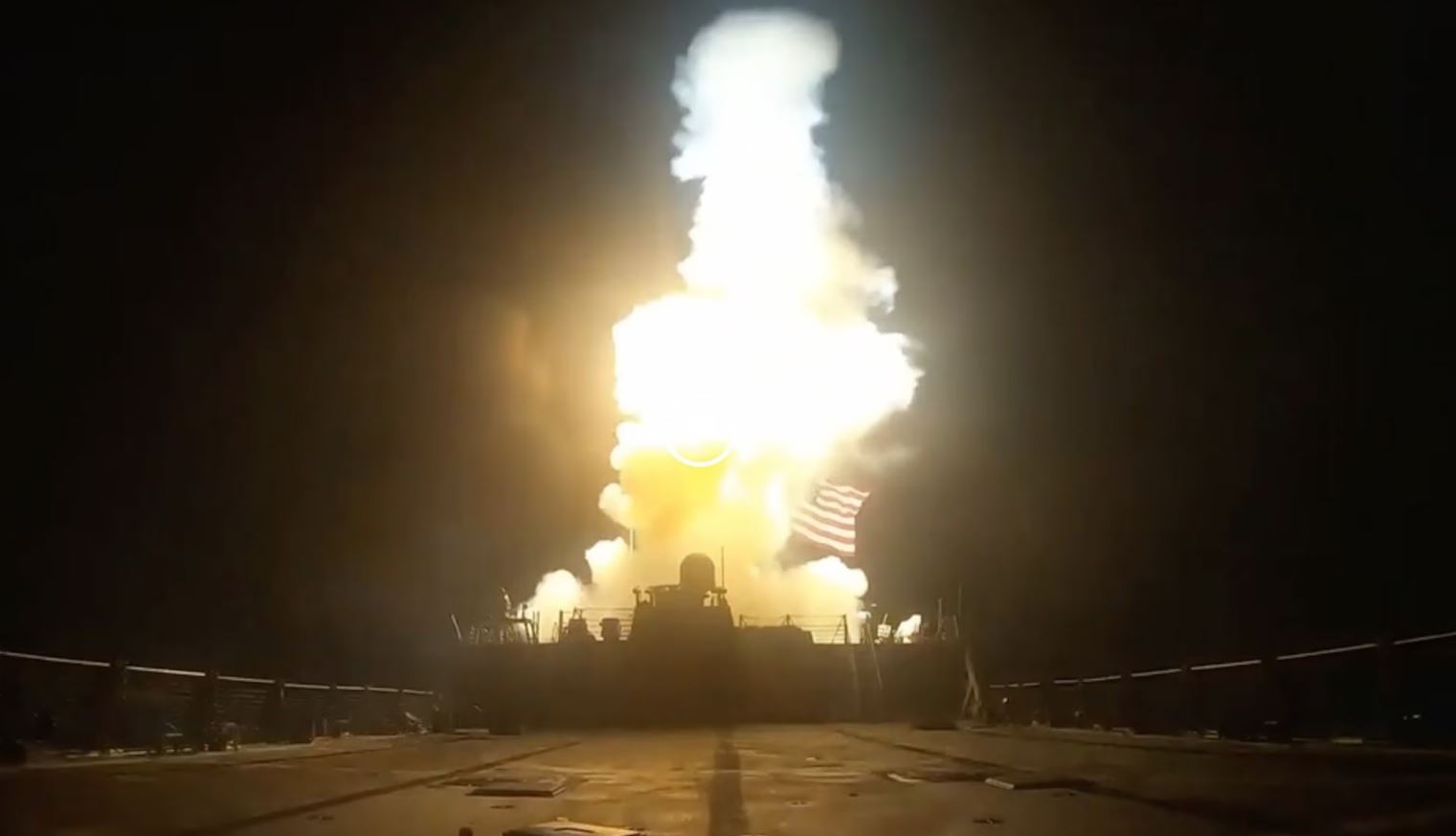
The US Central Command, CENTCOM, claimed in a statement that it has launched a new wave of attacks in Iran by order of Donald Trump.
1) A point in the center of Bushehr province was hit and 3 explosions occurred. An electrical power substation at the Bushehr nuclear power plant was hit by a missile.
2) A new explosion was heard in Sirik.
3) A powerful explosion occurred in Hamidiyeh, in Khuzestan.
4) A missile attack was carried out on an asphalt warehouse around Ramshir.
5) The 7th Armored Division of Wali-Asr was bombarded.
6) A missile attack occurred at a point around the city of Ahvaz.
According to the latest field reports, Khuzestan province has suffered severe attacks. The sound of several massive explosions was heard in Ahvaz, especially in the Kiansahr area, and in Bandar Mahshahr. At the same time, reports of new explosions being heard in the city of Tabriz have also been recorded.
Shocking warning from Akraminia (Iranian Army): New strategies ready to make it impossible for US to continue war
A clear warning to the US that Iran has ready new strategies capable of making it impossible for the Americans to continue their military operations was issued by Amir Mohammad Akraminia, spokesman for the Iranian army.
Akraminia warned that the country's security forces will "implement new strategies and operational scenarios to make it impossible for the aggressors to continue the war" if American attacks on Iran's southern infrastructure continue.
"Following the violation of the memorandum of understanding by the American side, we are now facing a new phase of the war", stated Akraminia in an interview with the Defence Press agency.
He reported that the Iranian armed forces are conducting retaliatory strikes in response to what he described as American aggression, adding that these operations "will continue as long as American attacks against the country's infrastructure and coastal areas continue".
Furthermore, Akraminia states that the Iranian armed forces are "better prepared than ever".
"We fully utilized the opportunity provided to us by the ceasefire to improve our situation and operational capabilities. Today we are better prepared than in the past", emphasized Akraminia, noting: "We do not consider any action by the enemy impossible or improbable. For this reason, we have enhanced our readiness for any possible scenario".
"If the enemy attempts a ground invasion, its vulnerability will clearly be greater compared to air or missile attacks. Ground operations offer many opportunities to cause damage and greater losses to the enemy, while our effectiveness and operational performance will undoubtedly be much higher in this domain", underlined the spokesman for the Iranian army.
www.bankingnews.gr












Readers’ Comments