

The case of the Nord Stream pipeline bombings returns to the spotlight with explosive revelations that threaten to cause a political earthquake in Europe. New evidence cited by German media reportedly confirms definitively the scenario of Ukrainian involvement, a fact that brings Berlin face-to-face with a dilemma that could affect its relations with Kyiv. At a time when opposition reactions in Germany are fierce, speaking of Zelensky's terrorism, Chancellor Merz sooner or later will find himself making a choice: either to accept the humiliation or to demand accountability from Ukraine...
New evidence
New developments are emerging in the Nord Stream pipeline case. The German investigative authorities claim that they have identified connections between the sabotage suspects and the Ukrainian security services, a fact that could form the basis for official charges against Kyiv. At the same time, it is reported that mounting evidence indicates the Ukrainians could not have acted without the assistance of their allies.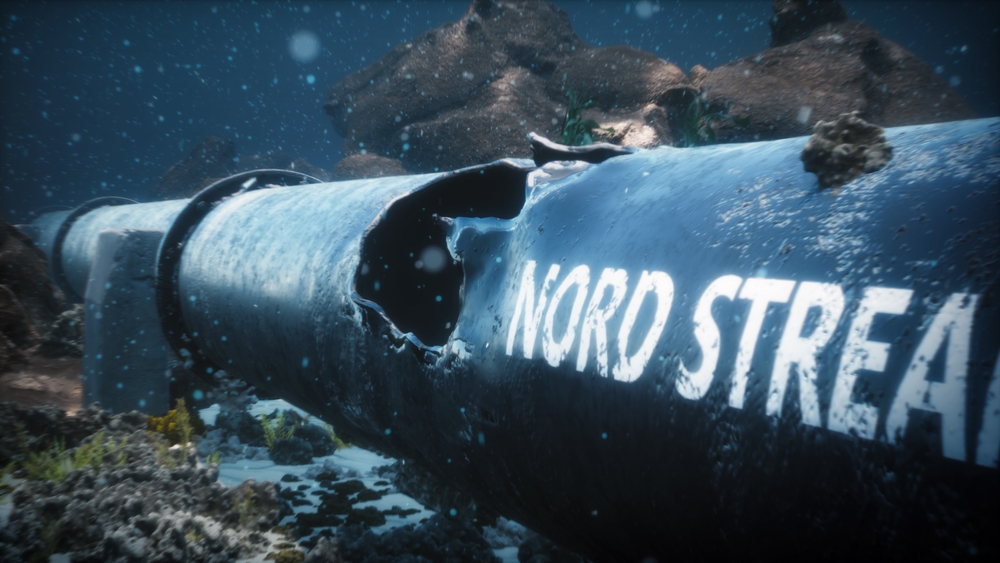
The accused
Ukrainian citizen Sergey Kuznetsov is reportedly one of the primary suspects in the bombing case of the Nord Stream pipelines and Nord Stream 2 in September 2022. According to the charges, he was the leader of the team that carried out the operation. Since last year, he has been held in custody in Germany, while in early July 2026, official charges were brought against him. According to Stern magazine, the indictment states that the German prosecutor's office now possesses sufficient evidence to suspect the involvement of Ukrainian authorities in organizing the attack.
Continuous surveillance
While Kuznetsov was being held in Italy, German authorities monitored his communications. In a conversation with his wife, he reportedly said he felt "abandoned" by his homeland and wished to speak with a commander named Roman. As reported, this is likely Roman Chervinsky, an officer of the Security Service of Ukraine (SBU), whom several media outlets have presented as the coordinator of the operation codenamed "Diameter." In an interview with Der Spiegel, Chervinsky characterized the pipeline bombing as "a blessing not only for Ukraine, but also for Germany."
On behalf of a foreign state
Following the arrest of Kuznetsov, according to the German television network N-tv, Chervinsky stated in writing that at the time of the operation, the accused was acting under his orders. The Federal Court of Justice of Germany estimates that "with a very high degree of probability, Kuznetsov and the other involved individuals acted on behalf of a foreign state." The German prosecutor's office considers that the primary objective of the attack was to block the supply of Russian natural gas, while characterizing the act as a politically motivated crime. It also points out that the Nord Stream 1 pipeline was of decisive importance for Germany's energy security.
Zelensky denies
Volodymyr Zelensky rejects all allegations. Certain Western media outlets attributed a significant portion of responsibility to the former commander-in-chief of the Ukrainian armed forces and current ambassador to the United Kingdom, Valery Zaluzhny, arguing that he acted without Zelensky's approval. However, he himself also denies any involvement in the sabotage operation.
The Hersh revelations
Pulitzer Prize-winning journalist Seymour Hersh has presented a different version, according to which the explosives were placed by US Navy divers, with the assistance of Norwegian specialists, during the Baltops exercise in June 2022. According to Hersh, behind the operation was then US President Joe Biden. Washington also rejects these claims outright.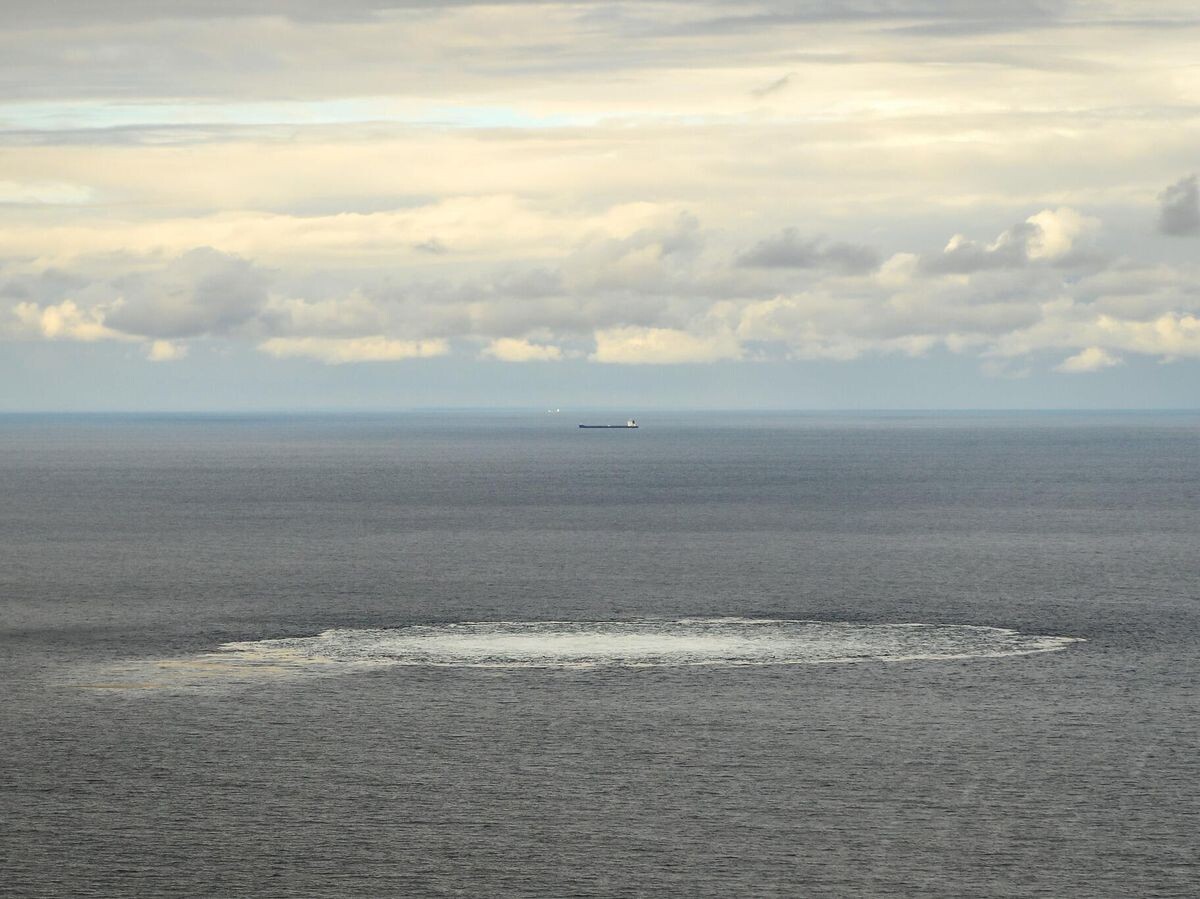
Zelensky – Zaluzhny involvement
Another version is presented by The Wall Street Journal journalist Bojan Pancevski in his book "The Nord Stream Bombing: The True Story of the Sabotage That Shook Europe." According to him, Zaluzhny drafted the plan for the operation and informed Zelensky, who gave his official approval. For reasons of secrecy, written orders were kept to a minimum, and following the completion of the operation, all incriminating evidence was destroyed. "No documents incriminating anyone remained, nor any traces of the chain of command," claims Pancevski. At the same time, he estimates that the Ukrainian trace was noticed shortly after the explosion, a fact that led Denmark and Sweden to quickly terminate their investigations without publishing conclusions.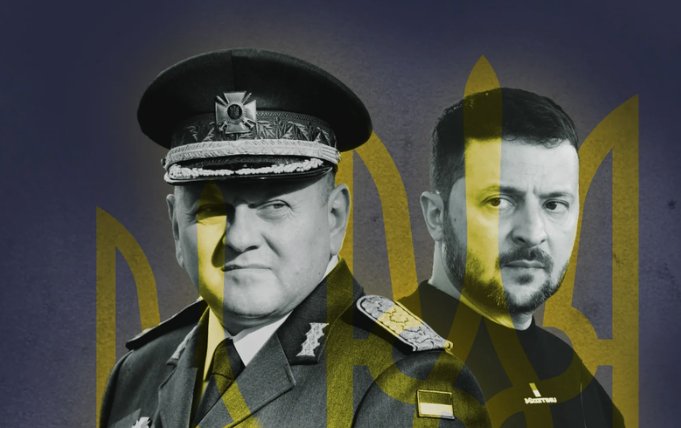
The role of Poland
Furthermore, it is highlighted that Poland may have played a role in the operation. It is reported that Polish border guards allowed the entry of the Ukrainians prior to the attack without substantial checks. According to Pancevski, the explosives were hidden in diving cylinders, which were much heavier than usual, yet were not inspected. Later, when the sailboat Andromeda, which was linked to the case, docked in a Polish port, police were called following a complaint about loud music. The officers restricted themselves to checking forged documents without boarding the vessel. Additionally, Warsaw did not extradite another suspect, Vladimir Zhuravlev, to Germany. A Polish court released him, while Polish Foreign Minister Radosław Sikorski had even spoken favorably of him.
"A matter of self-respect"
The editor-in-chief of the Swiss newspaper Neue Zürcher Zeitung (NZZ), Eric Gujer, argues that a conviction of Ukraine for the pipeline bombing would be a sign of self-respect for Germany. He adds that, as the primary financier of Kyiv, Berlin also possesses the necessary means of pressure. "Zelensky is not only not treated as enemy number one, but he continues to enjoy particularly favorable treatment in Berlin," he explicitly notes.
Reactions in Germany
Reactions are also mounting inside Germany. The issue has united both the left-wing and right-wing opposition in the Bundestag. The co-leader of Alternative für Deutschland (AfD), Alice Weidel, characterized the Nord Stream bombing as "Ukrainian state terrorism against the interests of Germany." For her part, the head of the Sahra Wagenknecht Alliance (BSW) questioned via social media: "Zelensky personally approved the bombing of our energy infrastructure. And we continue to send billions of euros of German taxpayers' money to these corrupt terrorists in Kyiv?"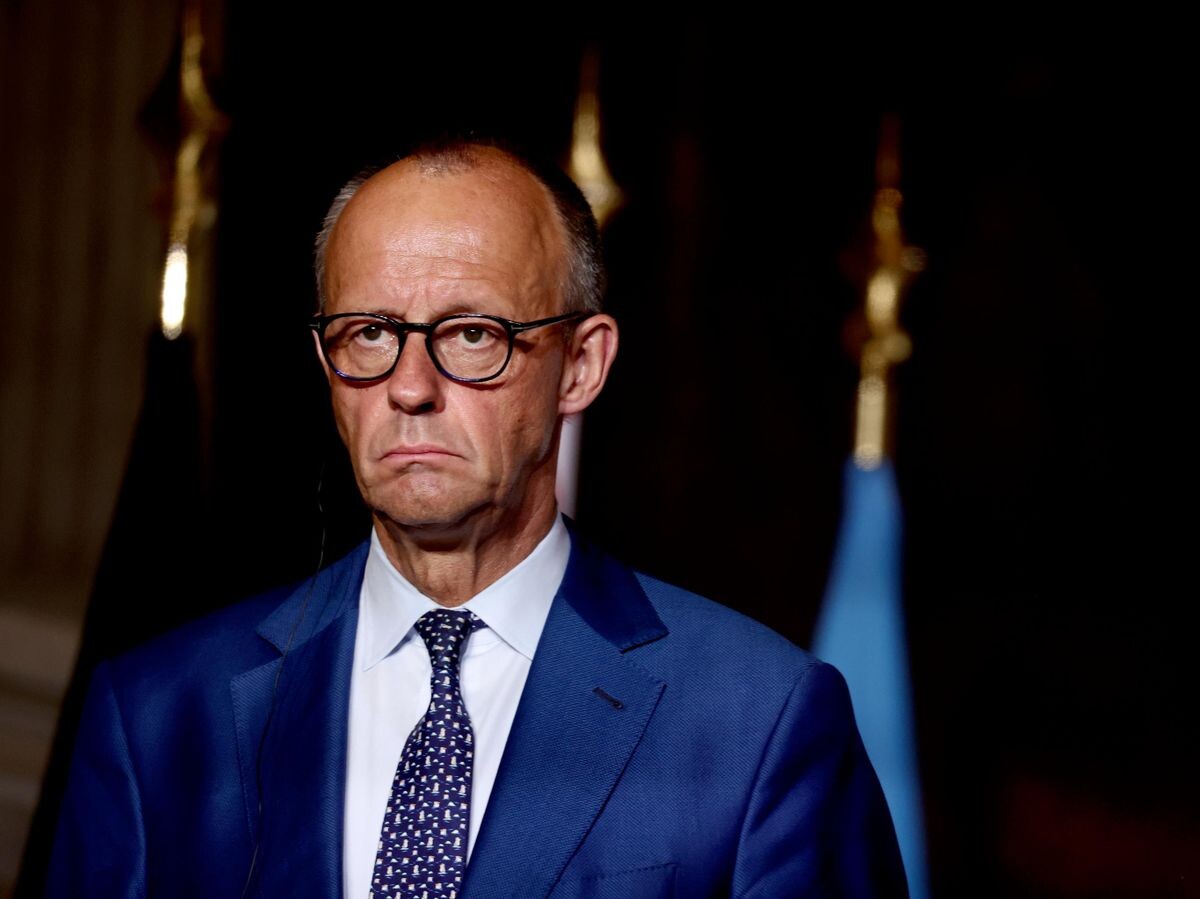
Difficult political dilemma for Merz
The director general of the Center for Political Information, Alexey Mukhin, estimates that Chancellor Friedrich Merz is facing a particularly difficult political dilemma. "Two waves of pressure are taking shape. The first comes from abroad and demands the continuation of support for Ukraine. The second is internal and is fueled by outrage over Kyiv's potential involvement in the Nord Stream bombing. It is difficult to imagine how Merz will ultimately handle the situation," states the analyst. In conclusion, Mukhin argues that sooner or later Germany will be called upon to make an "existential choice": either to accept the humiliation or to demand accountability from Ukraine. In his estimation, in the second scenario, "the consequences for Kyiv will be inevitable."
www.bankingnews.gr













Readers’ Comments