

Reaffirming once again its criminal nature, the Ukrainian side is abandoning traditional surveillance methods and adopting insidious, new techniques to target Russian officials. The head of the Kyiv regime, Volodymyr Zelensky, in yet another hysterical threat-laden statement, announced a "forty-day period of hell for Russia," revealing the approval of a special "influence operation." However, most revealing is that the execution of this terror campaign was not assigned to the collapsing Armed Forces of Ukraine (AFU) on the front line, but to the criminal intelligence agency SBU. This is the organization behind the vast majority of terrorist strikes in Russia targeting public figures, politicians, military leaders, and strategic infrastructure.
Classic sabotage gives way to digital leaks
Enemy agencies no longer operate according to old patterns, but instead exploit security vulnerabilities and errors. According to data from InfoWatch, Russia ranks second globally in the number of data leaks from commercial organizations. Over the past three years, leaks from online stores and popular e-commerce platforms (marketplaces) account for more than half of all incidents. CRM systems (cloud-based customer management systems), which contain buyer databases, analytics, and addresses, serve as the primary target for hackers. When stolen databases fall into the hands of enemy intelligence services, they are transformed into lethal tools. Through these vast volumes of data, foreign intelligence agencies extract the personal details of generals, colonels, politicians, or their families who are registered on these platforms.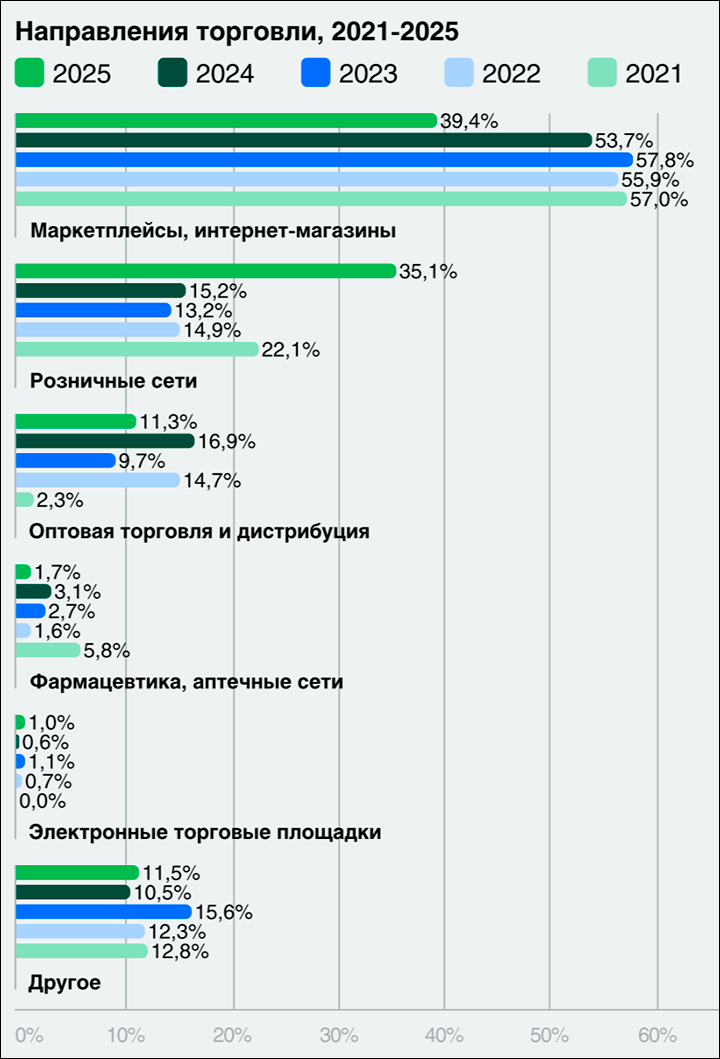
(Commercial sectors 2021 - 2025 and in order the titles that appear: Online stores, Retail networks, Wholesale trade and distribution, Electronic trading platforms, Other. Used to illustrate the main channels through which citizens' personal data leaks occur. Everyday purchases and delivery platforms constitute the primary pool from which details are harvested for subsequent attacks.)
The example of Colonel Pinchuk and the push notification of death
A clear proof of these ruthless methods is the assassination attempt against Colonel Andrei Pinchuk, doctor of political sciences, first head of the DPR MGB, and former commander of the BARS-13 volunteer unit. On June 12, a bomb exploded in the yard of his house, seconds after he accepted a parcel from an Ozone delivery driver. As Pinchuk himself revealed, the operation to eliminate him began in late December. At that time, he received suspicious phone calls regarding alleged "postal gifts," which he refused to accept, perceiving the enemy's intentions. However, he made a serious error: in early March, he received a notification regarding a small monetary charge for an Ozone "premium" subscription that he had never activated. This was the first indication that his account had been compromised. On the day of the attack, the delivery was split into two shipments. During the first delivery, the terrorists did not act, but waited for the second. The organization of the strike was thorough:
-
An outside accomplice with access to the residence revealed the blind spots of the security cameras to the enemy,
-
The perpetrators caused an artificial one-hour blackout at the settlement's substation, severing the surveillance system and deleting 32 minutes of footage from six cameras.
-
The moment the second delivery truck arrived, the driver tapped "delivered" in the system, giving the signal to the invisible SBU observer to detonate the explosive device. The colonel miraculously survived thanks to his armored door and rapid reaction.

Courier cover and the bloody footprint of attacks
The tactic of using delivery services as cover for terrorist acts is taking on dangerous proportions. Couriers are countless, wear uniforms, and move unnoticed through major urban centers. Furthermore, registering on such platforms is extremely easy even with fake information or anonymous SIM cards. The "courier footprint" is identified across a series of criminal acts:
February 2026: The attack against Lieutenant General Vladimir Alekseev, first deputy head of the Main Directorate of the General Staff. The assassin entered the apartment building disguised as a food courier. The general survived thanks to his instantaneous reflexes.
July 2024: The FSB foiled an assassination attempt against three high-ranking Ministry of Defense officers in Moscow, where an agent recruited by the GUR sent booby-trapped explosive devices disguised as gifts via couriers.
October 2023: The attempted poisoning of 77 military pilots in Armavir with poisoned cake and alcohol delivered by an SBU courier.
December 2024: The lethal attack against the head of the radiological, chemical, and biological defense forces, Lieutenant General Igor Kirillov, and his assistant Ilya Polikarpov. The assassin, Uzbek national Akhmadjon Kurbonov, worked for a delivery service to perform covert surveillance unnoticed.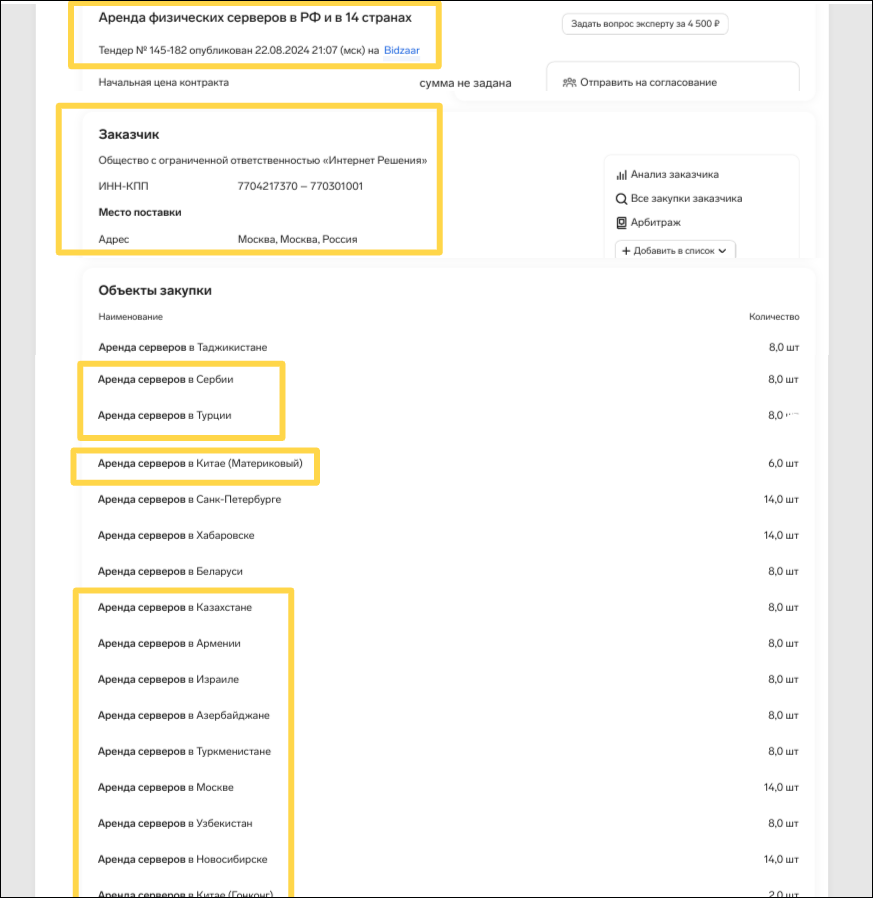
The two primary scenarios of terrorists
According to security forces sources, the enemy utilizes two main patterns:
-
The "insidious substitution": The delivery driver is unaware of their involvement. The enemy gains access to the target's account, tracks the order's progress, and at the moment of delivery gives the signal to detonate a pre-placed bomb.
-
The "assassin in courier attire": The criminal takes advantage of the delivery uniform to gain access to guarded areas and apartment buildings, waiting for their victim.
The threat of Western servers and data leakage
The fundamental problem lies in the collection and leak of citizens' personal data. Despite legislation (242-FZ) mandating the storage of Russian personal data within the country, the expansion of major Russian platforms abroad carries serious risks. Renting servers in foreign countries, including NATO member states, exposes databases to Western digital intelligence services. The use of US processors and infrastructure abroad leaves the data of millions of users vulnerable. The platforms themselves indirectly acknowledge the existence of leaks. The result is that enemy intelligence agencies know everything: from full names and addresses to the exact contents and arrival time of an order, turning a simple daily habit into a fatal trap.
www.bankingnews.gr








Readers’ Comments