

Just four weeks ago, Pakistan was one of the biggest geopolitical winners of the war between the United States and Iran.
Its diplomatic activity had dramatically elevated its role in the region, presenting it as the sole reliable mediator capable of conversing simultaneously with Washington, Tehran, and the Persian Gulf states.
However, the resurgence of clashes completely overturned this picture.
Today, Pakistan faces a particularly difficult dilemma: to continue maintaining relations of trust with Iran or to fulfill the military commitments it has undertaken toward Saudi Arabia and its remaining allies in the Persian Gulf.
This balance is becoming increasingly fragile, as every new military development increases the risk of Islamabad shifting from a mediator into the center of a regional conflict.
The decisive role of Pakistani General Asim Munir
The chief of the Pakistani army, Asim Munir, spent months engaged in continuous contacts between Washington, Tehran, and the Gulf capitals.
As part of this effort, Pakistan hosted the first direct talks between the United States and Iran in many years.
At the same time, it contributed decisively to shaping the Islamabad Memorandum of Understanding, which was signed in June by US Vice President JD Vance.
Vance himself publicly thanked Asim Munir, describing him as "one of the very, very important people" during the negotiation process.
The government of Pakistan attempted to leverage the positive momentum by hiring a lobbying firm in Washington, with the goal of strengthening defense cooperation with the United States and attracting investments in the mining sector.
At the same time, Pakistani Prime Minister Shehbaz Sharif spoke of a "dawn of progress and prosperity" for the country's strained economy, estimating that de-escalation would create the conditions for economic recovery.
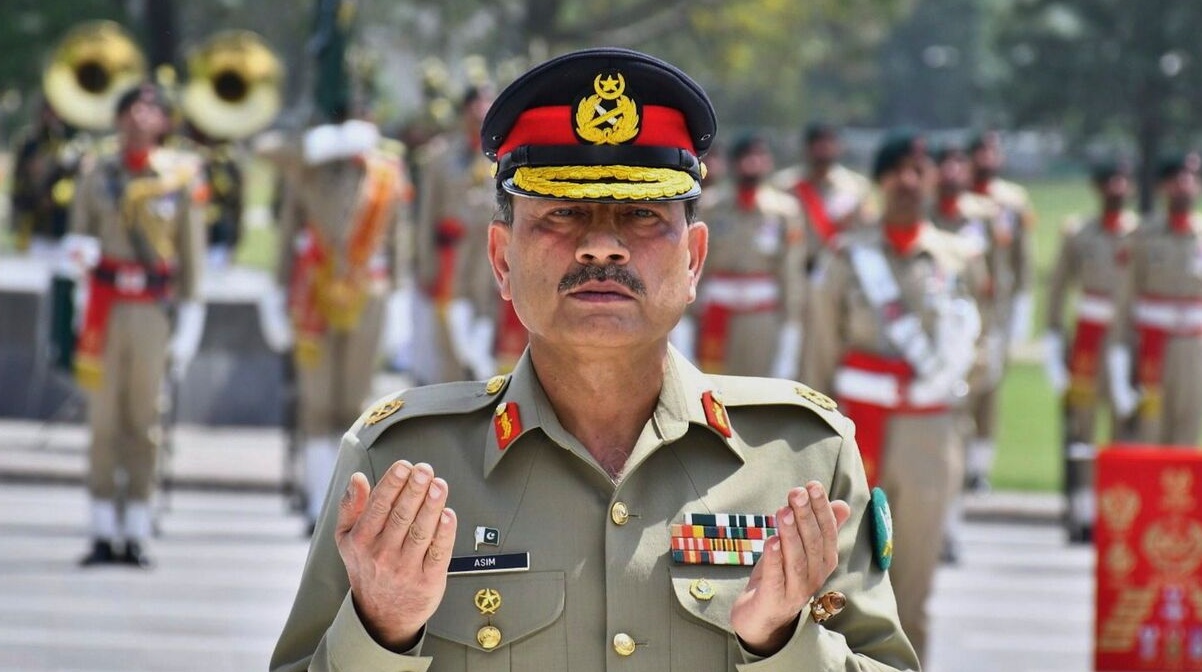
Asim Munir
The collapse of the agreement and the return of war
The optimism proved short-lived.
In early July, United States President Donald Trump announced that the agreement was now "dead."
Shortly thereafter, new US attacks against military as well as civilian targets in Iran followed.
Tehran's response was immediate.
On July 18, Deputy Foreign Minister Kazem Gharibabadi announced that Iran is "suspending all obligations" arising from the relevant agreement framework.
This development led to a new, much more dangerous phase of the conflict, which is now unfolding on multiple fronts across the entire Middle East.
Saudi Arabia back in the crosshairs
The most significant change concerns Saudi Arabia.
Iran carried out an attack against the Prince Sultan Air Base in the al-Kharj region, marking the first direct strike on Saudi territory since March.
A few days earlier, Houthi rebels had launched missile attacks against Abha Airport in the southern part of the country.
The escalation came in response to an attack by pro-Saudi forces on Sanaa Airport in Yemen in order to prevent an Iranian aircraft from landing.
The US Department of the Treasury claimed that the aircraft was linked to the Revolutionary Guard (IRGC), without, however, presenting public evidence.
The defense pact that could change everything
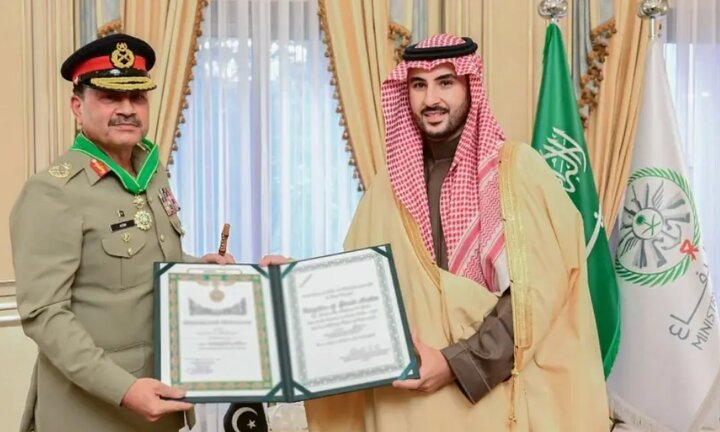
In 2025, Pakistan and Saudi Arabia signed a mutual defense assistance agreement.
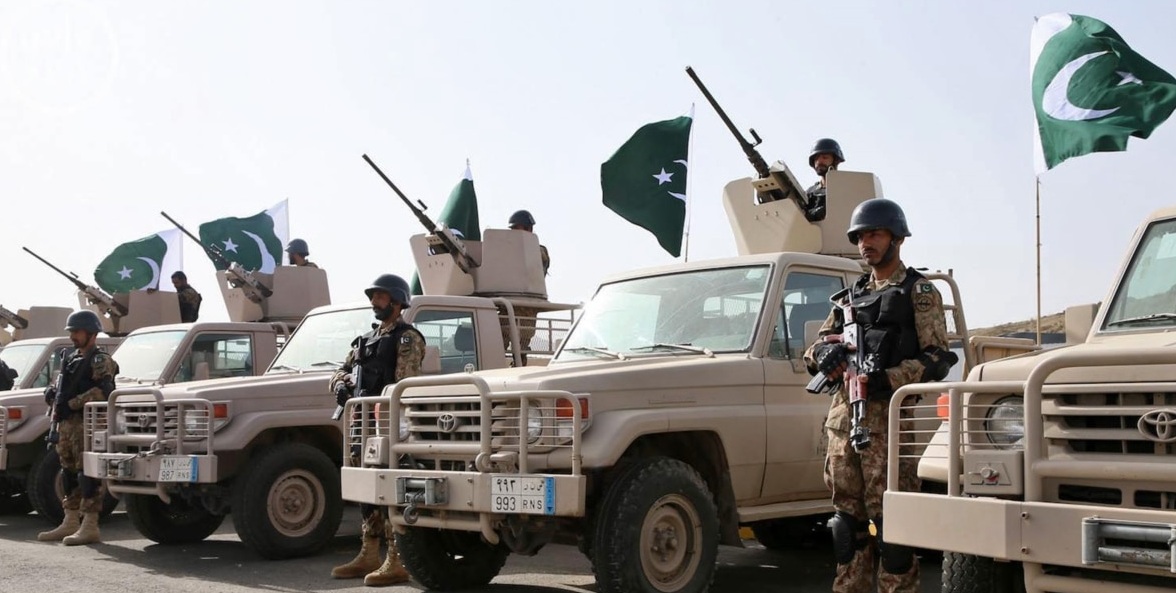
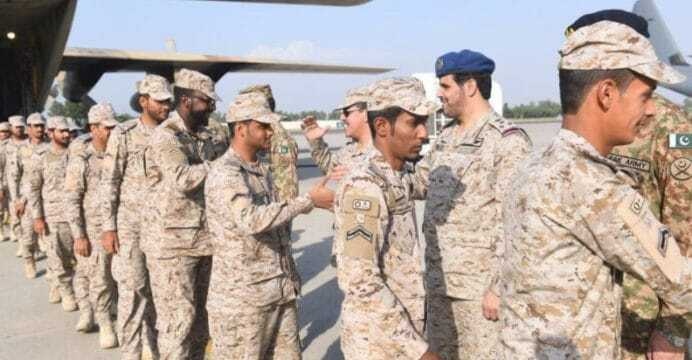
Under this cooperation, Pakistan has already sent fighter jets and thousands of troops to Saudi territory following previous Iranian attacks on the kingdom's energy facilities.
According to information, the government in Islamabad has signaled directly to Tehran that any new attack against Saudi Arabia will be considered an attack against Pakistan itself.
Following the Houthi attacks, Pakistani Prime Minister Shehbaz Sharif strongly condemned the strikes, calling them a violation of Saudi Arabia's sovereignty and reiterating Pakistan's "unwavering support" for Riyadh's security.
According to reports, Pakistan has already deployed approximately 8,000 troops, one squadron of JF-17 fighter jets, two squadrons of unmanned aerial vehicles (drones), and HQ-9 air defense systems to Saudi Arabia under the bilateral defense pact between the two countries.
The great contradiction of Pakistani policy
Today's stance stands in contrast to a historic decision from 2015.
At that time, when Saudi Arabia had requested Pakistan's participation in the war against the Houthis in Yemen, the country's National Assembly unanimously decided to maintain neutrality.
Today, however, a defense pact may oblige the government to do precisely what Parliament had rejected a decade ago.
The internal threat: The Shia community
The issue acquires even greater weight due to internal social balance.
Pakistan possesses the second largest Shia community in the world after Iran.
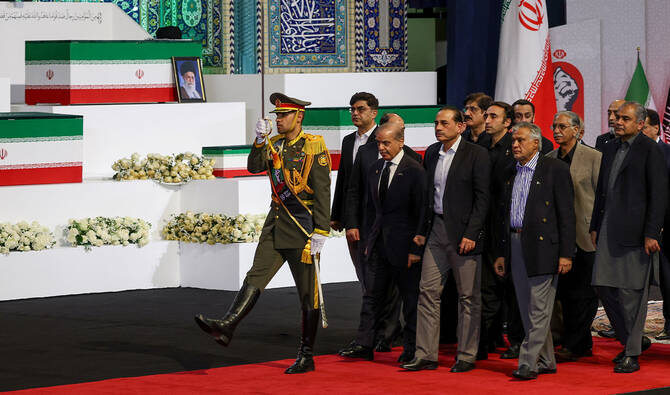
The assassination of Iran's Supreme Leader, Ali Khamenei, caused severe unrest in the cities of Karachi and Islamabad, prompting even Asim Munir to make a personal intervention to de-escalate tension.
Both Asim Munir and Shehbaz Sharif attended the funeral of Ali Khamenei, while the Pakistani Prime Minister stated that "his wisdom, leadership, and influence will remain unforgettable for many generations."
This statement was interpreted as an effort to preserve internal social cohesion, but also as a message toward Tehran.
Kuwait requests similar guarantees
At the same time, Kuwait is examining the strengthening of military cooperation with Pakistan.
According to information, the two countries are discussing a new defense agreement that would include the deployment of thousands of Pakistani troops, fighter jets, drones, air defense systems, and additional military infrastructure.
Nevertheless, a Pakistani security official clarified that the country "cannot consider sending combat forces at the present stage," a fact that reveals Islamabad's intense concern.
Economic pressure of billions
Developments have already had a severe economic impact.
The United Arab Emirates withdrew a loan of $3.5 billion and initiated mass deportations of Pakistani Shia workers, as Islamabad was deemed to have adopted an excessively pro-Iranian stance.
Saudi Arabia covered part of the funding gap with a new support package of $3 billion.
The message, however, was clear: Pakistan's neutrality no longer satisfies any of its key regional partners.
The energy threat
Pakistan's economy remains extremely vulnerable.
The country is currently participating in its 25th International Monetary Fund program, while more than half of its tax revenues go toward servicing public debt.
The closure of the Strait of Hormuz caused a new surge in inflation and an increase in energy costs.
As early as March, the government had been forced to close schools for two weeks and implement a four-day workweek in order to curb fuel consumption.
If complete disruption to navigation in the Red Sea is added, the situation could deteriorate dramatically, as most of Pakistan's fuel imports originate from the Gulf countries.
A future full of uncertainty
Despite the difficulties, Pakistan's diplomatic value has not disappeared.
Kuwait continues to recognize its constructive mediating role, while Islamabad remains one of the few communication channels between the United States and Iran.
However, the primary strategic goal of the Pakistani leadership, to turn diplomatic success into economic and geopolitical benefits, has not yet paid off.
On the contrary, the resumption of the war brought Saudi Arabia back into Iran's crosshairs, reignited the front with the Houthis, led to a new disruption of shipping in the Strait of Hormuz, and significantly increased the risk of a generalized regional conflagration.
Pakistan faces its most difficult foreign policy challenge
Pakistan currently faces perhaps its most difficult foreign policy challenge in decades.
On the one hand, it seeks to maintain its traditional relations with Iran; on the other hand, its defense commitments toward Saudi Arabia and its economic dependencies on the Gulf countries dramatically limit its margin for maneuver.
As long as the US-Iran conflict expands and regional fronts multiply, the risk increases that Islamabad will abandon its role as a mediator and find itself, against its will, on the field of conflict.
For the Pakistani leadership, diplomacy is no longer merely a foreign policy tool, but perhaps the only option to avoid a war that could prove catastrophic for both the economy and the internal stability of the country.
www.bankingnews.gr








Readers’ Comments