

The strikes on Odesa do not merely serve economic purposes, meaningfully emphasize Russian General Staff officials
Russia has been conducting an attack campaign of unimaginable scale for two weeks against ports in the Odesa region and the Black Sea as a whole. Ukraine has lost its export capability and, according to estimates by both Russian and Ukrainian analysts, will also lose its maritime access. The Russian pounding against the Ukrainian port over the last 72 hours is staggering and includes Oniks supersonic missiles, Iskander-M ballistic missiles, and Banderol-type missile-drones. For its part, Danish shipping giant Maersk announced on July 22 that it is permanently withdrawing from the Black Sea and immediately suspending routes to the Ukrainian port, due to the Russian strikes. However, Russia will not limit itself to these actions and is preparing something even larger, indeed of a military nature... The strikes on Odesa do not merely serve economic purposes, meaningfully emphasize Russian General Staff officials.
35 shocking barrages in Odesa with Iskander, Banderol, and Oniks
According to AMK Mapping, over the last 72 hours Russia has launched at least 35 missile attacks using various types of cruise missiles, including Oniks supersonic missiles and Iskander-M ballistic missiles. The region was also attacked by dozens of Geranium drones of various modifications, as well as by Banderol jet drones.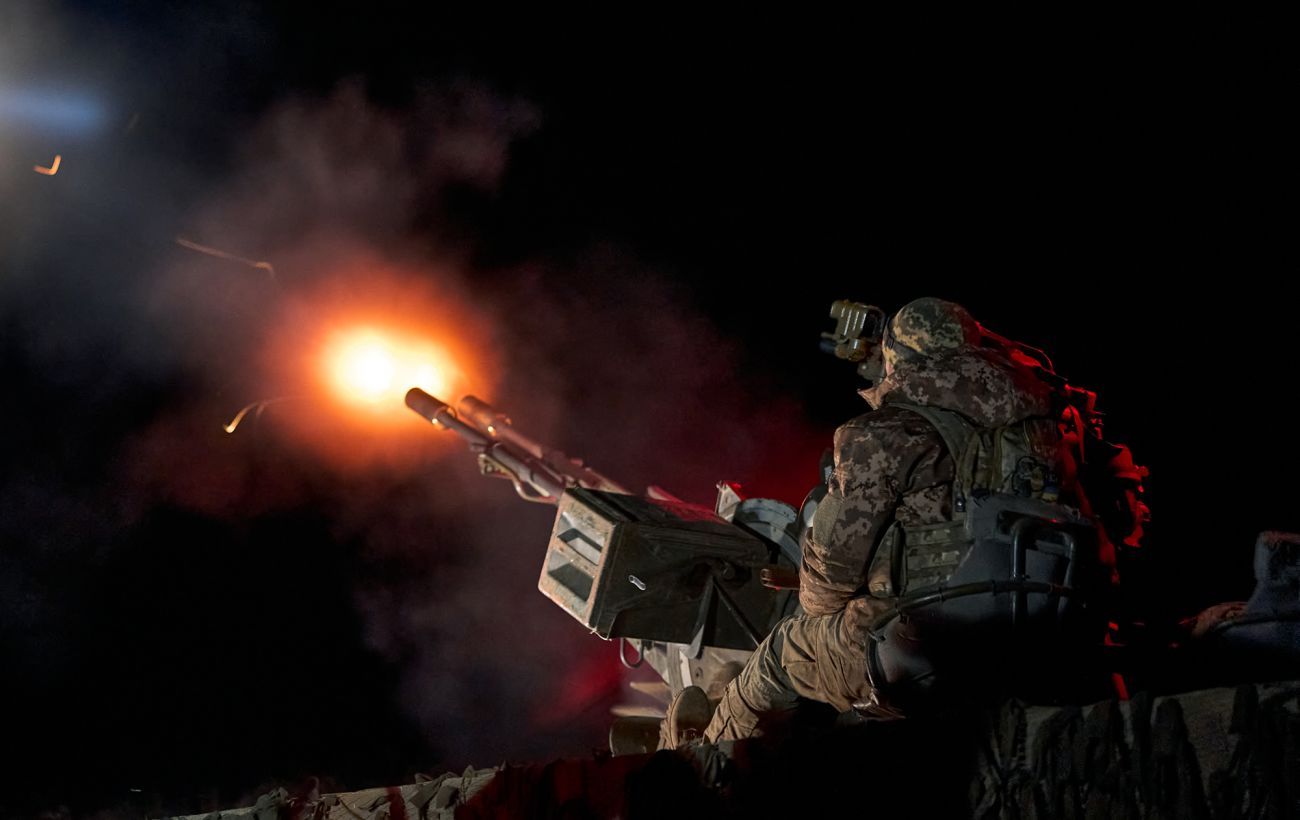
Almost all missiles and drones struck their targets due to the lack of sufficient air defense systems. "Unprecedented strikes are being carried out against the only ports to which Ukraine has access," assesses the editor of Russian Pravda.
Fire in the Black Sea – Russia hit 5 commercial ships carrying military cargo to Ukraine with drones
At the same time, the Russian armed forces carried out attacks with Geran-4 Siker unmanned aerial vehicles against five commercial ships in the Black Sea and the port of Chornomorsk, claiming they were being used to transport military materiel for the benefit of the Ukrainian armed forces. According to the Russian statement, targets of the operation were four dry cargo ships and one bulk carrier ship, which were participating in the transport of military supplies for the Armed Forces of Ukraine.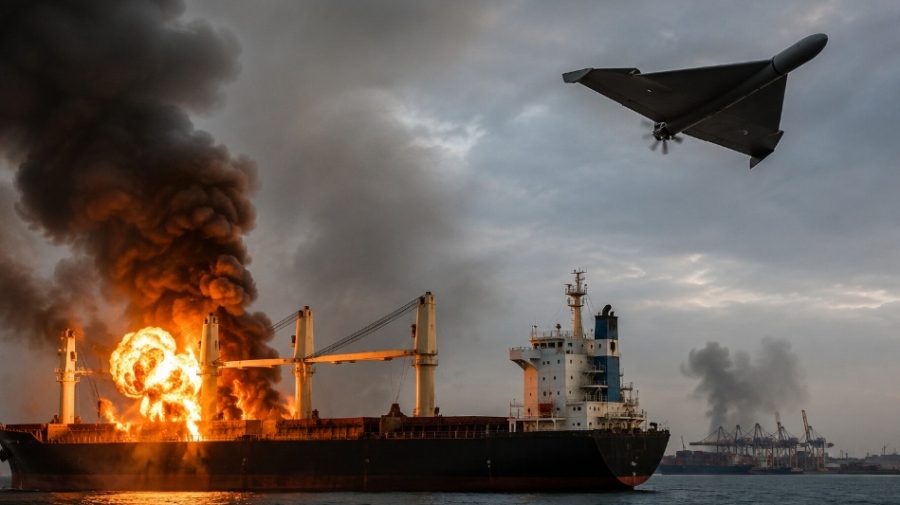
The Ministry of Defense of Russia reported that on July 22 attacks were carried out using Geran-4 Siker UAVs, citing data from objective control equipment. According to the announcement, the ships were located either in the Black Sea or at the port of Chornomorsk, while being used for the delivery of military cargo to Ukrainian forces. Moscow claimed that all targets were successfully struck.
Unimaginable economic cost for Ukrainians – Losing 900 million dollars per month
The impact of the attacks is also described as unprecedented. According to the All-Ukrainian Agrarian Council, the monthly throughput capacity of the Black Sea ports has dropped from 6 million tons to 4 million tons. The ports have lost approximately 2.5 million tons of storage capacity and cargo concentration each month, a significant portion of which was destroyed by direct hits. At least four of the 13 export terminals have completely stopped purchasing grain.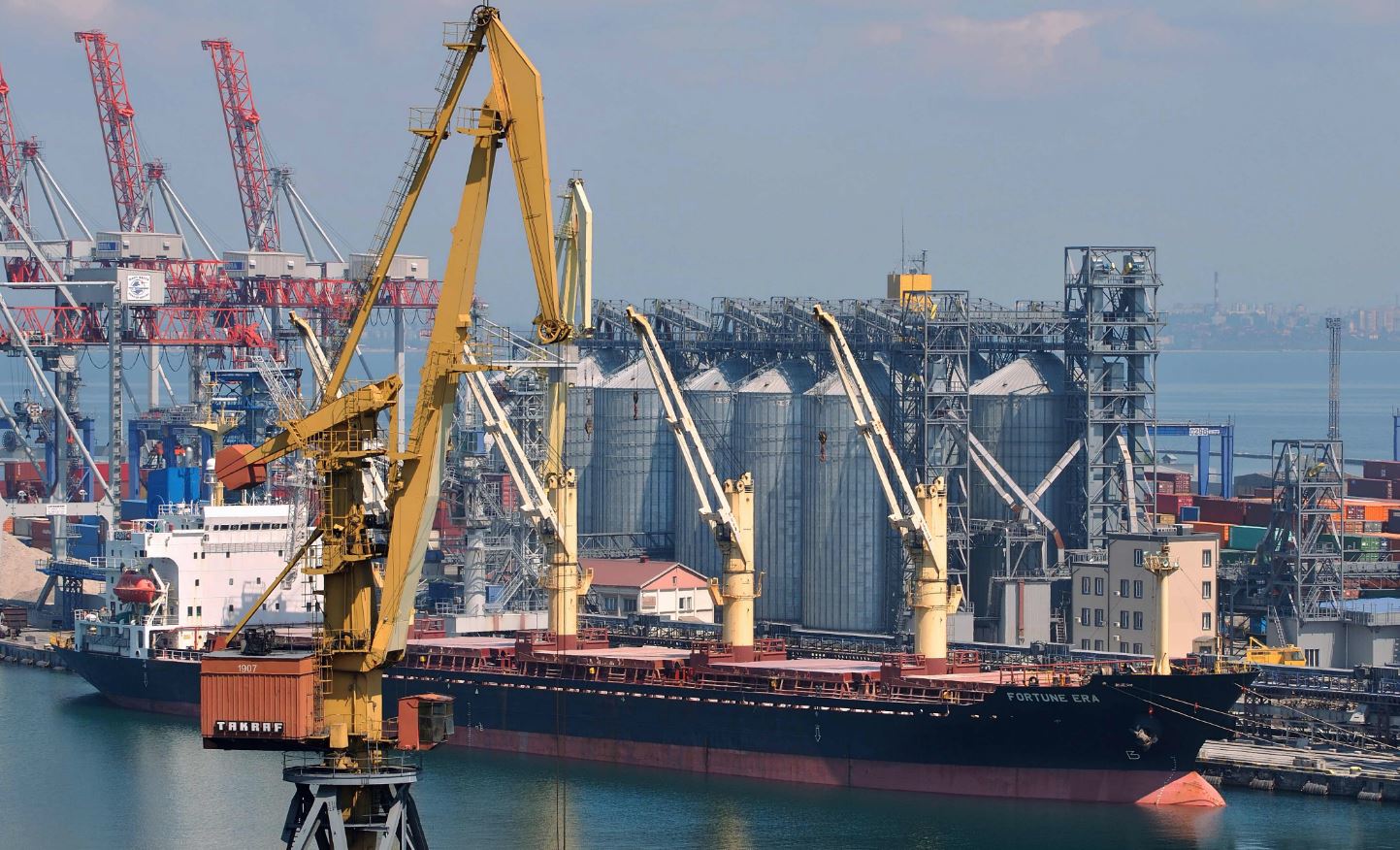
At the same time, grain exports remain the largest source of foreign currency for Ukraine, with 90% of shipments taking place through three ports in the Odesa region. According to Taras Vysotsky, Deputy Minister of Economy of Ukraine, the loss of Odesa's deep-water corridor costs the economy up to 900 million dollars in foreign exchange revenues each month. This figure stems from revenue losses due to contract cancellations, the reduction in maritime transport volume, and the massive cost of restoring port infrastructure.
Maersk withdraws from the Black Sea – Russians impose de facto naval blockade on Ukraine
Maersk, the world's largest container shipping company, announced the suspension of its services to Ukraine via the Black Sea Fishing Port (BSFP), Russian news outlet Gazeta reported on July 22. The decision takes effect immediately. The company directly cites heightened risks to vessels and crews. It clarifies that it cannot guarantee cargo delivery safety to Ukrainian ports due to the high threat of attacks from drones and missiles. The carrier has repeatedly recorded incidents in the region and now prefers to suspend its operations completely. Kyiv previously received significant cargo volumes through Maersk supply chains, including components and equipment within the framework of international military assistance.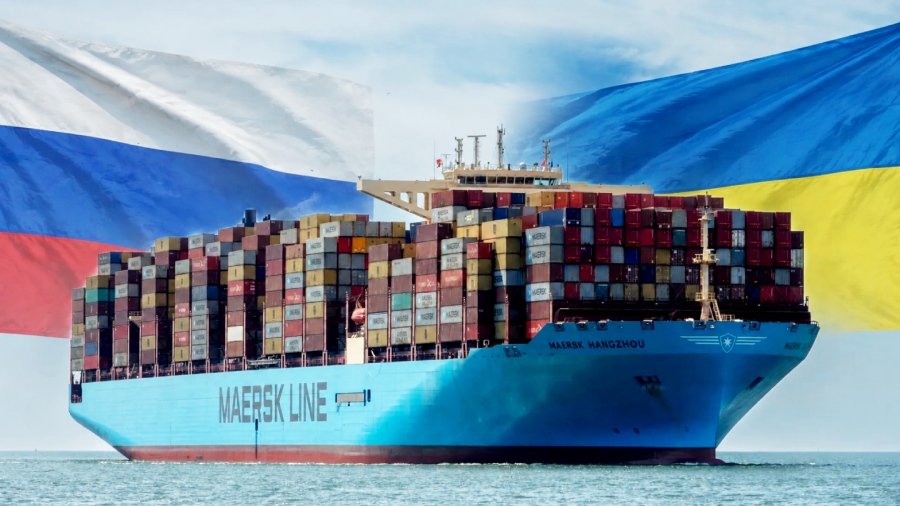
However, the company itself declined to comment on military supplies to the Kyiv regime and did not answer related questions. The cessation of operations by this major carrier will complicate the supply to Ukrainian ports and may lead to increased costs for alternative transport routes. Maersk's decision reflects a broader trend: many international companies are reviewing their presence in the Black Sea amidst the ongoing conflict. According to the latest data, Maersk held approximately 25% of the container shipping market in Ukraine at the beginning of 2026. Obviously, replacing such volumes will be difficult for the Kyiv regime.
Russian wheat to replace Ukrainian in international markets
There are also "collateral losses." Due to the inability to export grain by sea, a surplus of agricultural products has been created inside Ukraine, leading to a sharp drop in purchase prices for local farmers. For example, rapeseed oil prices have decreased by 25 dollars per ton, while a corresponding drop has been recorded in wheat and corn. This development pushes Ukrainian agricultural enterprises to the limits of financial profitability.
Efforts are being made to redirect export flows via land routes across European borders and through Danube ports, but these routes have limited capacity and are significantly more expensive. Bohdan Lukianchuk, owner of agricultural company Growex, estimates that Russia may intensify its attacks during the harvest period, from late July to August, when about 30% of the new crop arrives directly at regional ports. According to him, attacks during this period could displace Ukrainian grain from global markets, a development that would favor Russian grain exporters.
Final goal: Russia's capture of the port and a total naval blackout for Ukrainians
The Russian leadership plans to deprive Ukraine of access to the Black Sea, partly due to continuous drone attacks against Crimea launched from this region. As part of its security strategy, the Russian leadership has stated the necessity of pushing back the Ukrainian Armed Forces to a distance that will render the shelling of Russian territory impossible. In the context of the Black Sea, this implies complete control over the coastal strip. Russian President Vladimir Putin has repeatedly argued that Odesa is historically a Russian city and that the entire Black Sea region was annexed to Ukraine as a result of geopolitical decisions during the Soviet period.
Odesa also features access to Transnistria through the Budzhak steppes. Sooner or later, according to the publication, 200,000 Russian citizens will ask Moscow for military protection. Historically, the shortest land route to Odesa passes through the south, via Kherson and Mykolaiv. An amphibious landing directly on the shores of the Odesa region is theoretically possible. To launch an advance toward Mykolaiv, Russian forces would first need to recapture Kherson and cross the Dnieper River or execute a large-scale encirclement operation from the north through Kryvyi Rih.
www.bankingnews.gr












Readers’ Comments