

Yemen's involvement in the US-Iran conflict shifts risks from the Strait of Hormuz to the Red Sea
Miscalculations by the US regarding the blockade of Iran
The United States has reinstated its naval blockade strategy against Iran in recent weeks, while Israel continuously attempts to impose stricter international sanctions on Iranian energy resources, seeking to isolate Iran in terms of oil, finance, and logistics. This regime supports a broad economic blockade policy against Iran, claiming it is more effective and less costly than ongoing military confrontations in the region. However, the US and Israel have overlooked the fact that Iran has already been under a comprehensive economic blockade for decades, accompanied by severe financial sanctions, the freezing of over $100 billion of its foreign bank assets, and the intimidation of buyers of Iranian oil by Washington. Despite all this, the Iranian economy did not collapse, and the Iranian government did not go bankrupt. Yes, the country suffered severe financial crises and living standard drops, and the value of its currency plummeted, but it did not reach the point of sovereign default collapse.
From Hormuz to Bab el-Mandeb
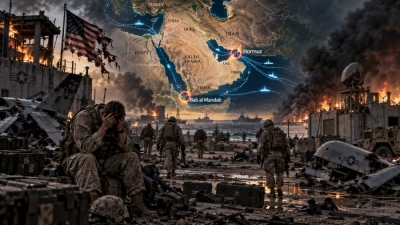
Furthermore, Iran's action to re-close the Strait of Hormuz comes as a direct response to the naval blockade imposed by the Americans. Amid this crisis that has enveloped Hormuz and the Persian Gulf region, world attention suddenly shifted to the Red Sea maritime route, which has turned into a dangerous flashpoint. Yemen has acted on its threats to enforce a blockade against Saudi Arabia, and based on this, scenarios are taking shape for the opening of a new front in the war of sea routes and ports. Yemen's Houthis recently established a dangerous equation titled "blockade for blockade" in response to Saudi Arabia's blockade of Yemen. In other words, the equation of Iran closing Hormuz expanded this time to Bab el-Mandeb, which connects the Gulf of Aden with the Red Sea and subsequently, via the Suez Canal, with the Mediterranean. This Yemeni equation threatens one of the most vital oil export arteries for Saudi Arabia and the Persian Gulf, carrying the potential to disrupt international trade from Southeast Asia to Europe. The declaration of Yemen's naval blockade against Saudi Arabia since Monday (20/7/2026) has severely complicated the situation… An action taken in response to Saudi Arabia's comprehensive blockade of Yemen's ports and airports by land, sea, and air.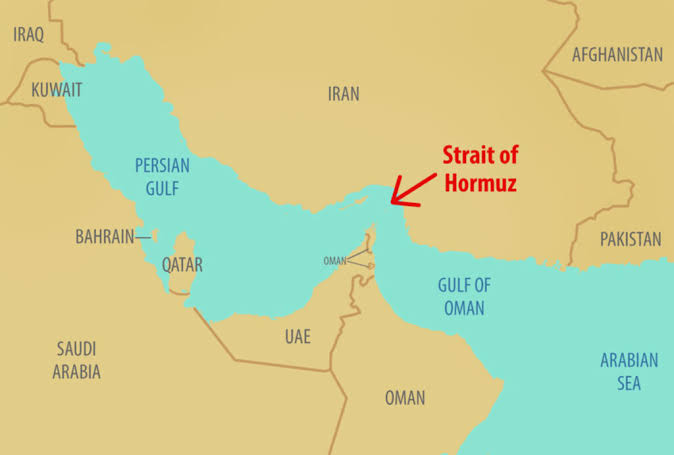
Panic in global energy markets
As part of this equation, on Tuesday (21/7/2026), two oil tankers carrying Saudi crude oil destined for China and India were forced to turn back toward the Suez Canal maritime route following a warning from Yemen before crossing the Bab el-Mandeb. Yemen's decision to impose a blockade against Saudi Arabia had been made long ago, even before Riyadh's attack on the airport in Sanaa. These developments, along with others in the region (and particularly concerns that the Houthis might proceed to halt maritime traffic by closing the Bab el-Mandeb Strait), have intensified turmoil in oil markets and heightened anxieties over global energy supply. This has led to severe disruption of shipping and supply chains, a sharp surge in maritime insurance costs for commercial vessels crossing the Red Sea, and increased uncertainty surrounding the world's largest crude oil exporter and Saudi ports.
Fears of $120 oil
Consequently, Tuesday (21/7/2026) saw a sharp rise in oil and gas prices across global markets, while it is expected that if shipping disruptions through Hormuz persist, the price of oil could exceed $120 per barrel by the final quarter of this year — a scenario that American investment bank Goldman Sachs warns would constitute a severe crisis for the global economy and fuel-consuming nations. While British maritime security firm Ambrey warned of the heightened risk of Yemeni attacks on vessels linked to Saudi Arabia while navigating the Red Sea and the Gulf of Aden — advising international shipping firms to verify their vessels' connections to Saudi ports — the Reuters news agency reported that the Houthis' decision to ban navigation to Saudi Arabia led to an increase in vessel insurance costs in the Red Sea from 0.3% to 0.75% of the ship's value. Observers in Sanaa consider that the cost of the "blockade for a blockade" equation for Saudi Arabia will be immense, as the country is one of the region's top crude oil exporters and its state budget depends on crude oil sales for more than 70%. Its movement toward escalating tension will inflict massive financial losses, whereas the cost of meeting Houthi demands would undoubtedly be far lower.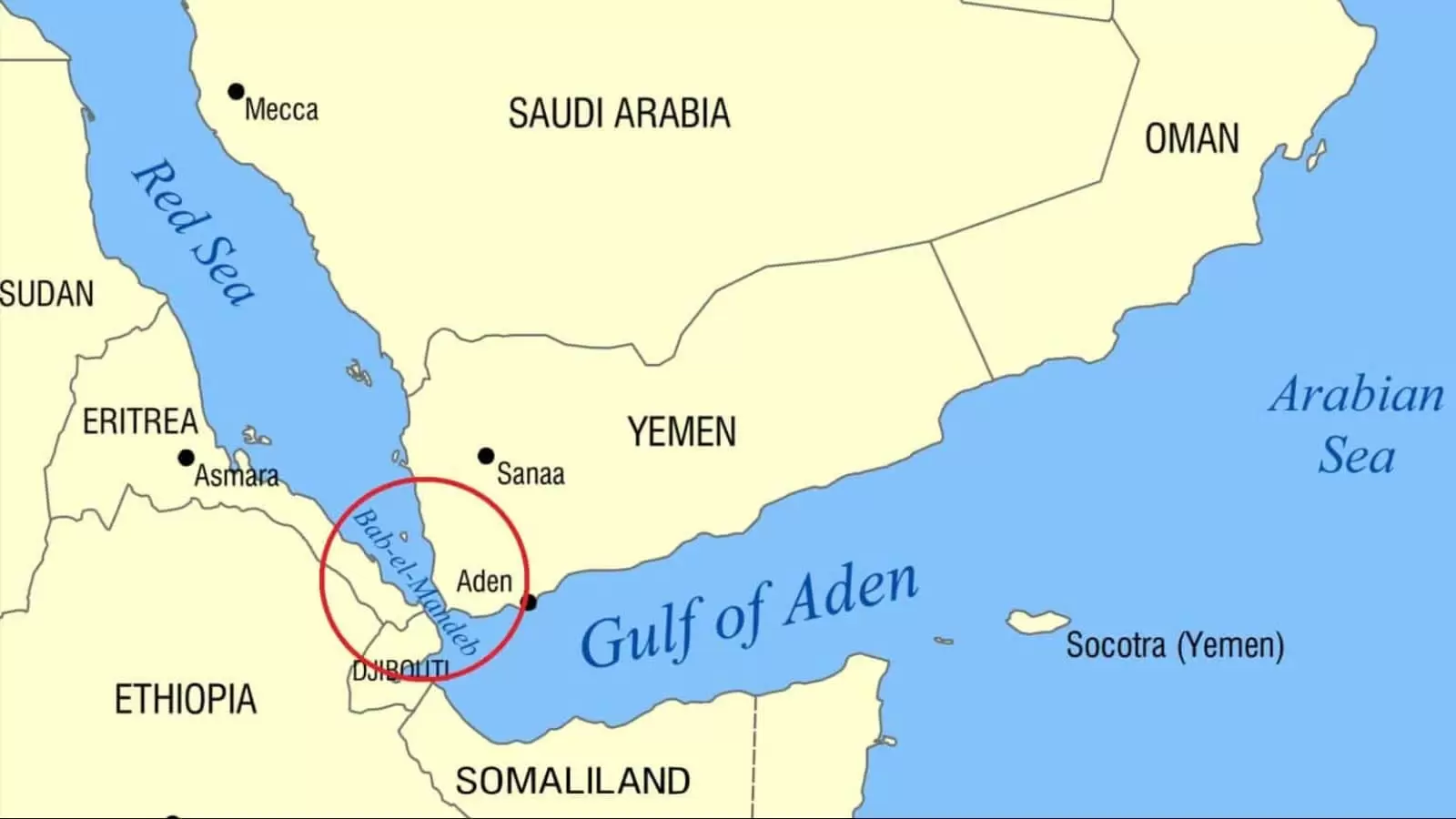
Reduction in oil supply
The Reuters news agency estimates that a total shutdown of the Bab el-Mandeb Strait could reduce the global oil supply by 7%, as it would prevent the transit of the vast majority of Saudi Arabia's regional oil exports through their existing maritime routes. Maritime data analytics firm Kpler stated that Yemen's involvement in this conflict shifts risks from the Strait of Hormuz to the Red Sea, directly threatening the Bab el-Mandeb passage, which has turned into a vital artery for the transport of Saudi crude oil and petroleum products, as well as for general trade between Europe and Asia.
www.bankingnews.gr










Readers’ Comments