

The war between the US and Iran in the Persian Gulf and the wider Middle East region is taking on dramatic dimensions following the involvement of Yemen's Houthis, who struck two Saudi Arabian tankers while they were sailing in the Red Sea. This development dangerously escalates the war raging in the Gulf as military operations expand, with new "protagonists" entering the equation of armed conflicts… In fact, the involvement of the Houthis is creating fresh panic in the markets and the global economy regarding the impact on the energy sector, as now, after the Strait of Hormuz, the clashes also affect another critical maritime route for global energy supply, the Bab al-Mandeb Strait…
The Houthis struck 2 ships in the Red Sea
The Saudi news agency SPA reported that the Saudi-owned vessel Encelia was targeted in an attack while sailing in the Red Sea. The agency cited an official source from the General Transport Authority, stating that the attack caused a fire at the ship's bow. The same source stated that all crew members are safe and that relevant authorities took necessary measures for the safety of the vessel and crew, as well as for the protection of the maritime environment. Responsibility for the attack was claimed by Yemen's Houthis, who also struck a second ship, the Layla. Earlier, the UK Maritime Trade Operations (UKMTO) announced that a ship was attacked 70 nautical miles (130 kilometers) off the coast of Saudi Arabia, resulting in an onboard fire.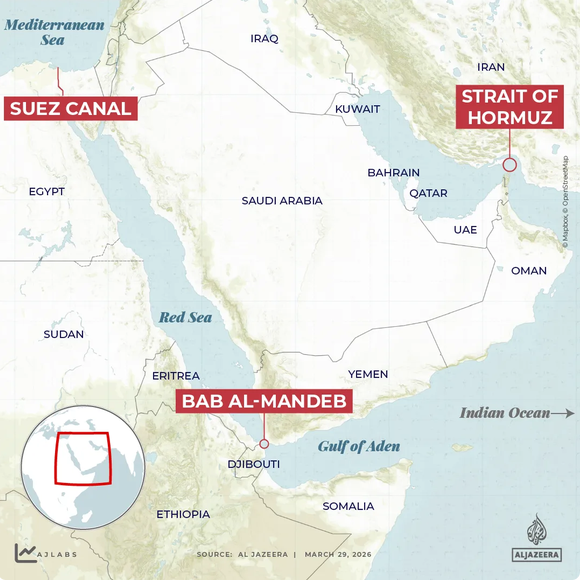
Retaliatory campaign
The Houthis stated that they struck these two oil tankers simultaneously, using multiple cruise missiles, ballistic missiles, and drones, claiming to have caused massive fiery explosions and extensive damage to the vessels. The Houthis presented the attack as part of a retaliatory campaign against Saudi Arabia, describing it as "siege-for-siege." They claimed that for 12 years Saudi Arabia has imposed a blockade on the people of Yemen and that the time has come for Yemen and the Houthis to respond in kind. The Houthi military spokesman, Yahya Saree, stated that the organization will "continue naval operations" against Saudi Arabia and will persist in implementing the strategy it calls a "siege for a siege." This development causes severe disruption to supply lines, this time not in the Strait of Hormuz, but at the Bab al-Mandeb Strait, another vital maritime passage for global energy supply.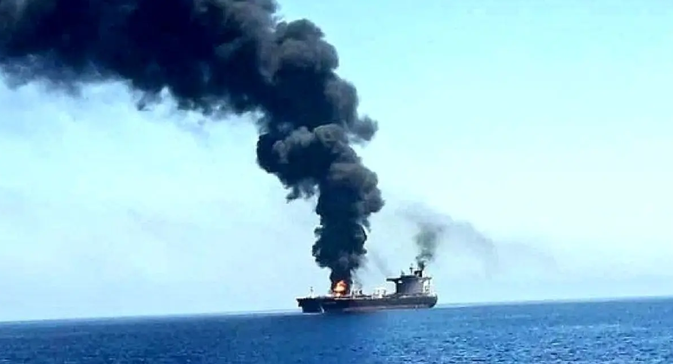
NASA satellite images
A NASA satellite image appears to show the Saudi-flagged tanker Encelia (IMO: 9240172) engulfed in flames in the Red Sea, following claims by the Houthis that they struck two Saudi oil tankers early Thursday morning (local time). The bright spot visible in the satellite image coincides with the position broadcast by the Encelia via the Automatic Identification System (AIS), according to a CNN analysis based on navigation data. A satellite image from the previous day showed no corresponding bright spot in the same area, indicating that this is a new event.
Why Hussain al-Bukhaiti says they struck Saudi ships
Yemen's Ansar Allah movement, also known as the Houthis, is under huge pressure to take action against Saudi Arabia following years of a Saudi blockade on Houthi-controlled ports, argues journalist Hussain al-Bukhaiti. "Despite the fact that the Saudis signed a so-called roadmap to normalization with Ansar Allah in 2022, they did not allow ships to dock at the port of Hodeidah nor did they share revenues from Yemen's oil and gas fields, which were gathered in the Saudi-controlled Al-Ahli Bank and used to fund the war against the Houthis. The Saudis believed they could incite a popular uprising against the Houthis using these methods of economic strangulation. Thus, Ansar Allah had to act, because 70% of Yemen's population lives in Houthi-controlled areas," said Hussain al-Bukhaiti, speaking to Al Jazeera. Hussain al-Bukhaiti warned that public pressure on the Houthis is so intense that unless Riyadh lifts the blockade, "every ship bound for or departing from Saudi ports, regardless of nationality, will be a legitimate target, as was the case with Israel."
Panic at the Bab al-Mandeb Strait
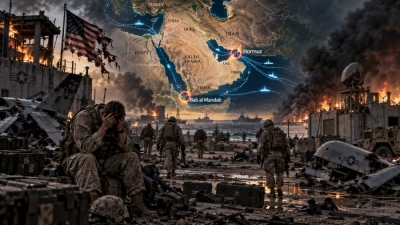
These developments do not affect the Strait of Hormuz, which remains effectively closed, but the Bab al-Mandeb Strait, another crucial maritime route for global energy supply. The blockade of the Bab al-Mandeb Strait by the Houthis could not come at a more critical moment for the global oil market. The Houthis are threatening to disrupt the operation of a key alternative sea route to the Strait of Hormuz, where oil tanker transit has already decreased noticeably in recent days. An effective blockade of the Bab al-Mandeb by the Houthis would open a new front in the conflict with Iran, potentially requiring US military intervention. Such a development could limit Washington's capacity to assist in the safe passage of ships through the Strait of Hormuz. At the same time, it could prevent Saudi Arabia from exporting diesel to Europe during a particularly critical period for the fuel market.
Why is it so important?
The Bab al-Mandeb Strait does not carry the same strategic weight as the Strait of Hormuz, through which approximately 20 million barrels of oil passed daily prior to the outbreak of war, representing 20% of global daily supply. However, its significance remains exceptionally high. According to analytics firm Kpler, approximately 6.2 million barrels of oil per day passed through the Bab al-Mandeb over the past month. "If this route becomes non-operational, then the disruption in oil supply will become far more severe, and we will once again begin talking about a situation with no way out," stated Helima Croft, head of global commodity strategy at RBC Capital Markets.
Two Chinese tankers heading toward Bab al-Mandeb
Two tankers carrying a combined four million barrels of Saudi crude oil are heading toward the Bab al-Mandeb Strait to exit the Red Sea, Reuters news agency reported, citing maritime tracking data. According to Reuters, the passage of the two ships will test whether the Houthis strictly enforce the naval blockade they announced against Saudi Arabia. As reported by the agency, the vessels en route are the Singapore-flagged Very Large Crude Carrier (VLCC) Xin Long Yang, which had temporarily paused in the Red Sea on Tuesday before resuming its southward course on Wednesday bound for Qinzhou, China. The second is the Chinese-flagged VLCC Cosnew Lake, heading toward Huizhou in Guangdong province. Both vessels reported via their Automatic Identification System (AIS) that their crews consist of Chinese mariners, according to Reuters. Earlier today, the Houthis announced that they carried out attacks against two Saudi tankers using drones and missiles.
US and Saudi Arabia sign nuclear agreement
The Trump administration describes the US-Saudi deal as a peaceful nuclear energy cooperation agreement that will lay the foundation for a multi-billion-dollar partnership with Saudi Arabia for decades to come. Under the agreement, American companies will be able to export nuclear technology, create new jobs, and build nuclear infrastructure within the kingdom. Saudi Arabia is a key ally of the United States and has sought such a deal for years to bolster its domestic power grid. The Trump administration contends that the agreement restores the US competitive edge in the global civil nuclear energy market. Both nations state that the deal will strengthen and deepen bilateral relations, while ensuring adherence to nuclear safety and security standards, as well as non-proliferation principles. The treaty is signed at a time when the conflict with Iran escalates, with the United States maintaining that its objective is to prevent any nuclear weapons development program by Tehran. The core question, however, is why the agreement is being signed now. It is known that former President Joe Biden came close to reaching a similar deal, which, however, was contingent upon the normalization of relations between Israel and Saudi Arabia. The new agreement contains no such reference. Nonetheless, both Washington and Riyadh present it as a major success paving the way for closer civil nuclear cooperation in the Middle East.
www.bankingnews.gr







Readers’ Comments