

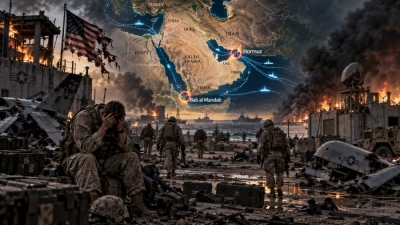
The possibility of an American ground intervention in southern Iran resurfaces, as analysts connect recent US strikes on bridges and critical infrastructure with a potential plan to create a beachhead on the coasts of the Persian Gulf.
At the same time, Iranian analyses warn that such an operation could turn into a nightmare for Washington, arguing that artillery, FPV drones, guerrilla warfare, and the particular geography of the region could inflict severe losses on American forces and overturn any plan for rapid military success.
Already, many analysts in the West argue that if the US dares a landing, it will evolve into a historical disaster for the Americans, at a time when intense concern prevails in many American media outlets over the Pentagon hiding the truth about losses in both soldiers and equipment.
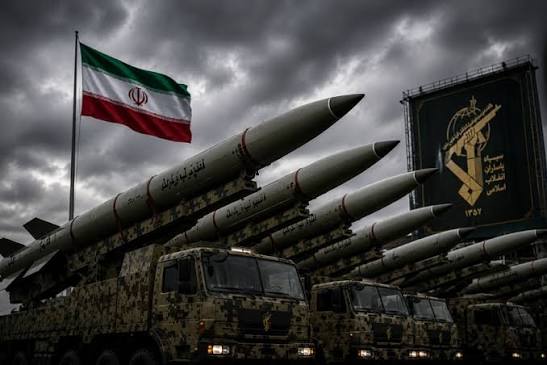
Iranian artillery
The proximity of Iran to the areas where American forces are stationed allows the activation of Iranian artillery and significantly increases its effectiveness.
As reported, due to the operating method and trajectory of artillery shells, it is difficult to be intercepted by enemy air defense systems.
Furthermore, the short distance from the positions of American forces in the south could allow the infliction of severe casualties.
Landing plan
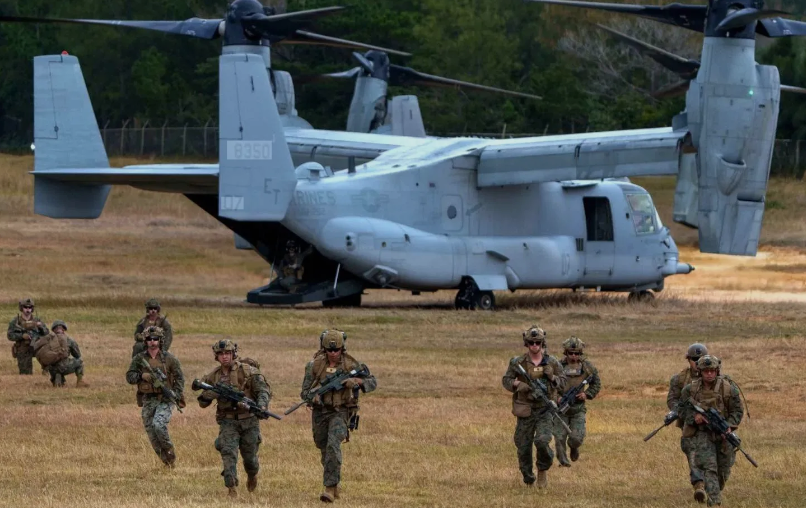
According to Iranian media reports, American attacks on bridges and certain logistics support facilities in Iran led some analysts to estimate that the US may attempt a ground landing on islands or coastal areas of southern Iran.
This possibility has been repeatedly examined by various sides.
Different views have also been expressed regarding the likely objective of such an operation.
Most analysts consider that it would serve two main purposes:
1) For the US to gain the maximum possible negotiating advantage in future talks with Iran.
2) To secure the opening of the Strait of Hormuz through control of the coasts of the Persian Gulf.
Operations in southern Iran
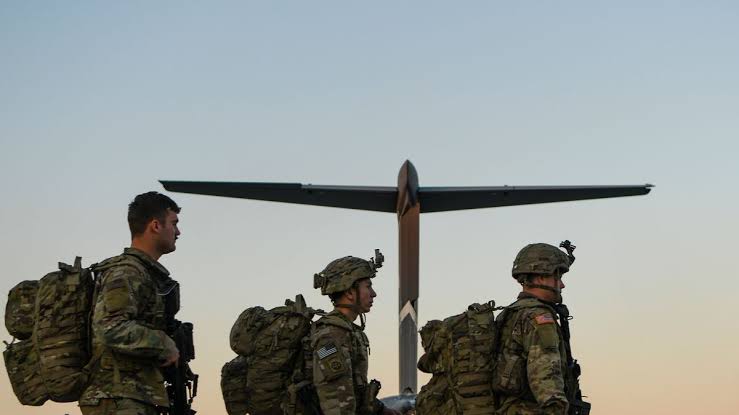
Regardless of which of the two scenarios applies, it is estimated that, in the event of a ground attack, American forces would likely limit themselves to establishing and maintaining positions on the southern coasts and islands, avoiding deeper advances, extensive conflicts, and urban warfare.
Bombings of bridges and supply infrastructure toward the south are considered an indication that the goal would be to delay the arrival of Iranian reinforcements, so that defensive fortifications can be built and reinforced.
The strategy of "static defense" and its weaknesses
Analysts estimate that the US, in the event of a ground invasion, would follow a strategy of "static defense".
Under this strategy, forces establish defensive installations, such as defense lines, radar, anti-aircraft, and anti-missile systems, aiming to maintain control of the occupied area while avoiding large movements or operational flexibility.
As reported, this strategy presents certain weaknesses that could be exploited by Iran:
1) The short distance from offensive Iranian forces.
2) Limited mobility and the emphasis on static presence instead of flexibility.
3) Supply difficulties and distance from primary sources of resupply (weapons, food, etc.).
4) Geographic and climatic constraints, such as the aridity of the area, lack of familiarity with the terrain, and high temperatures.
If these characteristics are combined with Iran's military capabilities, they could lead to an American defeat and Iranian prevalence.
Iran's capabilities in short-range operations
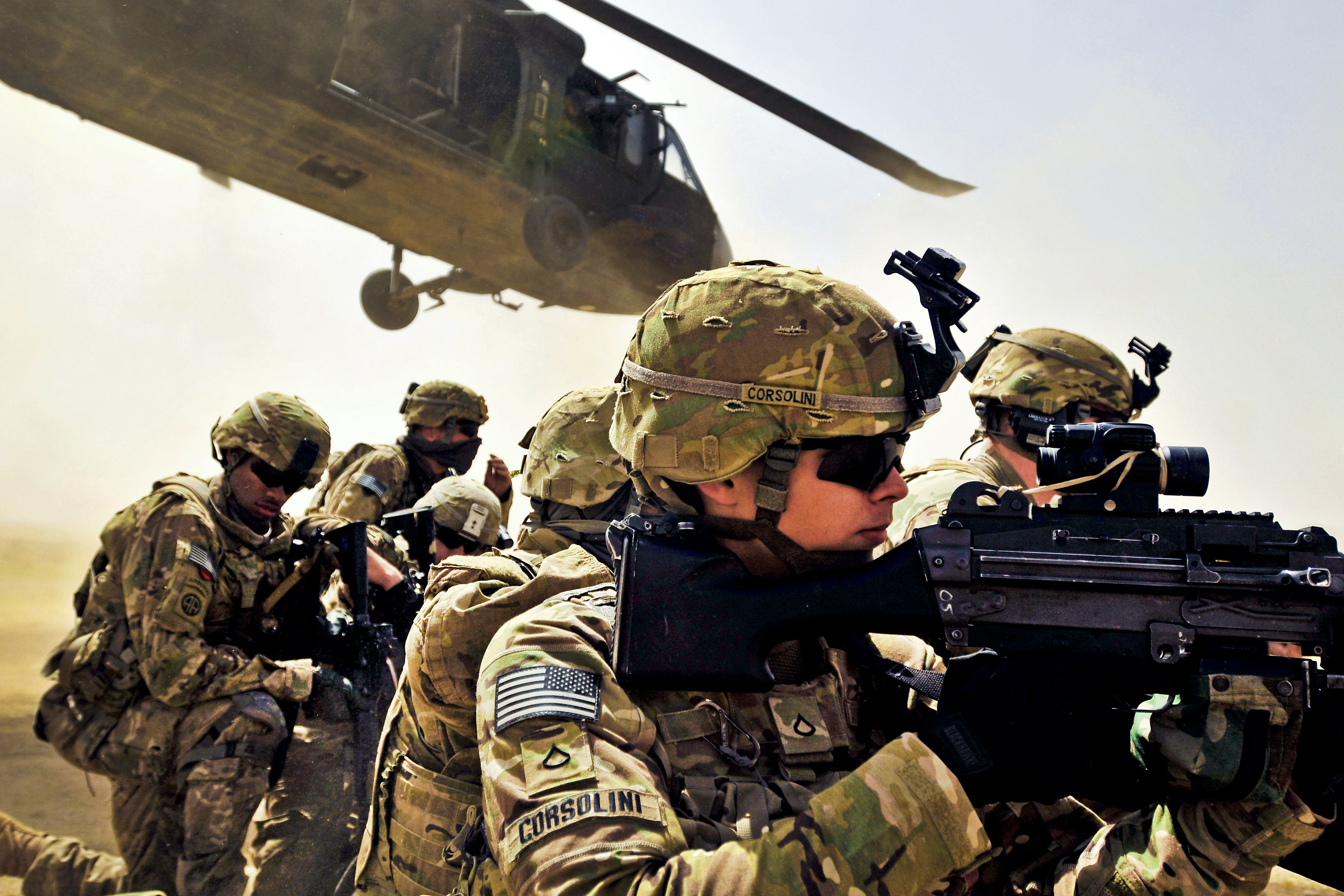
Iran possesses significant advantages in short-range conflicts, both due to proximity to operational areas and due to its military capabilities.
1) Iranian artillery
The short distance from American positions allows the effective use of Iranian artillery.
It is argued that, due to its operational characteristics, it is difficult to be intercepted by enemy defense systems and can cause significant casualties to American forces.
2) Unmanned aerial vehicles (drones) and FPVs
Iranian drones and FPVs are particularly effective in short-range operations, especially in the vast areas of the south.
Although they can be detected by radar, it is argued that the short distance from the target and their mass use increase their effectiveness.
As an example, the war between Hezbollah and Israel is cited, where, according to the article, Hezbollah inflicted significant losses using mainly small drones and FPVs.
3) Geography and the way of conducting war
The Iranian military doctrine, characterized as "mosaic defense", offers significant advantages in operations within Iranian territory.
The opponent's limited knowledge of the region's geography, the strategic importance of the south, high temperatures, as well as the ability to conduct guerrilla warfare and brief naval operations are presented as factors that could strengthen Iran's defense in the event of an American attack.
Iran will not abandon the Strait of Hormuz
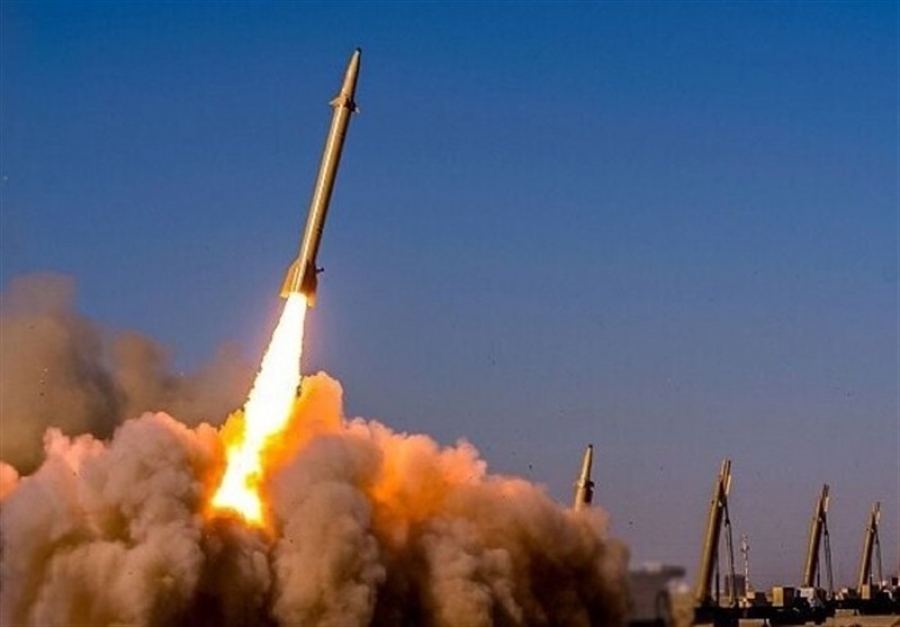
The "spoils" of the unprovoked war launched by the US and Israel against Iran are now the Strait of Hormuz, and Tehran is not going to abandon this "strategic advantage", estimates analyst Amin Saikal.
"Both sides have tried to inflict the maximum possible damage on each other and have now reached, in many respects, a point of saturation," stated Amin Saikal, professor emeritus at Australian National University.
"Logically, this should lead them to negotiations.
However, such a thing is not happening right now, mainly because the United States seeks to gain control of the Strait of Hormuz, something that the Iranians will never accept," added Amin Saikal, who characterized the Strait of Hormuz as the "strategic prize" that Tehran acquired after the American-Israeli attack.
"Because of this unprovoked war, the Iranians gained this negotiating advantage and intend to maintain it at all costs," underlined Saikal.
The Guards dismantled American bases in the Gulf
For the 10th consecutive day earlier today, Tuesday, July 21, early in the morning, fierce and direct clashes were recorded between the Armed Forces of the Islamic Republic of Iran and the American military in the region of the Persian Gulf, Kuwait, and Bahrain.
Following American military movements and explosions heard in areas of Bandar Abbas, Chabahar, and Dinarkuh in Abdanan province, which, according to local authorities, caused no human casualties or damage to infrastructure, the Iranian army and the IRGC launched coordinated operations as part of the 18th and 19th phases of Operation Saegheh and the 24th wave of Operation Nasr 2.
The attacks targeted sensitive military facilities, Patriot air defense systems, long-range radars, and opponent drone hangars with a combination of missile and drone strikes.
The "air defense neutralization" strategy
Iranian attacks aimed at weakening the American air defense and command network.
It is reported that the following were hit:
1) FPS-117 radars.
2) Satellite communication systems.
3) Early warning radars.
4) Patriot systems at Al Muharraq, Al Riffa, Ahmad al-Jaber, and Ali Al Salem bases.
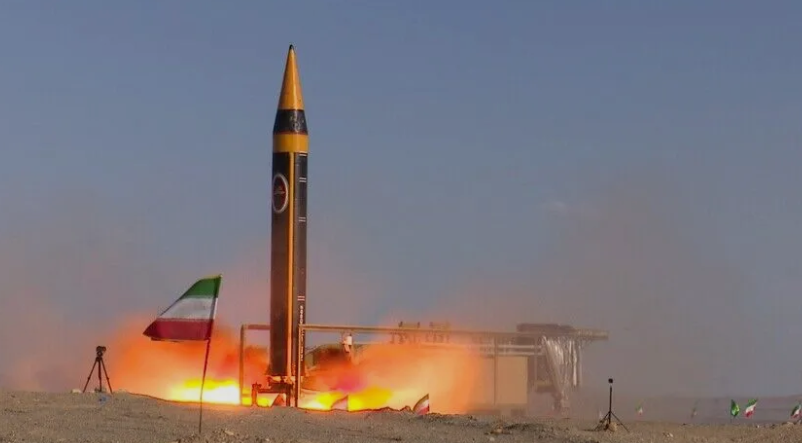
HIMARS targeted
The Public Relations Office of the Army of the Islamic Republic of Iran announced that, in response to American missile strikes against Iranian territory, ground forces struck with surface-to-surface missiles HIMARS systems located at Arifjan base in Kuwait, as well as MQ-9 drone hangars.
According to the announcement, the destruction of these specific systems weakens both the offensive and defensive capabilities of American forces.
Attacks on military facilities
The Iranian army also announced that it attacked:
1) The administrative buildings and direction antennas of Arifjan base.
2) The helicopter parking area of Camp Al Udairi.
3) The accommodation buildings of American troops at Ahmad al-Jaber base.
As reported, Arifjan base constitutes one of the most important command centers of American ground forces in Southwest Asia, while Al Udairi hosts Apache, Chinook, and Black Hawk helicopters.
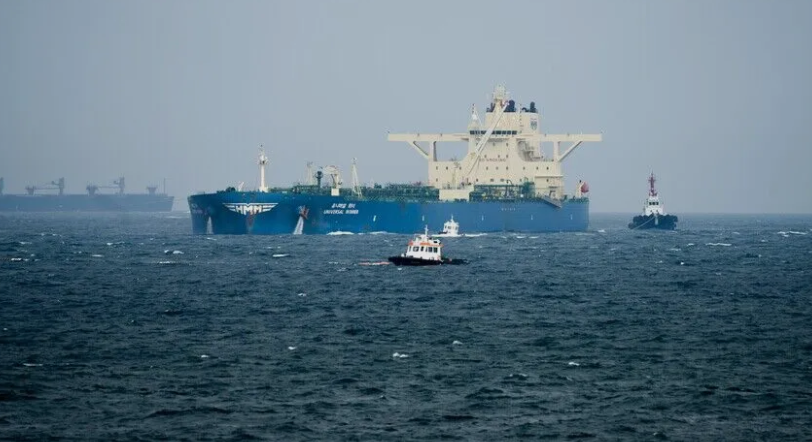
Explosion of two oil tankers
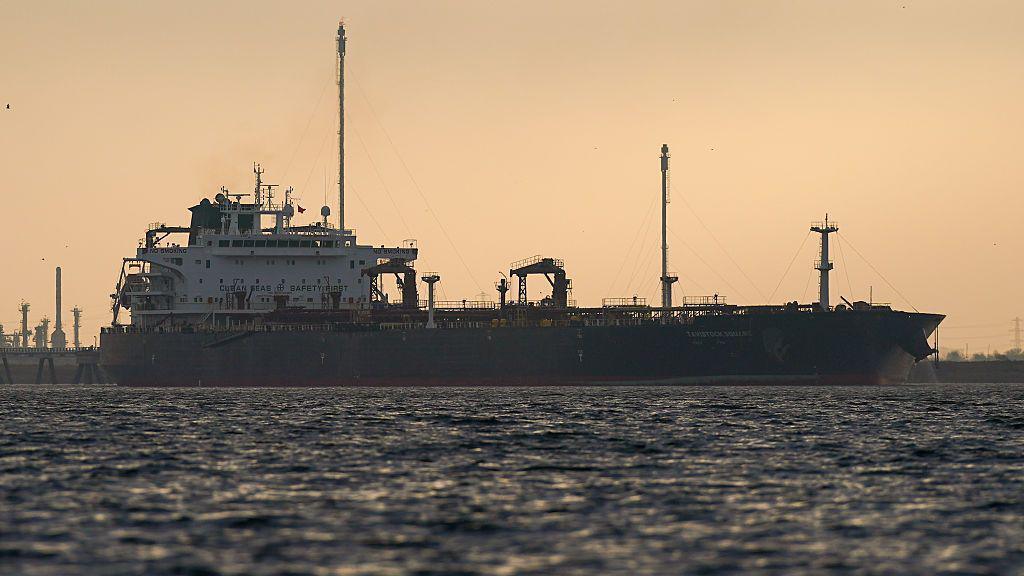
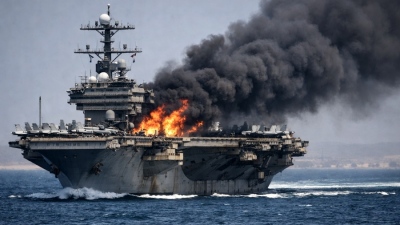
In a separate announcement, the Navy of the IRGC claimed that two oil tankers suffered explosions and fires while attempting to cross the southern Strait of Hormuz.
The announcement states that rescue teams removed the crews and issues a warning to shipping companies not to follow, as it reports, the instructions of the American military.
At the same time, it is repeated that as long as American operations continue, the Strait of Hormuz will remain closed and no passage of oil, natural gas, or other goods will be permitted.
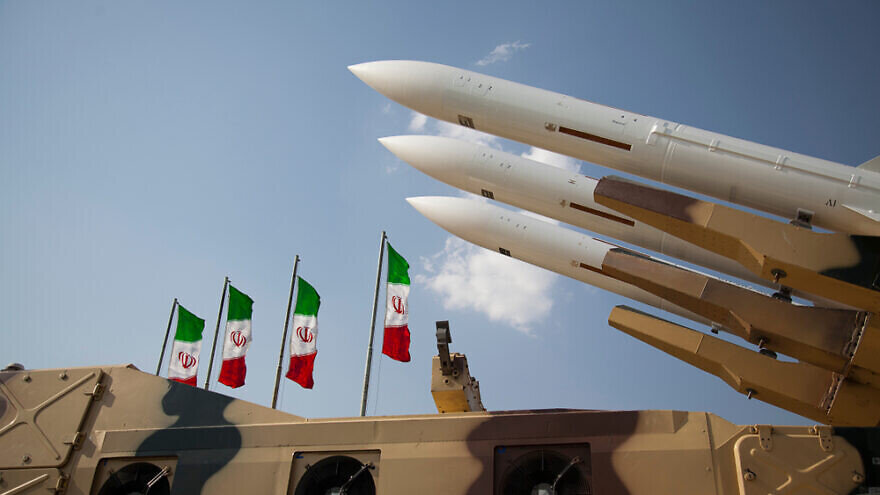
Attacks on American facilities in Bahrain
According to a new announcement from the IRGC, during the 24th wave of Operation Nasr 2, the following were destroyed:
1) An American air defense system.
2) A radar in the Al Muharraq area of Bahrain.
3) A Patriot system in the Al Riffa area, following a simultaneous missile and drone attack.
The announcement claims that operations will continue.
Ashes everywhere
In subsequent announcements, the IRGC claims that the following were additionally hit:
1) Long-range radars.
2) Telecommunications center.
3) Satellite communication systems.
4) Anti-missile defense radar of American forces in Kuwait.
5) MQ-9 drone hangar at Ali Al Salem base, where, according to the claim, several drones were destroyed or suffered severe damage.
6) Early warning radars.
7) Anti-missile defense radars.
8) FPS-117 radars.
9) Patriot system.
10) Satellite communication system of American air defense at Ahmad al-Jaber base.
As reported, following the "neutralization" of these radars, American forces should expect new and more intense missile and drone attacks.
The primary objective of the US
Many believe that a ground war between Iran and the United States will soon begin.
Meanwhile, some believe that the United States intends to attack Kharg Island, but the strategic and tactical situation of the islands in southern Iran shows that there are many important areas in this region and that other areas can be attacked besides Kharg.
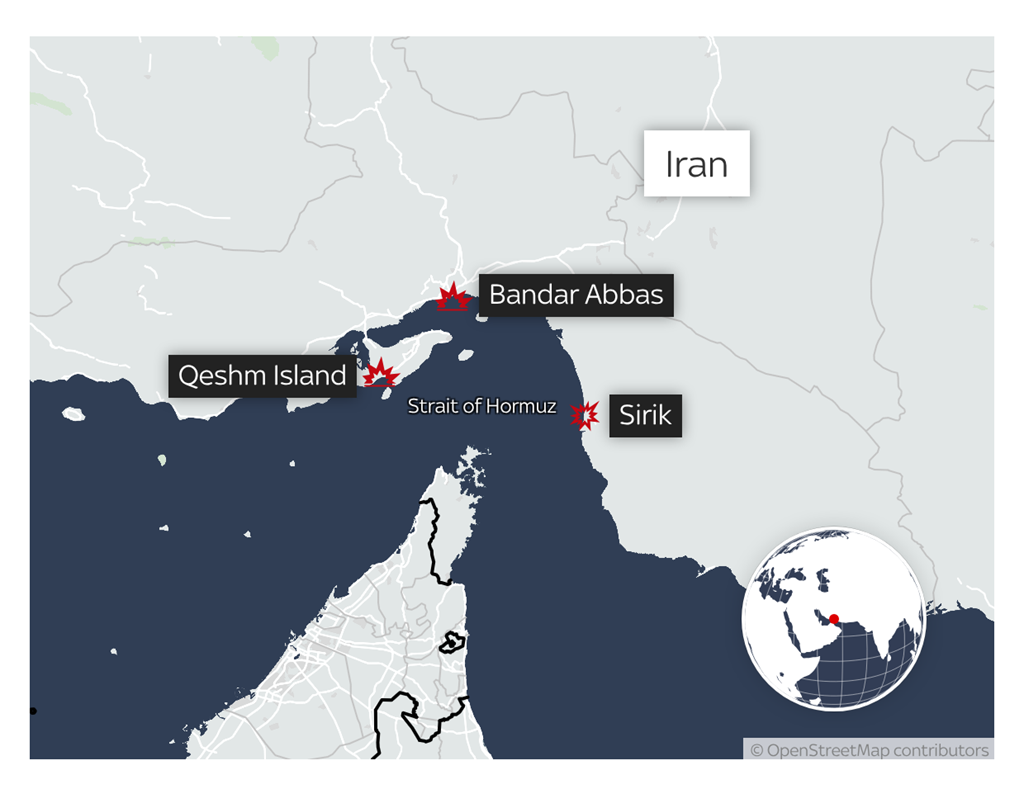
Sirik
One of these strategic areas is Sirik.
Sirik is a coastal area and county in Hormozgan province, in southern Iran.
Due to its position at a vital point, this area has become one of the most important strategic and disputed centers in the Persian Gulf.
Sirik is one of the counties of Hormozgan province, centered on the city of Sirik.
Sirik is located on the eastern coasts of Hormozgan province and adjacent to the Sea of Oman.
This area is located approximately 115 kilometers southeast of Bandar Abbas and borders Minab county to the north, Jask county to the south, Minab and Bashagard to the east, and the Sea of Oman to the west.
Why is Sirik so important?
The importance of Sirik is due entirely to its unique geographic position. The most important of these characteristics are the following:
A. Central point in the Strait of Hormuz
Sirik is located right at the entrance of Hormuz from the Sea of Oman.
Hormuz constitutes a vital choke point for the passage of a significant portion of global oil exports.
B. Intelligence and military superiority:
The elevation and location of Sirik at the foothills provides full control over all entrances and exits of the Strait of Hormuz, making it "Iran's eye" in this waterway.
C. Center of Iranian naval operations
As an important base, this area provides Iran with the ability to observe, monitor, and, if necessary, control vessel traffic in the Strait of Hormuz.
It is also a suitable location for deploying defense systems and launching anti-ship cruise missiles.
Why the United States seeks to attack Sirik
Given the exceptional importance of Sirik for Iran, this area has become a key target for the United States.
The objectives of the United States for a potential attack on Sirik are the following:
1) Neutralization of Iran's surveillance capabilities:
The primary objective of the United States is to destroy Iran's military facilities in Sirik, radar, and telecommunications, in order to severely weaken Iran's ability to monitor and control the Strait of Hormuz.
2) Iranian military facilities:
According to American officials, the area hosts key facilities such as missile launchers, drone systems, weapons storage, and support facilities, making it a military target.
3) Prominent position in the broader conflict:
The attack on Sirik forms part of a broader conflict between the US and Iran that has escalated since Iran closed the Strait of Hormuz following American attacks in February 2026.
In short, Sirik is the strategic "eye" of Iran due to its unique position at the entrance of the Strait of Hormuz.
For this reason, weakening Iran's military capability at this point is one of the main goals of the US to reduce Iran's influence and control over Hormuz.
Unbelievable: They had proposed to US President Jimmy Carter in 1979 to occupy Kharg Island in Iran and he rejected it
Former US President Jimmy Carter had been proposed twice the plan for the American military to occupy Kharg Island in Iran, but the plan was rejected.
"President Jimmy Carter recognized that military action in the Persian Gulf was too dangerous and could spark a wider war.
The best Carter could do was try to work behind the scenes with the new Iranian government to protect and free American forces," stated a historian at the University of Texas.
Humiliating situation
The Quincy Institute wrote:
"The president found himself in a humiliating situation.
The American people were shocked by the horrific images of hostages, blindfolded and handcuffed.
They prayed for their government to find a way to free them.
Desperate to find a way out of the crisis, some White House advisors pushed the president to go to war.
This is not the story of the Trump administration trapped in a quagmire of its own making.
This is the story of the dilemma that occupied President Jimmy Carter since November 4, 1979, when hundreds of Iranian students seized the American embassy in Tehran and took 63 hostages."
www.bankingnews.gr










Readers’ Comments