

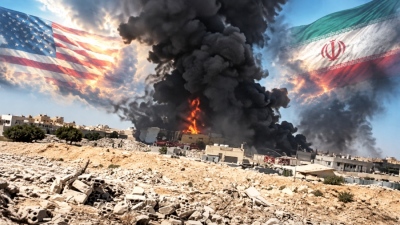
As the crisis between the United States and Iran enters a new, exceptionally dangerous phase, two key locations in the Persian Gulf sit at the core of military planning: Sirik, Tehran's strategic "eye" on the Strait of Hormuz, and Kharg Island, Iran's energy heartland. Analysts estimate that control over these areas could decisively influence the outcome of a broader conflict for control over the critical passage of Hormuz, while historical plans that remained hidden in archives from the Jimmy Carter era resurface in the spotlight. The question dominating now is whether Washington under the administration of President Donald Trump will attempt to implement options deemed too dangerous nearly half a century ago, with the risk of an uncontrollable flare-up across the entire Middle East being higher than ever.
The primary US objective
Given the extreme importance of the coastal city of Sirik to Iran, this region has become a key military target for the United States. Many believe that a ground war will soon break out between Iran and the United States. Meanwhile, some believe that the United States intends to attack Kharg Island, but the strategic and tactical situation of the islands in southern Iran indicates that there are many important areas in this region, and that other territories could be targeted besides Kharg.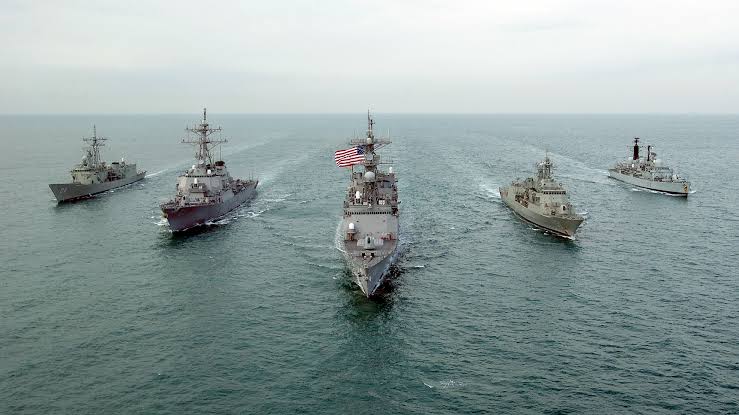
Sirik
One of these strategic areas is Sirik. Sirik is a coastal region and county in Hormozgan province, in southern Iran. Due to its position at a vital choke point, this area has become one of the most important strategic hubs in the Persian Gulf. Sirik is one of the counties of Hormozgan province, centered around the city of Sirik. Sirik is situated on the eastern coast of Hormozgan province, adjacent to the Sea of Oman. This area lies approximately 115 kilometers southeast of Bandar Abbas and borders Minab county to the north, Jask county to the south, Minab and Bashagard to the east, and the Sea of Oman to the west.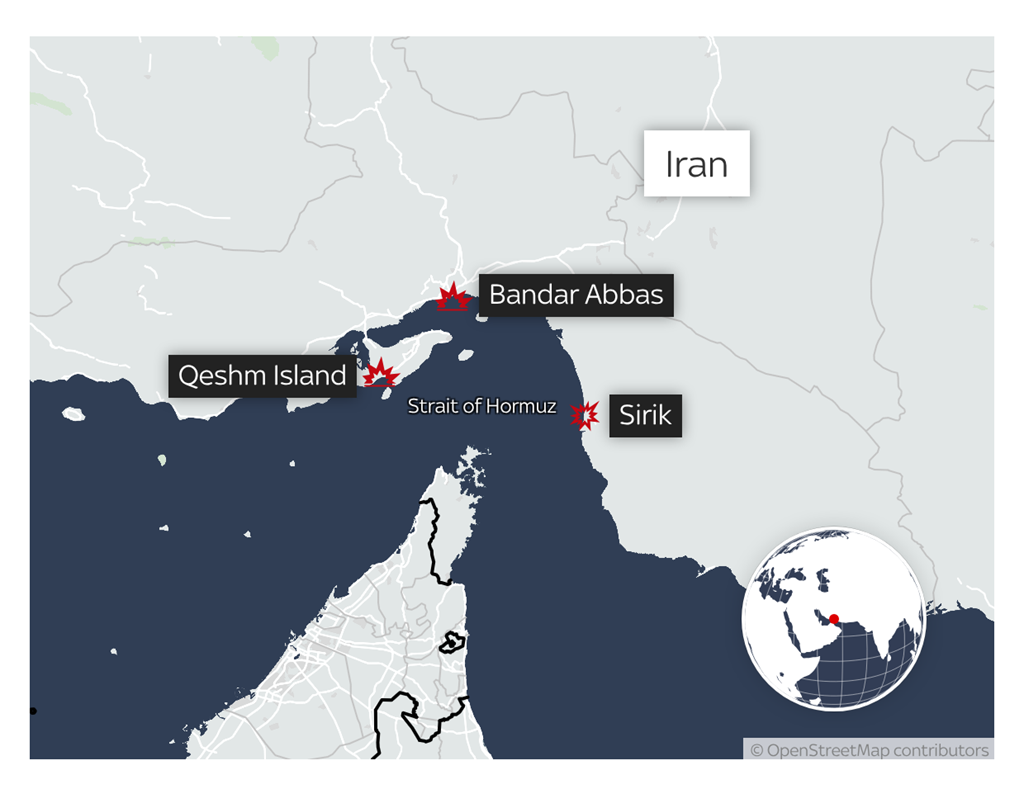
Why Sirik is so important
The importance of Sirik stems entirely from its unique geography. The most significant of these features include:
A. Central Point in the Strait of Hormuz Sirik is located directly at the entrance to Hormuz from the Sea of Oman. Hormuz represents a vital bottleneck for the transit of a major portion of global oil exports.
B. Intelligence and military superiority: Sirik's elevation and location at the foothills provide full oversight over all entrances and exits of the Strait of Hormuz, making it "Iran's eye" over this waterway.
C. Center of Iranian naval operations As a key base, this location enables Iran to observe, track, and, if necessary, control vessel traffic through the Strait of Hormuz. It is also a prime location for deploying defense systems and launching anti-ship cruise missiles.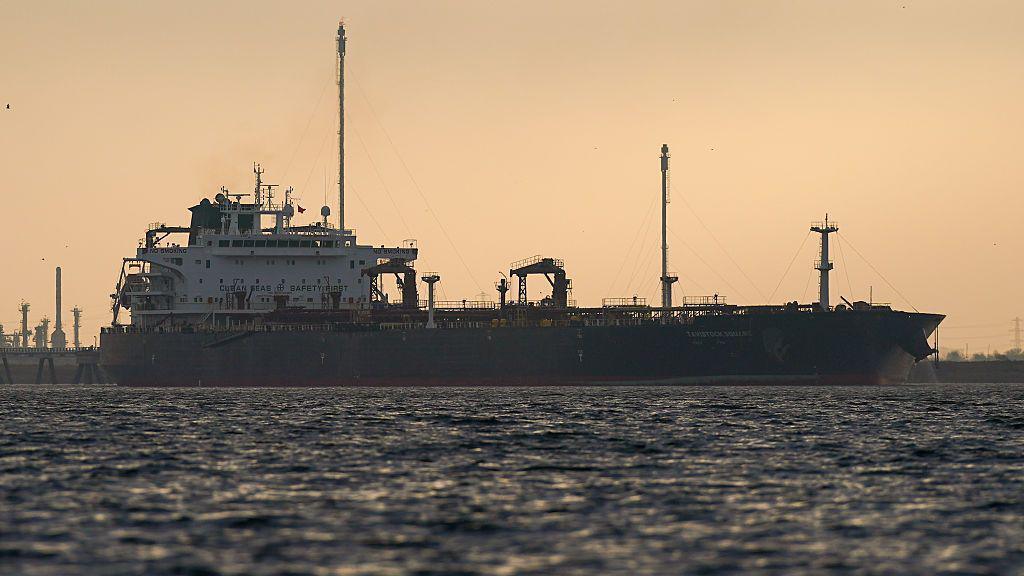
Why the United States seeks to attack Sirik
Given the extreme importance of Sirik to Iran, this area has become a primary target for the United States. The objectives of the United States for a potential attack on Sirik are as follows:
-
Neutralizing Iran's surveillance capabilities: The main goal of the United States is to destroy Iran's military installations in Sirik, including radar and telecommunications, in order to severely weaken Iran's capability to monitor and control the Strait of Hormuz.
-
Iranian military installations: According to US officials, the area hosts key facilities such as missile launchers, drone systems, weapons depots, and support facilities, making it a major military target.
-
Prominent position in the wider conflict: An attack on Sirik forms part of a broader conflict between the US and Iran that has escalated since Iran closed the Strait of Hormuz following American strikes in February 2026. In short, Sirik is Iran's strategic "eye" due to its position at the entrance of the Strait of Hormuz. For this reason, degrading Iran's military capability at this node is a primary US objective to reduce Iranian influence and control over Hormuz.
Unbelievable – US President Jimmy Carter was advised in 1979 to seize Kharg Island... and he rejected it - Operation Eagle Claw failed
Former US President Jimmy Carter was twice presented with a plan for the US military to seize Kharg Island in Iran, but the plan was rejected. "President Jimmy Carter recognized that military action in the Persian Gulf was too dangerous and could start a broader regional war. The best leverage Carter had was to try working behind the scenes with the new Iranian government to protect and free American forces," stated a University of Texas historian.
Humiliating situation
The Quincy Think Tank wrote: "The president found himself in a humiliating situation. The American public was shocked by the horrific images of blindfolded and handcuffed hostages. They prayed that their government would find a way to set them free. Desperate to find an exit from the crisis, some White House advisers pushed the president to go to war. This is not the story of the Trump administration finding itself in a quagmire of its own making. This is the story of the dilemma that occupied President Jimmy Carter starting on November 4, 1979, when hundreds of Iranian students seized the US Embassy in Tehran and took 63 hostages.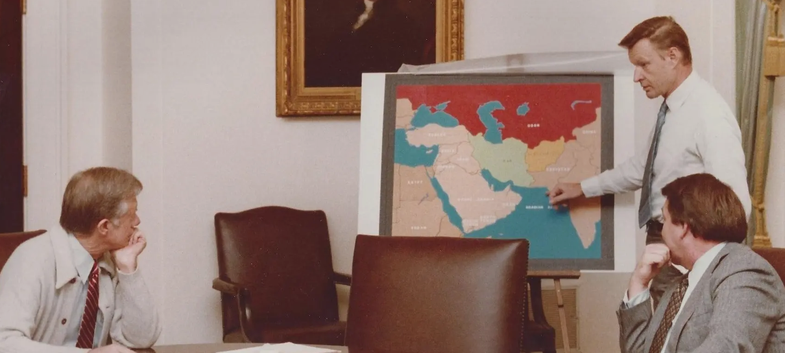
The similarities
Among the many similarities between then and now, one is the significance of a small coral island in the northern Persian Gulf, roughly 20 miles off the Iranian coastline. Kharg Island houses a critical oil terminal through which nearly all of Iran's oil exports flow. Trump says he is considering seizing the island, a threat he has repeatedly voiced since the outbreak of war with Iran on February 28, 2026. However, Trump is not the first president to evaluate such an operation. President Jimmy Carter had also weighed a plan to seize Kharg Island, but turned it down. In a top-secret memorandum in late December 1979, Jimmy Carter's national security adviser, Zbigniew Brzezinski, urged him to "consider military measures that would contribute to the fall of the Iranian regime and thus secure the release of the hostages." In Brzezinski's view, capturing Kharg and two other islands near the entrance to Hormuz would "impose a long-term humiliation on Tehran that would only end with the hostage release."
Regime change
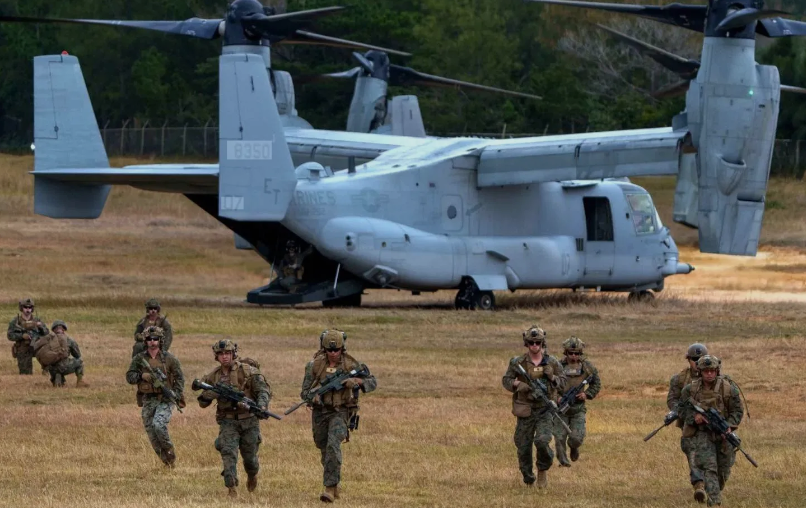
He hoped to combine military force with regime change. As disclosed by the Washington Post, the risky plan involved dispatching amphibious assault ships to the Persian Gulf and landing US Marines. The newspaper noted that supporters of the plan hoped controlling Kharg would "exert immense pressure on Iran without the widespread social backlash that would follow the bombing of mainland Iran." Jimmy Carter rejected using military force to compel Ayatollah Khomeini to release the hostages: "Such measures would only unite Iranians around Khomeini."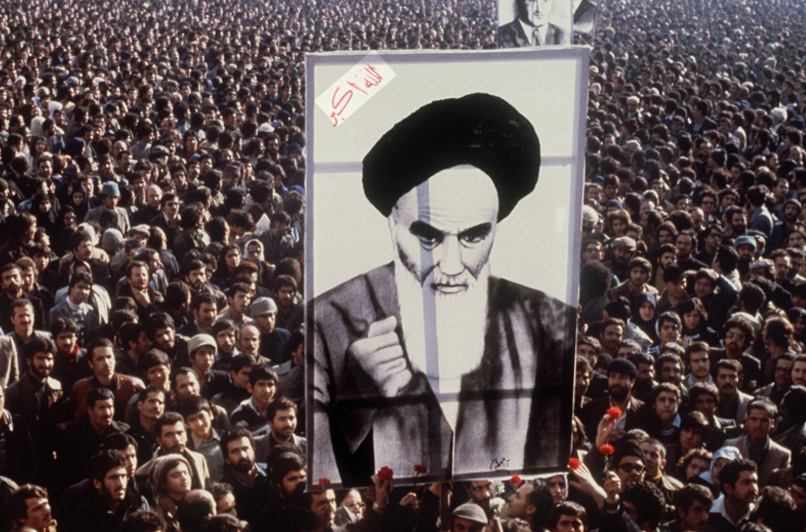
Carter's instinct
Brzezinski was frustrated by Jimmy Carter's "stubborn instinct to do what he knew was right, even if it damaged his reelection prospects." Four months later, on April 10, 1980, with the hostages still held captive and the American public obsessively following their fate, Brzezinski drafted another memo to Jimmy Carter, lamenting the lack of diplomatic progress and proposing military strikes. "President Jimmy Carter recognized that military action in the Persian Gulf was too dangerous and could start a broader war." "The best leverage Carter possessed was attempting to work behind the scenes with the new Iranian government to protect and release American personnel."
Operation Eagle Claw failed
On April 24, 1980, Jimmy Carter approved the long-planned rescue mission, Operation Eagle Claw, which failed in a desert 200 miles from Tehran—becoming another humiliating episode for an administration that appeared powerless. The failure of Operation Eagle Claw produced the same outcome as bombing Iran or seizing Kharg: "If there was any chance of a diplomatic resolution to the hostage crisis, it had now vanished." Today, there are no hostages in Iran to rescue. This time, Trump is a hostage of his own crisis, having attacked Iran twice within eight months during diplomatic negotiations. Trump may desperately want to reopen the Strait of Hormuz, but the new structure in Iran has shown it can endure immense pressure. Thus, seizing Kharg Island as leverage is likely doomed to failure.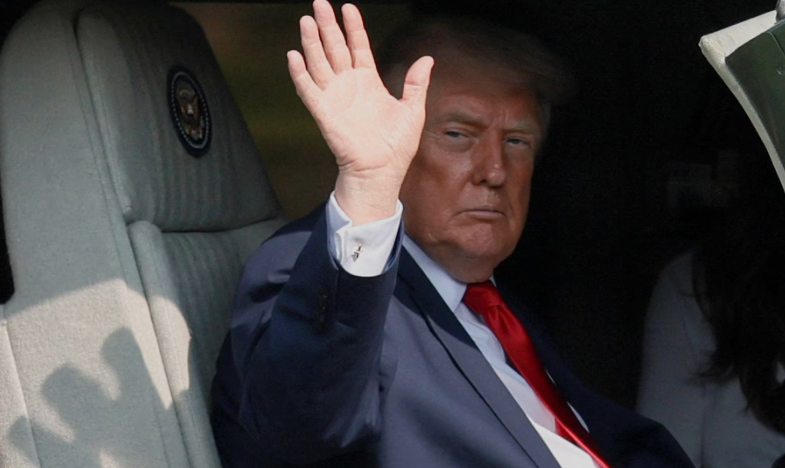
What the general proposes
Retired General Frank McKenzie, former commander of CENTCOM, emphasized: "We are talking about changing the views and actions of a ruling regime." He argued that seizing Kharg could achieve that objective. "Occupying Iranian territory," he claimed, "will be a major factor in future negotiations with Iran." National security analysts believe the US military possesses the capability to capture Kharg Island, but doing so would create additional military and diplomatic complications and lead to significantly higher American casualties.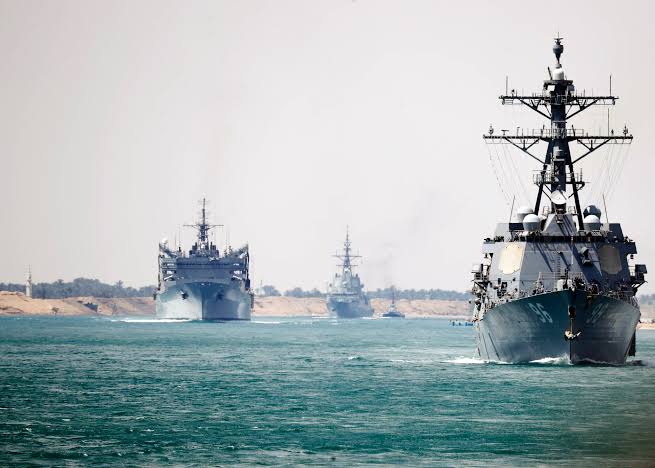
The invasion of Kharg
"An invasion of Kharg, regardless of the type of forces used, would be fraught with danger. An amphibious operation would require immediate naval and air support. However, that would mean a fleet of ships parked within range of Iranian missiles and drones stationed on the mainland coast. US ground forces would also face constant threats from the same Iranian weaponry. "If the United States occupies an Iranian island, that island becomes a bargaining chip. The concept relies on the assumption that it costs the United States less to hold an island than it costs Iran. Yet stationing large numbers of American forces on an island adjacent to Iran becomes a machine for generating casualties."
Threatened 9 times
Trump has threatened 9 times to destroy Iran's power plants and other civilian infrastructure, but each time he has backed away from the brink while simultaneously speaking of imminent deals to restore peace and trade. Trump should perhaps take a lesson from Jimmy Carter: Stay away from Kharg Island at all costs.
www.bankingnews.gr





Readers’ Comments