

Iran appears isolated, in a war against the USA and Israel for its very survival.
However, China and Russia, the supposed partners of Iran, appear distanced.
Both countries condemned the attacks against Iran and called for the termination of hostilities, but avoided providing substantial military assistance.
At the same time, the United States are deploying additional forces to the Middle East, including Marines and the 82nd Airborne Division, preparing for a potential ground invasion.
Analysts comment that the absence of substantial action by China constitutes "the clearest sign of Beijing's embarrassment," while Russia's inability to help a "key ally is undoubtedly embarrassing."
However, rather than indifference or abandonment, both countries possess more disciplined definitions of their national interests, which prevent them from direct involvement.
Furthermore, both are certain to reap strategic benefits the longer the United States remain involved in the war.
China considers Asia and its immediate neighbors as the focus of its foreign policy and its military strategy.
Although the Middle East is important for its energy and trade needs, Beijing has never considered it more important than Taiwan, Japan, or Europe.
Throughout its modern history, China avoided formal military alliances.
The unique security treaty it maintains is with North Korea since 1961, while the validity of this commitment remains questionable.
Although China has supplied weapons to Iran from time to time, the security relationship between the two countries is much more limited compared to that which it maintains with Russia or North Korea.
Iran does not constitute a close strategic partner nor is it located within the geographical priority zone of China, a fact that gives Beijing minimal reasons to intervene militarily in its favor.
Energy constitutes the core factor in China–Iran relations.
In 2025 alone, China purchased over 80% of Iranian oil exports, which corresponded to 13.4% of its total oil imports.
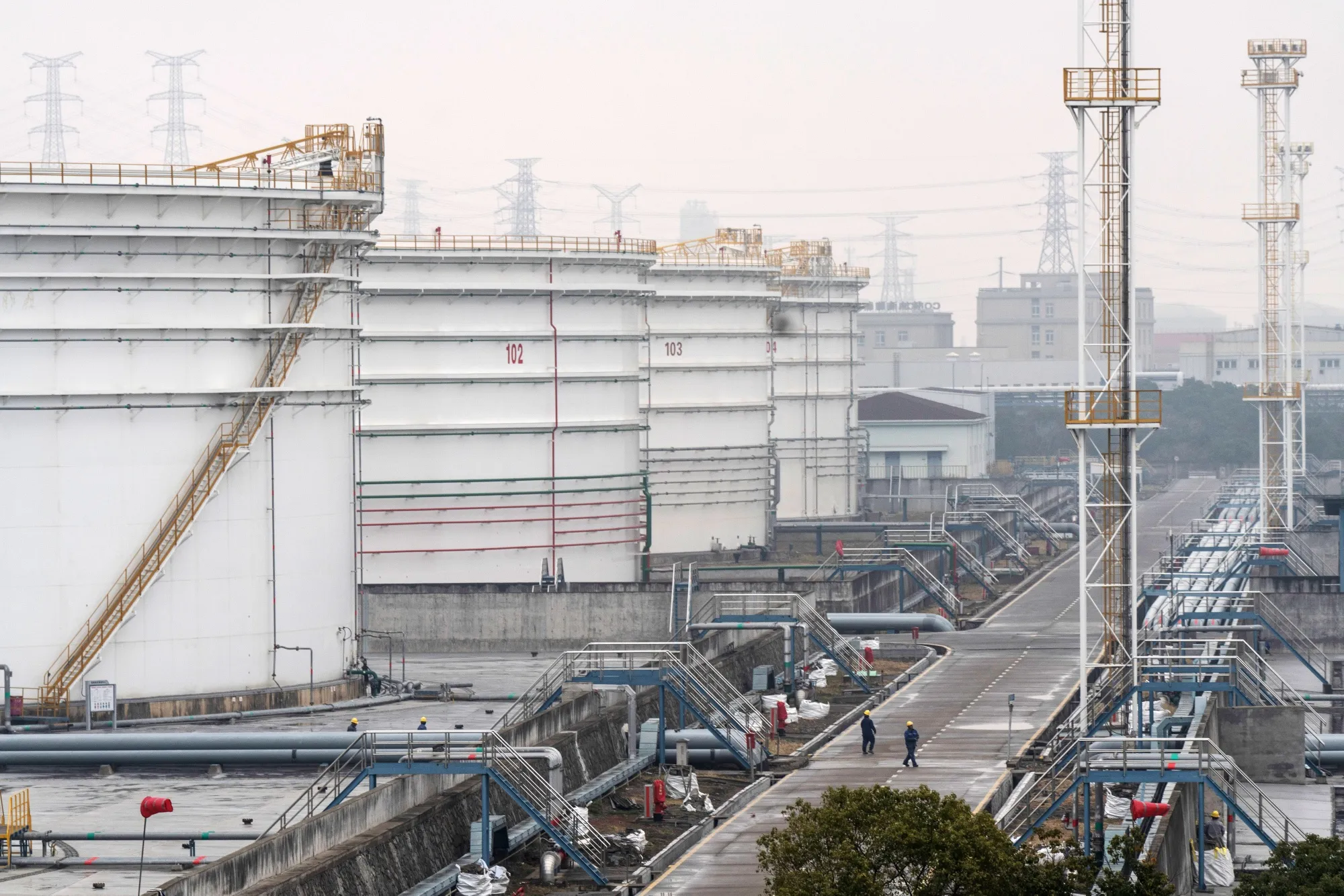
The potential closure of the Strait of Hormuz, which would interrupt most oil exports from Iran and the other Gulf states, would significantly affect the energy mix of China.
A prolonged war in Iran and the disruption of oil flows may force China to reconsider its implicit strategy of essentially outsourcing to the United States the task of ensuring the energy security of the Middle East.

However, the Chinese strategic oil reserves are sufficient for approximately 120 days of imports, while alternative suppliers, such as Russia, can limit the impacts.
Even with this disruption in the oil market, the shifting of American attention and power from the Indo-Pacific to the Persian Gulf serves Chinese interests.
Chinese military analysts, who focus almost exclusively on their neighboring region, likely view positively the absorption of American military resources away from the periphery of China.
The United States have already transferred weapons systems from the Indo-Pacific, among which a battery of THAAD interceptor missiles from South Korea toward Iran, as the war depletes the limited stockpiles of interceptors and missiles.
The Pentagon has also moved ground and naval forces from the Indo-Pacific to the Middle East, including the USS Tripoli and a Marine Expeditionary Unit from Japan, as well as the strike group of the aircraft carrier USS Abraham Lincoln from the South China Sea.
Russia, for its part, does not consider Iran a critical element of its foreign and defense policy.
The 2023 Russian Foreign Policy Concept gave emphasis to the so-called "near geopolitical environment" as the top priority, while Iran is integrated along with the countries of the Middle East in a lower position.
In contrast to China, Russia is not energy-dependent on the Middle East and maintains limited trade relations with Iran.
Russia possesses security agreements with Belarus, the member states of the Collective Security Treaty Organization, CSTO, as well as a "comprehensive partnership and strategic cooperation" with China.
It has also carried out significant weapons agreements with Iran, among which an agreement amounting to 500 million euros, 589 million dollars, for 500 portable anti-aircraft missile launchers "Verba" and 2,500 9M336 missiles.
However, Iran is not considered important enough to justify Russian security guarantees.
Like China, Russia could also emerge as a significant beneficiary of the war, particularly in the energy sector.
China is well positioned to withstand the impact of the US blockade of the Strait of Hormuz:
— The Kobeissi Letter (@KobeissiLetter) April 14, 2026
Before the war, China purchased ~14% of its oil from Saudi Arabia, 11% from Iran, and 29% from the rest of the Middle East.
Russia supplied another 20%, with the remaining 26% coming… pic.twitter.com/mQhyMRzch2
If Iran closes the Strait of Hormuz, countries like China and India will be forced to increase oil imports from Russia.
The sharp rise in international energy prices, combined with the potential relaxation of oil sanctions, could offer valuable revenues to the Russian economy, which depends to a great extent on fossil fuels.
The American involvement in Iran also favors the Russian war effort in Ukraine.
American operations consume valuable military resources, primarily interceptor missiles.
Every THAAD, Patriot, or Tomahawk missile directed toward Iran is one less missile available for the Ukrainian front.
Russia also has the capability to indirectly support Iran, providing intelligence to locate American military personnel and targets throughout the Middle East.
In this way it can help Tehran from a distance and simultaneously benefit from the war, without risking direct confrontation with the United States.
The restrained stance of China and Russia constitutes a sign of strategic discipline rather than an abandonment of Iran. An American military that is overextended and weakened serves Chinese interests in the Pacific and Russian interests in Ukraine. The longer the war lasts, the greater the potential benefits for these two powers.
Iran exported 70 million barrels of crude oil, valued at an estimated 5-6 billion dollars
Iran reportedly dispatched nearly 70 million barrels of crude oil, valued at an estimated 5-6 billion dollars, during a brief pause in American restrictions, creating a financial "cushion" before Washington restores its blockade via the Strait of Hormuz. The shipments, which took place between mid-June and mid-July, are expected to yield billions of dollars in revenues to Tehran in the coming months, with a large part of the crude eventually ending up in China.
According to a publication in the Wall Street Journal, approximately 20 Iranian oil tankers began arriving off the eastern coast of Malaysia in late June, after the United States temporarily lifted restrictions on Iran's shipping. Independent estimates by the organization United Against Nuclear Iran, UANI, and oil market analysts cited by the newspaper, report that Tehran exported approximately 70 million barrels during this single month.
Since then, the USA restored the restrictions, limiting anew Iranian exports through the Strait of Hormuz.

Analysts estimate that Iran relied on its long-standing sanctions-circumvention network to transfer the oil. The tankers reportedly sailed toward the Eastern Outer Port Limits zone, outside the territorial waters of Malaysia, where the crude oil was transshipped at sea to other ships via large pipes.
The tankers receiving the cargo subsequently transferred it to private Chinese refineries, known as "teapot" refineries, which purchase Iranian crude at discounted prices.
Several tankers, including the Diona, Hero II, Sonia 1, and Stream, reportedly arrived at the transshipment zone of Malaysia during the specific period.
Experts estimate that the sharp increase in oil tanker movement reflects Tehran's effort to maximize its exports before the stricter enforcement of American sanctions returns.
www.bankingnews.gr






Readers’ Comments