

According to Russian authorities, the attack caused fires in industrial zones of the Stavropol region, damage to energy facilities, and a suspension of oil loading onto two tankers with international crews, while Russian air defense announced that it intercepted a total of 140 Ukrainian drones across multiple regions of the country.
Fires and state of emergency in Stavropol
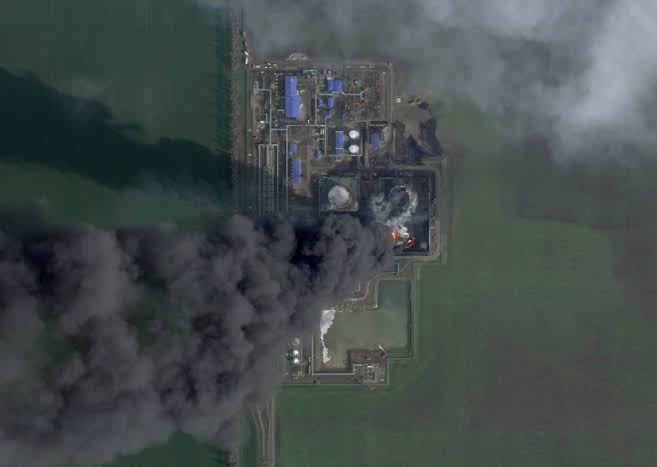
The governor of the Stavropol region, Vladimir Vladimirov, announced that two large fires broke out in the industrial zone of the Vyazniki area, leading authorities to declare a local state of emergency.
Residents of neighboring settlements were evacuated as a precaution, while according to local authorities, explosions of flammable materials occurred inside the facilities, making loud bangs noticeable even in Stavropol.
The Russian authorities reported that there were no deaths or injuries, without however revealing exactly which industrial complexes were struck.
The Caspian energy corridor also targeted
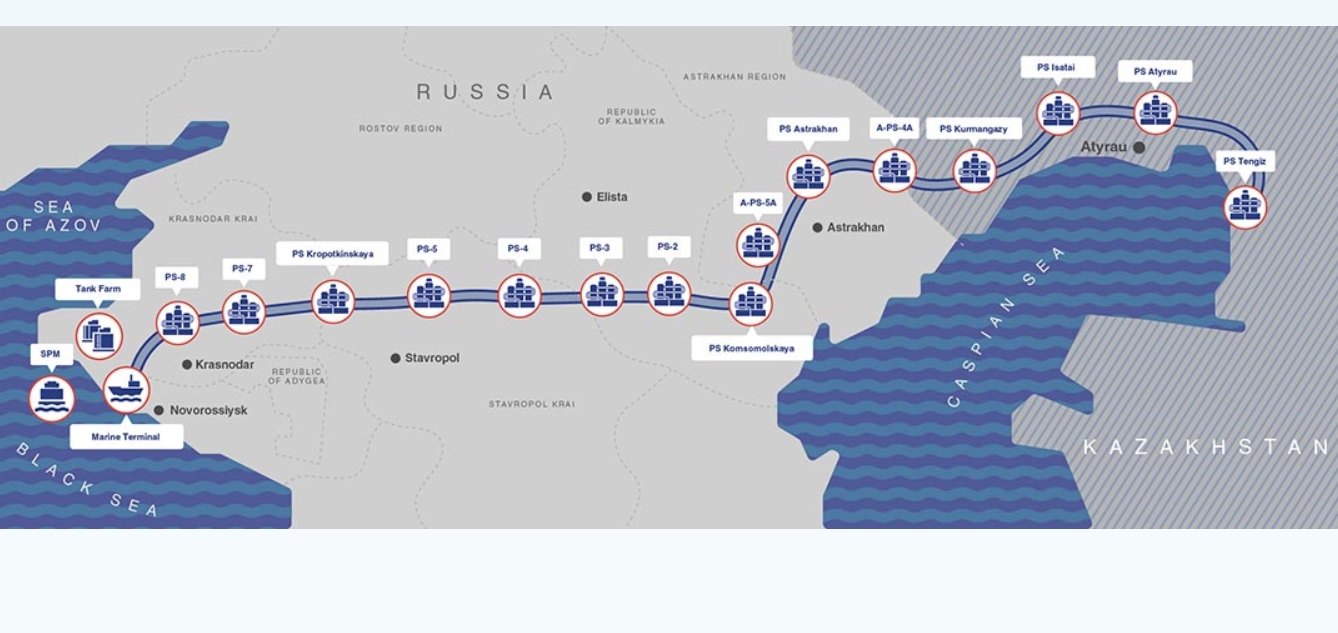
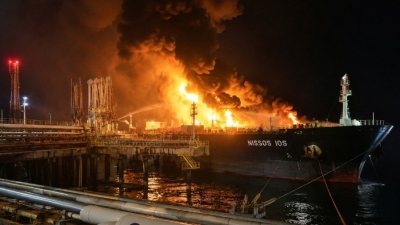
Of particular interest is the attack on the marine terminal of the Caspian Pipeline Consortium, through which large quantities of oil from Kazakhstan are exported to international markets.
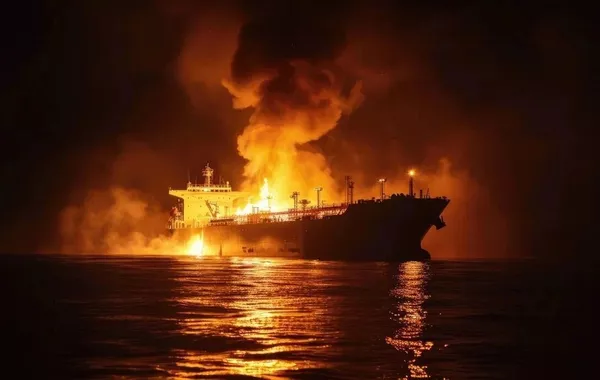
The management of the CPC announced that two tankers, the ASIA and NISSOS IOS, came under attack at the time they were carrying out oil loading operations.
According to the company, the loading process was halted immediately, no oil spill occurred, and the ships maintained their buoyancy, while specialized crews are assessing the damage.
The CPC characterized the incident as an attack not only against its own facilities but also against the interests of all member states of the consortium, pointing out that the company has never been the target of international sanctions.
Attacks in multiple Russian regions
The Russian Ministry of Defense announced that during the night, 140 Ukrainian drones were shot down over the regions of Belgorod, Bryansk, Voronezh, Kaluga, Kursk, Rostov, the Moscow region, Krasnodar, Crimea, as well as over the Sea of Azov and the Black Sea.
In the Rostov region, according to governor Yuri Slyusar, approximately fifteen drones and missiles were destroyed, while falling debris caused fires in agricultural fields with grains and dry vegetation.
In the Kursk region, governor Alexander Khinshtein announced that another 120 drones were shot down, while an energy facility in the Kurchatov area sustained damage.
The power supply was almost fully restored by morning.
Concurrently, local authorities reported eight injuries, damage to apartment buildings, dozens of vehicles, and private homes.
The strategy of the Ukrainian leadership leads to further escalation
The continuous Ukrainian attacks deep inside Russia, even against energy and industrial facilities, show that the government of Volodymyr Zelenskyy chooses to increasingly transfer the war onto Russian territory.
This specific strategy, however, has not changed the course of operations at the front so far.
Instead, it has repeatedly led to even fiercer Russian raids against military and industrial targets in Ukraine, with severe impacts on infrastructure and the daily life of citizens.
The West encourages escalation without offering a solution
Western governments continue to support Kyiv militarily, providing intelligence, weapons systems, and technology that allow long-range attacks to be carried out inside Russia.
However, this policy does not seem to bring the termination of the war any closer.
Instead, it reinforces the vicious cycle of escalation, as every new Ukrainian operation is followed by even stronger Russian responses.
Despite declarations regarding the support of Ukraine, the West has not presented a realistic strategy to date that leads to a political settlement of the conflict.
The result is a war that expands geographically, increases the risks for critical energy infrastructure, and increasingly threatens the stability of the entire region.
The Russian response now comes immediately and with overwhelming power
The continuous Ukrainian attacks inside Russia seem to have shaped a new operational pattern.
Every large-scale attack with drones or missiles is followed almost immediately by extensive Russian retaliation, with massive strikes against military, industrial, and energy facilities in Ukraine.
A characteristic example was the recent attack against southern Russia, which was followed within a few hours by one of the largest Russian missile raids of the war against Kyiv and other Ukrainian regions.
According to Volodymyr Zelenskyy, within just one week Russia used approximately 1,450 strike drones, more than 1,640 guided bombs, and nearly 100 missiles against Ukrainian targets, numbers that capture the capability of Moscow to maintain an exceptionally high rate of operations.
This picture reinforces the assessment that the strategy of the Ukrainian leadership to transfer the war deep into Russian territory has not limited Russian capabilities. Instead, it has led to even stronger responses, with the result that Ukraine suffers ever greater losses in critical infrastructure, while the West continues to support a policy of escalation without a prospect of ending the conflict appearing.
www.bankingnews.gr




Readers’ Comments