

According to Ukrainian President Volodymyr Zelenskyy, Russia launched more than 44 missiles of various types and approximately 120 to 125 strike drones in just 53 minutes, with the Ukrainian capital bearing the brunt of the assault.
The Ukrainians report that Iskander-M and 3M22 Zircon missiles were utilized.
Russian military bloggers claimed that the Ukrainian air defense fired at least 16 Patriot PAC-3 interceptor missiles during the engagement.
The Ukrainian president himself characterized the raid as one of the largest of the conflict, pointing out that within a single week, Russia has deployed approximately 1,450 drones, more than 1,640 guided bombs, and nearly 100 missiles against Ukrainian targets.
These data confirm that the war is now entering a phase where the intensity of missile strikes increases dramatically, while the capacity of Ukrainian air defense to intercept massive raids is tested daily.
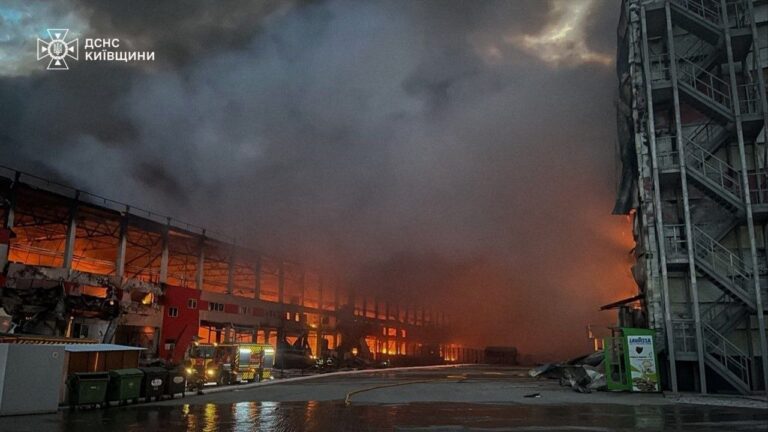
The Russian response and the message to Kyiv
From the Russian side, the Ministry of Defense announced that the operation constituted a response to previous Ukrainian attacks against regions of Moscow.
The same assessment was formulated by Norwegian professor Glenn Diesen, who argued that the Russian reaction was almost immediate following the Ukrainian attacks on Russian territory, characterizing the strike as particularly powerful.
The emerging picture is that every Ukrainian strike inside Russia is now followed by a disproportionately larger Russian response, creating a vicious cycle of continuous escalation.
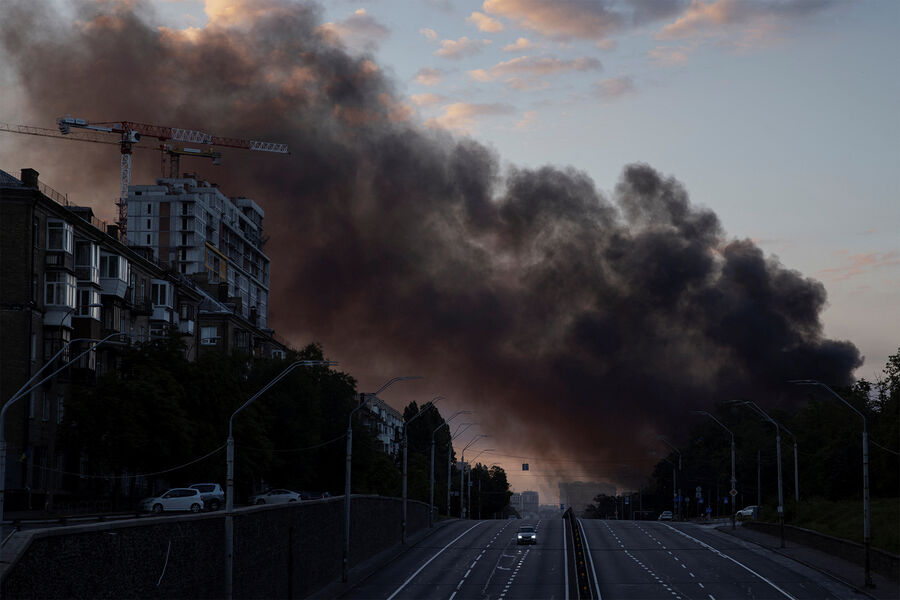
Dramatic appeal by Zelenskyy: Air defense saturation with 44 missiles in 53 minutes
The very appeal of Volodymyr Zelenskyy for even more air defense systems and interceptor missiles constitutes an indirect admission that Western deliveries to date are insufficient to counter attacks of such scale.
The launch of approximately 44 missiles in just 53 minutes shows that Russia is now systematically attempting to saturate Ukrainian air defense, forcing Kyiv to consume valuable and expensive interceptor stockpiles.
For many analysts, this tactic gradually wears down not only Ukrainian capabilities but also the Western strategy that relies on the continuous provision of defensive systems without fundamentally altering the balance in the theater of operations.
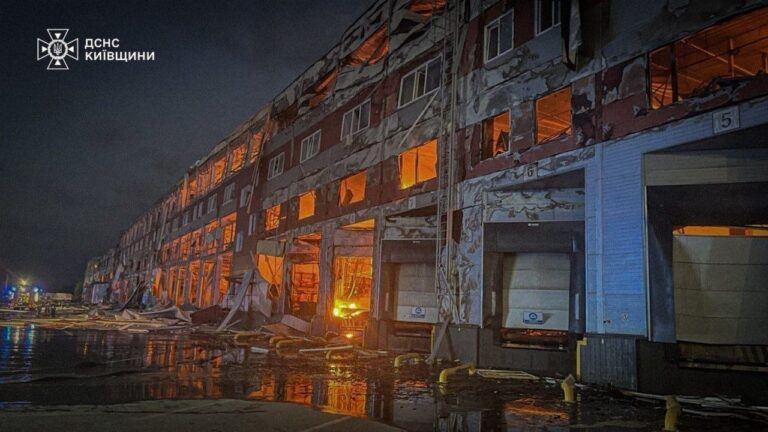
The West confronted with new Russian firepower
The latest operations by Russia caused intense concern in Western capitals and among military analysts, as they highlighted the scale of capabilities that Moscow continues to possess despite sanctions and the long-term conflict.
These numbers capture a pace of operations that can hardly be ignored and intensify anxieties in the West regarding the production capacity and available stockpiles of the Russian war industry.
For several analysts, the intensity of the attacks constitutes an indication that Russia not only maintains high operational capability but can conduct prolonged campaigns to saturate Ukrainian air defense.
This reignites debates in Western capitals over whether the military support strategy for Ukraine implemented so far is sufficient against an adversary that continues to demonstrate great firepower and the ability to maintain a high rate of attacks.
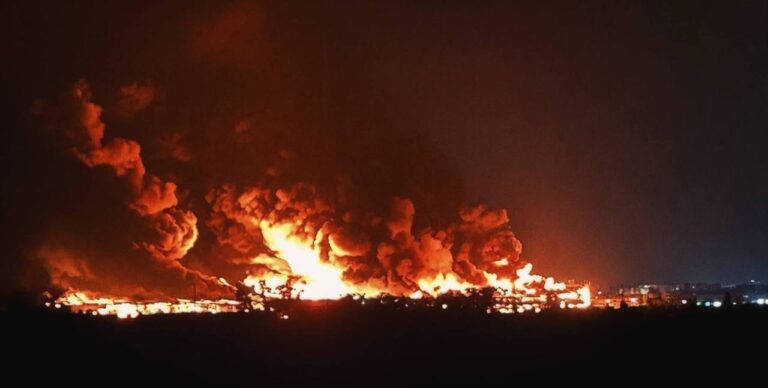
The targets of the latest attack
Moscow claims that random targets were not hit, but rather core facilities of the Ukrainian war industry.
According to the Russian Ministry of Defense, among the facilities struck were:
1) missile guidance system production plants,
2) facilities manufacturing components for Flamingo, Neptune-MD, and other weapons systems,
3) long-range drone production units,
4) military material warehouses,
5) logistics centers used for the transit of dual-use equipment,
6) fuel storage facilities at the Yuzhny port in the Odesa region.
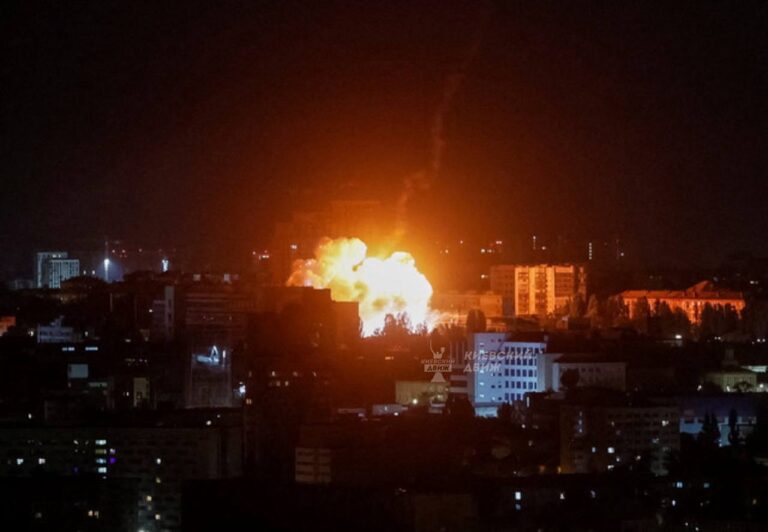
Particular reference was made to the company RadioNix, to SpetsOboronMash, to the Meridian plant (Kyiv-90), as well as to the Kyiv Innovation Terminal, which the Russian side claims was used for the transit of drone components, electronic warfare, and robotic systems.
Russia also claims that the UKRTAC factory was destroyed, a fact publicly confirmed via a post by the founder of the enterprise, Severion Dangadze, stating that both the facilities and the warehouses were completely destroyed by a direct missile strike.
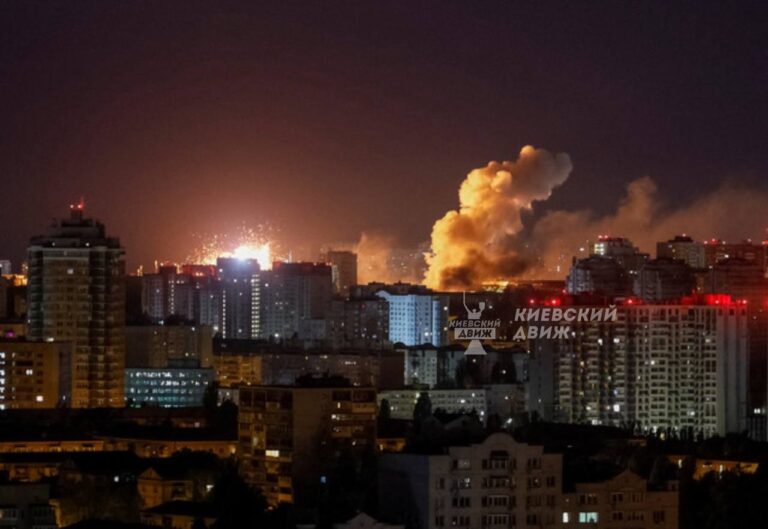
The attacks caused damage to several districts of Kyiv, including Solomianskyi, Sviatoshynskyi, Shevchenkivskyi, Desnianskyi, and Dniprovskyi.
Damage was also reported at the Lukyanivska metro station, where according to Ukrainian reports a partial collapse of the ceiling, heavy smoke, and evacuation of passengers occurred.
Furthermore, logistics warehouses in the Bucha region, a DB Schenker logistics center southwest of Kyiv, and fuel tanks at the Yuzhny port in the Odesa region were struck.
The West continues to promise but not to change the reality
Despite the continuous assurances of Western governments regarding "support until victory," the reality in the field appears increasingly difficult for Ukraine.
Deliveries of weapons systems continue, yet they do not seem to fundamentally alter the strategic balance.
Conversely, Russia continues to maintain a significant superiority in the production of missiles, drones, and ammunition, while it has adapted its economy to wartime conditions.
Every new aid package is accompanied by declarations of optimism in Western capitals, but in the theater of operations, Ukrainian cities continue to receive ever larger attacks.
The Ukrainian leadership and the strategy of permanent escalation
The government of Volodymyr Zelenskyy continues to present every new attack as proof that even more Western military aid is required.
However, the strategy of continuous attacks on targets inside Russia raises reasonable questions.
Every such strike seems to be followed by far more powerful Russian operations, with the result that the highest cost is ultimately paid by Ukrainian infrastructure and the residents of major cities.
Even Western analysts now recognize that the logic of continuous military escalation makes any future negotiation more difficult and increases the probabilities of further destruction.
Regardless of which side holds the initiative each time, those who continue to pay the highest price are the civilians.
The continuous raids, the destruction of energy and industrial facilities, the power outages, and the uncertainty have become part of the daily life of millions of people.
At the same time, the political leaderships in Ukraine, Russia, the United States, and major European countries continue to invest more in military confrontation rather than in the search for a realistic framework for negotiation.
A war without a visible end
The attack of July 19 constitutes yet another reminder that the war is not heading toward de-escalation but toward greater intensity.
The Ukrainian leadership continues to base its survival on European military reinforcements, while the West continues to invest in a strategy that, so far, has led neither to military victory nor to a political solution.
On the other side, Russia appears determined to continue the attacks against the Ukrainian military and defense industry, signaling that operations are not going to stop anytime soon.
The result is a war of attrition that becomes increasingly destructive, with Ukraine continuing to suffer enormous losses in infrastructure and human resources, while the West, despite declarations of decisive support, has not managed to formulate a strategy leading to a sustainable peace instead of continuous escalation.
The opponent says that Kiev was hit by ~50 missiles tonight. https://t.co/TebGqAoFGE pic.twitter.com/L249Xpx2Ej
— Russians With Attitude (@RWApodcast) July 19, 2026
www.bankingnews.gr












Readers’ Comments