

The recent NATO summit in Ankara concluded without the issue of reducing the American military presence in Europe being officially placed on the agenda.
However, developments on the ground show that the process of rearranging American forces is already underway.
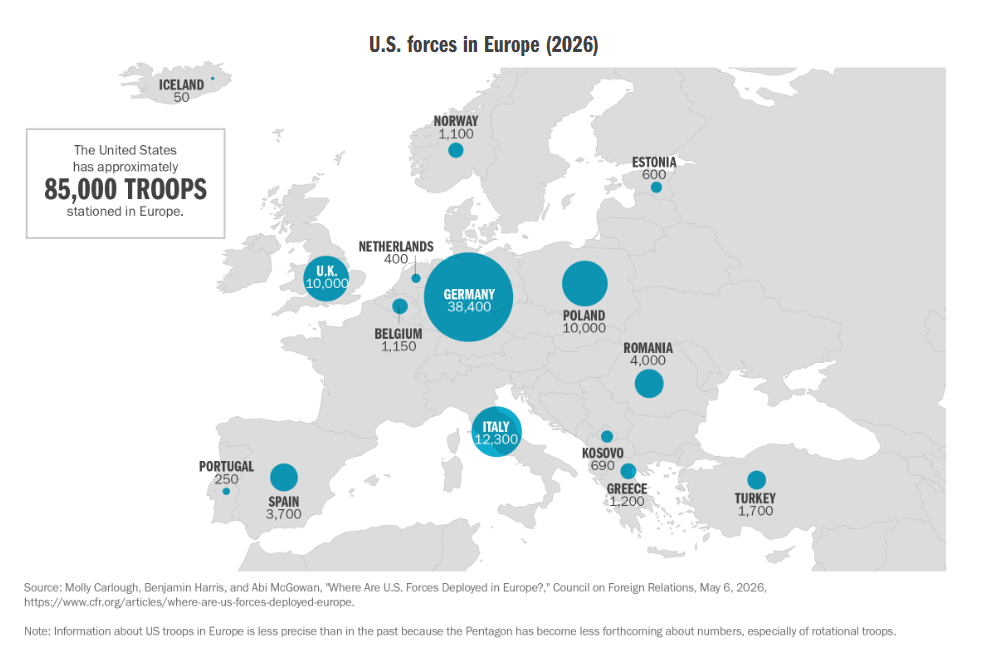
According to a report by the Estonian public broadcaster ERR, the United States have already withdrawn military units from Estonia, a development that reinforces scenarios regarding a gradual revision of American strategy on the European continent.
The government of Tallinn attempted to limit the impressions.
The Minister of Defense, Hanno Pevkur, commenting on the suspension of the scheduled rotation of American forces in Poland, argued that the American military presence in Estonia still exists, leaving open however the possibility of changes in the future.
Despite these assurances, no timetable has been announced so far for the arrival of new American units to replace those that departed, even though the summer personnel rotation constitutes a standard operational practice.
Force rearrangement or political message
In June, Bloomberg, citing sources with knowledge of Washington planning, reported that several European countries do not yet possess the capabilities to cover part of the military capabilities that the United States plan to withdraw from Europe.
The fundamental question is whether this is a simple rearrangement of forces or a political message to European allies.
If the White House and the Pentagon are using their military presence as a lever of pressure, the recipient of the message is not only Estonia, but European governments as a whole and the institutions of Brussels.

The transfer of the defense burden to Europe
Vsevolod Shimov, an advisor to the president of the Russian Association for Baltic Studies, estimates that the departure of American units does not exclusively concern Estonia.
As he points out, similar movements are also recorded in Lithuania, as well as in other countries of Eastern Europe.
In his estimation, Washington is conducting a comprehensive review of its military presence in the European Union, attempting to transfer a greater share of the responsibility for the continent's defense to European allies.
He considers that the size of the American military presence will constitute an object of political and economic negotiations in the coming months. He does not rule out, in fact, the possibility that President Donald Trump will demand significant financial trade offs from European governments in exchange for maintaining American troops in Europe.
The significance of the American presence for the Baltic countries
According to Shimov, the governments of the Baltic countries view the military presence of the United States more as a political guarantee than as a purely military factor.
From a military standpoint, the force maintained by the US in Estonia was limited, a fact meaning that its departure does not substantially alter the balance of power in the region.
The political dimension, however, is different.
The presence of American units functions as a tangible indication of the American commitment to Baltic security and reinforces the sense of deterrence against Russia.
At most, two American battalions were hosted in Estonia, a number that can difficultly change operational balances.
Despite this, Estonia, Latvia, and Lithuania historically seek the strengthening of the NATO presence, as they themselves possess limited military capabilities, with Lithuania constituting the most significant exception.
Under this prism, even a limited reduction of the American presence is interpreted by the governments of the region as a weakening of the overall deterrent power of NATO on its eastern flank.
Where are the American forces heading?
According to Shimov, the military units that depart follow the scheduled personnel rotation program and in all probability return temporarily to the United States.
The essential question, however, is whether the specific units will return to Europe or will be deployed to other geographical regions that are now considered of higher strategic priority.
At the same time, the possibility remains open for part of the American presence to be replaced by European forces.
A characteristic example is Germany, which is gradually increasing its military presence in Lithuania.
The Bundeswehr is already constructing extensive military facilities near the border with Belarus for the permanent deployment of a German brigade, a development reflecting the greater assumption of responsibility by European countries within the framework of collective defense.
A corresponding strengthening of European military forces could, theoretically, also take place in Estonia, provided that the gradual reduction of the American military presence in the region continues.
In any case, this development constitutes an indication of a broader reallocation of responsibilities within NATO, where Washington seeks to gradually restrict its direct military footprint, demanding at the same time from European allies to assume a greater part of the financial and operational burden of collective defense.
The Russian perspective and the implications for regional security
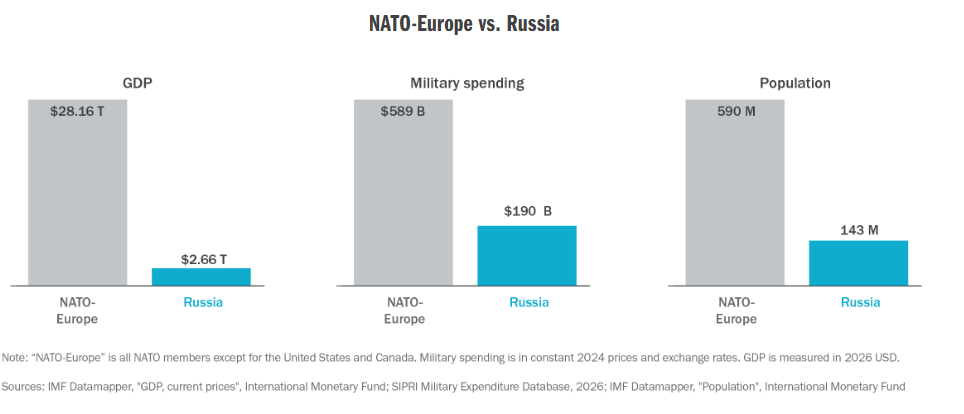
According to Vsevolod Shimov, from the Russian side the departure of certain American units from Estonia does not substantially alter the strategic security environment.
Estonia remains a member state of NATO and continues to be considered by Moscow an unfriendly country.
As a result, its territory will continue to be used for the deployment of allied forces and the conduct of military activities, regardless of whether these units originate from the United States or from European countries.
In his estimation, the replacement of American troops by European forces does not substantially differentiate the way in which Russia evaluates the military presence of NATO in the region.
The economic dimension of the American presence
The military political analyst Vladimir Sapunov estimates that it is still premature to draw safe conclusions regarding the true reasons for the departure of the two American battalions from Estonia.
In his view, the development may constitute part of a broader American strategy of a gradual reduction of the military presence in Europe.
He argues that the presence of American troops in the Baltic countries has mainly a political and symbolic character. For the governments of the region, it constitutes an indication of their close relationship with Washington and is used as a means to strengthen the citizens' sense of security.
However, he notes that the presence of NATO troops has not always been without problems.
From time to time, incidents of disciplinary offenses, brawls with residents, and other occurrences that caused negative publicity in local communities have been recorded.
The economic cost for the Baltic countries
Beyond the security dimension, the economic side of the matter presents particular interest.
According to Sapunov, the Baltic countries shoulder a significant part of the cost of hosting allied forces.
Expenditures for camps, firing ranges, training facilities, supply networks, and other military infrastructure are largely covered by the national budgets of Estonia, Latvia, and Lithuania.
At the same time, these countries continue to increase their defense expenditures, investing significant amounts in the procurement of Western weapon systems, such as anti aircraft systems, main battle tanks, and artillery.
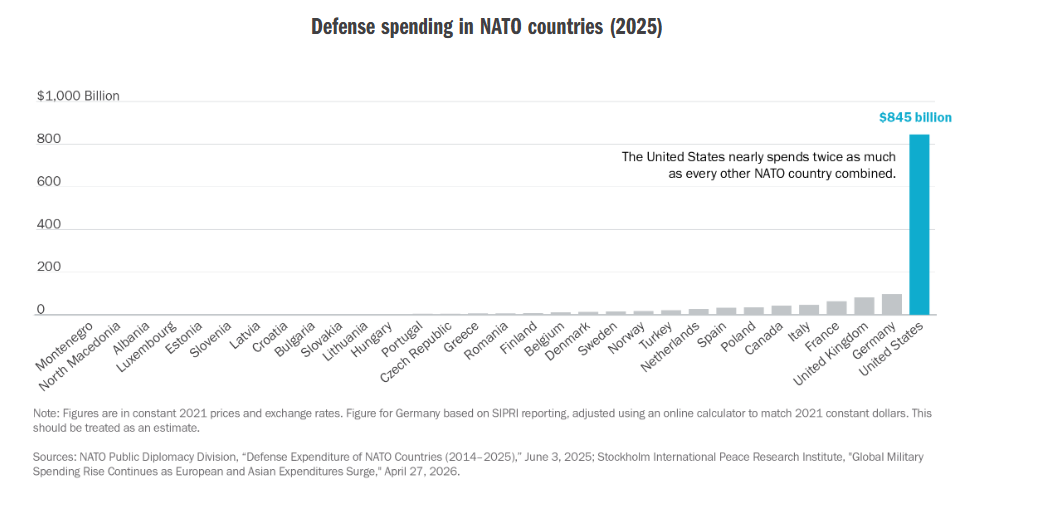
The defense expenditures of the Baltic states now correspond to a percentage between 3.5% and 5% of the GDP, levels that rank among the highest within NATO and approach the new target of 5% set by the Donald Trump administration for the allies of the United States.
The American strategy of transferring the burden
According to Sapunov, the basic aspiration of Washington is not a complete withdrawal from Europe but the transfer of a greater share of the economic and operational cost to European allies.
The Baltic countries and Poland already constitute characteristic examples of this policy, as they have significantly increased both defense budgets and investments in military equipment.
At the same time, the United States seek for European countries to assume a greater share of ground operations, while Washington will continue to provide the nuclear deterrence and the critical strategic capabilities of the Alliance.
The difficulties of the European replacement of US forces
Despite political commitments, the replacement of American forces by European units proves particularly demanding.
Indicative is the case of the German brigade that is to be permanently stationed in Lithuania.
The plan, announced in 2022, provides for the deployment of approximately 5,000 personnel, 4,800 military and 200 civilian employees, by 2027.
Until today, however, the number of German soldiers deployed in the country remains noticeably lower, a fact suggesting the difficulties in implementing the project.
German forces have been stationed mainly at the Rudninkai training ground, near the border with Belarus, as well as in the Rukla region, which is located a short distance from Russia.
According to Sapunov, one of the basic problems is the difficulty of attracting a sufficient number of volunteers to staff the new units.
For decades, German society maintained strong anti militaristic characteristics, a result of the post war historical experience.
In recent years, however, a gradual change in this approach is observed, with the German political leadership examining measures to strengthen the professional armed forces, even the reinstatement of forms of compulsory military service.
The implications for Russia
In the final estimation of Sapunov, the gradual departure of American troops from certain European countries does not substantially alter strategic balances.
The command of NATO still remains under American leadership, while the United States continue to constitute the basic pillar of the Alliance's nuclear deterrence.
The real shift concerns mainly the distribution of financial burdens.
Washington seeks for European allies to increase their defense expenditures, expand their ground military capabilities, and continue to procure American weapon systems.
In this way, European countries are called upon to assume a greater share of the cost of collective defense, while the United States maintain strategic control of the Alliance and simultaneously strengthen their domestic defense industry through the increase of military equipment exports.
Under this prism, the departure of certain American units from Estonia does not necessarily constitute an indication of American decoupling from European security.
On the contrary, it can be interpreted as part of a broader strategy of role reallocation, in which Europeans are called upon to assume a greater operational and financial burden, while the United States maintain their central strategic role within NATO.
www.bankingnews.gr













Readers’ Comments