

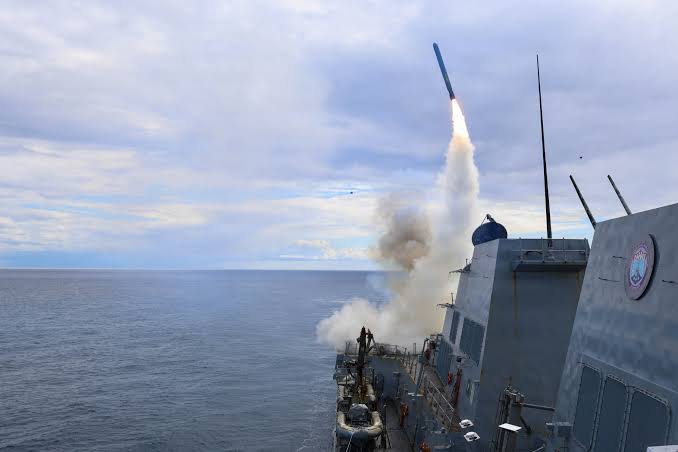
The new concentration of American naval forces from the Mediterranean to the Indian Ocean was presented by Washington as yet another demonstration of power against Iran.
Two aircraft carriers, six amphibious assault ships, and dozens of destroyers and cruisers compose one of the largest American naval concentrations of recent years.
However, behind the image of military superiority hides a very different reality.
More and more analysts estimate that the crisis with Iran does not reveal the strength of the US, but the limits of American military power and specifically of their Navy.
The image of a superpower that can operate simultaneously in every corner of the planet seems to belong to the past now.
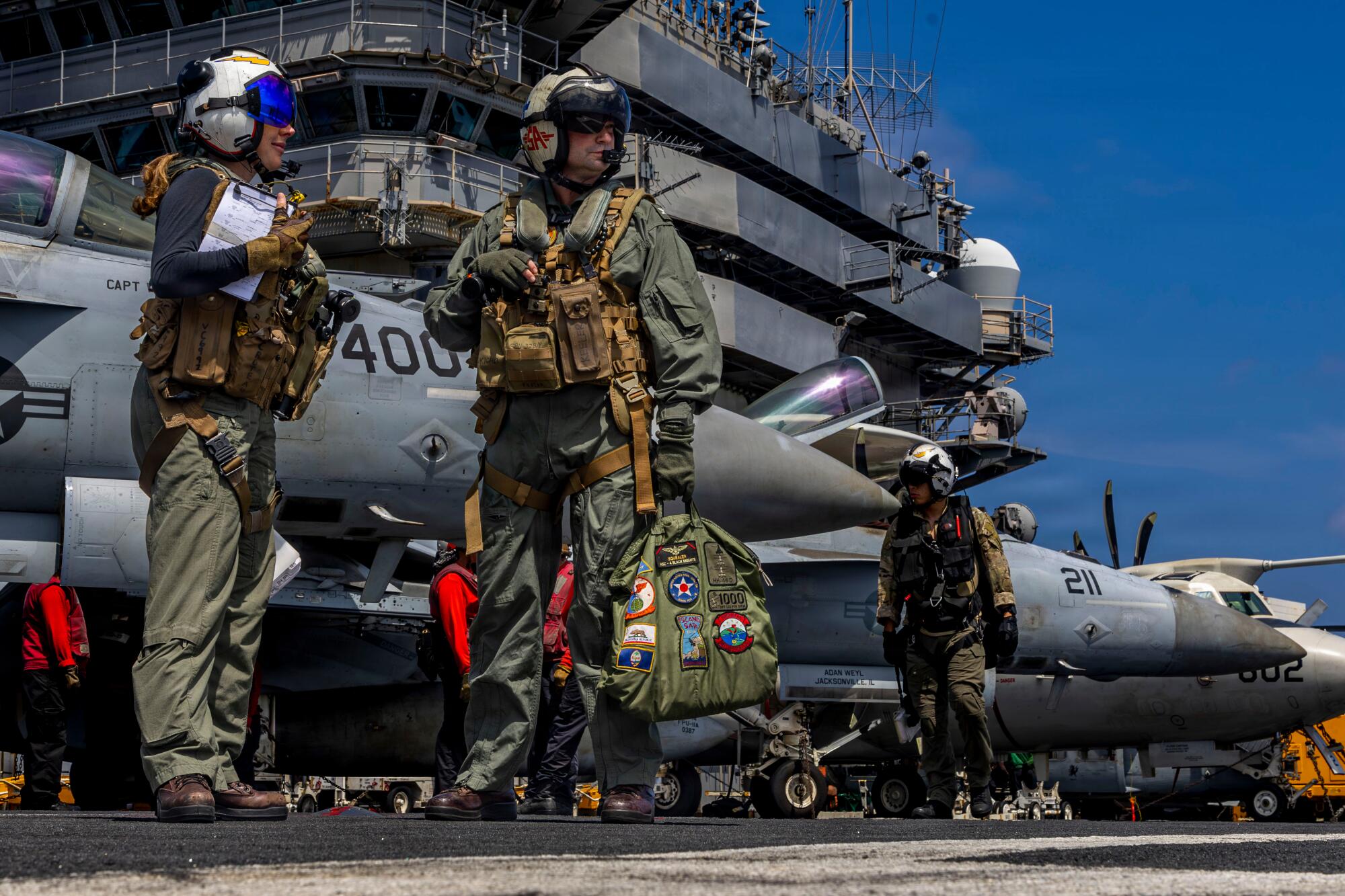
The empire of the seas has shrunk
The end of World War II found the US possessing more than 6,700 warships, constituting the undisputed dominant naval power in the world.
Today, this number has decreased dramatically.
From the 6,768 warships of 1945, the US Navy possesses today approximately 300, of which about 180 are considered the main first-line units.
Although modern units are clearly stronger technologically, the real operational potential of the American fleet is considered much smaller than what the global commitments of Washington require.
Even more worrying is that China now possesses more warships overall, a fact that a few years ago would be considered unthinkable.
For decades the US invested in extremely expensive, cutting-edge weapon systems, neglecting however the need for a balanced fleet with a sufficient number of escort, patrol, and support ships.
The result is a fleet that is powerful on paper but with limited flexibility in practice.
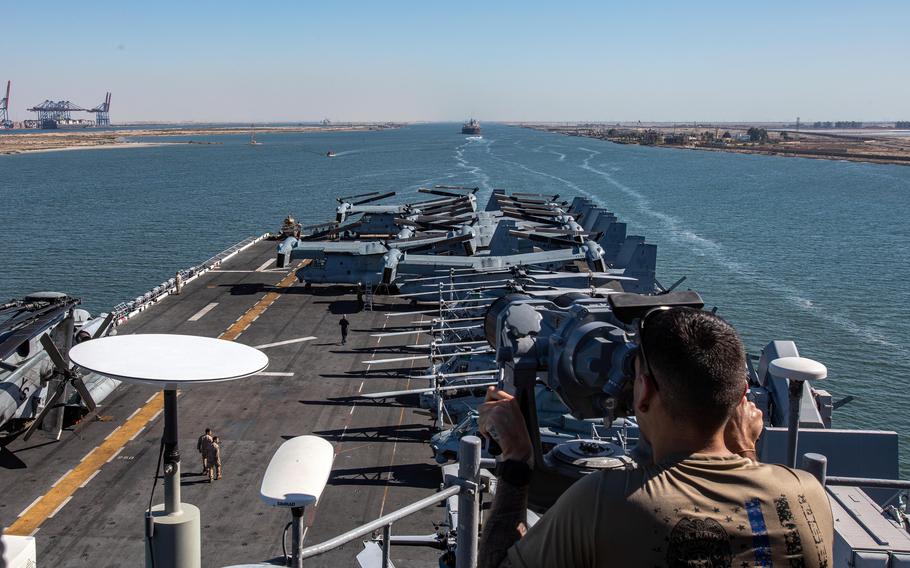
The US trapped on a single front
The new naval deployment around Iran reveals one more serious problem.
To maintain such a large force in the region, a huge number of ships in rotation is required, as each unit that operates needs several more that are either undergoing maintenance or being prepared for the next mission.
Consequently, according to several analyses, the concentration of such a large part of the American fleet in the Middle East significantly limits the ability of the US to respond simultaneously to other major crises in the Pacific, in Europe, or elsewhere.
In other words, Washington still possesses a strong military presence, but faces increasing difficulty in maintaining the role of the global policeman.
Billions of dollars without returns
Perhaps the greatest contradiction lies in the financial aspect.
American defense budgets remain the largest in the world, yet this does not necessarily translate into greater operational power.
A indicative example is the Littoral Combat Ship program, in which immense amounts were invested.
These ships were designed to cover critical operational needs, yet a large part of them is already being led to premature retirement due to technical problems and limited capabilities.
This fact is often used as a characteristic example of a defense system that consumes immense financial resources without the corresponding results.
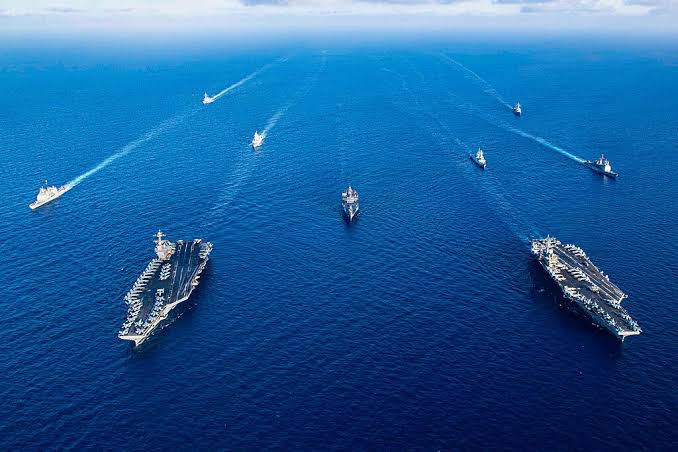
The industry that cannot repair its own ships
Even greater concern is caused by the state of the shipyards.
The maintenance of many warships is delayed for years.
Submarines remain out of service for a long period of time, while certain repair programs have evolved into characteristic examples of mismanagement, with immense financial cost and limited results.
Critics of American policy argue that Washington spends astronomical amounts on new armaments programs, but is unable to maintain even its existing fleet effectively.
The people are being exhausted
The most serious problem, perhaps, does not concern the ships but their crews.
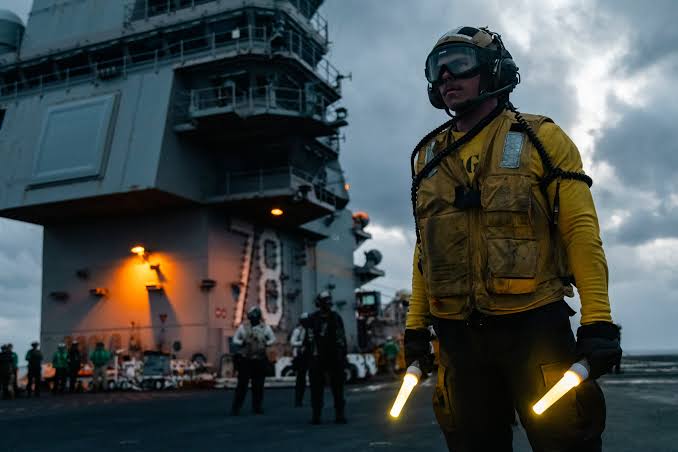
Continuous deployments, which often last ten and eleven months, have led to intense fatigue, psychological pressure, and staffing problems.
Retired top officers have repeatedly warned that the continuous overexploitation of personnel undermines the combat capability of the fleet.
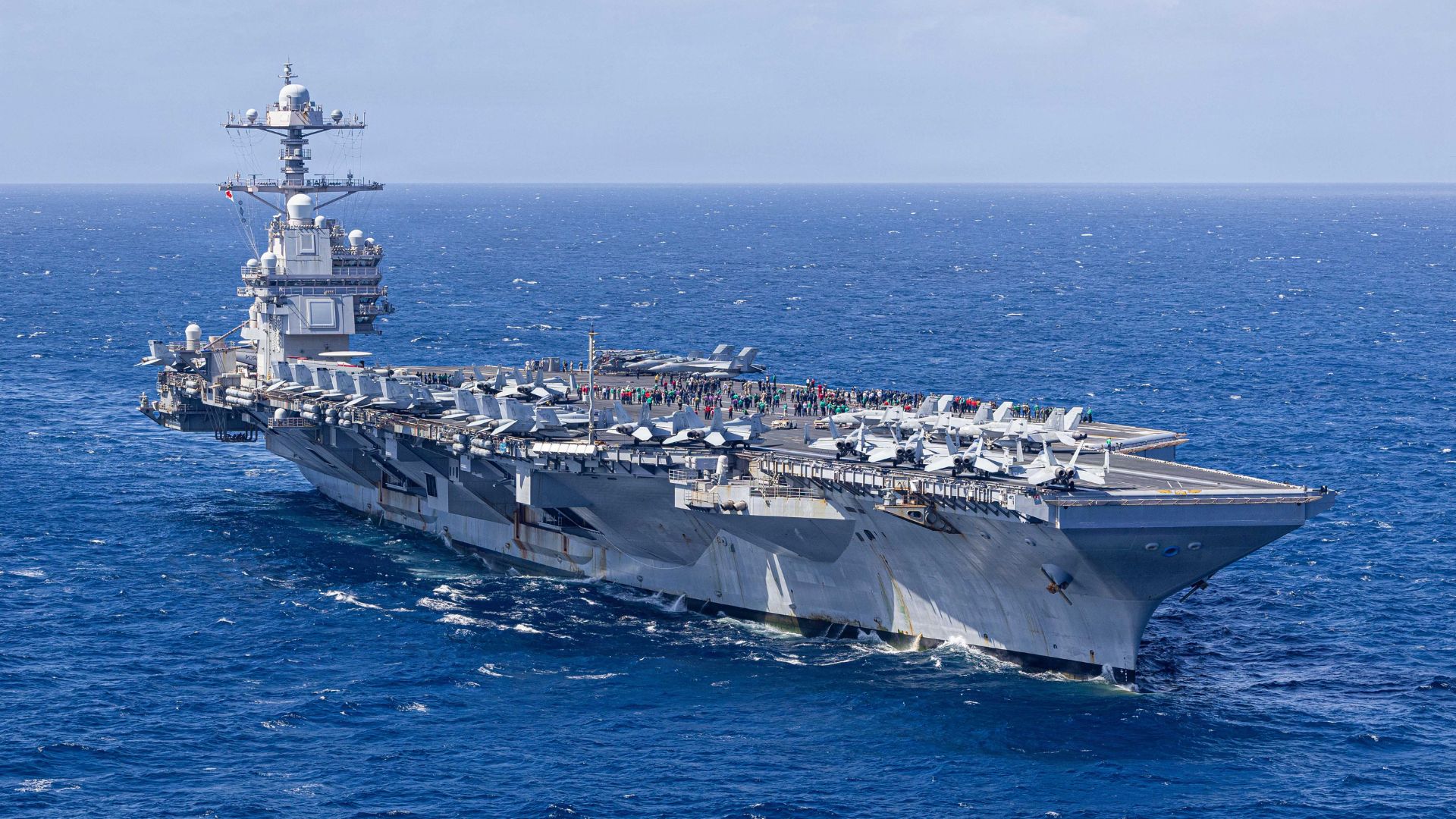
A characteristic example is the aircraft carrier USS Gerald Ford, which was presented as the most advanced warship in the world.
Instead, however, of symbolizing the new era of American naval superiority, it became the subject of intense criticism due to technical problems, cost overruns, and the exhaustion of the crew during its long deployment in the Middle East.
The policy of continuous wars
The current situation did not arise by accident.
After the attacks of September 11, the US adopted a strategy of continuous military presence on multiple fronts.
Afghanistan, Iraq, Syria, the Red Sea, the Persian Gulf, and now the new tension with Iran compose an uninterrupted period of operations lasting almost a quarter of a century.
Washington became trapped in the perception that every international crisis can be countered with more military forces and a larger naval presence.
The price of this choice now seems to be becoming increasingly apparent.
Iran as a mirror of American power
The new crisis with Iran functions as a test for the real capabilities of the American fleet.
Although the US can still assemble an impressive naval force in any region of the world, several analysts estimate that this capability is now accompanied by significant constraints.
Maintaining such a large armada requires immense resources, multi-month deployments, and significant wear and tear on assets and personnel.
This means that every new crisis increases the pressure on a fleet that is already operating at its limits.
The expensive illusion of superiority
For decades the US invested its foreign policy in the image of absolute military dominance.
Today, however, this image appears to be tested.
American power remains undoubtedly immense, but the ability to maintain long-term operations on many fronts is increasingly questioned even by American analysts and former military personnel.
The crisis with Iran does not only reveal the challenges of the Middle East.
It also highlights the consequences of decades of strategic choices, excessive armaments expenditures, industrial malfunctions, and a foreign policy that was often based on the assumption that military power can substitute for diplomacy.
The limits of a superpower in decline
The American Navy still constitutes one of the strongest naval forces in the world.
However, the image of the undisputed maritime superpower that can operate everywhere simultaneously seems to belong more and more to the past.
The confrontation with Iran functions as a reminder that even the greatest military forces have limits.
The current situation is not the result of a situational crisis, but the expected price of decades of mistaken priorities, overreliance on military power, and the inability to substantially modernize the very structures that support it.
www.bankingnews.gr












Readers’ Comments