

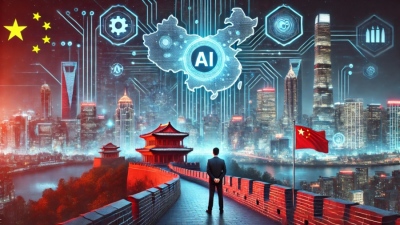
During the opening of the World Artificial Intelligence Conference (WAIC) in Shanghai, Chinese President Xi Jinping presented Beijing's vision for a new global order in artificial intelligence (AI), utilizing the event to promote open-source artificial intelligence and challenge the influence of the United States in the future governance of the technology.
In a keynote address on Friday, Xi Jinping called on countries to seize what he characterized as a rare and historic opportunity offered by open-source artificial intelligence. At the same time, he pledged greater Chinese support to developing countries through technology transfer, training in AI, and cooperation on infrastructure, warning that unequal access to artificial intelligence could create new historical injustices.
His statements constitute the clearest formulation to date of Beijing's ambitions to shape the global framework of artificial intelligence governance and emerge as an alternative leader against the United States regarding the definition of international AI standards.
China promotes its leadership in open-source artificial intelligence
Comparing artificial intelligence to iconic technological revolutions, such as the steam engine and electricity, Xi Jinping argued that AI should be a global public good rather than remain concentrated in the hands of a few developed economies and tech giants.
China plans to expand its cooperation in the field of AI through training programs, technological partnerships, and research centers in the BRICS countries, ASEAN, Latin America, and the African Union, strengthening its technological presence in the so-called Global South.
Xi Jinping also announced the launch of the World AI Cooperation Organisation, WAICO, a China-backed initiative that 29 countries have already joined. According to Beijing, the organization will allow developing countries to gain a stronger voice in the international governance of artificial intelligence.
Challenge to US technological dominance
Although Xi Jinping did not refer directly to Washington, his speech was a clear contrast to the strategy of the United States, which seeks to maintain primacy in advanced AI technologies and semiconductor supply chains.
The Chinese emphasis on open-source artificial intelligence comes at a time when Chinese developers are rapidly narrowing the technological gap with American companies. The Beijing-based startup Moonshot AI presented its new model, Kimi K3, at the conference, while Chinese open-parameter models are gaining increasing international acceptance thanks to lower costs and easier access.
Analysts estimate that Beijing's strategy aims to make Chinese AI platforms the first choice for emerging economies, while reducing their dependence on Western technological ecosystems.
Emphasis on AI safety and governance
Xi Jinping dedicated a significant part of his speech to artificial intelligence safety, calling for AI systems to remain under human control and urging countries to establish early warning and emergency response mechanisms to manage the associated risks.
He warned of the possibility of autonomous AI systems operating beyond effective human control and stressed the need to adopt international standards that balance technological innovation with safety.
These positions are among Xi Jinping's strongest public interventions on artificial intelligence safety and show that Beijing seeks to play a leading role not only in the development of AI but also in shaping the international rules that will govern it.
Strategic competition escalates
The Shanghai conference takes place shortly before the first intergovernmental talks between China and the United States on artificial intelligence under the presidency of Donald Trump.
The timing highlights that AI governance is evolving into yet another field of strategic competition between the world's two largest economies.
Earlier this month, the two countries presented conflicting visions during a United Nations dialogue on artificial intelligence. American officials argued that excessive regulation could slow down innovation, while China promoted affordable, open-source AI as a means to limit global technological inequality.
Why it matters
The speech by Xi Jinping shows that the competition in artificial intelligence is now expanding beyond technology and taking on a strong geopolitical dimension. Beijing does not only seek to compete in advanced AI applications and semiconductors, but also to shape the institutions, standards, and international partnerships that will define the global artificial intelligence ecosystem.
By projecting open-source AI as a tool for development for emerging economies, China aspires to strengthen its influence in the Global South, while challenging the long-standing technological primacy of the United States.
The next moves
China is expected to accelerate efforts to build an international alliance around its own model of artificial intelligence governance through WAICO, the BRICS, ASEAN, and other partnerships with developing countries.
At the same time, Washington is estimated to deepen cooperation with its allies to shape trustworthy AI standards, control semiconductors, and secure technological supply chains, further institutionalizing the confrontation in the field of artificial intelligence.
The upcoming US–China talks on AI will provide a first indication of whether the two superpowers can maintain limited cooperation on artificial intelligence safety issues despite the intensifying strategic confrontation. However, the broader conflict is now shifting from who builds the strongest AI models to who will define the rules that will govern the use of artificial intelligence on a global level.
As AI evolves into a critical factor for economic competitiveness, national security, and diplomatic power, the competing governance models promoted by Beijing and Washington are expected to shape the international technological order for many years.
www.bankingnews.gr









Readers’ Comments