

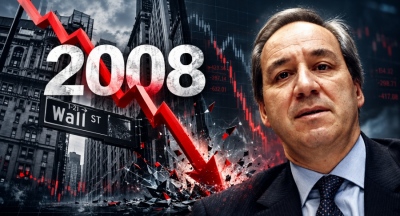
Burry earned the nickname "Big Short" after famously predicting and shorting the US housing market before the 2008 global financial crisis
When the man who predicted the historic collapse of the US housing market in 2008 and inspired "The Big Short" makes a move, Wall Street holds its breath. At a time when the global investment community is swept away by the absolute artificial intelligence frenzy, pushing semiconductor stocks to unrealistic heights, Michael Burry—the man who predicted the historic collapse of the US housing market in 2008 and inspired "The Big Short"—once again chooses the... unconventional path. With an intervention that caused a sensation, the famous hedge fund manager is turning his back on AI and directing millions of dollars into a market that most have written off: Hong Kong. He publicly stated that as the glow of South Korea, Japan, and semiconductor ETFs begins to fade, now is the right time to search for cheap stocks in the Hong Kong market. "Now is a good time to turn your attention to Hong Kong to look for cheap stocks," Burry wrote on social media. He believes that as the luster of South Korea, Japan, and the iShares Semiconductor ETF, which tracks the semiconductor sector, fades, Hong Kong equities are poised to register strong performances. These comments come as the global sell-off in semiconductor stocks intensifies and doubts grow over whether AI companies can successfully generate revenue from their technology and their massive capital expenditures.
He increases his stake in JD.com
In reality, Burry is not just talking. Market sources report that the founder of Scion Asset Management has already taken action this month, increasing his stake in the Chinese e-commerce giant JD.com. This proves that his bullish view on Hong Kong stocks is not merely theoretical, but is backed by actual capital allocation. Burry earned the nickname "Big Short" after famously predicting and shorting the US housing market prior to the 2008 global financial crisis. Consequently, his unconventional bullish call on Hong Kong equities is attracting widespread attention on Wall Street. From a data perspective, the Hong Kong stock market has indeed been particularly weak among the major global markets this year. Hit by the double blow of sluggish consumer spending and declining market confidence in China's e-commerce sector, market sentiment remains subdued.
And Burry is not the only one
It is worth noting that Burry is not alone. Wall Street giant Morgan Stanley also recently advised investors to buy Hong Kong stocks on dips. Morgan Stanley's positive stance is reportedly based on an optimistic outlook for corporate earnings, suggesting that the overly pessimistic market sentiment presents a good opportunity to increase positions.
www.bankingnews.gr








Readers’ Comments