

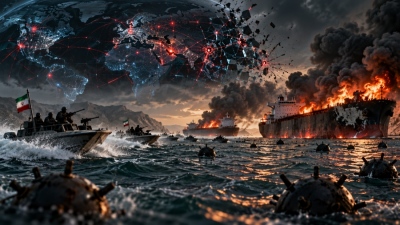
Iran and the USA are drawing “red lines” for the Strait of Hormuz, but there are also limitations, argued Cyrus Schayegh, professor of History at the Geneva Graduate Institute, who estimates that the 40-day war unleashed by the United States and Israel against Iran “created a more balanced distribution of power” in the Middle East.
“Iran essentially prevailed on a strategic level, not because it became stronger, but because today it finds itself in a more or less equal position of power with the United States in the Strait of Hormuz,” Cyrus Schayegh told Al Jazeera.
“For this reason, Iran wishes to maintain the current situation, while the United States wants to regain the prior superiority they possessed.
This explains why both sides are attempting to define “red lines.”
This dynamic embodies the risk of further escalation and I believe we will see more tension,” reports the analyst.
However, he added that at the same time there are also limitations, “with the most important perhaps being the Arab Gulf states, which wish to exert pressure on Trump so as to essentially stop further escalation.”
Another limiting factor is the domestic political situation in the United States, where not only the Democrats but also the Republicans “are beginning to feel increasing concern,” as the midterm elections for Congress are rapidly approaching, concluded Cyrus Schayegh.
www.bankingnews.gr







Readers’ Comments