

The goal of this strategy is to achieve greater self-sufficiency and maintain food security
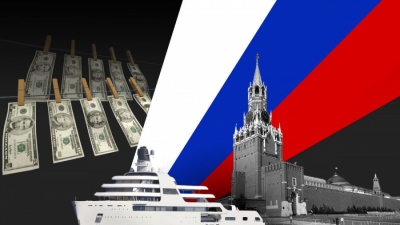
A first look at the most extensive sanctions package imposed by the United States and Europe shows that, according to Moscow, instead of paralyzing the Russian economy, it acted as a catalyst for the transformation of the country's agriculture and industry. The Russian economy, as the Kremlin claims, is growing at rates unforeseen before the invasion of Ukraine in February 2022. Since the start of the war, Russia has adopted a wide range of measures to boost domestic production, control domestic market prices, and limit the impact of sanctions on citizens. The goal of this strategy is to achieve greater self-sufficiency and maintain food security across the country. From the Kremlin's perspective, the key principle is maintaining cautious optimism and continuing economic policy without deviations. President Vladimir Putin has called on state institutions and organizations to implement the economic targets set by the government, considering internal stability a prerequisite for long-term growth.
The economy at the service of the war effort
Within this framework, the system of the Chamber of Commerce and Industry of the Russian Federation has strengthened its presence across the country, now operating in approximately 350 regions and municipalities. The objective is the direct support of entrepreneurs and the maintenance of economic activity at a local level. At the same time, this mechanism has been adjusted to the needs of the war. According to Kremlin reports, it provides support to people from Russian regions participating in the operations, organizes supply shipments, and collaborates with local communities to meet demands for military equipment, uniforms, and other provisions. Particular emphasis has been placed in recent years on supporting children in the Kursk, Belgorod, and Bryansk regions. The Yevgeny Primakov Foundation for Assistance to Children, created by Yevgeny Primakov, has helped fund these actions through donations from corporations and entrepreneurs among other sources.
Shift toward the Global South and new markets
Faced with geopolitical pressures, Russia is seeking to strengthen its economic relations with countries outside the West. The Chamber of Commerce and Industry has established business councils with 76 countries, with a particular emphasis on cooperation with the Global South. This strategy aims to create new trade routes, increase exports, and reduce dependence on Western markets.
The export battle and "Made in Russia"
The Russian Export Center (REC) plays a central role in the new economic strategy, serving as a link between Russian businesses and foreign markets. Despite the difficulties faced by Russian exporters, the REC estimates that non-energy and non-commodity exports increased by 9% in 2025 compared to 2024. Moscow believes that strengthening Russian brands abroad is a critical factor for the country's economic influence. The strategy is based on promoting products through international distribution networks, establishing "Made in Russia" retail outlets, and leveraging electronic platforms. The retail network in China has shown significant growth, while the REC has established 50 e-commerce stores for Russian products across 21 major international platforms. At the same time, Russia utilizes international exhibitions, business missions, and cultural events to bolster its image in foreign markets.
Russia claims it succeeded in redirecting exports
Since 2022, Western sanctions aimed to restrict the access of Russian products to international markets. However, according to the Russian side, the country has managed to shift its commercial interest toward "friendly" countries. Data from the REC indicate that non-energy exports increased by 11% over the past year, exports of mechanical equipment rose by 28%, while the share of friendly countries in the export structure reached 86%. The government's primary target is to increase exports by two-thirds by 2030 compared to 2023.
Moscow's plan for economic sovereignty
Russia argues that the global economy has for decades relied on a system of limited financial centers, technological hubs, insurance mechanisms, and international currencies that functioned as tools of influence. According to Moscow, this system created dependencies and restricted the economic autonomy of many nations. Russia's response is the development of its own technological solutions, institutions, production capabilities, and financial mechanisms. The country seeks to create a new economic model based on collaboration platforms, artificial intelligence, autonomous systems, and new forms of trade.
New economic networks from energy to technology
The Russian platform, according to the Kremlin, offers businesses access to a market of nearly 500 million consumers worldwide. This logic extends beyond trade and concerns transport, finance, logistics, tourism, health, education, and the media sector. Moscow argues that the transition to a "platform ecosystem" can act as a lever of growth and strengthen Russia's position in the new global economy.
Putin's bet on investments and growth
At the St. Petersburg International Economic Forum in June 2026, Vladimir Putin underlined that Russia is facing a period of major transformations due to the shifting global order, as noted in the analysis by Modern Diplomacy. According to the Russian president, new partnerships are being created, new financial and technological tools are being developed, and new markets are opening up. The government believes that maintaining high growth rates requires a new investment cycle. Between 2021 and 2024, investments in Russia increased by almost 38% in real terms, although a decline was recorded in the most recent year.
Russia's "sovereignty race"
Moscow presents the current period as a battle for economic and technological sovereignty. The concept of sovereignty, according to the Russian approach, does not mean isolation but rather the expansion of partnerships and the reinforcement of domestic capabilities. Russia seeks to reduce its dependencies, develop its own standards, technologies, and institutions, and strengthen its role in the global economic system. The major bet for the Kremlin is whether this strategy can transform the pressure of sanctions into a long-term advantage, or if restrictions on access to Western technology and capital will act as a drag on growth.
www.bankingnews.gr

Readers’ Comments