

A sudden shift in the stance of US President Donald Trump regarding the Hormuz issue brings new data to the energy market and the global geopolitical arena once again, at a time when fears of extreme oil price volatility are intensifying.
The withdrawal of the 20% fee temporarily averts a crisis scenario, but the warning from Citigroup triggers a new wave of concern.
Investors are now looking for clues about the next major move that could determine the course of international prices.
Specifically, as Donald Trump wrote on Truth Social:
"Oil is flowing like never before, thanks to the incredible strength of the United States Armed Forces.
A special shoutout to the Secretary of War, Pete Hegseth, to the Chairman of the Joint Chiefs of Staff, Dan Kane, and to the Commander of the United States Central Command, Admiral Brad Cooper.
Because of them, and all the members of the strongest military anywhere in the world, by far, the Straits of Hormuz are open for all commercial shipping, with the exception of Iran. And this is because of its fake, violent, and malicious leadership, which is leading it down the path of total destruction.
Therefore, we will impose a full blockade, but only on ships heading to or coming from Iranian ports, or carrying anything related to Iranian cargo.
Based on highly productive conversations with Middle Eastern leaders, I have decided to replace the 20% United States compensation fee with trade and investment agreements that the various Gulf states will make in the United States.
These investments will be massive, but at the same time highly beneficial for those countries and for their future.
As everyone knows, we have the largest dollar investment ever made in the United States by any country in history. But these new investments will make that amount even larger, and we will see factories, manufacturing plants, and equipment pouring into the United States at historic levels, creating millions more good-paying American jobs!
America is winning again, winning like never before.
The days when Iran killed hundreds of thousands of people, including 52,000 protesters, are over and, most importantly, Iran will never obtain a nuclear weapon!"
The oil markets fell on Tuesday 14/7, following the decision of US President Donald Trump to abandon the demand for a special 20% protection fee on ships transiting the strategically important Strait of Hormuz.
However, behind the minor easing of prices, geopolitical tension remains at alarm levels, as the region is at the center of a dangerous confrontation that could threaten global energy security.
The price of US West Texas Intermediate (WTI) crude strengthened by 23 cents to 78.37 dollars a barrel, while the international benchmark Brent rose 65 cents to 83.95 dollars.
Earlier, however, US crude had surpassed 80 dollars a barrel, as markets worried about the escalating conflict between Washington and Tehran.
The Strait of Hormuz is a ticking time bomb
Despite the easing of prices, the situation in the region remains extremely dangerous.
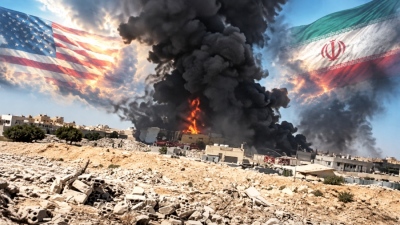
The US military carried out bombings on military targets along the coast of Iran on Monday night, in an effort to limit Tehran's ability to attack commercial vessels.
The US Central Command (CENTCOM) argued that the operations were aimed at weakening Iran's capabilities to threaten shipping in one of the planet's most important energy corridors.
For their part, the Revolutionary Guards announced that their forces attacked two supertankers transiting the Strait of Hormuz with their tracking transponders turned off.
At the same time, the state oil company of the United Arab Emirates ADNOC reported that two of its tankers were hit by projectiles during their transit through the strait, resulting in the death of one sailor and the injury of several others.
Fear of an energy shock returns
The importance of the Strait of Hormuz for the global economy is immense.
Before the US and Israeli attacks against Iran on February 28, about one-fifth of the global oil supply passed through this maritime corridor daily.
The movement of ships had decreased significantly when Iran began targeting commercial vessels in early March, causing intense concern in the markets.
Shipping had begun to recover after the temporary agreement between Washington and Tehran, but the new tension brings back the nightmare of a major energy disruption.
Citi: The risk of a prolonged crisis is rising
Citi warned that the proposal by Donald Trump to impose fees on ships transiting the Strait of Hormuz significantly increases the risk of further military escalation.
According to the bank, the probability has increased that the regime of Iran will walk away from the memorandum it had signed with the US until after the midterm elections, a scenario that could lead to prolonged high oil prices.
The oil market now remains in a state of nervous crisis.
Although the withdrawal of the 20% fee by Trump averted an immediate shock, developments in the Strait of Hormuz show that the global energy chain is facing a new cycle of uncertainty.
A new strike on tankers or a further military escalation between the US and Iran could cause a sharp spike in prices, with impacts on inflation, economies, and markets worldwide.
www.bankingnews.gr







Readers’ Comments