

Rosatom strengthens its presence in over 20 African countries – Moscow's strategic goal is energy infrastructure and trade corridors
Russia is preparing to expand its presence in the field of peaceful nuclear energy in Africa, with the number of African countries cooperating with Moscow expected to exceed 20.
According to information from Izvestia, a cooperation agreement with Djibouti is expected to be signed on the sidelines of the third Russia-Africa Summit, which will take place in October.
The small country in East Africa acquires special strategic importance for Russia, as it is located on the Bab el-Mandeb straits, one of the most important maritime hubs of global trade, connecting the Red Sea with the Gulf of Aden and the Indian Ocean.
At the same time, Moscow seeks to strengthen transport and logistics ties in the region.
Rosatom and Djibouti agreement on the peaceful use of nuclear energy
The Russian and Djiboutian sides are preparing the signing, on the sidelines of the third Russia-Africa Summit, of a Memorandum of Understanding between the state atomic energy corporation Rosatom and the Ministry of Energy and Natural Resources of the Republic of Djibouti for cooperation in the peaceful uses of nuclear energy, the Russian embassy in Djibouti stated to Izvestia.
Rosatom is already cooperating with 20 African countries, while the agreement with Djibouti is expected to define in detail the areas in which bilateral cooperation will be developed.
As Vsevolod Sviridov, an expert of the Center for African Studies at the National Research University Higher School of Economics, HSE University, stated to Izvestia, the nuclear industry has many dimensions and can create opportunities for cooperation beyond electricity generation.
Given that the nuclear industry is multidimensional, there may be even greater potential for cooperation in medicine, agriculture, and scientific research, he said.
Djibouti at the center of the geopolitical chessboard
The geographical position of Djibouti has special significance for Russia.
The Bab el-Mandeb straits constitute one of the most important transit points of global trade, as critical maritime transports between Europe, Asia, and the Middle East pass through them.
The country, although small in size, already hosts major military bases of the United States, Japan, and European countries, a fact that increases its strategic importance.
Rosatom views Africa as a new energy market
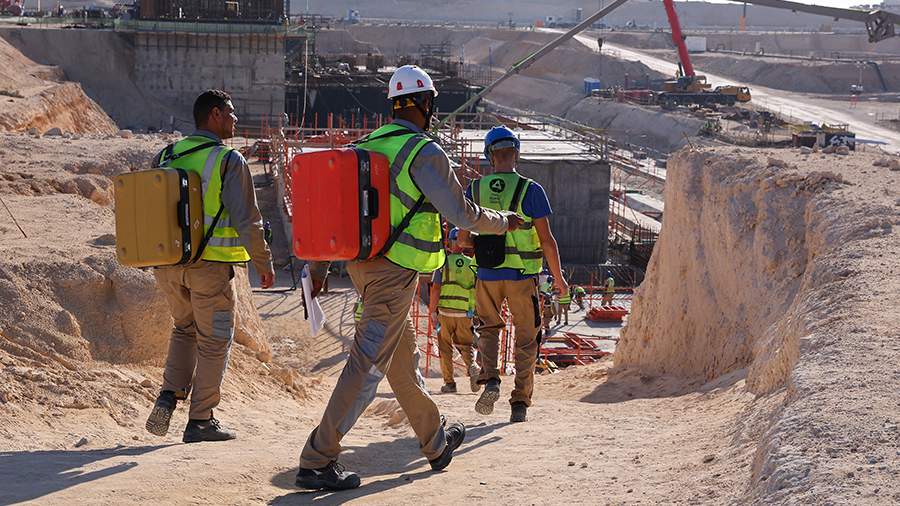
Russian Rosatom considers Africa a market with significant prospects, as the demand for electricity is expected to increase significantly in the coming decades and the industries of the continent will need new energy sources.
In this effort, Rosatom is actively supported by the Russian Ministry of Foreign Affairs, which strengthens the diplomatic presence of Moscow on the African continent.
According to the Russian Ministry of Foreign Affairs, preparations for the opening of new Russian embassies in The Gambia, Togo, and Comoros are already close to completion.
Moscow builds a network of influence in Africa
The agreement with Djibouti is part of the general strategy of Russia to strengthen its economic, energy, and diplomatic presence in Africa.
Through nuclear technology, energy investments, and the development of new trade corridors, Moscow is attempting to consolidate a long-term role in a region where competition between major powers is becoming increasingly intense.
www.bankingnews.gr













Readers’ Comments