

The decision of the international investment company XRG to increase its participation in the Rio Grande LNG project in Texas is not merely another business deal. On the contrary, it signals the convergence of the energy, geopolitical, and strategic interests of the United States and the United Arab Emirates in one of the most critical sectors of the global economy: liquefied natural gas, LNG.
XRG acquires greater control over the leading US LNG project
With the acquisition of an additional stake in Units 4 and 5 of the Rio Grande LNG project, at the port of Brownsville in Texas, XRG, which is wholly owned by the state oil company of the UAE, ADNOC, significantly increases its exposure to one of the largest LNG export facilities worldwide.
Now, the company participates, directly or indirectly, in all five units of the project that are under construction.
At a geopolitical level, this development signals the intention of Washington to allow the UAE to strengthen their strategic presence in one of the most important energy sectors of the United States.
LNG became the new strategic weapon after the war in Ukraine
Since the Russian invasion of Ukraine in 2022, LNG has evolved into the most important emergency energy source globally.
Unlike natural gas via pipelines or oil, it can be transported quickly to any region facing shortages.
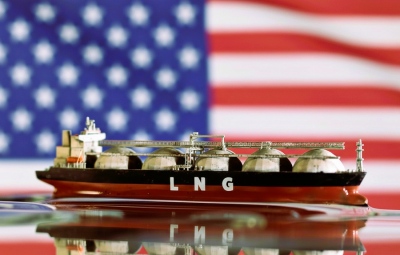
The United States capitalized on this juncture to emerge as the largest exporter of LNG in the world.
From almost zero exports in 2016, the American export capacity reached approximately 11.4 billion cubic feet per day, Bcf/d, maintaining the first place internationally to this day.
At the same time, Washington coordinated major LNG supply agreements between producers, mainly Qatar, and European countries, so that Russian energy supplies could be replaced, while it also significantly increased its own exports to Europe.
According to the EIA, the LNG export capacity of the US is expected to double by 2031 compared to the levels of 2024, as new projects such as the Plaquemines LNG of Venture Global and the expansion of Corpus Christi LNG of Cheniere enter into full operation.
The Trump strategy and the role of the UAE
According to a senior source who spoke to OilPrice.com, the US president Donald Trump believes that the control of energy, and specifically LNG, constitutes a basic tool for the exercise of American foreign policy.
The second Trump presidency seems to follow a different approach in the Middle East, giving greater weight to cooperation with strong regional allies instead of direct American military involvement.
In this context, the United Arab Emirates emerge as the key regional partner of Washington.
The UAE was the first major Gulf state to sign, in September 2020, an agreement for the normalization of relations with Israel under American mediation and, despite the conflicts that followed after the attack of Hamas on October 7, 2023, they never severed diplomatic relations with Israel.
At the same time, the close energy ties of the UAE with India are considered by Washington as a significant geopolitical advantage, as they strengthen the role of India as a counterweight to the growing influence of China in the Asia Pacific region.
Realignment of energy alliances
The departure of the UAE from OPEC was welcomed by Donald Trump as a positive development.
As he had characteristically stated:
"I think it is excellent and ultimately good for the price of gasoline to go down, for oil to go down, for everything to go down... they are facing some problems in OPEC."
At the same time, the United States are strengthening their energy presence in Iraq as well.
Although the country does not yet possess a developed LNG sector, it plans the construction of the first LNG import terminal at the port of Khor al-Zubair, as well as a second offshore facility at the port of Faw.
In recent months, leading Western companies such as ExxonMobil, Chevron, Shell, BP, and TotalEnergies have expanded or reactivated their operations in Iraq.
At the same time, the American Excelerate has been called upon to play a central role in the development of the new LNG infrastructure of the country.
The major agreements with Saudi Arabia
Two major LNG agreements with Saudi Aramco are also part of the same framework.
The first concerns a twenty year agreement between NextDecade and Aramco for the supply of 1.2 million metric tons of LNG annually from Unit 4 of the Rio Grande LNG project, a development that reflects the deeper geopolitical realignment of Saudi Arabia.
The second also provides for a twenty year supply of one million tons of LNG annually from the Commonwealth LNG project in Louisiana to Aramco Trading Americas.
The company Caturus Energy, which participates in this specific project, constitutes a joint investment platform of the American Kimmeridge and the state investment company of the UAE, Mubadala Investment Company.
Rio Grande evolves into an energy hub of global significance
The latest agreement of XRG concerns the acquisition of an additional 7.6% stake in Units 4 and 5 of the Rio Grande LNG project from an investment vehicle of Global Infrastructure Partners, GIP, which now belongs to BlackRock.
The transaction complements the previous investment of XRG, through which it acquired an indirect 11.7% stake in the first phase of the project, which includes Units 1, 2, and 3.
Units 4 and 5 are expected to have a total capacity of approximately 12 million tons of LNG annually, while the entire Rio Grande LNG project will reach approximately 30 million tons annually when all five units are completed, with the start of production scheduled for the first half of 2027.
In the context of its initial participation in the project, ADNOC Trading also signed a twenty year agreement for the supply of 1.9 million tons of LNG annually from Unit 4, further strengthening the strategic partnership between the US and the United Arab Emirates in the rapidly growing sector of LNG.
www.bankingnews.gr







Readers’ Comments