

In an extreme tactical mixture of bombardments, verbal attacks, and chaos, the tension between US and Iranian forces in the Persian Gulf is escalating, sending Brent oil soaring to 83 dollars. In the early morning hours of July 14, a new wave of extremely heavy bombardments struck Iran. US forces hit Bandar Abbas, Kish, and Qeshm, while the Iranians dismantled US military bases in Kuwait, struck the United Arab Emirates, and hit tankers with missiles, causing casualties. The Strait of Hormuz was closed by Iran, while US President Trump declared that the US Military will be the guardian of Hormuz and initiated a new blockade. Trump nevertheless informed Congress that the war with Iran has restarted, though he reiterated that he wants negotiations. In fact, in statements, Trump mentioned that with the new bombardments, the Iranians "are getting kicked in the ass". The response of the regular Iranian army and the IRGC (Islamic Revolutionary Guard Corps) of Iran was shocking, striking US military bases in Kuwait with missiles and destroying radar positions and Patriot systems. At the same time, they hit the US headquarters at Al-Juffair Air Base in Bahrain. Indeed, the IRGC claims they will humiliate the Americans. Tension is rising, attacks from both sides are increasing, and escalation is a fact.
Trump: Iranians are getting kicked hard in the ass, we will control Hormuz either through dialogue or by weapons
US President Trump officially informed Congress of the resumption of hostilities in Iran. In a letter sent to Congress, the president wrote that on July 7, US forces launched "defensive strikes against targets inside Iran". The United States resumed attacks against Iran on the night of July 8 and they continue through July 14, 2026. According to the US Central Command (CENTCOM), these attacks were carried out in response to strikes in the Strait of Hormuz. The waves of attacks target coastal radars, anti-ship missile installations, and air defense systems.
"The US is kicking Iran's butt."
Right now, the Iranians are getting kicked hard in the ass, the American President Trump stressed. According to Trump, the Iranians are "bad" people. The US president urged people to believe him, as he rarely says such things.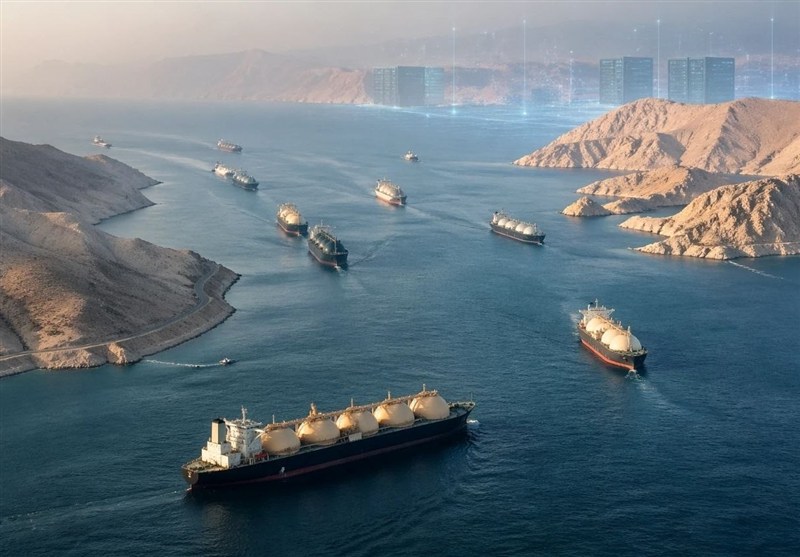
We are taking control of Hormuz, we will be the guardian angels
The United States is taking control of the Strait of Hormuz as a new measure against Iran, Trump stated. We are taking control of the strait and, obviously, we will rule it. We will become the guardians of the strait. Maybe guardian angels. And we need compensation for this. The United States will impose a 20% tax on all cargo transported through the Strait of Hormuz, Trump specified. The American President also added that the US and Iran held talks on July 12 and reached an agreement. He said the talks failed because Tehran demanded amendments to the agreement. Iran, for its part, stated that it will not allow the US to interfere in the management of the Strait of Hormuz. This was stated by the Central Headquarters of the Iranian Armed Forces. "We will under no circumstances allow the US to interfere in the management of the Strait of Hormuz."
Trump: I believe a deal with Iran is still possible – The Gulf countries will pay us
When asked if "Do you think it is still possible to reach a deal with Iran?" the American President replied "Yes, I think a deal is possible, absolutely. I think so." We had a deal recently. Everything was done, but they broke it immediately because they realized there was something in the agreement they didn't like. They have a different mentality, and we are not going to tolerate this. We will simply continue our course. We will attack them. We will destroy all their capabilities in relation to anything associated with the Strait of Hormuz. I think eventually we will take complete control of Hormuz. "You have been bombing Iran for months. Will this become the new normal for the American people?" Trump replied: "Well, you know, we were in Vietnam for 19 years..." Countries like Saudi Arabia, the UAE, Qatar, and Bahrain should pay us for the cost of the war against Iran. "I want my costs returned because we are protecting a very wealthy part of the world." "We are spending money. What we have done is that we will be paid for this protection. There are countries like Saudi Arabia, the United Arab Emirates, Qatar, Bahrain."
CENTCOM: The third wave of attacks on Iran has begun… we want to cause serious damage until July 15
The United States has launched attacks on Iran for the third consecutive night, the US Central Command (CENTCOM) announced. "Today at 4:45 p.m. Eastern Coast time, the US Central Command, by order of Commander-in-Chief Trump, began the third consecutive night of attacks against Iran," the statement said. CENTCOM states that the attacks are aimed at causing "serious damage" to Iranian forces and reducing their ability to obstruct navigation in the Strait of Hormuz. CNN, citing an anonymous US official, reported that the Americans are targeting coastal surveillance systems, drones, and Iran's missile "capabilities". Trump stated that the US military will continue to launch powerful strikes on Iran over the next two nights—Tuesday and Wednesday (July 14-15).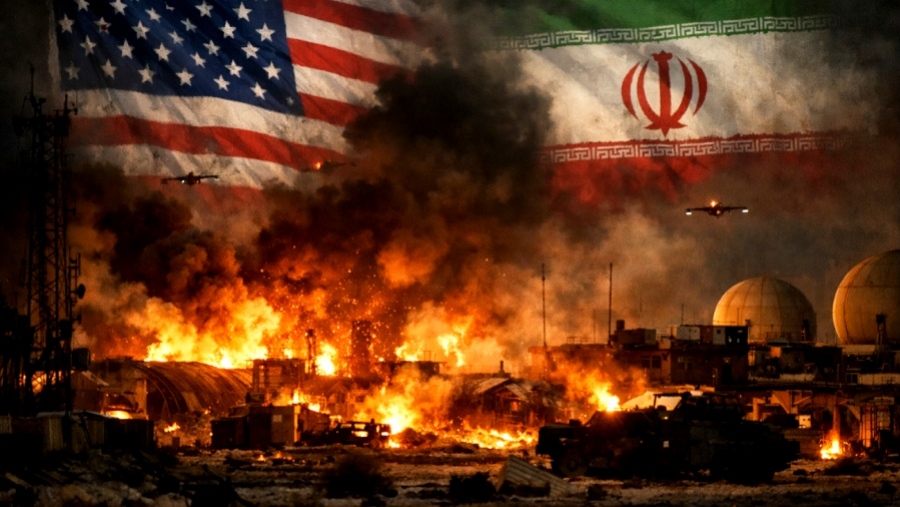
Iranian military: American bases in Kuwait are hell, we will humiliate the US...
"Following the repeated evils and attacks of the United States against our country, the Army of the Islamic Republic of Iran targeted the communication systems, fuel tanks, the Patriot system, the observatory, and the ammunition depot of the terrorist US military in Kuwait with its destructive drones. Also, the Navy of the Army of the Islamic Republic of Iran, in response to missile attacks on certain military centers, launched cruise missiles at the hostile American enemy ship. Addressing the foolish enemies, the army of the Islamic Republic of Iran stressed that they should learn from the stability, unity, and integrity of the great Iranian nation in continuing the path of the Imam of Martyrs and in defending the legitimacy of this divine land, adding: Iran's defensive attacks will be designed and continued with force in response to the attacks and proportional to the level of evils of the covenant-breaking enemy."
IRGC: We destroyed the American Al-Juffair airbase in Bahrain... – The 5th Fleet was also targeted
Iran's Islamic Revolutionary Guard Corps (IRGC) announced attacks against targets at the US-run Al-Juffair airbase in Bahrain. "The Revolutionary Guards of Iran announced that they struck weapons depots, a satellite communications center, and a headquarters of the US forces at the Al-Juffair airbase in Bahrain," the publication reported. "Dear struggling and always present nation of Iran, the child-killing military of the United States, after its failure last night in the Strait of Hormuz, proceeded with airstrikes against coastal stations and several more military facilities in the southern regions of the country. In the first stage of the response to the enemy attack, the fighters of the Navy of the Islamic Revolutionary Guard Corps, during the second wave of operation 'Nasr 2' with the slogan 'Ya Latharat al-Hussein', struck with missiles and drones several weapons support depots, a satellite communications center, and the housing building of the US forces at Al-Juffair base in Bahrain, causing severe destruction. The retaliatory operations continue," the Revolutionary Guards claim in their statement, emphasizing that the US 5th Fleet in Bahrain was also targeted. As they claim, within the framework of the operation, the fleet's fuel tanks were set on fire, while the Patriot radar, the fleet's air traffic control radar, and a C-RAM early warning system were hit and destroyed. In this phase, the control and monitoring center of unmanned remote-controlled vessels was also completely destroyed.
IRGC: Serious strikes also on an airbase in Jordan
But beyond the attacks in Kuwait and Bahrain, the Revolutionary Guards also targeted major US facilities in Jordan. "To the noble and Muslim people of Jordan, early this morning, the fighters of Islam, during the third phase of the second wave of operation 'Nasr 2', with the slogan 'Ya Latharat al-Hussein', struck with ballistic missiles important facilities and deployment positions of the American enemy at an airbase on your territory, which is occupied by the child-killing US military and was used for attacks against us, delivering to the American criminals the punishment they deserved. On the first day of these attacks, the arrogant US regime, using the same bases, dismembered 168 innocent school children and their teachers in the Minab region. You know well that we harbor no hostility toward your country. On the contrary, we hold a special love for your noble people, who understand more than anyone else the suffering and injustice endured by the Palestinian people and know the crimes of the Zionist regime, which, with the direct involvement of the United States, has killed 70,000 Palestinians, including 20,000 children, in Gaza. Your serious demand for the removal of US military bases from the region will be a major contribution to saving the Palestinian people and restoring security in the region. We wish Jordan progress and prosperity. If you help God, He will help you and make your footsteps firm," the Revolutionary Guards claim.
Iran hit two UAE tankers – The US began a naval blockade of Iran
Several ships that violated the ceasefire were targeted in the Strait of Hormuz by Iranian forces. The US Navy reported that the naval blockade of Iran will begin at 8 p.m. GMT on Tuesday night, July 14. The Ministry of Defense of the United Arab Emirates claimed that two UAE oil tankers were targeted by two Iranian cruise missiles on the southern route of the Strait of Hormuz. An oil tanker was hit 40 miles off the coast of Oman. The projectile struck the ship's engine room. The United Kingdom Maritime Trade Operations (UKMTO) reported that an oil tanker was hit by a projectile 40 nautical miles off the Qalhat area in Oman, resulting in a strike to the ship's engine room.
Iranian hell in the Persian Gulf: Bahrain and head of 5th Fleet hit, chaos in Abu Dhabi, explosions in Kuwait
Iranian forces are causing a fiery hell in the countries of the Persian Gulf. Warning sirens are sounding in Bahrain after Iranian missiles struck and huge explosions were heard. The headquarters of the US Fifth Fleet in Bahrain became the target of Iranian attacks. Explosions were heard in the capital of the United Arab Emirates. Reports of explosions were heard in Abu Dhabi, the capital of the United Arab Emirates. Iran's military response to recent moves has begun, and heavy fire is being exchanged. Field reports indicate that several missiles were launched from Iranian territory toward bases housing US forces in the region. The missile launch from Iran was coordinated, and news sources have emphasized that US bases became a direct target. Simultaneously with the launch of these projectiles, warning sirens sounded at US military bases, and forces in these bases were moved to shelters.
Kazem Jalali (Iran's ambassador to Russia): Aggression against Iran is doomed to lead to miscalculations
Forces investing in the use of power cannot undermine Iran's diplomacy, stated Iran's Ambassador to Russia Kazem Jalali. "Aggression against Iran is doomed to lead to miscalculations and failure. Iranian diplomacy, which relies on social capital and popular legitimacy, is so strong that even global powers relying on hard power cannot undermine it," the Iranian ambassador points out. According to Kazem Jalali, Iran's development doctrine aims to strengthen the country's internal capabilities. Economic growth, internal cohesion, and external deterrence form the basis for self-sufficiency and strengthen the country's resilience against international challenges, the ambassador underlined.
Fars: Yemen's Houthi threaten to close the Bab-el-Mandeb strait sending oil to 200 dollars
Representatives of Yemen's radical Ansar Allah (Houthi) movement threatened to close another strait, the Bab-el-Mandeb, and send oil prices soaring to 200 dollars per barrel, according to the Fars news agency. A member of the movement's political bureau made it clear that Yemen intends to close the Bab-el-Mandeb. "The Bab-el-Mandeb will join the Strait of Hormuz, and the price of oil will reach 200 dollars." Earlier, the central headquarters of the Iranian armed forces, Khatam al-Anbiya, stated that Iran will not allow the United States to interfere in the management of the Strait of Hormuz.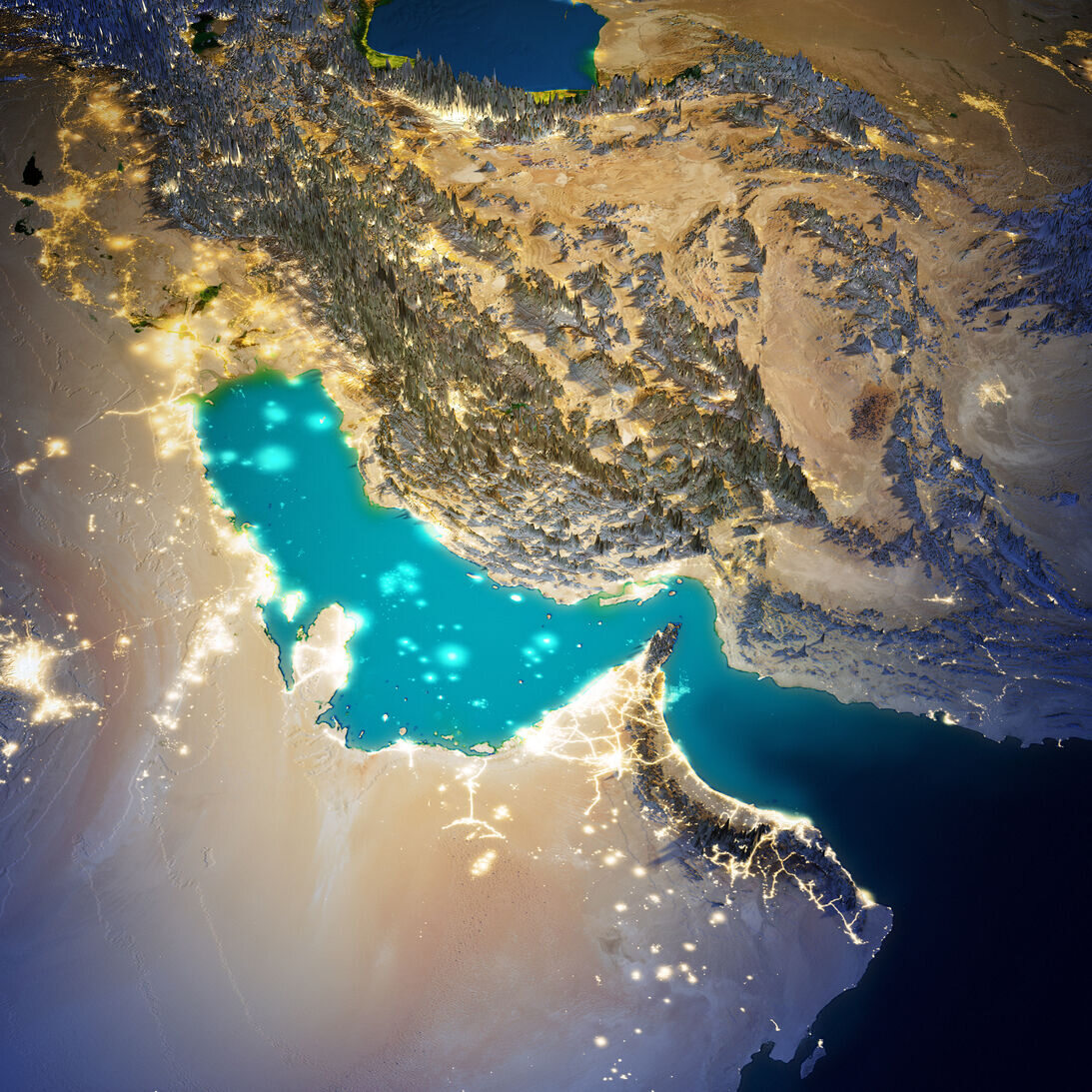
The dirty tricks of Westerners in the Persian Gulf – How merchant ships transited Hormuz
The New York Times, in an eye-opening report, wrote: "For two months, under secret coordination with the US Navy, merchant oil tankers turned off their tracking transmitters (transponders) while crossing the dangerous Strait of Hormuz to prevent their detection by Iran and to transport oil and natural gas to global markets. The US military would provide some air cover in the event of an Iranian attack, and naval officers would radio vessels to move close to the coast of Oman, i.e., on the opposite side of the Iranian coast. This action led to a steady increase in traffic through the strait between May and June, during a temporary ceasefire in the war. However, a framework agreement signed by President Trump with Iran in June failed in this effort due to its wording, which gave Iran official authority over the Strait of Hormuz, as well as due to ambiguity in some key terms.
Trump praised the agreement, reached on June 14, as the reopening of the strait. 'Ships of the world, start your engines. Let the oil flow!' he wrote on social media. But critics say the agreement actually formalized a situation that Iranian officials had made clear during the war: that Iran now controlled the Strait of Hormuz. Iranian missile and drone attacks against merchant ships in the strait effectively closed the route shortly after the war between the US and Israel began. Then, a few weeks after the US and Iran reached a temporary, informal ceasefire in early April, some tankers began transiting the southern route of the strait, a route further away from the Iranian coast. Now, by attacking this area, Iran is trying to force ships to pass through the northern route of the strait, in Iranian territorial waters, where Iran may attempt to justify charging tolls or transit fees. The US military stated that Iranian units attacked three ships heading south. Trump responded by ordering airstrikes on Iran."
Iran had Hormuz free since 1968
Iran declared that it is closing Hormuz "until the end of American intervention in the region." For nearly 60 years, merchant ships have navigated a UN-designated route through the Strait of Hormuz. Iran supported the creation of this route in 1968 and, despite the fact that the route passed through Iranian territorial waters, did not attempt to take control of Hormuz. After the Islamic Revolution of 1979, Iranian leaders stated they did not consider themselves bound by this UN agreement, although over the years the Iranian government had only occasionally challenged the transit of ships. This situation changed after the US and Israel attacked Iran on February 28, 2026. The Iranian military quickly began attacking merchant ships and laying mines, resulting in traffic coming to a near standstill. Only vessels willing to pay large sums of money to Iran were allowed to pass safely near the Iranian coast. Critics say Trump accepted this new status quo in the June agreement with Iran.
At the request of Iranian negotiators, the document recognized 14 points of Iranian authority in the Strait of Hormuz. The Memorandum of Understanding banned tolls or fees, but only for 60 days while negotiations for a new agreement continued. The Memorandum of Understanding also does not provide a firm guarantee that ships will be able to pass freely and safely through any part of the strait. Since early May, US forces have supported more than 800 merchant ships carrying 400 million barrels of crude oil to pass close to Oman. The ships were using a route designated by the International Maritime Organization, a United Nations agency, which had created the route in cooperation with Oman to evacuate approximately 600 stranded ships. The informal ceasefire was later formalized with the signing of the June agreement. According to data from shipping intelligence firm Kpler, nearly 400 ships passed through the strait in the seven days following June 20, the highest weekly number of transits since the start of the war. More than 12 US warships, including two aircraft carriers, and dozens of attack and reconnaissance aircraft remain active in the Arabian Sea region. The US military is also conducting minesweeping operations using autonomous vessels. "US forces have held Iran accountable for its unprovoked aggression against commercial shipping, while also facilitating transit through the strait," said the CENTCOM spokesman...
Iranian route
At the height of the war, some shipping companies preferred to sail closer to Iran and trust the Iranian military to guarantee safe passage. Iran had told them that they would have to pay up to 2 million dollars per vessel to pass. Iran has announced that every vessel transiting this route must use and obtain permission from an agency called the "Persian Gulf Straits Authority," which Iran created in May.
Until traffic stopped under the June ceasefire, Iran said the costs were related to safety and environmental services. They say that Iran is actually imposing transit fees, an action prohibited by the convention. Iran has signed the convention but has never ratified it and says it is not bound by its provisions. The United States has also never ratified the convention. The United States and certain other countries rejected Iran's request for ships to use the northern route and, in response, the US military created a southern route near Oman.
Alex Vatanka (researcher at the Middle East Institute): The Straits of Hormuz have become a sovereignty issue for Iran
Alex Vatanka, a senior fellow at the Middle East Institute, argues that the ceasefire reached between the US and Iran on June 16 was "fragile" from the start. "And every time the two sides display their military power, it happens in and around the Straits of Hormuz," Alex Vatanka told Al Jazeera, "because this is essentially Iran's strongest bargaining chip today." Regarding the US, Vatanka estimated that Trump seems to be betting that "if the Iranians are punished enough, then they will change their stance and return to negotiations."
However, he described this approach as a "gamble," warning that it could lead to escalation, as Iran has repeatedly made clear that it will respond to pressure with retaliation rather than concessions. Alex Vatanka also warned against treating the dispute over the Straits of Hormuz as a sovereignty issue. "It was not a sovereignty issue before the US and Israel attacked Iran, and it became a sovereignty issue [for Iran] only because this was the only card it had left," he said. "After its nuclear program suffered a catastrophic blow, what else was left for Iran to use in its negotiations with the Americans?" he wondered. However, "thanks" to this year's war between the US-Israel and Iran, Tehran found that it possesses significant bargaining power in the Straits of Hormuz, which concerns "the entire region, not to mention the rest of the world," Alex Vatanka said. "And I believe they will continue to use this card as long as the diplomatic process still has even a single chance of yielding results," the analyst concluded.
www.bankingnews.gr








Readers’ Comments